





 Portuguese
  English
  Spanish
  5 min of reading
  0 comments


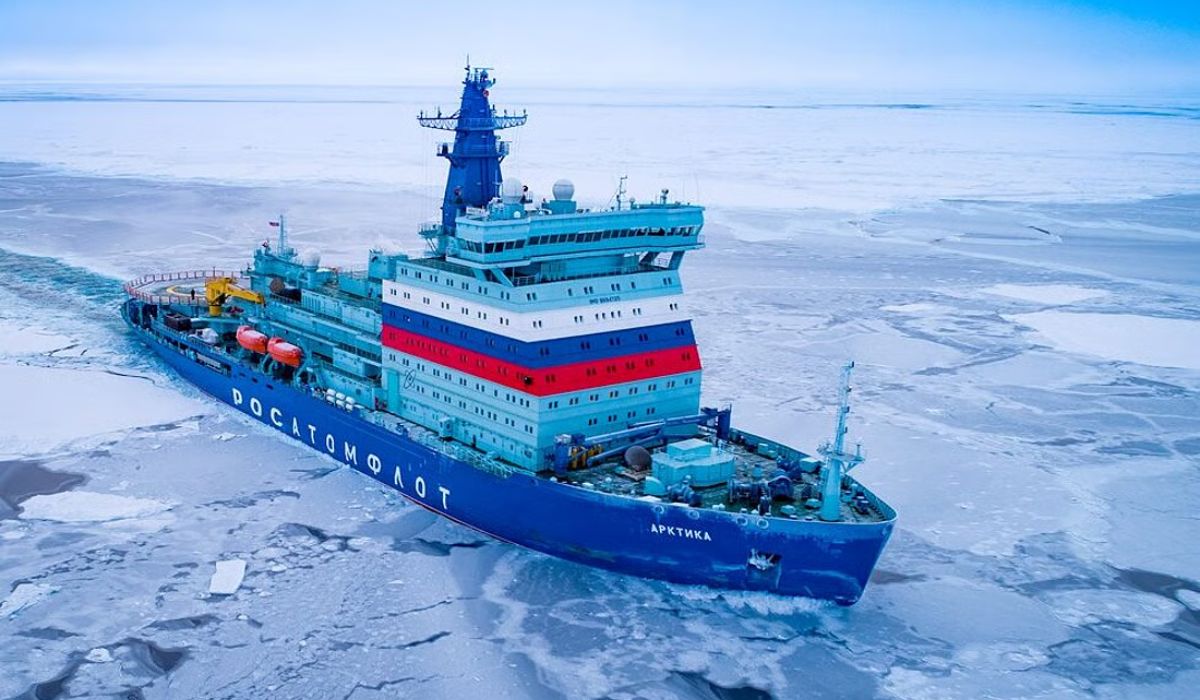
The Yakutiya, New Nuclear Icebreaker of Project 22220, Is the Focus of Russia’s Arctic Strategy by Supporting Escorts and Opening Channels on the Northern Sea Route, Where Ice and Depth Vary and Affect Navigation.
The nuclear icebreaker Yakutiya is part of the Russian Project 22220 class and was developed to support navigation in Arctic areas where ice can disrupt routes for long periods.
Built by the Baltic Shipyard in St. Petersburg, the vessel is operated by Atomflot, a division of Rosatom dedicated to nuclear icebreakers.
The program’s stated goal is to maintain maritime circulation in sections of the Northern Sea Route with the support of escort and the opening of channels in thick ice, according to materials and communications from the sector.
-
Church from 1888 becomes a mansion of over 330 m² in Canada after a renovation of R$ 3.4 million and is eventually sold for nearly R$ 4.3 million.

-
How an innovative city combines high technology, well-being, and sustainability to become the largest reference in clean energy on the planet.
-
Couple buys 1846 church in ruins for R$ 660,000, invests R$ 3.2 million in renovations, transforms it into a millionaire mansion, and even preserved a historic cemetery with over 300 graves.

-
He started running at 66 years old, broke records at 82, and is now a subject of study for having a metabolic age comparable to that of a 20-year-old, in a case that is intriguing scientists and inspiring the world.


Over the past few years, the region has begun to concentrate logistical operations and projects related to transport and energy.
Analyses from the Center for Strategic and International Studies (CSIS) describe the Northern Sea Route as a corridor along the Russian coast, from the Bering Strait in the east to the Kara Gate in the west.
The center also points out that the icebreaker fleet is a relevant component for sustaining traffic and operational presence in extreme conditions, especially during the winter.
Nuclear Icebreakers of Project 22220 and the “Universal” Operation
Reports and technical descriptions of the Project 22220 characterize the vessels as “universal” nuclear icebreakers, a term used to indicate the ability to operate both in open sea and in shallower areas of the Arctic, including near the mouths of Siberian rivers.

The proposal is to enable operations in regions where the combination of ice and variations in draft requires a more flexible operational profile, according to explanations released by sources from the nuclear and maritime sectors.
Additionally, specialized publications describe that the class was designed to escort large vessels on Arctic routes.
This role includes opening a navigation channel with a width compatible with merchant ships operating in the region, especially in sections where ice formation usually limits passage.
RITM-200 Reactors, Commissioning and Sea Trials
The most significant advance in the commissioning process of the Yakutiya occurred when the first of the two RITM-200 reactors reached the minimum controlled power level.
The World Nuclear News reported on October 10, 2024, that this stage was reached after fuel loading and routine checks, a procedure that is part of the path to regular operation.
Subsequently, specialized maritime coverage reported that, in December 2024, the vessel completed sea trials from the builder and was delivered to the operator.
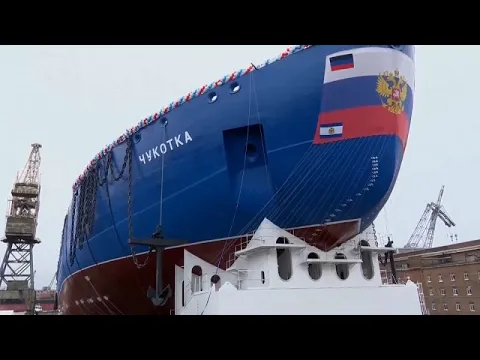

The Baird Maritime reported that there was a delivery ceremony on December 28, 2024, with the raising of the Russian flag, a traditional milestone for incorporating the ship into service.
Months later, in April 2025, the Yakutiya departed St. Petersburg towards the base port of Murmansk.
The Barents Observer reported the departure on April 4 and mentioned an estimated arrival on April 13.
In the same coverage, the outlet pointed out that the expectation was for the icebreaker to head towards the Kara Sea, where escort operations usually support maritime flows in the western Arctic.
Dimensions of Yakutiya, Speed and Icebreaking Capacity
The specifications released about the 22220 class state that the Yakutiya is 173.3 meters long and 34 meters wide.
In open water conditions, the design speed is reported as 22 knots.
These figures appear in publications from the nuclear sector and in technical materials associated with the program.
The icebreaking capacity is presented, in general descriptions, as close to three meters, although some materials distinguish between maximum capacity and continuous performance in level ice.
In different technical references, the mark of 2.8 meters also appears under specific conditions, indicating variation depending on the criteria adopted and the type of ice considered.
For this reason, sector sources often present performance in terms of ranges and operational parameters.
The propulsion system of the Yakutiya is based on two RITM-200 reactors.
The World Nuclear News describes these reactors as pressurized water units with thermal power of 175 MW each.
The same coverage associates the design with prolonged missions and an operational model focused on escort and opening channels throughout the year.
Northern Sea Route and the Role of Escort in the Russian Arctic
Interest in the Northern Sea Route is linked to logistics along the northern Russian coastline and the removal of cargo in areas where ice imposes restrictions.
The CSIS points out that, to expand the navigation window and maintain regular operations, the route depends on infrastructure and escort capacity, which increases the relevance of a large fleet of icebreakers.
In this context, the Yakutiya is part of a larger series of the Project 22220, cited in industry monitoring and publications from the sector.
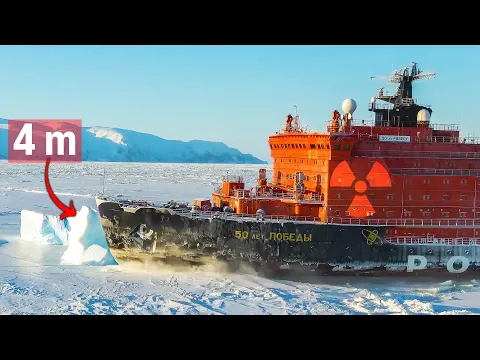
In April 2025, the World Nuclear News addressed the planned fleet expansion and reiterated the general characteristics of the class, such as operation in open sea and shallow waters, as well as operation in thick ice.
The entry of the Yakutiya into escort missions was also a topic of later reports.
In May 2025, the Barents Observer reported on the first regular trip of the ship after incorporation into service and attributed information about the mission to Rosatomflot.
The coverage indicated that the operation was related to a route affected by ice, with the icebreaker employed to enable navigation to a terminal in the Arctic region.
With the vessel integrated into the fleet, the availability of escort now depends on schedules, positioning, and routes assigned to each unit, according to the operator’s planning.
In sector coverage, areas such as the Kara Sea frequently appear for concentrating sections that require icebreaker support part of the year, especially when ice formation limits the passage of merchant ships.







-

-

-

5 pessoas reagiram a isso.