





 Portuguese
  English
  Spanish
  5 min of reading
  0 comments


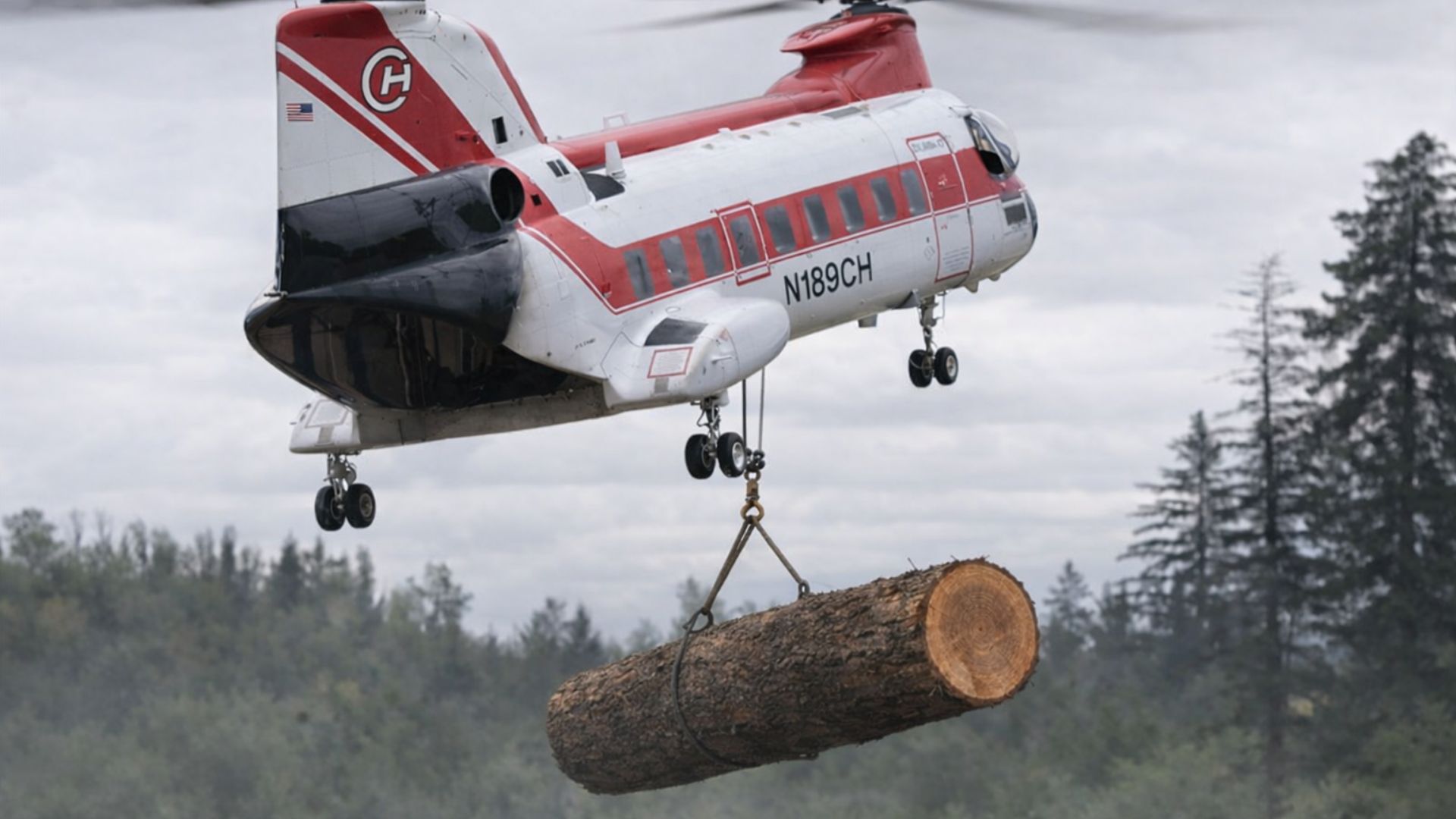
Chinook Helicopter Was Used to Position 125 Logs with Roots in a Remote Stream in Northern California, in a Coho Salmon Restoration Effort. Operation Brought Together Watershed Organization, Karuk Tribe, and Aviation Company, with Large Pieces Planned to Increase the Complexity of the Channel.
A Chinook helicopter was used to transport and position large wood within a stream in northern California as part of a coho salmon habitat restoration project.
The intervention added 125 pieces of wood along 2.5 miles of the West Fork Beaver Creek, with the aim of increasing channel complexity and improving conditions in the watercourse for the species.
Habitat Restoration for Coho Salmon in West Fork Beaver Creek
The initiative was led by the Mid Klamath Watershed Council, in partnership with the Karuk Tribe and the Columbia Helicopters, responsible for the aerial operation.
-
These living root bridges and ladders are over 700 years old and help indigenous people survive in one of the rainiest regions in the world.

-
From sertanejo star to international investor: Ana Castela invests millions in a mansion in the USA, creates a themed accommodation in Orlando, and shows that the “boiadeira” also wants to grow away from the stage.

-
The 10 most stunning motorhomes in the world: a $3 million trailer with a rooftop nightclub and garage for a Ferrari, “palaces on wheels” with Italian marble, private cinema, and five-star hotel luxury for billionaires.

-
Trump wanted to spend $400 million on the White House, but the courts prohibited the million-dollar construction.


The use of the helicopter allowed for large logs to be brought to a stretch where land access is limited and where the logistics of transporting and installing the material required a solution capable of handling heavy loads in rugged terrain.
Giant Logs with Roots and Defined Measurements for the Channel

The organizers describe that the installed pieces followed defined specifications for the intended ecological function.
The logs had at least 24 inches in diameter, about 45 feet long, and included roots at one end.
This set of characteristics was adopted to provide robust structures within the channel, capable of altering flow patterns and creating sheltered areas.
Aerial Operation with Chinook and Registered Flight Time
The project was implemented over two days of operation and registered a total of 9 hours and 6 minutes of flight time.
The action was planned to be executed safely, with prior site preparation and coordination between ground teams and the aircraft during the placement of the material in the stream.
How Large Wood Changes Flow and Creates Shelter
The logic of restoration with large wood comes from the role that logs and roots play in rivers and streams.
In watercourses with wood presence, the current encounters obstacles that create variations in speed and depth, forming low-energy zones and more protected areas within the channel.
At the same time, these structures help diversify the habitat, providing resting and shelter locations under different flow conditions.
History of Wood Removal and Stream Simplification
According to the project report, the area received this intervention because the stream was affected over time by wood removal and by processes that deepened the channel.
In this context, the addition of logs seeks to restore part of the lost structure, creating complexity points that favor the use of the stream by fish and other aquatic organisms.

Why Roots on the Logs Are Part of the Restoration Design
The presence of roots on the installed pieces is highlighted by the responsible parties as a relevant element of the design.
Roots increase the irregularity and contact area of the wood with water, which can enhance the formation of refuges and low-velocity zones around the structure.
The combination of long, thick logs with roots was also chosen to increase the durability of the assembly within the stream.
Long-Term Goal and Permanence of Structures in the Stream
The Mid Klamath Watershed Council notes that the objective is for the 125 pieces to contribute to improving the habitat of the section for an extended period, with an expectation to last for at least 30 years.
The proposal is that this gain in complexity will enhance the stream’s conditions to support the target species during important life cycle stages.
Spawning in Beaver Creek and Focus on the Restored Section
The focus on coho salmon is presented as a response to a scenario of spawning presence in Beaver Creek, but at levels described as consistent and, at the same time, minimal.
The restoration was directed to a specific stretch, with the purpose of improving the stream’s capacity to provide suitable areas for shelter and fish development, according to what is described in the project material.
Why Use a Chinook in a Hard-to-Access Area
The aerial operation involved a Chinook helicopter, identified by the organizers as the largest commercial helicopter in operation in the United States.
The choice of this model was linked to the need to move and position wood with dimensions and weight compatible with the project’s goal, avoiding transportation limitations and reducing land interventions in the channel during the installation phase.
Site Preparation and Safety with Rotor Winds
Before loading and depositing the logs in the stream, the project included a preparation period at the site.
The Mid Klamath Watershed Council reports that weeks of work were carried out to fell trees considered hazardous, aimed at reducing risks during the operation.
The care was related to the specific conditions of the helicopter and the forest environment, where the proximity of canopies and branches can increase the complexity of the work.
Winds Above 80 mph and Coordination Between Teams
The report also mentions that the Chinook can generate rotor winds above 80 miles per hour, a factor that broadens the need to delineate areas and keep teams positioned safely during the approach, lifting, and release of loads.
The operation was described as completed without injuries, complying with the planned safety protocols.
Helicopter Logistics in River and Stream Restoration
The helicopter installation is part of a strategy that has been used in different regions to transport restoration material to remote locations.
Instead of opening new access routes or transporting wood over fragile roads, the aerial solution allows logs to be delivered directly to the planned stretch, with less need for machinery movement within the bed at the time of installation.
Structures Planned to Rebuild Stream Functions
The West Fork Beaver Creek, as described by the responsible parties, received the pieces as part of an effort to recover stream functions that depend on physical structures within the channel.
By inserting large wood, the project seeks to change how water circulates in that stretch, creating heterogeneity and protection points that do not exist in overly simplified channels.








-

-

-

3 pessoas reagiram a isso.