





 Portuguese
  English
  Spanish
  5 min of reading
  0 comments


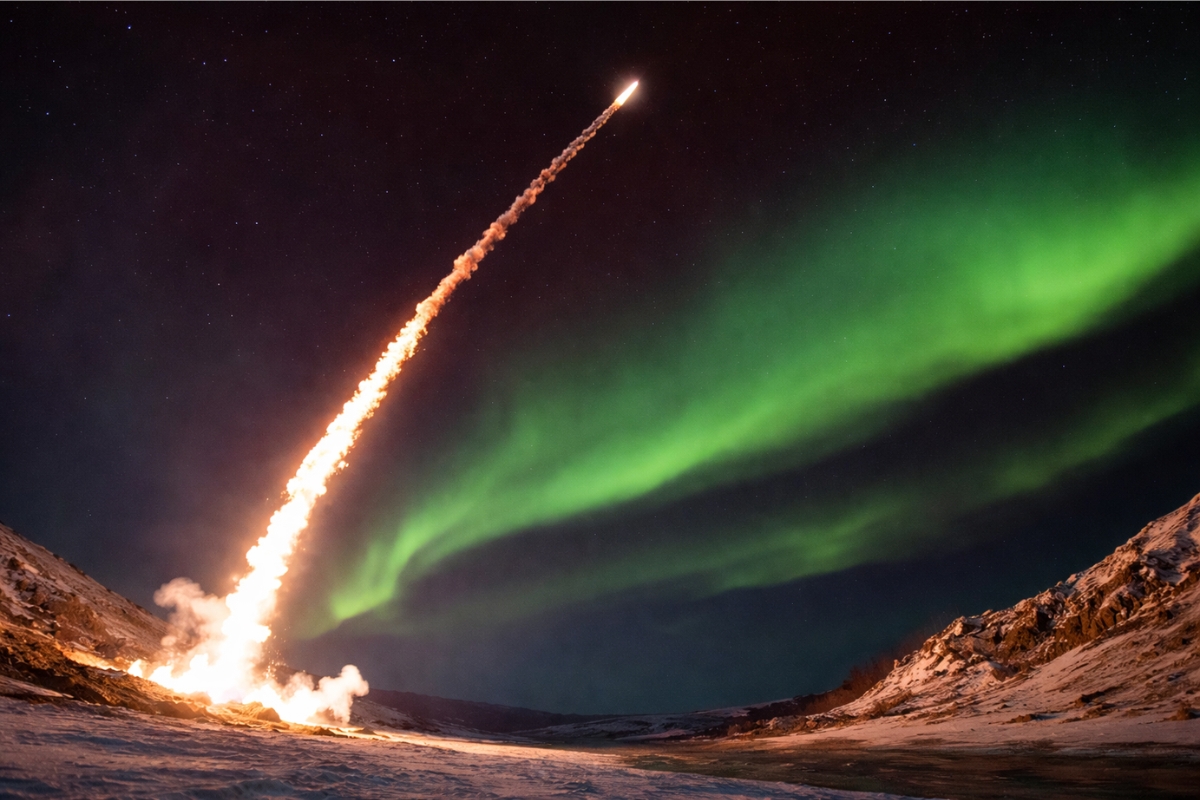
On January 25, 1995, a group of scientists launched in Norway at an altitude of 1,457 kilometers to study the aurora borealis, triggering warnings on Russian radars and attracting the attention of President Boris Yeltsin
For just over 1 hour, on a winter day, the world witnessed a type of tension that many believed had been left behind after the fall of the Berlin Wall. What seemed like a routine scientific procedure turned into a high-risk alert.
On a typical Wednesday afternoon, radar stations in northern Russia detected a rapid ascent from the Norwegian coast. The question was straightforward and frightening: where was this rocket headed and what did it mean?
The most striking visual detail was the scene described around the nighttime launch, with phenomena linked to the polar aurora, exactly the type of situation where a misreading could lead to a decision in minutes.
-
He started running at 66 years old, broke records at 82, and is now a subject of study for having a metabolic age comparable to that of a 20-year-old, in a case that is intriguing scientists and inspiring the world.

-
Oldest tree on the planet reappears after 130 years of searches: Wattieza, 385 million years old, was 10 meters tall and had no leaves or seeds; Gilboa fossils in New York solved the mystery in 2007.

-
A 48-square-meter house assembled in hours with 4,000 bricks made of recycled plastic that does not absorb moisture, has natural thermal insulation, and costs less than 90,000 reais in a complete kit.

-
Luciano Hang revealed that Havan’s air fleet has already accumulated more than 20,000 landings, 10,000 flight hours, and 6 million kilometers traveled, and he says that without the planes, the company would never have grown so quickly.


What Appeared on Russian Radars and Why the Alert Came Up So Quickly
The on-duty military technicians saw a signature they considered concerning. The record indicated a rocket accelerating upward, in a sensitive area of the North Atlantic, as reported by BBC Culture, the cultural section of the BBC.
In the logic of defense at the time, there was a specific fear. A missile launched by a submarine in those waters could carry warheads to Moscow in about 15 minutes, according to the assessment presented in the report.
For this reason, the information quickly climbed up the chain of command and reached Russian President Boris Yeltsin. The impact was immediate because the clock, in this type of scenario, counts in minutes.
The Moment Boris Yeltsin Activated the Nuclear Briefcase and the Weight of the Decision
The episode entered history for a rare reason. Yeltsin became the first world leader to activate a nuclear briefcase, described as a case with instructions and technology to authorize the use of nuclear weapons.
At this point, the decision was not theoretical. In a context of nuclear deterrence, the logic is simple and brutal: a large attack tends to prompt a large response, with assured mutual destruction.
In practice, Yeltsin and his advisors needed to quickly assess whether there was a real attack and whether there would be retaliation. What seemed impossible in 1995 was reconsidered for a few minutes.
Times of the Scare and the Correction That Reduced Tension at 14:52 GMT
The world also felt the ripple outside the barracks. There was instability in currency markets and a scramble for information among politicians, military personnel, and journalists.
The report cites a clear milestone. At 14:52 GMT, those following the potential crisis could breathe again, after the correction from the Russian agency Interfax.
The correction indicated that while the early warning system had detected the launch, the artifact had fallen in Norwegian territory. Later, a defense official in Norway confirmed that the launch was peaceful.
Why the Rocket Was Launched, Where It Fell, and Why the Altitude of 1,457 Kilometers Mattered

The launch was part of a research program at a civilian base and had a specific objective: to gather information about the aurora borealis, a singular meteorological phenomenon.
The rocket fell into the sea, as planned, near the remote Arctic island of Spitsbergen, far from Russian airspace. This detail helps explain why the real risk did not materialize, even with the initial panic.
Weeks earlier, Norway had informed Moscow about the planned launch. Norwegian scientist Kolbjørn Adolfsen reported being surprised by the reaction, suggesting that one factor may have weighed heavily: the trajectory had been higher than usual, reaching an altitude of 1,457 kilometers.
He also stated that this should not have been a surprise because, on December 14, a notice had been sent via the Ministry of Foreign Affairs to the involved nations. For some reason, the message did not reach the correct sectors, and that was the detail that changed everything.
Why a Lost Notice Turns Into Global Risk and How Other Near Accidents Reinforce the Alert
The case exposed a sensitive point: a single notice that does not reach its destination can amplify the risk of catastrophic decisions. In alert systems, small noises become big threats when time is short.
The report reminds us that near nuclear accidents are not rare in the nuclear age. It mentions false alarms triggered by unusual factors, as well as technical failures and environmental conditions.
Examples of serious incidents from different decades also appear. In 1958, a nuclear bomb was accidentally dropped and only killed chickens. In 1966, two U.S. military planes collided over a village in Spain, one of which carried four nuclear weapons. In 2010, the U.S. Air Force lost contact for a period with 50 missiles.
The Dispute Over the Level of Danger, What Experts Said, and What Lessons Remained
After the episode, different interpretations emerged regarding how close the world was to a nuclear war. Part of the debate involved the internal political context in Russia, including the reading that Yeltsin’s announcement could sound like bravado amid the war in Chechnya.
Yeltsin declared the next day that he had used his black briefcase for the first time and suggested that someone might be testing Russia, in an environment where the press said the military was weak.
A former CIA official classified the episode as the most dangerous moment of the nuclear missile era. Pavel Podvig, a nuclear disarmament researcher at the UN, said he would rate the case at 3 out of 10 and that there were more serious situations during the Cold War, even suggesting that the briefcase scenario could have been staged the next day. Vladimir Dvorkin, a Russian nuclear expert, stated that there was no danger at all and, in 1998, told the Washington Post that even signals of a massive attack do not automatically lead to a decision.
Five days after the incident, the BBC reported that Russia attributed the alert to a misunderstanding that should not be repeated, and a spokesperson for the Ministry of Foreign Affairs stated that Norway acted according to procedure and that there should not have been bad faith.
What remains is a hard-to-ignore contrast: a meteorological rocket, launched for research, managed to trigger the highest level of alert and put a nuclear decision on the table for over an hour.









-

2 pessoas reagiram a isso.