





 Portuguese
  English
  Spanish
  6 min of reading
  0 comments


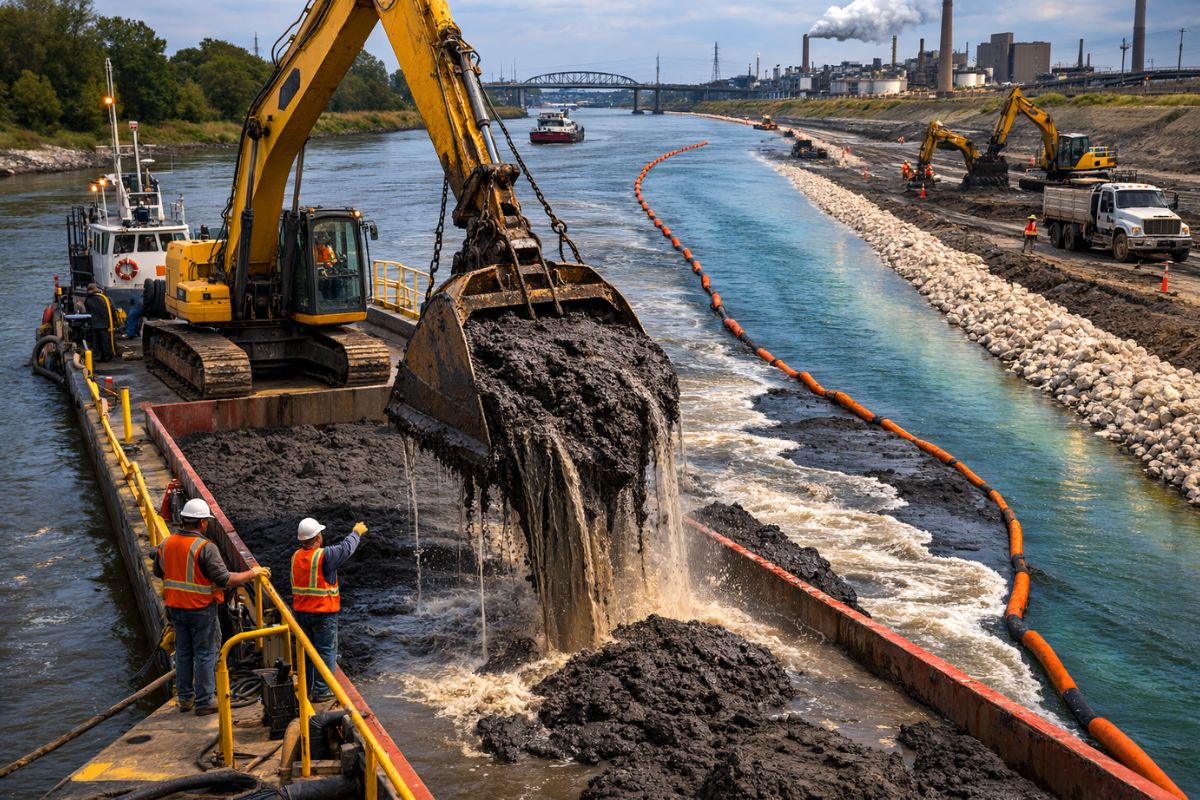
In the Buffalo River, the river received the removal of 1,003,000 cubic yards of contaminated sediments in two phases, gained depth in the navigation channel, had sections isolated by 1.68 meters of clean material, and entered monitoring to recover use, circulation, and public confidence along the local urban system.
The river in Buffalo, known as the Buffalo River, underwent one of the largest cleanup operations ever implemented on its final stretch. In total, 1,003,000 cubic yards of contaminated sediments were removed in two phases, in an intervention designed to deepen the bed, restore the navigation channel, and prevent historic contamination from being exposed again.
The remediation targeted the final six kilometers of the watercourse and an additional 2.2 kilometers of the City Navigation Canal, in an effort that gathered public agencies, the private sector, and non-profit organizations. The goal was not only to remove sludge, but to address an industrial legacy marked by PCBs, PAHs, lead, and mercury, returning to the river more stable conditions for use and circulation.
How the Buffalo River Became an Industrial Liability Accumulated at the Bottom

For decades, the Buffalo River bore the physical weight of heavy industrial activity established on its banks and in its port area.
-
How 5,000 Indian dabbawalas manage to deliver around 200,000 lunchboxes a day in Mumbai for over 130 years using bicycles, crowded trains, and a manual system that continues to operate with impressive accuracy.

-
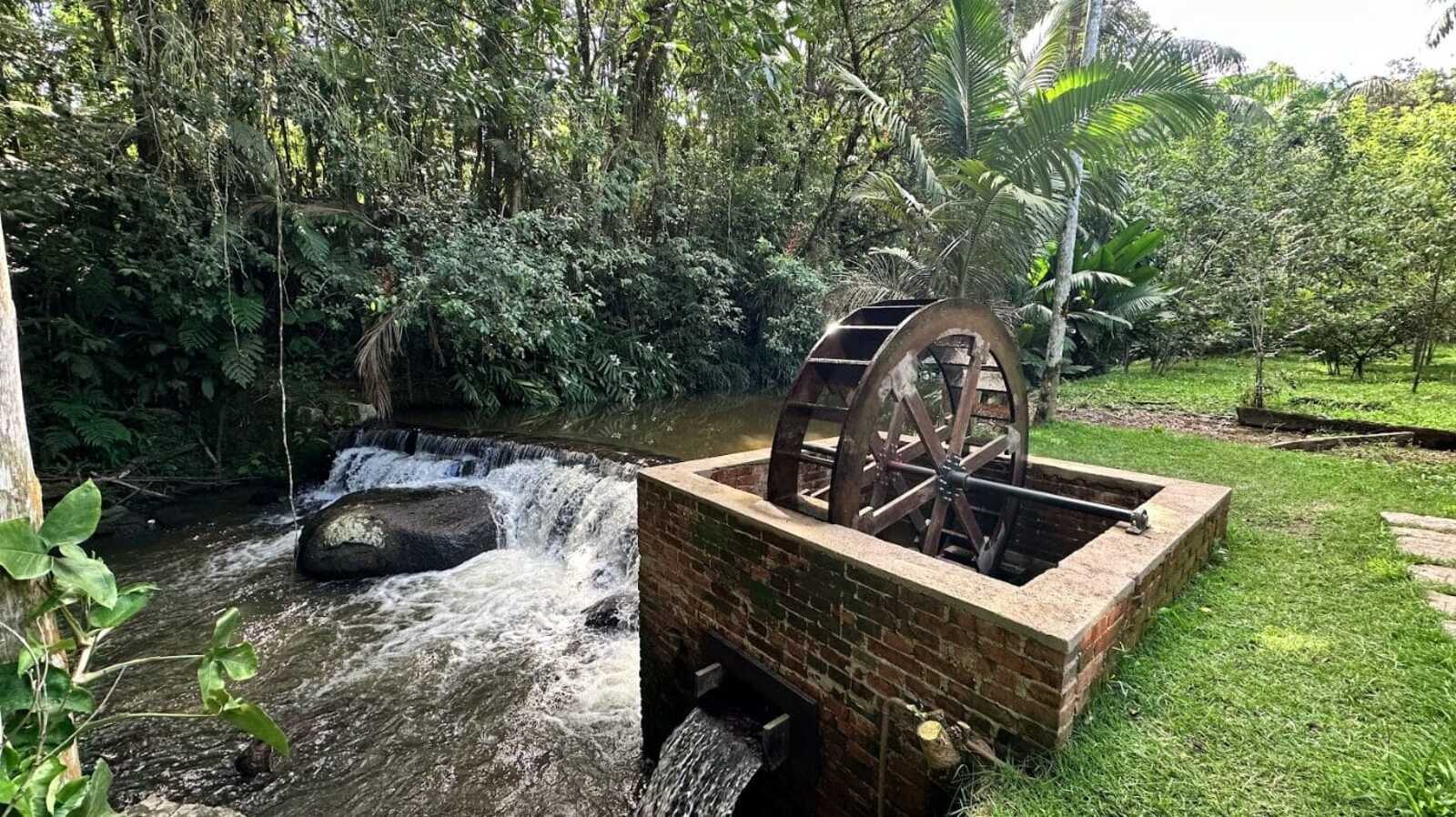
While restoring a historic mansion from 1910, a brick structure with an old turbine that generated energy from the Rio do Testo emerged, along with a hidden door and a rare floor concealed under layers of wax.
-
Italian researchers have detected what appears to be a second Sphinx buried under the sands of Egypt, and satellite scans reveal a gigantic underground megastructure hidden beneath the Giza Plateau for over 3,000 years.

-
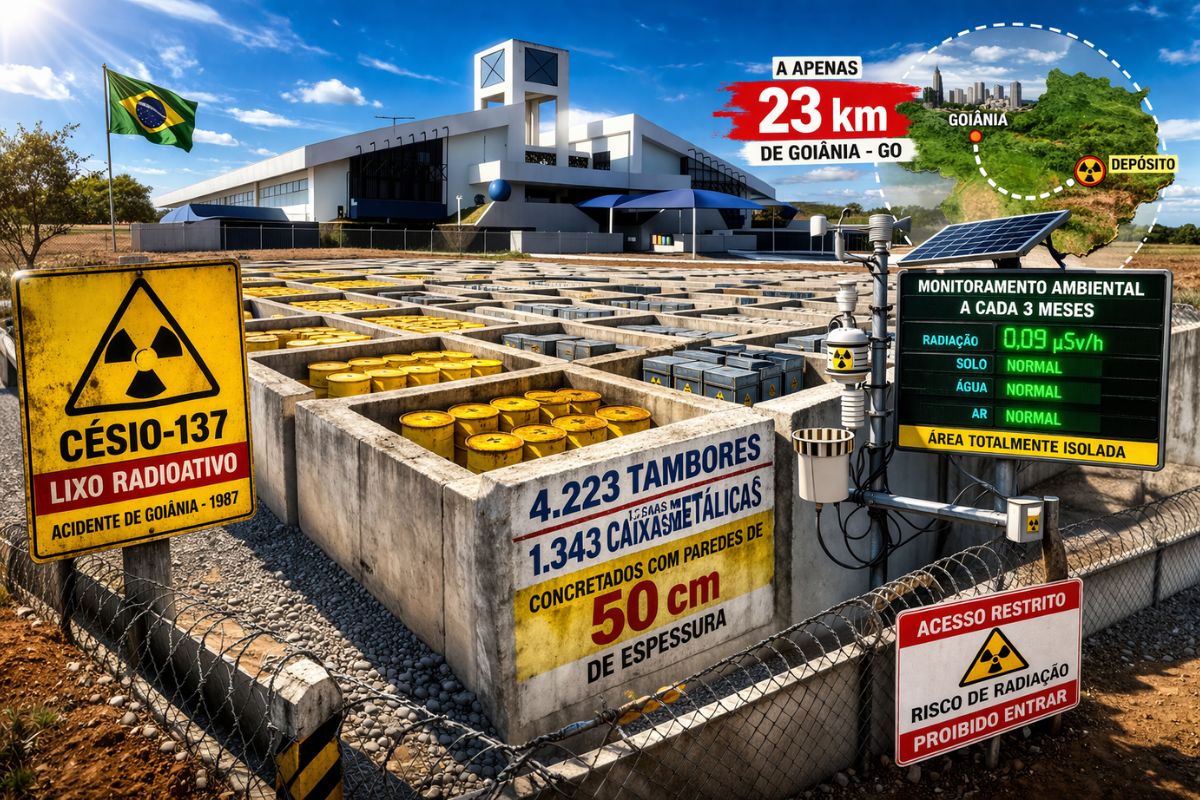
There are 4,223 drums and 1,343 metal boxes concreted with 50-centimeter walls that store the radioactive waste from Cesium-137 in the worst radiological accident in Brazil, just 23 kilometers from Goiânia, with environmental monitoring every three months.

The contamination was not limited to the visible water on the surface. It concentrated at the bottom, within a mass of contaminated sediments that accumulated over time and began to impair the functioning of the river as an urban, environmental, and economic thoroughfare.
This condition was exacerbated by the degradation of the bed and poor water quality, factors that led the Buffalo River to be placed on the list of Areas of Concern in the Great Lakes as early as the 1980s.
When a river enters this category, it ceases to be just a polluted watercourse and becomes treated as a strategic problem, requiring a technical response, funding, and long-term institutional coordination.
Successive assessments showed that there were between 700,000 and 1,000,000 cubic yards of contaminated material in the bed.
The number alone was already significant, but the operational meaning was even greater: as long as this volume remained at the bottom, routine future interventions in the navigation channel could remobilize old pollutants and return contamination to the system.
The Cleanup in Two Phases and the Real Scale of Dredging

The solution adopted was to divide the work into two complementary phases. The first focused on dredging for navigation between 2011 and 2012.
In this phase, the U.S. Army Corps of Engineers received over US$ 4.5 million in funding from the Great Lakes Restoration Initiative, and adding that amount to its own financing, removed approximately 550,000 cubic yards of material from the federal navigation channel.
The second phase, aimed at environmental dredging, took place between 2013 and 2015. In it, Honeywell voluntarily entered into a cost-sharing agreement with the EPA under the GLLA program.
The project budget was raised to US$ 48.5 million, with EPA and Honeywell splitting the total cost equally. This phase removed an additional 453,000 cubic yards, bringing the total to 1,003,000 cubic yards, a number that reflects the scale of the operation in the Buffalo River.
The cleanup did not occur in isolation. It was conducted within the Buffalo River Restoration Partnership, an alliance that included USEPA, the USACE, the New York State Department of Environmental Conservation, the city of Buffalo, Buffalo Niagara Waterkeeper, and Honeywell.
Without this partnership framework, a project of this size would have been unlikely to come to fruition, as the problem combined historic contamination, river engineering, disposal logistics, and public recovery goals for the river.
How Contaminated Sediments Were Removed Without Spreading the Problem

In the environmental phase, operational control needed to be as important as the actual removal of the material. To contain the dispersion of particles, dredging utilized environmental buckets and sediment curtains, aiming to reduce suspended solids and residual contamination during the work.
Water turbidity monitoring was continuous, and air monitoring was also implemented during the removal and handling of the material regulated by TSCA.
The contaminated sediments removed from the Buffalo River were placed directly into barges and transported to a confined disposal facility maintained by the Corps of Engineers. This detail is central because it shows that the operation did not end at the moment of removal.
Removing the sludge from the river without a technically controlled destination would merely displace the risk and would not resolve the origin of the liability accumulated at the bottom.
A smaller portion of the material required even more stringent treatment. Sediment with PCB concentrations above the hazardous waste criteria was separated and sent to appropriately licensed landfills.
This distinction reinforces the surgical nature of the intervention: it was not a generic cleanup, but an operation where each range of contamination required its own transport, confinement, and disposal protocol.
The Covering of the Bottom and the Attempt to Stabilize the Channel
In a section of the City Navigation Canal, the chosen solution was not only to remove, but also to isolate.
The local conditions and low flow indicated that covering would be the most effective measure to prevent contact with the remaining chemical contamination.
Modeling indicated that a single layer of clean material 1.68 meters thick could safely fulfill this role.
Approximately 65,000 cubic meters of clean material were placed at the end of the City Navigation Canal. The application was made using conveyor belt methodology: the input was transported by barges to the telescopic stacking unit and then spread manually in successive layers of 30 centimeters.
In areas with difficult access, long-reach excavators supplemented the service. The riverbed ceased to be merely a space to be excavated and became a surface to be reconstructed.
This covering serves two simultaneous functions. The first is chemical, as it isolates what remains below the treated surface. The second is structural, as it provides a new base to the most sensitive section of the navigation channel.
Instead of solely relying on the absolute removal of all liabilities, the project combined massive removal with a physical barrier, enhancing the long-term stability of the system.
What Changes in the River After the Work and Why Monitoring Continues
With a deeper bed and a more stable navigation channel, the Buffalo River regains practical conditions for circulation and access.
This change directly impacts the relationship between the city and its waterfront. A river less associated with contaminated sludge reduces the stigma of pollution and opens space for recreation, tourism, and revitalization of the banks, something particularly relevant in areas marked by heavy industrial memory.
But the work was not treated as a final point. The partnership responsible for the restoration began to monitor the deposition of new sediments and the chemical composition of the surface layer to verify if the remediation goals continue to be met.
The first round of sampling occurred in 2017, two years after the main dredging, and another round was scheduled for 2020. In projects like this, cleaning is only half the work; the other half is proving that the problem has not returned.
The continuity of monitoring is also crucial for the removal of the Buffalo River from the list of contaminated areas in the Great Lakes.
This means that the fate of the river does not depend solely on the amount removed, but on the ability to sustain results over time. If future deposition is controlled and the treated surface remains stable, the cleanup ceases to be an episode and becomes a lasting transformation.







-

-

-

-

-

13 pessoas reagiram a isso.