





 Portuguese
  English
  Spanish
  4 min of reading
  0 comments


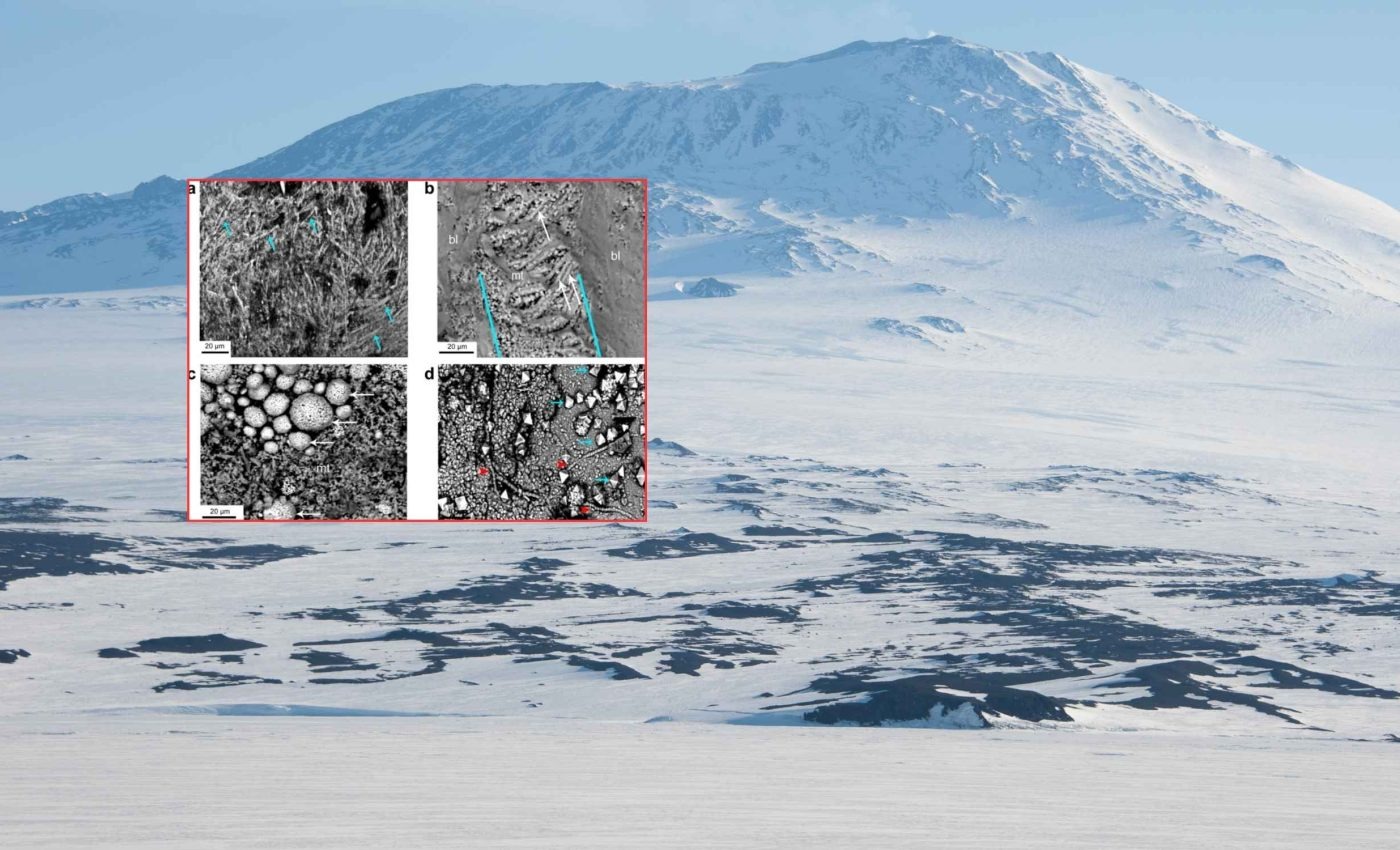
Fossilized Egg 68 Million Years Old With 28 Cm By 20 Cm Found On Seymour Island In Antarctica Reveals That Giant Marine Reptiles Deposited Soft-Shelled Eggs In The Sea, Changing Hypotheses About Reproduction In The Upper Cretaceous And Expanding Evolutionary Understanding
A giant fossilized egg 68 million years old, measuring 28 cm by 20 cm, was excavated on Seymour Island, Antarctica, revealing that a large marine reptile deposited soft-shelled eggs in the sea, changing hypotheses about reproduction in the Upper Cretaceous.
The specimen, nicknamed “The Thing,” was found in Antarctic sediments and became the largest soft-shelled egg ever identified, as well as being the second largest known egg among all animals.
The measured dimensions, about 28 centimeters long and 20 centimeters wide, place the fossil above any other described soft egg, surpassing previous records in absolute size.
-
While the world looks at oil, the war with Iran is already disrupting helium supply from Qatar, affecting car and iPhone chips, threatening AI expansion, and putting pressure on aluminum packaging at the highest value in four years.

-
Global warming will expose a treasure hidden under the ice of Antarctica and may spark an international dispute over gold and valuable minerals.

-
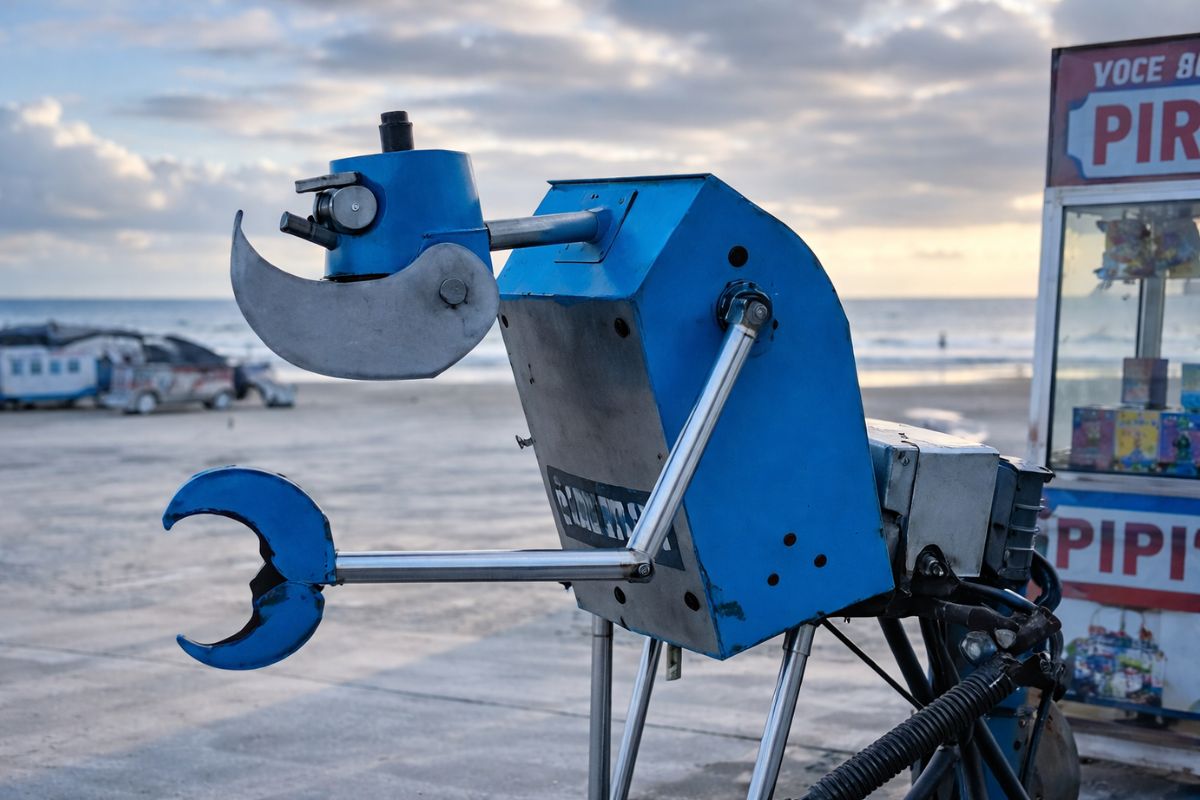
A street vendor from Praia Grande built a robot made of scrap from scooters and washing machines that pulls his popcorn cart on the beach, emits sounds, and interacts with customers, becoming an attraction on the coast of São Paulo.
-
The specifications of the Xiaomi 18 Pro Max have been leaked, and the highlight is a dual 200 MP camera with a new 22-nanometer technology that promises to consume less energy and capture details in shadows and bright areas using LOFIC HDR.


The discovery occurred on Seymour Island, a site known for preserving marine deposits from the Upper Cretaceous, where layers of mud and sand recorded delicate organisms with a high level of detail.
Unusual Structure And Identification Of The Fossil
Initially, the object did not resemble an egg. It was a leathery, folded, and flattened mass, which led researchers to compare it to a deflated bag buried in the Antarctic sediments.
Microscopic analyses revealed an extremely thin wall, with only fractions of a millimeter, with no visible pores and formed by overlapping layers, reminiscent of modern lizard and snake eggs.
The absence of a thick, calcareous shell ruled out the possibility of a typical dinosaur egg, reinforcing the interpretation of a collapsed soft-shelled egg after hatching.
The work was led by Lucas Legendre, a paleontologist at the University of Texas at Austin, specializing in fossilized eggs and the reproductive evolution of reptiles over geological time.
After careful reconstruction of the original shape, the team concluded that the shell had collapsed after hatching, explaining why the fossil did not preserve a rounded contour.
The specimen was formally named Antarcticoolithus bradyi, a fossil designation that formalizes its uniqueness and allows systematic comparisons with other known fossil eggs.
Implications For Marine Reptile Reproduction
Before this discovery, the dominant view indicated that large marine reptiles, such as mosasaurs, gave birth to live young, a strategy known as viviparity.
This hypothesis was based on previous finds of small mosasaur skulls in oceanic rocks, suggesting birth in open water, far from beaches or coastal areas.
The Antarctic egg indicates a different strategy, with the deposition of thin and flexible-shelled eggs directly in the water, allowing for almost immediate hatching of the young.
This characteristic suggests that the embryo remained in the maternal body until an advanced stage, being released in an egg that quickly ruptured in the marine environment.
Although the progenitor animal was comparable in size to a large dinosaur, the egg did not exhibit any typical characteristics associated with known dinosaur eggs.
The unusual combination of size, shape, and texture differentiates Antarcticoolithus bradyi from all other types of fossilized eggs ever described in the paleontological record.
Possible Egg Producer And Coastal Environment
Near the site of the find, researchers identified bones of Kaikaifilu hervei, a large mosasaur known from the same rock formation on Seymour Island.
Detailed descriptions indicate that this reptile reached about 10 meters in length, being the top predator in the Antarctic seas during the studied period.
Estimates based on comparisons with 259 species of modern reptiles suggest that the progenitor of the egg would have been over 7 meters long, a value consistent with Kaikaifilu.
This size match, combined with the spatial proximity of the fossils, makes Kaikaifilu a strong candidate, although the direct link cannot yet be proven.
The region also preserves bones of young mosasaurs and plesiosaurs, suggesting that the area functioned as a protected coastal nursery.
In this context, fast-hatching eggs would release already mobile young directly into shallow waters, reducing initial vulnerability to predators.
Soft-Shelled Eggs In The Fossil Record
For decades, almost all known fossilized eggs of dinosaurs and other reptiles exhibited thick, mineralized shells, reinforcing the idea that this would be the ancestral pattern.
This interpretation began to change with independent analyses that examined eggs of Protoceratops and Mussaurus, revealing leathery and flexible structures, not rigid.
The researchers of this work concluded that soft shells likely existed in early dinosaurs and that hard shells evolved multiple times, independently.
Museum reports indicated that these primitive eggs resembled those of modern turtles, with burying coverings in moist soil or sand.
The Antarctic egg broadens this scenario, extending the presence of soft-shelled eggs to giant marine reptiles that lived near the poles.
Exceptional Preservation And Environmental Context
Soft eggs rarely fossilize, as they are quickly destroyed by bacteria and scavengers, making the preservation of Antarcticoolithus bradyi an exceptional event.
The rapid coverage by sediments in a shallow sea likely isolated the egg from decomposition, preserving its delicate structure over millions of years.
In the Upper Cretaceous, Antarctica had a warmer climate, with productive seas and ice-free coasts, despite its location within the polar circle.
These conditions favored the continuous accumulation of sediments, creating ideal environments for the preservation of fragile remains on the seafloor.
Preserved embryos of Protoceratops in Mongolia show that whole nests can be fossilized, offering parallels for interpreting the Antarctic find.
The egg and the nearby juvenile remains provide a rare glimpse into the early life stages of large marine predators from the southern hemisphere.
Each new discovery helps connect egg type, reproductive behavior, and environment, revealing adaptations to cold and seasonal conditions near the ancient South Pole.
The study was published in the journal Nature, which also credited the image of the fossil presented in the official announcement of the finding.









-

-

-

-

-

-

153 pessoas reagiram a isso.