





 Portuguese
  English
  Spanish
  4 min of reading
  29 comments


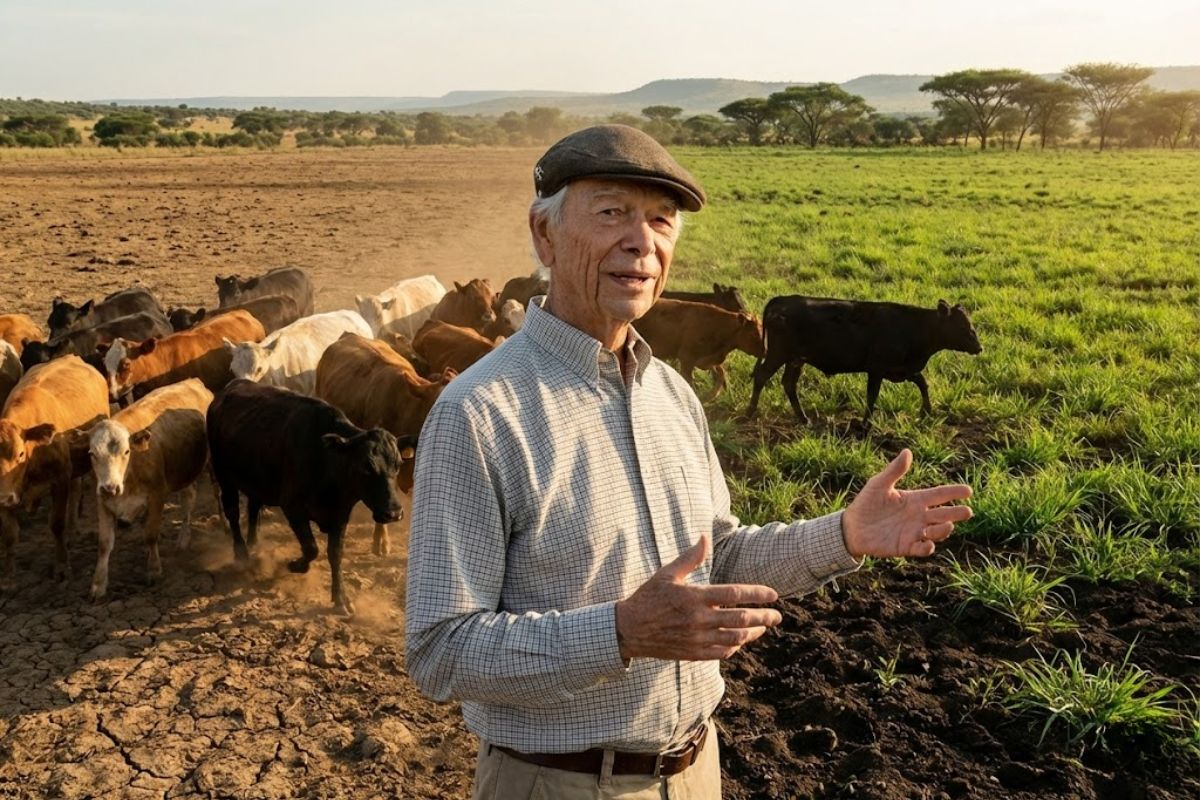


The Journey of African Rancher Allan Savory Gained International Reach by Proposing That Planned Grazing of Herds Can Restore Degraded Soils, Reverse Desertification, and Strengthen Pastures, Inspiring Farmers, Environmental Organizations, and Companies to Adopt Holistic Management as the Foundation of Regenerative Agriculture.
The African rancher Allan Savory became one of the most influential figures in the ecosystem restoration debate by advocating that well-managed herds can be part of the solution for degraded soils. His proposal broke with the view that cattle are merely a factor of degradation and placed planned grazing at the center of environmental recovery.
Starting from research initiated back in Africa, Savory disseminated holistic management across different continents, connecting livestock farming, ecology, and social development. The work of the African rancher began to influence farms, NGOs, universities, government agencies, and brands interested in regenerative supply chains.
Origin of the Idea and the First Studies on Degradation

The African rancher was born and raised in Zimbabwe, on a 16,000-hectare farm.
-
In Mexico, a 3,000-year-old Maya site with the dimensions of an entire city may have been built as a colossal map of the cosmos, created to represent the order of the universe and reveal how this people organized space, time, and rituals.

-
Japan wants to build a solar ring of 10,900 kilometers on the Moon to continuously send energy to Earth.

-
Weighing almost 1 ton, with temperatures of up to 3,000°C, the ability to launch 10,000 fragments within a radius of 1 km, capable of penetrating concrete and melting steel, Turkey’s terrifying bomb emerges as one of the most destructive non-nuclear weapons ever presented.

-
After a submarine disappeared beneath the “Doomsday Glacier,” scientists announce a new monstrous machine capable of operating at 3,000 meters depth to return to the heart of the ice and investigate a threat that could raise sea levels worldwide.


With a degree in biology and botany, he began to investigate soil degradation and desertification, observing the relationship between impoverished landscapes, loss of wildlife, and increasing poverty.
In the 1960s, Savory deepened studies on the correlation between the reduction of fauna and the advancement of rural poverty.
He began to argue that the degradation of pastures directly affects humanity, contributing to problems related to climate change, food insecurity, and social instability.
The Birth of Holistic Management

The major turning point in the African rancher’s journey came with the formulation of holistic management.
The proposal involves a decision-making system that considers ecological, social, and economic factors in an integrated way.
In practical terms, Savory developed the concept of planned grazing, in which cattle are moved in a way that mimics the behavior of large wild herbivores.
The herd stays for short periods in an area and then is moved, allowing enough time for the recovery of vegetation and soil.
According to the approach defended by the African rancher, this controlled cycle stimulates the regeneration of fragile pastures, improves vegetation cover, and contributes to the restoration of soil health.
International Expansion of the Methodology

After moving to the Cayman Islands, Savory saw his methodology gain more visibility. Later, in 1984, he and his wife, Jody Butterfield, moved to the United States, where they founded the Center for Holistic Management.
Even living outside Africa, the African rancher maintained ties to his homeland.
He helped establish the African Center for Holistic Management in Zimbabwe, donating 2,520 hectares to serve as a learning center focused on holistic management for local communities.
Global Influence on Farms, NGOs, and Governments

The African rancher’s proposal has been adopted by thousands of farmers, ranchers, and herders in various regions around the world.
Holistic management has also been applied in conservation projects, universities, NGOs, and government agencies across five continents.
The recognition of the methodology as a tool for reversing desertification and restoring ecosystems helped to consolidate regenerative agriculture as a growing field of action.
The approach has come to be seen as a way to unite food production and environmental recovery.
International Visibility and Public Debates
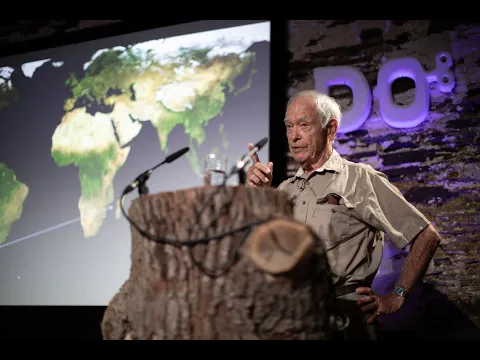
In 2013, the African rancher took his message to an even larger audience by presenting his methodology in a widely acclaimed TED talk.
The exposure broadened the debate on the relationship between desertification, social degradation, and land management.
After this presentation, a documentary was produced showing how planned grazing contributed to restoring pastures in Zimbabwe.
The film reinforced the image of holistic management as a practical alternative for tackling environmental degradation.
From Field to Market and Ecological Verification

The influence of the African rancher has also reached supply chains.
The Savory Institute, an organization linked to his journey, developed the Ecological Outcome Verification, known as EOV.
This system evaluates farms and ranches based on land health criteria, including soil quality, biodiversity, and ecosystem functioning.
From this verification, producers can be recognized as regenerative suppliers of meat, dairy, wool, and leather.
The EOV seal offers transparency for consumers interested in products from regenerating areas, connecting field practices with market choices.
The Construction of a Global Network
The legacy of the African rancher is also expressed in the creation of a global network of people and organizations committed to regenerative agriculture.
The Savory Global Network brings together regional centers that promote holistic management in different countries.
These centers serve as spaces for training, experience sharing, and dissemination of regenerative practices.
The proposal is to create an international community that works together to recover degraded landscapes and strengthen food production sustainably.
Impact on the Debate About Regenerative Agriculture
By advocating that well-managed herds can help heal the soil, the African rancher changed the tone of a discussion that previously framed cattle as merely environmental villains.
His approach helped expand the debate on how productive systems can be redesigned to restore ecosystems.
Holistic management has come to be associated with improving soil health, increasing biodiversity, and creating more favorable conditions for food production aligned with environmental regeneration.
The story of the African rancher shows how an idea that emerged on a farm in Zimbabwe gained global scale and influenced everyone from small producers to brands and institutions.
Do you believe that holistic management can truly transform the way we produce food and care for the soil?








Claro los ranchos ganaderos bien administrados dónde hay agostaderos y pastos y tierras de cultivos son eficientes y autostonibles.
Saludos.
Este señor nunca fue granjero. Es un impostor y oportunista. Pasó más de diez años en África matando elefantes como metodo de control de poblacional. Trabajo al servicio de la muerte nunca de la vida. Es un oportunista pues inteligencia no se compra ni se aprende, demagogia y oportunismo sin escrúpulos si.
Angel – You are completely wrong. Why dont you take the trouble to actually understand what Holistic Management is about. The elephant story you speak of took place more than 65 years ago, and was considered international best practice at the time. It was this very event that made Allan Savory realise that conventional practices and education was failing, and it set him on a trajectory to understand what the root cause of desertification was. Something he dedicated his life to, and it doesnt matter whether you agree or not, but to attack the man personally, without knowing the facts, is more reflection on you than on him.
As vacas estão **** e andando