





 Portuguese
  English
  Spanish
  4 min of reading
  0 comments


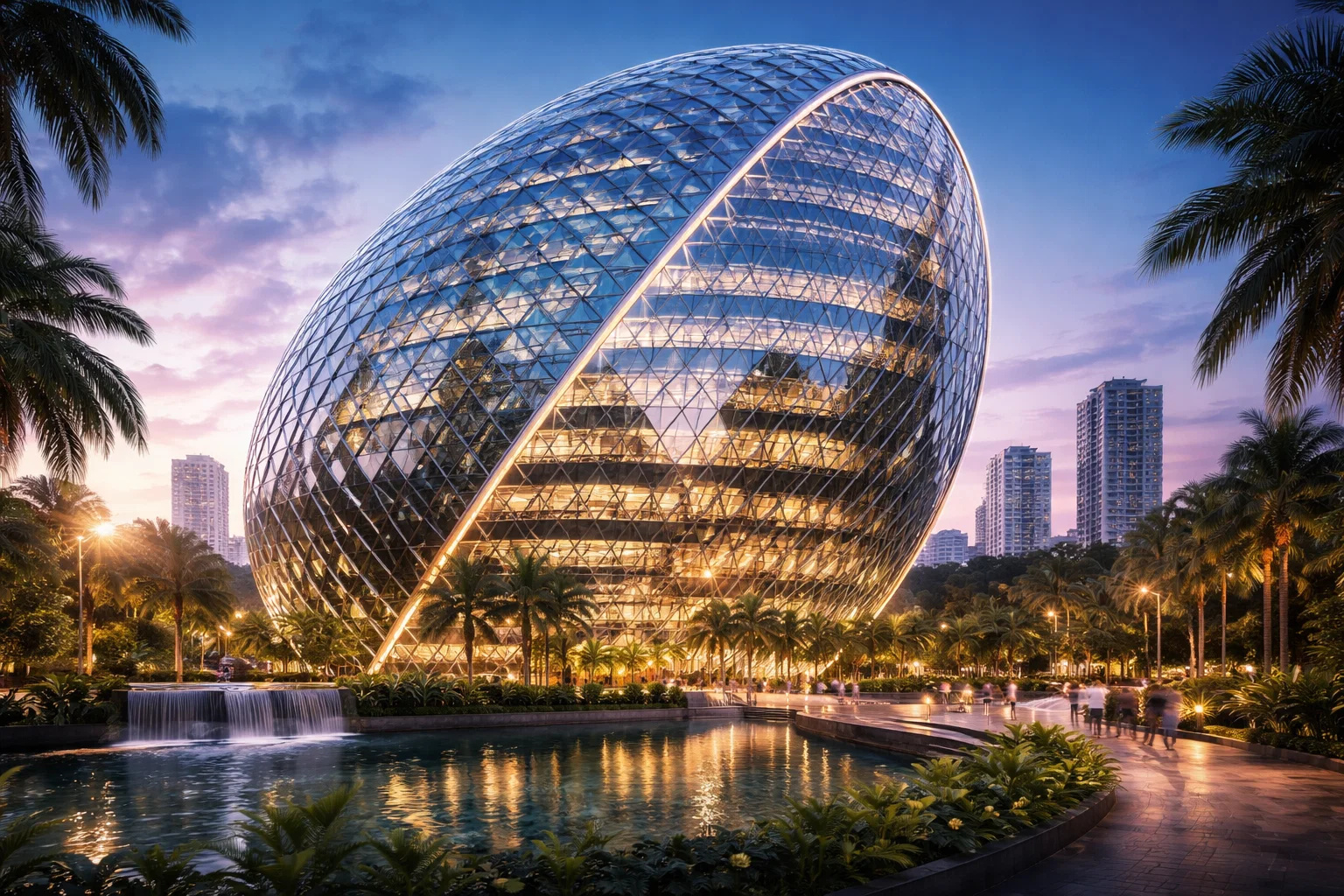
An Egg-Shaped Building In Mumbai Challenges The Traditional Model Of Corporate Buildings By Integrating Futuristic Architecture, Smart Technology, And Self-Generating Renewable Energy Within A Structure Designed To Function As A True Urban Technological System
Have you ever thought about coming across an egg-shaped building? It’s not a metaphor. Walking through the financial center of one of the largest cities on the planet, you might feel like you’re in a science fiction movie. In the business district of Mumbai, India, there is a corporate building that attracts attention not only for its unusual design but for what exists inside it.
The Cybertecture Egg Building was designed to show how engineering and technology can transform the way buildings operate, consuming less energy and offering smarter structures.
The Challenge Of Modern Engineering To Create Smart Buildings Capable Of Generating Energy And Reducing Consumption In Large Cities
Large cities are facing a growing problem. Corporate buildings consume enormous amounts of energy every day.
-
These living root bridges and ladders are over 700 years old and help indigenous people survive in one of the rainiest regions in the world.

-
From sertanejo star to international investor: Ana Castela invests millions in a mansion in the USA, creates a themed accommodation in Orlando, and shows that the “boiadeira” also wants to grow away from the stage.

-
The 10 most stunning motorhomes in the world: a $3 million trailer with a rooftop nightclub and garage for a Ferrari, “palaces on wheels” with Italian marble, private cinema, and five-star hotel luxury for billionaires.
-
Trump wanted to spend $400 million on the White House, but the courts prohibited the million-dollar construction.


Air conditioning, lighting, elevators, electronic equipment, and security systems create a constant demand for electricity.
It was precisely in this scenario that architect James Law proposed the concept known as Cybertecture.
The idea is simple on paper but complex in practice. To create buildings that function as intelligent systems capable of integrating digital technology, energy efficiency, and advanced architecture.
The result of this vision is the Cybertecture Egg, an egg-shaped building with 13 floors and approximately 33,000 square meters of corporate space.
The oval shape was not chosen just to impress visually. According to experts, rounded structures can help in the distribution of structural loads and also in the thermal control of the building.
The Engineering Secret Hidden In The External Structure That Eliminates Internal Columns And Changes The Utilization Of Offices
One of the most talked-about features of the egg-shaped building does not immediately appear to those passing by on the street.
The external structure of the Cybertecture Egg uses a system called diagrid, a structural mesh that acts as a metal exoskeleton.
In practice, the main support of the building occurs on the outside.
This allows internal spaces to have fewer structural columns, which is highly valued in the corporate market.
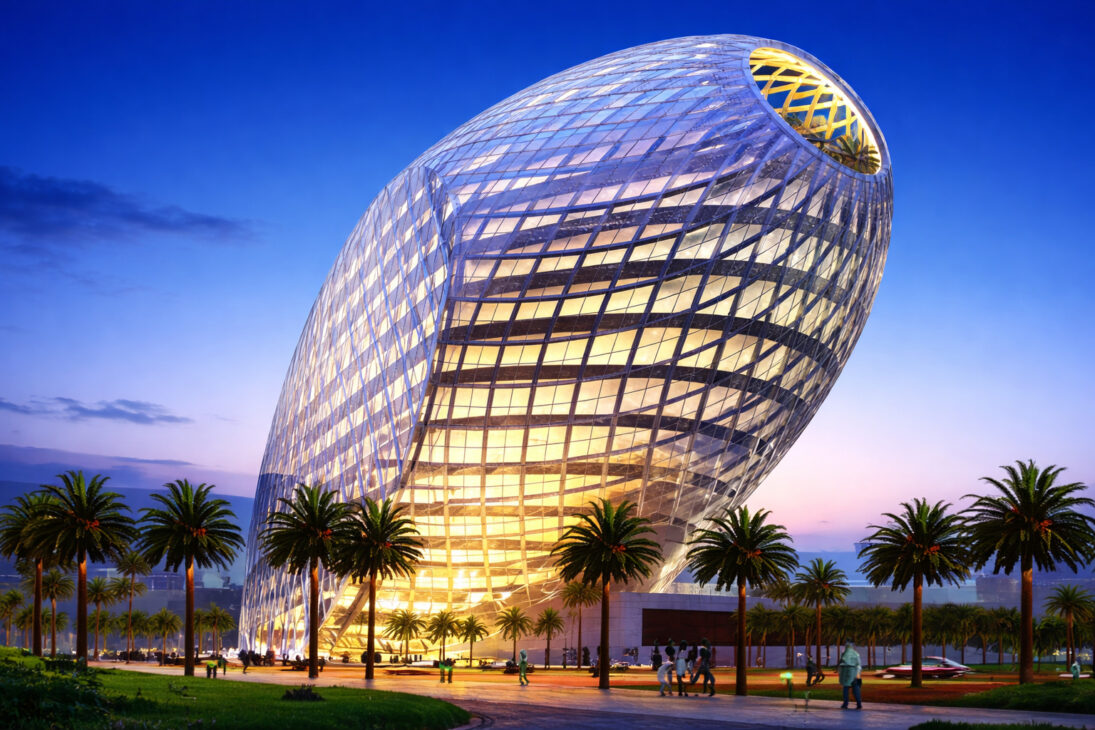
Open spaces offer more flexibility for companies that wish to adapt offices, meeting rooms, and collaborative work areas.
According to engineering specialists, structures of this type can also reduce the amount of material needed for construction when compared to traditional models.
Solar Energy, Wind Turbines, And Water Reuse Make The Building An Experience In Energy Engineering
Another aspect that makes the Cybertecture Egg an intriguing project is how it integrates different energy solutions.
The building was designed to use renewable sources and reduce conventional electricity consumption.
Among the technologies present are photovoltaic solar panels and wind turbines integrated into the structure.
Additionally, the project includes strategies for water reuse and elevated green areas that help in controlling internal temperature.
These solutions have a clear objective. To decrease the environmental impact of the building and reduce energy costs over time.
According to sustainable architecture experts, corporate buildings are increasingly being designed as self-sufficient energy systems.
Technology Inside The Building Also Monitors Users’ Health And Comfort In An Uncommon Proposal In Corporate Architecture
The Cybertecture concept involves not only energy and structure.
The project also explores the integration between digital technology and the daily lives of the people using the building.
One of the examples cited in analyses of the project is a system known as Cybertecture Health, which allows monitoring basic health indicators at specific points within the building.
The proposal is to use technology to track information such as weight and blood pressure.
The idea is that data can then be sent to health professionals when necessary.
This type of solution shows how modern architecture is beginning to incorporate digital resources that go beyond the traditional function of a corporate building.
Why Experts Watch Projects Like The Cybertecture Egg When Thinking About The Future Of Cities And Urban Engineering
Buildings like the Cybertecture Egg attract attention because they present a possible path for future cities.
Growing urbanization, pressure for energy efficiency, and technological advancements are changing the way architects and engineers think about urban spaces.
Smart buildings capable of integrating technology, energy generation, and environmental comfort are beginning to gain prominence in projects around the world.
The building in Mumbai acts as a kind of architectural laboratory on a real scale.
It demonstrates how architecture, structural engineering, and digital technology can work together within the same construction.
This type of proposal helps to understand why out-of-the-box projects continue to spark curiosity among experts and the general public.
At the end of the day, an egg-shaped building may seem just an architectural curiosity at first glance. But behind the unusual shape lies a question that more and more engineers and urban planners are asking: what will the buildings of the coming decades look like?
What do you think about this type of futuristic architecture? Would you work in a building like this or do you think cities will take time to adopt such projects? Share your opinion in the comments.









-

Uma pessoa reagiu a isso.