





 Portuguese
  English
  Spanish
  6 min of reading
  0 comments


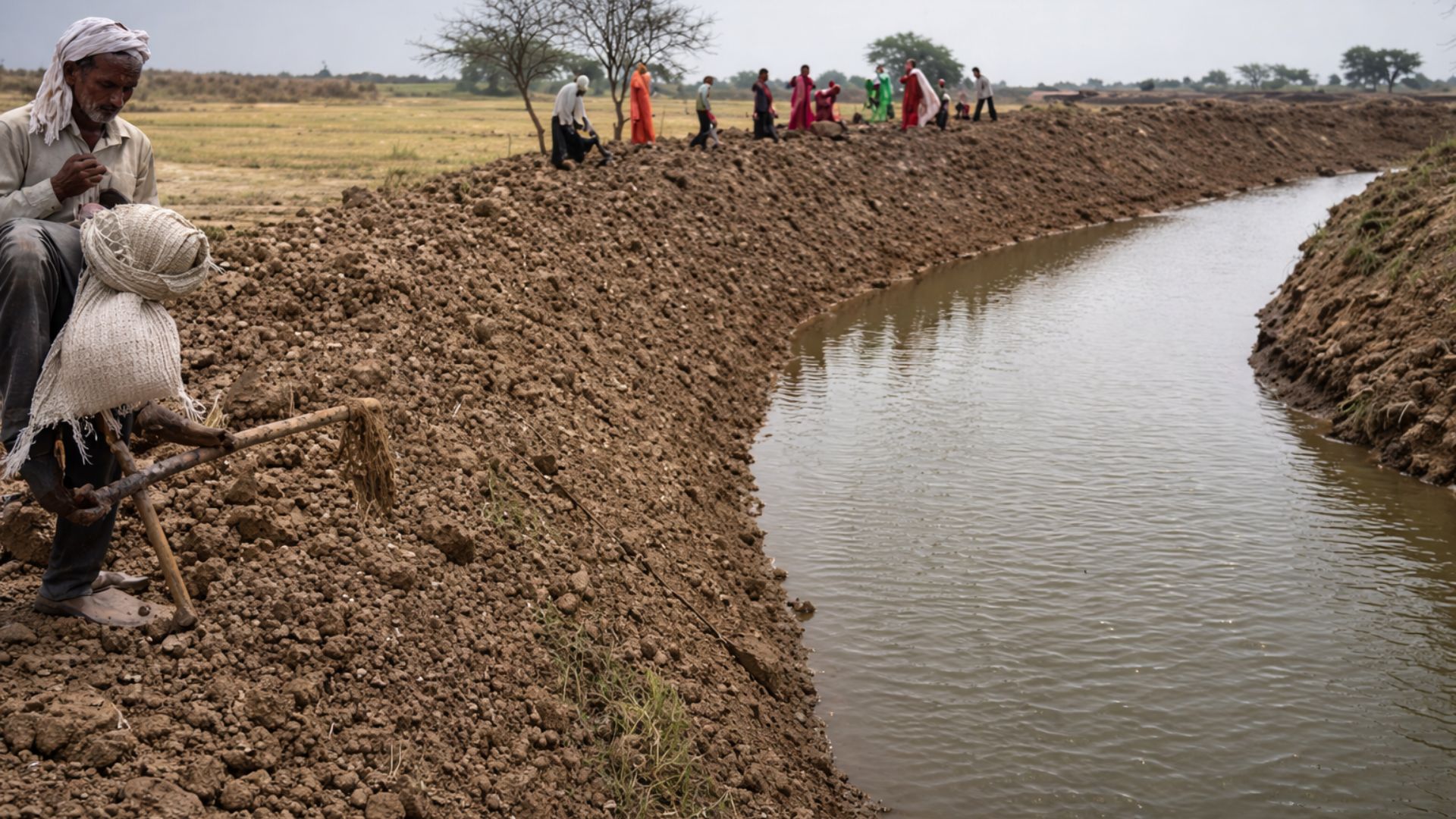
Unexpected Recovery of a Buried River Covered by Mud, Invasive Plants, and Waste Mobilized Thousands of Workers in Northern India, Reopened Part of the Lost Bed, and Transformed an Almost Forgotten Watercourse into an Example of Water Revitalization Observed by Local Authorities and Rural Communities Recently.
A river that had lost its visible course at several points in northern India began to flow again after a restoration operation that mobilized thousands of rural workers, manually reopened part of the bed, and restored the flow of a water system now regarded as a reference by authorities in Uttar Pradesh.
In the Kanpur Nagar district, the recovery of the Noon River has drawn attention for bringing together dredging, cleaning, technical mapping, and community participation on an uncommon scale.
The initiative gained prominence because the Noon, with 48.5 kilometers in length, had been covered in sections by sediments, water hyacinths, waste, and encroachments along its course.
-
Attracting around 250,000 people a year, a lighthouse 200 meters from the sea, on a 60-meter high cliff, on the North Sea coast in Denmark, becomes one of the most impressive examples of how nature can threaten historical buildings.

-
The narrowest house in the world is only 63 centimeters wide, but inside it can accommodate a bathroom, kitchen, bedroom, office, and even two staircases.

-
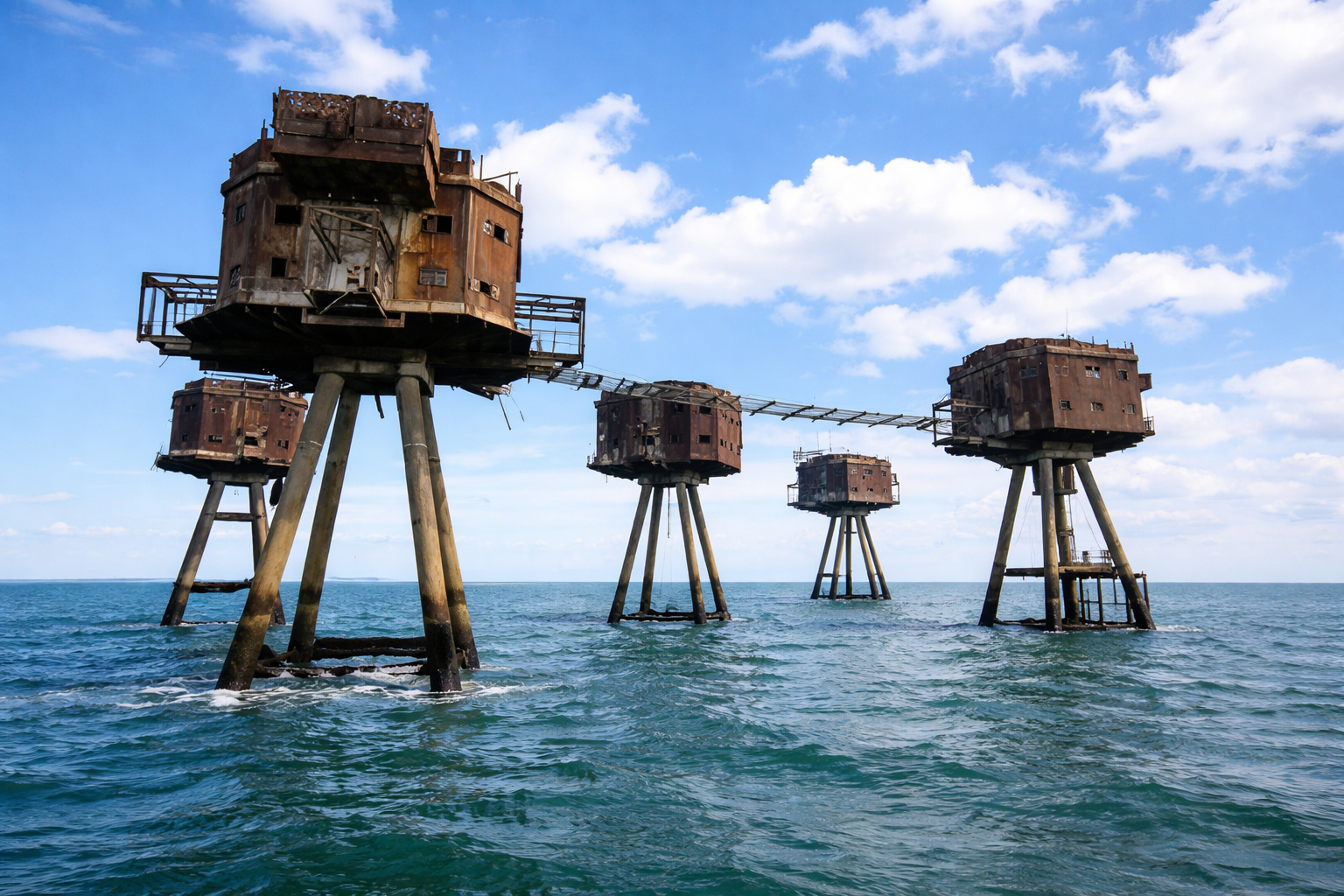
In the middle of the sea, these enormous concrete and steel structures, built by the British Navy to protect strategic maritime routes, look like they came straight out of a Star Wars movie.
-
For years, no one could cross a neighborhood in Tokyo because of the tracks, but an impressive solution changed mobility and completely transformed the local routine.


Instead of an isolated intervention or one solely focused on the superficial removal of debris, the work progressed by identifying the original path of the river and reopening the section deemed most compromised, where the water had ceased to flow regularly.
Mapping the Bed Revealed the River’s Original Path
In Kanpur Nagar, the district administration and teams linked to the rural employment program MGNREGA focused the main recovery efforts on about 23.5 to 24 kilometers of the bed.
In this segment, according to reports published by the Indian press, the river was cleaned, excavated, and unclogged mainly with manual labor, without relying on heavy machinery for most of the operation.
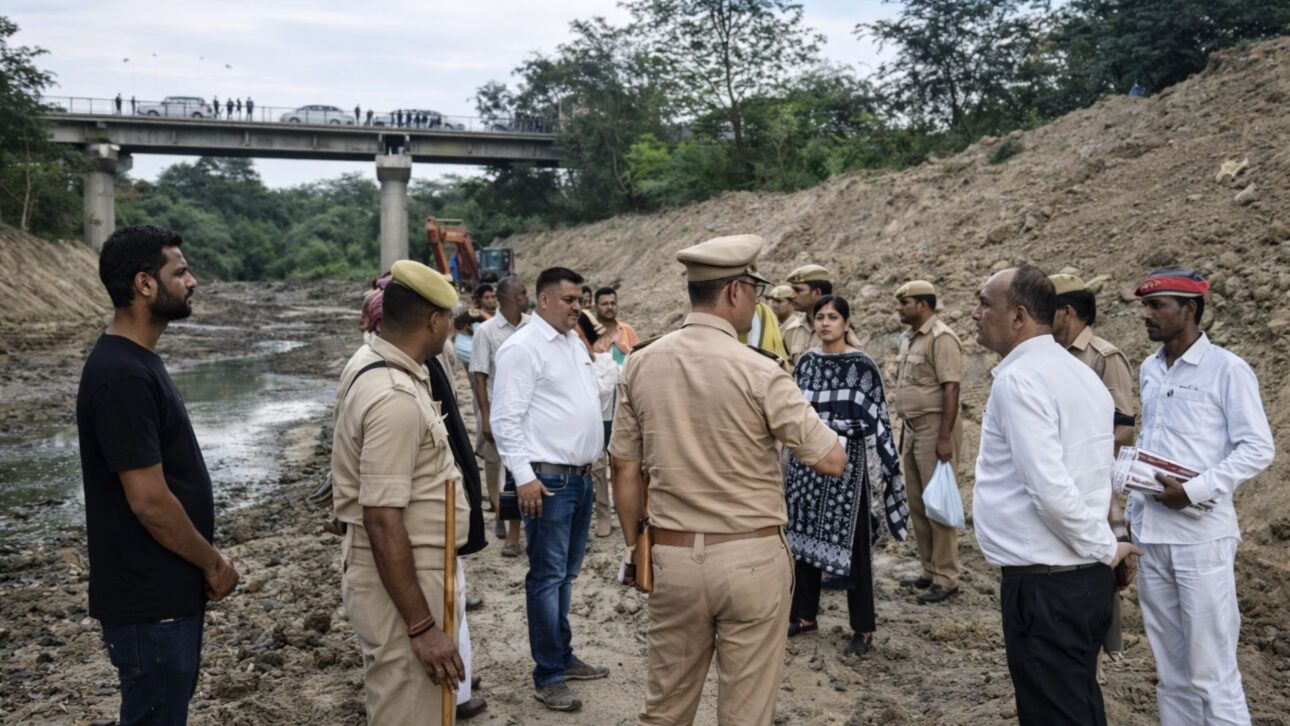
The choice was presented by authorities as a way to reduce environmental impacts while simultaneously generating immediate income for the rural areas around it.
The progress of the project depended on a previous, less visible, but crucial step for the final result.
Before reopening the bed, technicians and authorities gathered old records, satellite images, drone surveys, and information provided by older residents to locate the course that the Noon had followed before being altered.
This data cross-referencing allowed distinguishing between the points where the course was merely narrowed and those where it had practically disappeared under vegetation, accumulated soil, or illegal dumping.
A report by the Indian Express showed that, in Rampur Narua, the area identified as the origin of the river, there had been no visible sign of the Noon by early February 2025.
At that location, the proliferation of water hyacinths had transformed the old bed into an indistinct strip of the rural landscape.
After the cleaning and removal of blockages, the watercourse began to reappear with visible width, which gave concrete dimension to the recovery process and helped consolidate the case as an example of river revitalization within the state.
The operation also exposed how the disappearance of a river can occur gradually, without a single event that immediately draws attention.
In the case of the Noon, the blockage of flow was associated with the accumulation of sediments, the presence of invasive aquatic plants, waste dumping, and, in some spots, blockage caused by construction materials.
The loss of the river’s function, therefore, did not result from a single factor, but from successive pressures on the territory.
Rural Mobilization Gathered Thousands of Workers
The field effort was one of the most impactful aspects.
According to information released by local authorities and reported by outlets such as Times of India, PTI, and Indian Express, more than 6,000 workers participated in the manual recovery of the Noon.
The workforce was mobilized through 58 gram panchayats, rural administrative structures, and generated more than 23,000 man-days under the MGNREGA program.
This design gave the project a dual dimension.
On one hand, it allowed reopening the bed with a large volume of work distributed over several sections.
On the other, it transformed the restoration of the river into a temporary rural employment front, with remuneration linked to an existing public program.
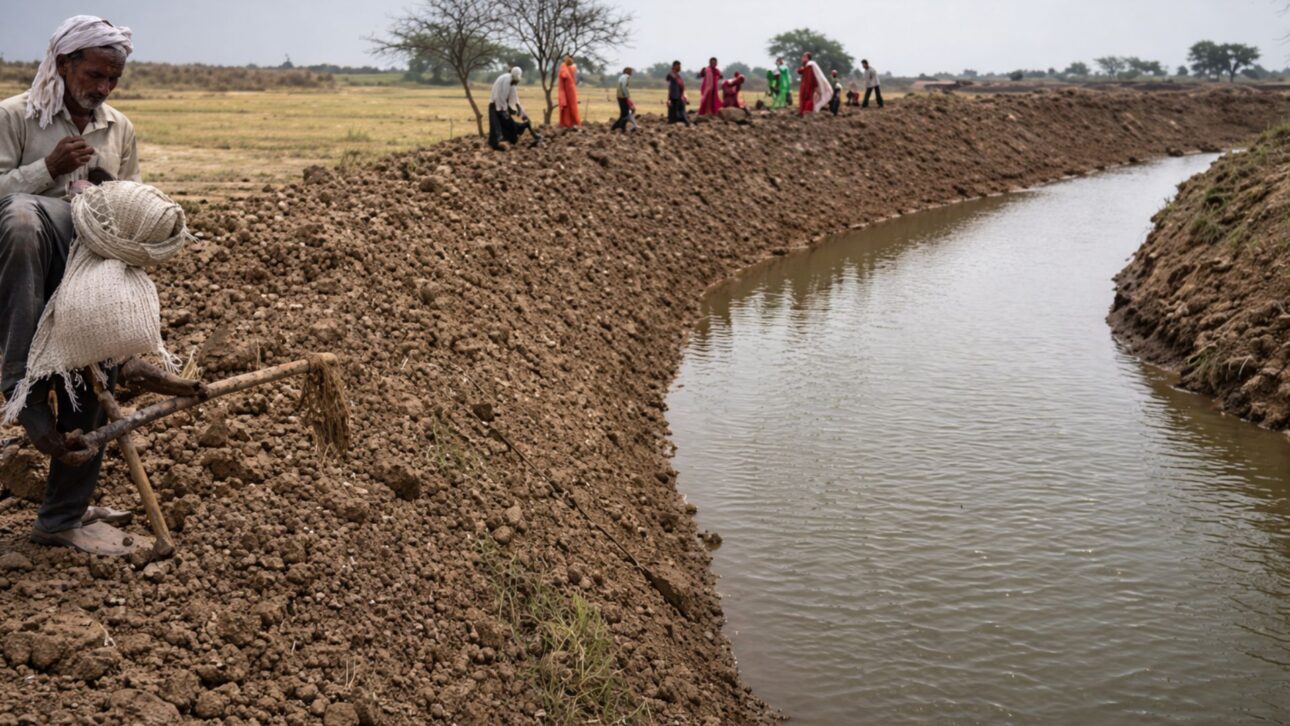
In an experience of this kind, environmental recovery ceases to be merely an infrastructure expenditure and also functions as a local occupation policy.
Although excavation and cleaning were predominantly manual, the intervention did not forgo additional support in more critical areas.
According to the Indian Express, sections where there were large piles of debris and heavier waste required support from private companies, which provided equipment at specific points.
This shows that the narrative of manual labor does not eliminate the presence of technical and logistical support but indicates that the main axis of the operation was conducted with human labor distributed along the river’s course.
Recovery of the River Brought Environmental and Agricultural Impacts
The recovery of the Noon has been presented by local authorities as a case of direct impact on drainage, irrigation, and water availability in neighboring communities.
Farmers interviewed by the Indian press reported expectations of reduced overflow onto cultivated areas during the rainy season and less dependence on pumping groundwater for part of the agricultural season.
The return of flow, in this context, alters not only the appearance of the territory but the daily functioning of the rural area.
There was also a front for vegetation reconstitution along the banks.
Authorities in Kanpur Nagar reported the planting of 40,000 saplings of species such as neem, peepal, pakar, and moringa along the project.
This measure was presented as a way to reinforce the protection of the riverbanks, improve soil stability, and increase green coverage around the restored course.
In revitalization programs, this step is often important for reducing erosion and providing more lasting support to the reopening work of the bed.
Reports published in the Times of India also indicated improvements in nearby wells, the reappearance of local wildlife along the banks, and favorable results in water quality tests, with mentions of higher oxygen levels and lower presence of contaminants.
As these data appeared linked to statements from authorities and sources associated with the project, the case began to be politically used as a demonstration that the recovery of smaller rivers can produce quick effects when there is channel cleaning, waste control, and maintenance of the course.


State Program Began to Use the Case as an Example
The Noon was incorporated into the narrative of the One District-One River program, a policy of the Uttar Pradesh government that aims to recover at least one river in each district.
In this environment, Kanpur Nagar began to be cited as one of the most visible examples of the state effort to reactivate degraded or forgotten watercourses.
The repercussions increased in July 2025, when reports highlighted the experience as a replicable model and a symbol of a strategy that combines district administration, local participation, and the use of remote imagery.
Subsequent coverage reinforced that the action was not limited to an official announcement.
In June 2025, the Times of India reported tributes to female workers and local leaders involved in the project and informed that the works had begun on February 22, 2025.
During the same period, inspection walks and monitoring of the recovered section served to give visibility to the result and keep the project in public circulation, which is often decisive for initiatives that depend on ongoing maintenance.
The story of the Noon began to attract attention precisely by inverting a recurring perception in areas pressured by disorderly urban expansion, siltation, and waste disposal.
Instead of appearing as an irreversibly lost watercourse, the river was reintroduced as a system that could still be reactivated through the correct identification of the course, persistent removal of blockages, and reorganization of land use around it.





-

-

-

-

-

26 pessoas reagiram a isso.