





 Portuguese
  English
  Spanish
  5 min of reading
  0 comments


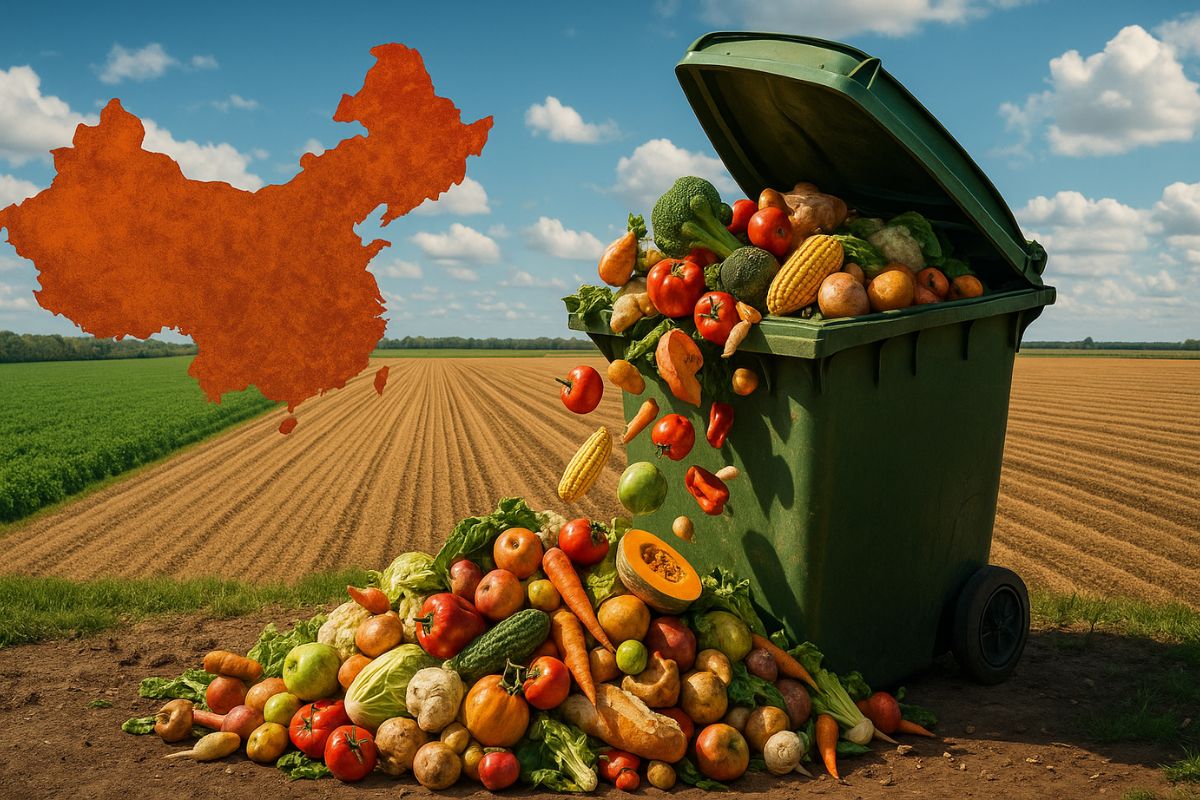
One Third Of The Food Produced In The World Is Not Consumed, While An Agricultural Area Larger Than China Is Used To Grow Food That No One Eats, Increasing Emissions, Pressuring Biodiversity, And Wasting Up To $1 Trillion A Year.
The food produced globally coexists with a paradox: we waste more than a billion meals a day while 783 million people face hunger. There Is No Lack Of Food On The Planet; there is a lack of efficiency, distribution, and rules that align farm-to-table incentives.
Behind this picture, loss and waste occur throughout the supply chain. Households account for 60% of the discard, food services for 28%, and retail for 12%. It is a universal problem and not exclusive to rich countries, with surprisingly small per capita differences across income brackets. The environmental and economic account of this linear system, which produces and throws away, is growing and diffuse.
The Scale Of The Problem: How Much And Where Is Lost
The world generated 1.05 billion tons of food waste in a single year, a volume equivalent to about 19% of the food available to consumers. Added to post-harvest loss up to pre-retail, estimated at 13.2%, the proportion approaches one third of all that is offered for human consumption that is never consumed. This mountain of produced food that becomes waste reflects a massive logistical and economic failure.
-
Italian researchers have detected what appears to be a second Sphinx buried under the sands of Egypt, and satellite scans reveal a gigantic underground megastructure hidden beneath the Giza Plateau for over 3,000 years.

-
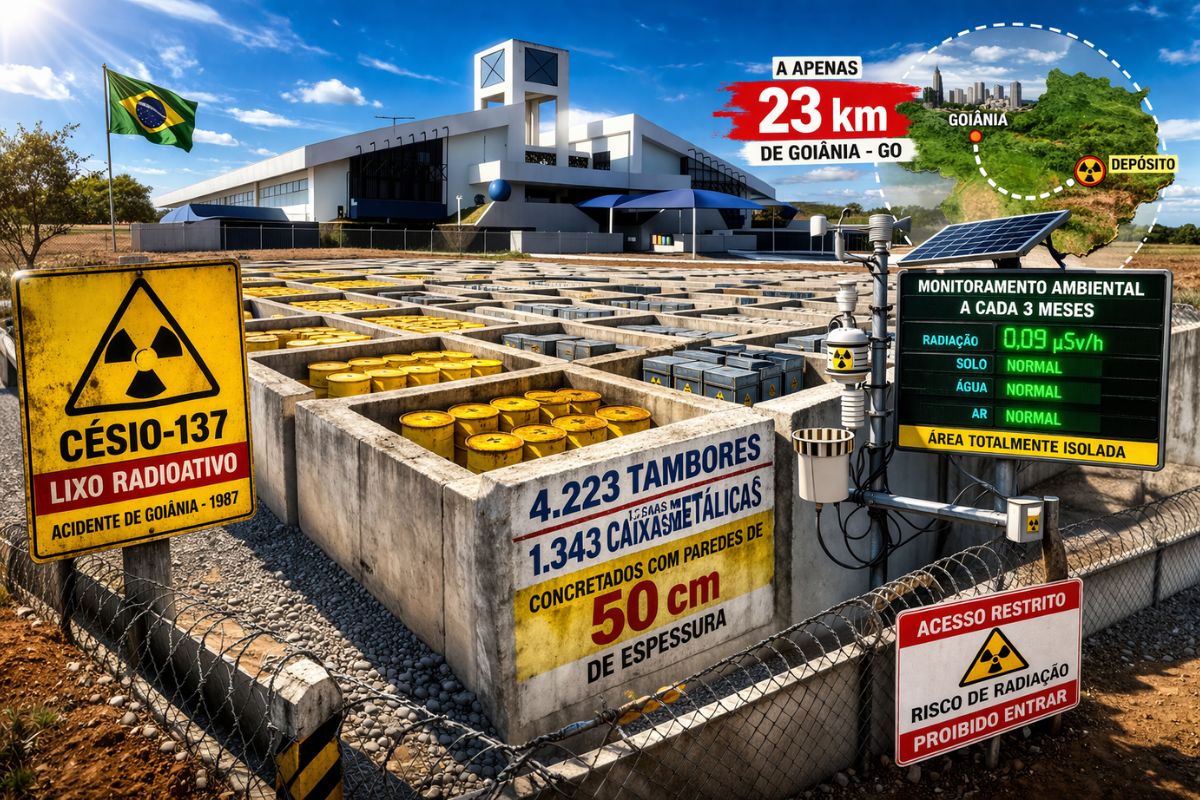
There are 4,223 drums and 1,343 metal boxes concreted with 50-centimeter walls that store the radioactive waste from Cesium-137 in the worst radiological accident in Brazil, just 23 kilometers from Goiânia, with environmental monitoring every three months.
-
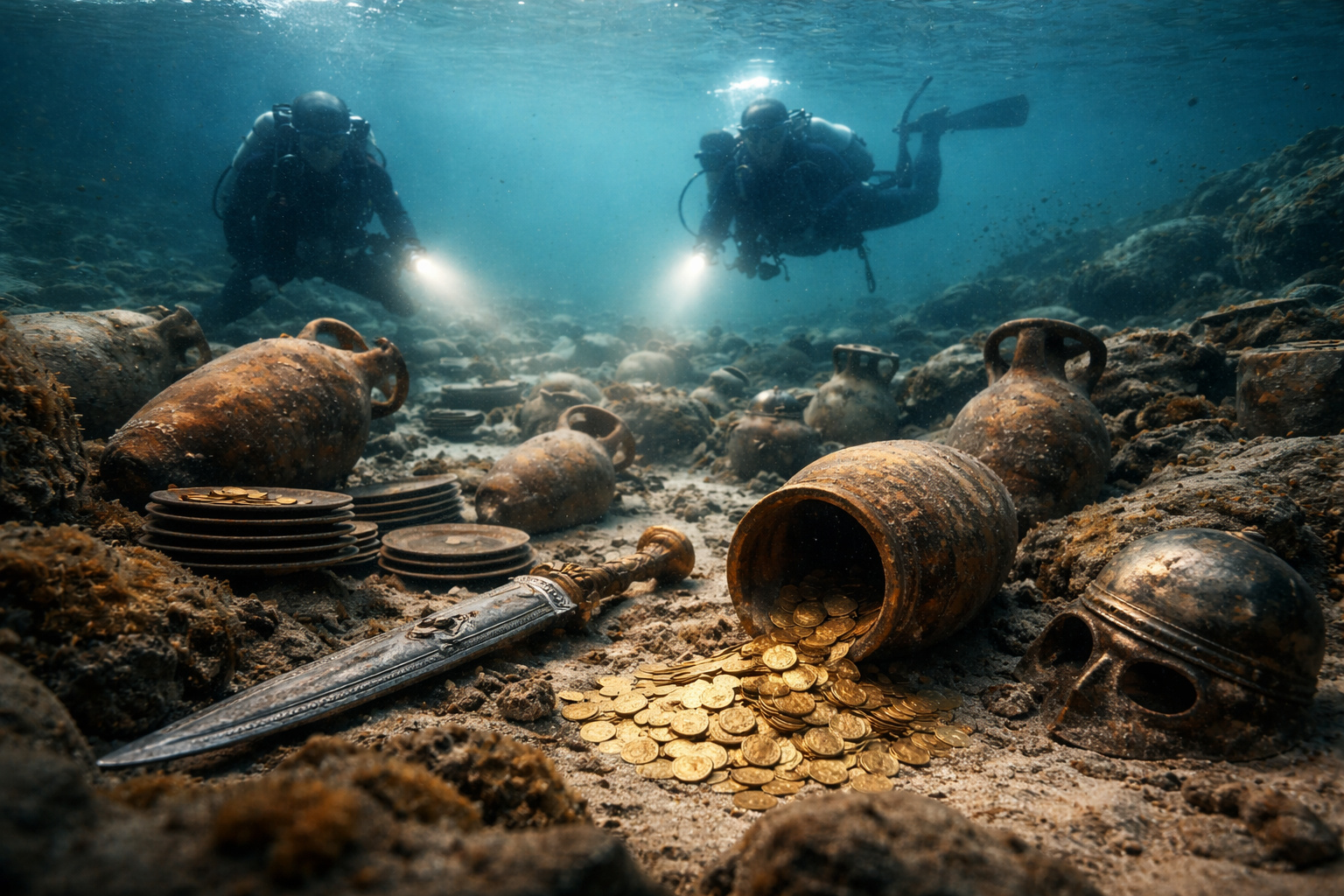
Giant Roman treasure found at the bottom of Lake Neuchâtel in Switzerland reveals an advanced trade system, circulation of goods, and armed escort in the Roman Empire about two thousand years ago.
-
He buried 1,200 old tires in the walls to build his own self-sufficient house in the mountains with glass bottles, rainwater, and an integrated greenhouse.


The waste map is clear: homes are the epicenter, with 79 kg per person per year just in the domestic environment. Next come restaurants, cafeterias, and buffets, pressured by inaccurate demand forecasts and large portions, and retail, where display practices and rigid aesthetic standards lead to perfectly good food being discarded.
Without addressing consumption behavior and the design of offerings, the strategy does not reach the largest share of the problem.
The Environmental Toll: Climate, Land, And Water
The food produced and discarded accounts for 8% to 10% of global greenhouse gas emissions. The impact occurs upstream, when inputs, energy, and deforestation are mobilized to grow what will not be eaten, and downstream, when organic waste in landfills generates methane, a gas much more potent than CO₂ in the short term.
Diversion of organics from landfills through composting and anaerobic digestion is a fast-acting climate lever.
In resource use, waste consumes an agricultural area larger than China and drains almost a quarter of the freshwater used in agriculture. Every tomato discarded carries water, fertilizer, energy, and soil.
The conversion of habitats to produce surpluses that do not reach the plate accelerates biodiversity loss and the eutrophication of rivers and seas due to nutrient runoff. It is a cycle that costs the planet dearly without nourishing anyone.
The Human And Economic Cost: Who Pays The Bill
While one third of the food produced is lost, hundreds of millions lack access to a healthy diet. Hunger Is Less About Producing And More About Accessing. Waste raises prices by creating artificial scarcity and embed inefficiencies throughout the chain, penalizing primarily low-income families.
From a financial perspective, direct loss and waste add up to approximately $1 trillion a year. It is capital immobilized in inputs, logistics, and infrastructure that does not generate nutritional value.
The good news is that reducing waste has a high return for businesses, cities, and consumers, with gains involving input savings, lower waste rates, and revenue streams from reuse and secondary markets.
Anatomy Of The Causes: Why We Throw Away
In production and post-harvest, lack of infrastructure and cold chain, adverse weather, and prices that do not cover harvesting lead food to remain in the field. In processing and transport, inadequate packaging and improper handling cause damage and loss. Every link amplifies the previous one, turning small deviations into tons discarded.
In retail and food service, aesthetic standards eliminate edible products based on appearance and abundance strategies generate oversupply. In homes, weak planning, confusion with expiration dates, and inadequate storage lead to the disposal of small portions that, when added together, become a mountain. Without data and targets, the invisible remains untouched.
Who Needs To Act: Governments, Businesses, And Consumers
Governments can set targets aligned with SDG 12.3, integrate the agenda into climate, standardize mandatory measurement, and create legal security for the donation of surpluses. Measuring Is Governing: when businesses and cities monitor what they throw away, the problem gains ownership, budget, and a solution.
Businesses should loosen aesthetic standards, calibrate portions, optimize demand forecasts with data and AI, and open redistribution channels for social sales of surpluses and donations. Circular models that transform byproducts into ingredients and biomaterials turn cost into revenue.
For households, shopping planning, correctly reading labels, and creative use of leftovers reduce the heaviest volume of waste.
Innovation That Works: Technology, Logistics, And Circularity
Smart and active packaging prolong shelf life and inform real freshness, reducing waste by date. Inventory and forecasting systems decrease excess preparation and stockouts.
Redistribution platforms connect surpluses to consumers and institutions, creating a new market for what was once waste. Urban composting and anaerobic digestion close the loop and cut methane.
Technology does not replace strategy. It accelerates what is already well-designed: targets, measurement, and incentives. Without changing rules and habits, sensors become decorative. With policy and governance, they become levers for productivity, income, and climate.
The evidence is unequivocal: reducing wasted produced food is one of the fastest, cheapest, and most integrated ways to relieve climate, protect nature, lower grocery costs, and expand access. It is not a sacrifice; it is an investment with systemic returns.
What is lacking is not technology; it is coordinated will and metrics in the routine of those who produce, sell, prepare, and consume.
Do you, who buy, sell, cook, or manage inventories, feel the cost of wasted produced food in your daily life? What practices have worked in your market, restaurant, school, or home to reduce losses? Do expiration dates confuse your team or customers? Do you agree that mandatory measurement targets can change the game or do you prefer voluntary incentives? Share your experience in the comments we want to hear real cases to map solutions that work.









-

-

-

6 pessoas reagiram a isso.