





 Portuguese
  English
  Spanish
  6 min of reading
  1 comment


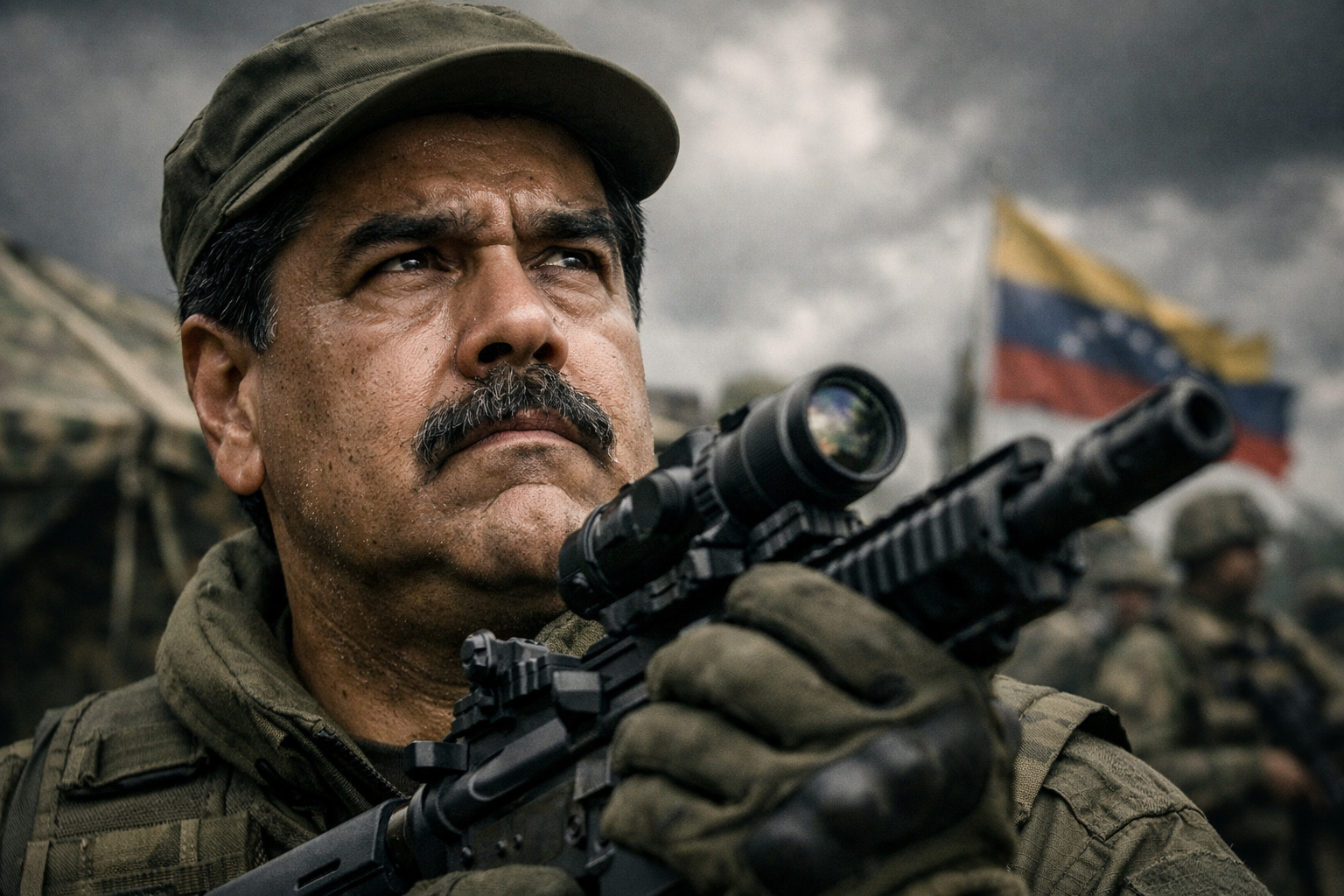


Specialists Explain Why Systems Considered Among the Most Advanced in the World Failed in the Face of Technology Superiority, Electronic War, and Strategic Errors of Venezuelan Forces
For more than a decade, the Venezuelan government maintained the narrative that the country possessed one of the most powerful air defense systems on the planet. In 2013, former President Nicolás Maduro publicly claimed that “no one could touch even a centimeter of the homeland,” assuring that national airspace would be completely protected against any foreign incursions. However, nearly 13 years later, this narrative has collapsed.
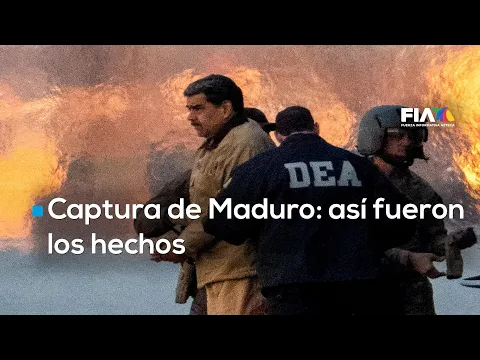
On January 3, over 150 airplanes and helicopters from the United States crossed Venezuelan airspace, reached Caracas, and executed an unprecedented military operation that resulted in the capture of Nicolás Maduro and his wife, Cilia Flores. The episode, widely documented in videos and records shared on social media, exposed the practical fragility of a system that, at least on paper, had consumed billion-dollar investments in Russian, Chinese, and Iranian equipment.
The information was reported by BBC News Mundo, in an article written by journalist Juan Francisco Alonso, published on January 14, 2026, after consulting international military experts and retired Venezuelan officials.
-
With a cost per shot close to zero, the DragonFire laser could change naval warfare in 2027 and provide British ships with nearly unlimited defense against drones.

-
A British startup creates tires that generate electricity in electric vehicles when passing over potholes, speed bumps, and cracks.

-
Scientists have created robots made with living cells that have their own nervous system, swim on their own, explore the environment, and self-organize without any genetic engineering, and now they want to do the same with human cells.

-
Students create a solar-powered ambulance that operates without a plug, without fuel, and still keeps medical equipment running in remote areas.


Despite official statements that there was resistance, records indicate that the air defenses reacted in a limited or almost non-existent manner. Five days after the operation, the then-president Delcy Rodríguez stated that “there was combat for the homeland,” but did not explain why systems considered sophisticated did not prevent the massive entry of American aircraft.
In light of this scenario, central questions arise: what exactly failed? Why did equipment purchased from Russia and China, similar to those used in other war theaters, prove ineffective against the United States?
A System Considered Formidable Only in Theory

According to Mark Cancian, a retired colonel of the U.S. Marine Corps and researcher at the Center for Strategic and International Studies (CSIS), the ineffectiveness of Venezuelan air defense is, at first glance, surprising. This is because the country has built, since 2009, a network based on systems recognized in the international market.
Among the main equipment acquired are the S-300 and the Buk-M2, both of Russian manufacture, purchased during the government of Hugo Chávez as part of strategic agreements with Moscow. The S-300, for example, consists of mobile launchers capable of firing missiles weighing 1,480 kilograms, about 7 meters long, designed to target airplanes, helicopters, and cruise missiles at a distance of up to 150 kilometers, according to CSIS data.
The Buk-M2 is a medium-range system capable of destroying aerial targets within a radius of up to 40 kilometers. Complementing this structure, Venezuela also acquired short-range missiles, such as the Pechora and Igla-S. The latter are portable, can be operated by a single soldier, and use infrared guidance, being effective against low-altitude aircraft and drones.
Just weeks before the American offensive, Maduro himself claimed that the country had nothing less than 5,000 units of the Igla-S, reinforcing the image of a large and diverse system. Additionally, the arsenal included Chinese radars and Iranian drones, enhancing surveillance and response capabilities.
Still, as pointed out by Thomas Withington, a specialist in electronic warfare and radars at the Royal United Services Institute (RUSI) in London, this set of equipment may be lethal against regional adversaries but becomes insufficient against a first-rate military power. For him, against the United States, “it is nothing but scrap.”
Electronic Warfare, Surprise, and Strategic Errors

The main explanation pointed out by specialists involves the American technological superiority, especially in the field of electronic warfare. In the six months prior to the operation, the United States would have formed a fleet in the Caribbean, which allowed for a detailed mapping of Venezuelan defenses, identifying their strengths and, above all, their vulnerabilities.
Based on this analysis, American forces would have launched a combination of cyberattacks, electromagnetic interferences, and air defense suppression actions. According to Withington, Venezuelan radars and communication systems were likely neutralized within the first minutes, rendering American planes virtually invisible.
This assessment was confirmed by a retired major of the Venezuelan Army, who told BBC News Mundo that the United States possesses technologies capable of neutralizing enemy radars, allowing aircraft to advance undetected. Consequently, the element of surprise was decisive, drastically reducing any possibility of coordinated reaction.
In addition to electronic warfare, there were evident failures in the physical disposition of the systems. Cancian highlighted that several air defense batteries were positioned in the open, without proper camouflage, which facilitated their location and destruction. Images released after the attacks showed, for instance, a Buk-M2 battery destroyed next to the runway of the La Carlota airbase, visible even from a nearby highway.
In the specialist’s assessment, these units should have been concealed, dispersed, and protected using decoys, a common practice in more experienced armed forces. Poor positioning also indicates training deficiencies and operational readiness, despite the military exercises announced in the previous months.
Reports from surviving soldiers reinforce this perception. A military personnel interviewed by the newspaper Tal Cual stated that “there was no time to counterattack,” while Third Sergeant Ricardo Salazar, injured during the bombardment, reported that he attempted to use his two Igla-S, but was hit by an explosion before he could fire.
Armed Forces Focused on Internal Security
Another decisive factor was the doctrinal change of the Venezuelan Armed Forces over the years. According to Cancian, the Army began to prioritize internal security and political control, to the detriment of preparation to face conventional external threats.
This view was corroborated by Venezuelan General Hebert García Plaza, former minister of Maduro’s government, who stated that the United States realized that the Bolivarian National Armed Force was prepared only for a model of resistance warfare, and not for a modern and technological air confrontation.
According to him, this doctrine was driven by Defense Minister Vladimir Padrino López and General Domingo Hernández Lárez, focusing on containing internal opposition and ensuring the governability of the regime, rather than facing a foreign power.
International vehicles, such as The New York Times, also pointed out that part of the air defense equipment was not active at the time of the operation due to the economic difficulties faced by the country and issues of administrative management. For Withington, corruption aggravates this scenario, especially in sensitive areas such as defense and national security.
Analyst Andrei Serbin Pont, president of CRIES, had previously warned about the discrepancy between what Venezuela possessed “in theory” and what was actually operational. According to him, many systems only existed in inventory but were not in real combat conditions.
Hit but Not Completely Defeated
Despite the severe impact of the American offensive, specialists emphasize that the Venezuelan air defense system was not completely destroyed. According to Withington, the goal of the United States was to open a safe air corridor to allow the entry of helicopters and Maduro’s withdrawal, rather than to eliminate the entire military apparatus of the country.
Venezuela still maintains rocket launchers, an apparently intact arsenal of drones, and its fleet of Sukhoi Su-30MK2 fighter jets. Still, the episode exposed vulnerabilities that were considered unthinkable until recently.
So far, only the dismissal of General Javier Marcano Tábata, then head of the Military House, has been officially confirmed. Rumors also circulate about the departure of Major General José Luis Tremont Jiménez, head of the Integrated Aerospace Defense Command (Codai).
What remains uncertain is whether there will be a thorough review of the structure and military doctrine of Venezuela following an operation that dramatically highlighted the limits between propaganda, real capability, and the harsh reality of the modern battlefield.







Não sabe aquele ditado que diz que não há pior **** do que o que está portas dentro?
Das duas, uma. Ou foi pura traição envolvendo políticos e militares ao mais alto nível, ou foi tudo combinado com o próprio Maduro e um dia destes, ele e a mulher receberão asilo da Rússia como recebeu o presidente da Síria e respetiva família.
Coitados dos que morreram, entre venezuelanos e cubanos, ainda foram umas dezenas. Esses coitados é que não mereciam morrer, estavam no cumprimento do dever.