





 Portuguese
  English
  Spanish
  3 min of reading
  0 comments


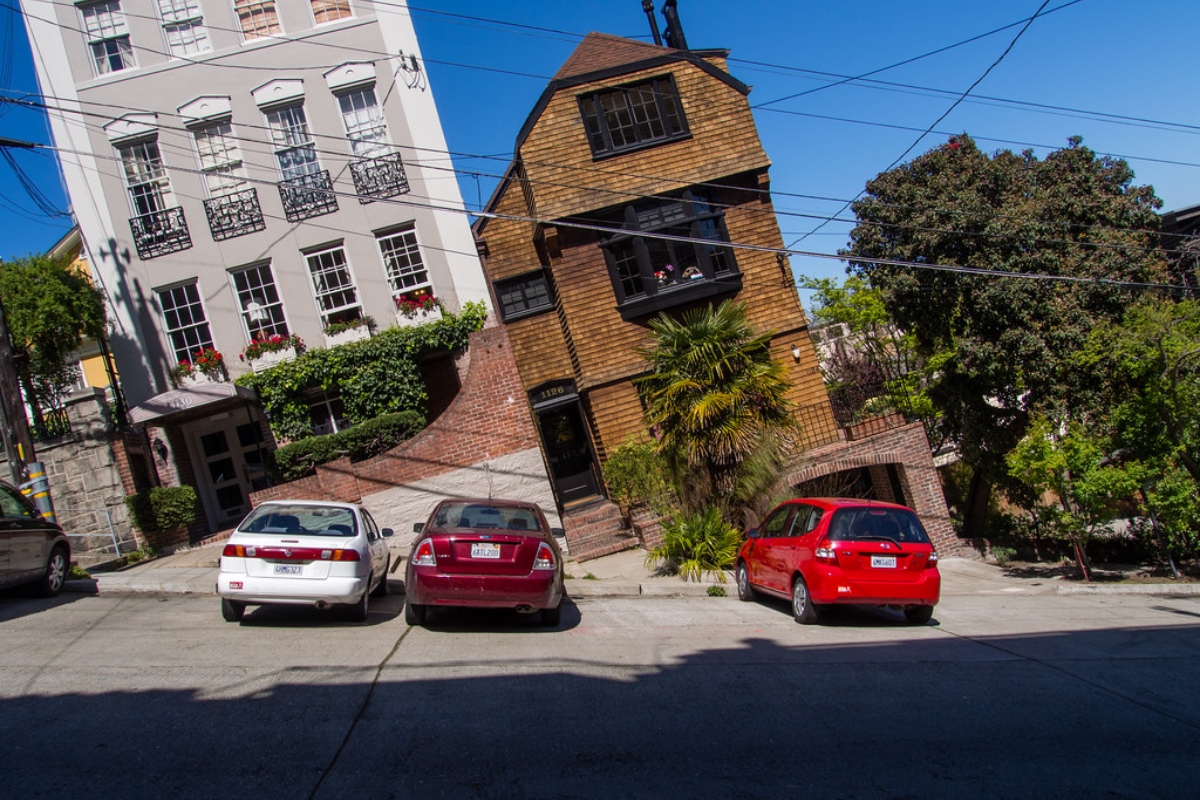
A Slope of 17.5 Degrees Changes Mobility, Demands Attention to Safety, and Shows How the City Coexists with Extreme Hills.
San Francisco draws attention for having streets with extreme slopes, capable of reaching 17.5 degrees in specific areas.
This scenario impacts daily circulation, increases demands on vehicles, and reinforces how urban planning and terrain shape the operation of a city.
The slope also helps explain why certain mobility solutions have gained traction there, especially in areas with intense climbs.
-
A 68-year-old pizza delivery driver went off route to buy a soda that was missing from a visually impaired customer’s order, refused an extra tip, and now Dan Simpson has over R$ 546,000 in donations from people around the world who want to ensure he can retire peacefully on April 30.

-
Amateur archaeologists were searching a forest in Poland with metal detectors when they found a ceramic pot buried for over 1,500 years. Inside was a pure gold necklace weighing 222 grams, folded to fit in the vessel, and when experts examined the piece, they discovered it was the first Gothic torque ever found in Polish territory.

-
Millions of people have been eating pomegranates for centuries without knowing that this ancient fruit contains punicalagins, which scientists are studying for their possible effects on memory and vascular health.

-
Argentina patrols the South Atlantic with ships built in France and monitors over 1.1 million km² with 87 m OPVs, a range of 7,500 miles, 360° radar, and a 30 mm cannon against illegal fishing in the 200-mile zone.

What Happened and Why It Caught Attention
The city has roads where the slope reaches 17.5 degrees, a level that completely changes the experience of driving and even walking.
On such slopes, vehicle control becomes more demanding, especially during stop-and-go maneuvers.
The topic draws attention because it is not an isolated case; it is part of the urban design of a city built on many hills.

How Geography Became a Deciding Factor in Urban Design
San Francisco was built on more than 40 hills, a terrain that naturally creates steep climbs and descents.
Even with this landscape, many streets follow a straighter path, leaving some stretches with slopes far above the norm.
The results are evident in practice; some roads become well-known for the physical effort required to climb and the extra caution needed when descending.
What a Slope of 17.5 Degrees Means in Practice
A slope of 17.5 degrees corresponds to about 31 to 32% incline, a very high level for an urban street.
For comparison, accessible ramps usually stay at 5 to 8%, and conventional roads rarely exceed 10 to 12%.
Above 20%, attention to control, braking, and safety takes on a new weight, especially in low-traction situations.
Filbert Street Becomes a Reference for Having a Section with This Slope

One of the most well-known examples is Filbert Street, between Hyde Street and Leavenworth Street.
This area has the maximum slope of 17.5 degrees, and has become a reference for showing how a street can remain functional even in an extreme scenario.
The presence of stairs and pedestrian-focused solutions reinforces that not every steep climb works well with just a traditional street design.
Why Cable Cars Appear as a Solution in Such Difficult Terrain
In a hilly environment, mobility solutions gain importance when the slope makes common use more challenging.
Cable cars enter this context as a direct response to steep climbs, helping to keep movement possible in steep areas.
The combination of terrain and infrastructure presents a clear lesson; when geography imposes limits, engineering needs to adapt the operation to the land.
San Francisco remains a striking example of a city where the street is not just a path; it is part of the challenge.
The presence of stretches with 17.5 degrees highlights the practical impact of the slope on mobility and safety, and helps explain why specific solutions make such a difference in daily life.








Seja o primeiro a reagir!