





 Portuguese
  English
  Spanish
  5 min of reading
  0 comments


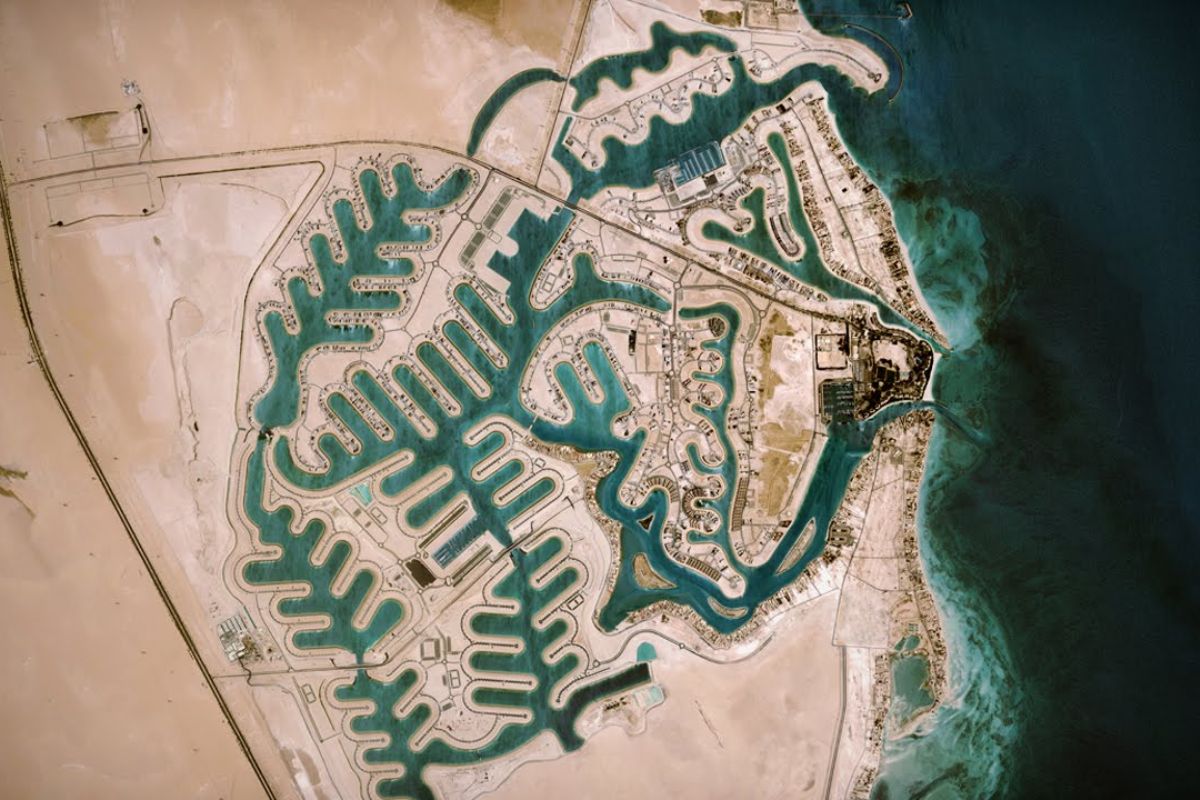


In The Heart Of One Of The Most Arid Regions On The Planet, A Seaside City Completely Different From Anything You Have Ever Seen Emerged. Discover This Urban Marvel.
Imagine living in the middle of the desert, in an area where temperatures easily reach 50 °C, and still have a private beach at your doorstep. Sounds like something out of science fiction or one of those megalomaniac projects typical of the Persian Gulf, right? But no: this is actually happening in Kuwait, one of the hottest countries in the world and, interestingly, one of the most creative when it comes to urban planning.
The name of the project is Sabah Al Ahmad Sea City, and it is much more than a luxury condominium. It is an ingenious response to the scarcity of coastline, the impacts of war, and the search for sustainable solutions in one of the most challenging regions on the planet.
When There Is Not Enough Coast, One Is Created
Kuwait has only 160 km of coastline, much of which is already occupied by ports, industrial zones, and military areas. With population growth and demand for high-end seaside housing, a deadlock emerged: there was no more space to build.
-
Australia is on alert for a potential shortage of up to 300,000 workers in construction by 2027, as a surge in energy, housing, and infrastructure projects pressures the country and exposes a historical bottleneck that could stall ongoing billion-dollar projects.
-
How much does it cost to build a simple 2-bedroom house in the countryside in 2026? Look at real values and what drives up the project’s costs.
-
From discarded waste to completed constructions: startup creates modular blocks with recycled plastic that reduce construction costs, eliminate the need for specialized labor, and accelerate projects in Brazil.
-
Recycled plastic house is completed in 4 hours and becomes an attraction at Feicon: facade with cement board and “nano rock” texture with a 10-year warranty, 100% plastic furniture, minimalist doors, and a promise of thermal and acoustic resistance.

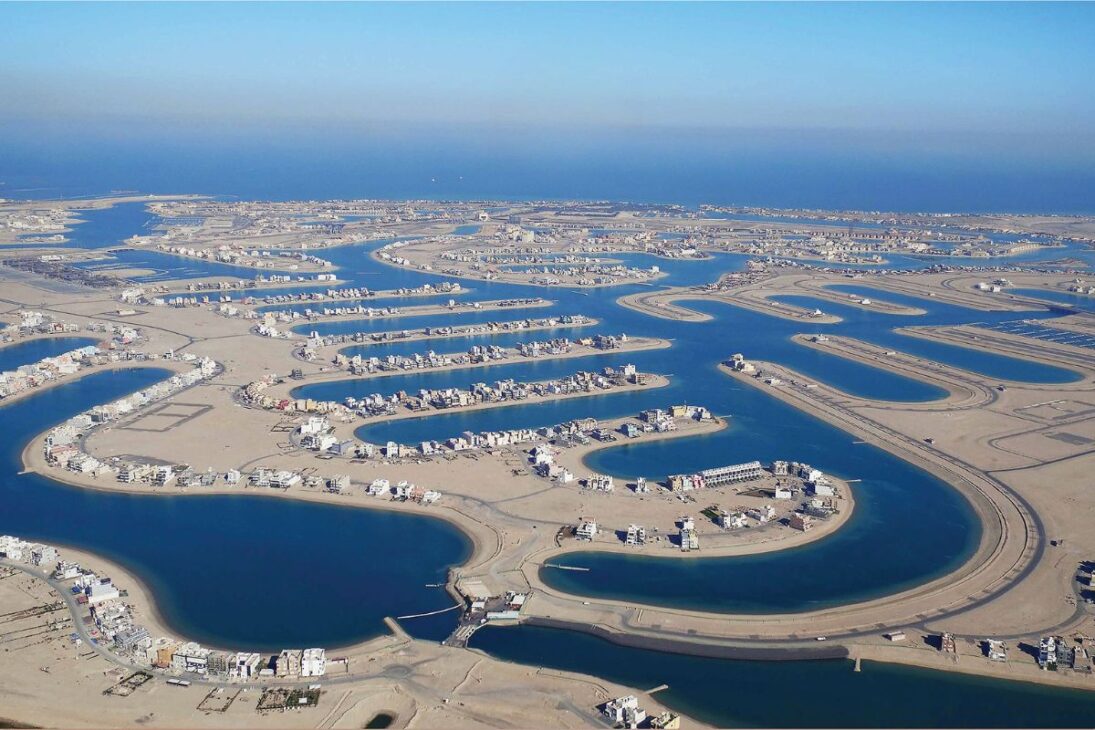
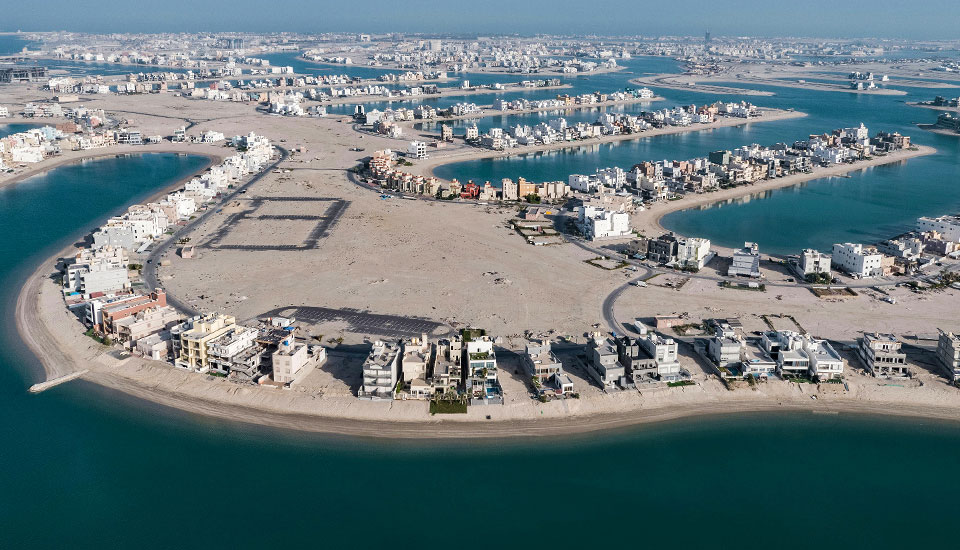
That’s when the bold idea came: why not create more coastline? And, unlike Dubai — which built artificial islands in the sea — Kuwait took the opposite route: excavated the desert to bring the sea in.
The project began in the Al-Khiran region, in the southern part of the country, near the border with Saudi Arabia. A flat landscape with natural channels was the starting point for the creation of a network of navigable channels interconnected with the Persian Gulf, which transformed the desert into a vast artificial coastline. Source: Wikipedia
Urban Planning That Dialogues With Nature
More than just impress with aerial images, Sabah Al Ahmad Sea City was designed to work with nature, not against it. One of the biggest technical challenges was to prevent the channels from becoming stagnant — brackish, foul-smelling, and lifeless. To address this, engineers created a passive hydrodynamic system, based on simulations with real data on wind, tide, and currents.
The automatic gates open and close with the tide, without motors, allowing for constant water renewal and the entry of marine life. Additionally, vegetation is also part of the project: salt-resistant species, such as grey mangrove (Avicennia marina), were planted to stabilize the soil, absorb salt, and create small coastal ecosystems. Source: ResearchGate
A City To Heal The Wounds Of War
The idea of creating a maritime city in the middle of the desert emerged after a traumatic period in Kuwait’s history: the Gulf War, in 1990, when the country was invaded by Iraq. The conflict left not only destruction but also an environmental disaster, with hundreds of oil wells set ablaze.
Sabah Al Ahmad Sea City emerged as part of the national reconstruction, with a more responsible, modern, and environmentally connected proposal. It is named after the then emir of Kuwait, who led the country’s recovery with a long-term vision.
And Dubai In All This?
It is impossible to talk about grand projects in the Gulf without thinking of Dubai, famous for creating palm-shaped islands and even a world map in the sea. But the paths chosen by Kuwait and the Emirates were very different. Dubai added land to the sea with dredged sand, creating form before function. Meanwhile, Sabah Al Ahmad Sea City sculpted the desert based on the natural behavior of the sea, prioritizing water circulation and harmony with the environment. Source: Gulf Construction Online
The result? While Dubai faces problems with erosion, water stagnation, and environmental impacts, Kuwait’s project is more discreet, but also more sustainable.
Not Everything Is Roses (Or Palms)
Despite all of this, the city also has its limitations. It is highly geared towards private luxury and low urban density. The dependence on automobiles is high, and public spaces are still few. In other words, it is a project more focused on residential comfort than on the dynamic urban life seen in major metropolises.
Even so, one cannot ignore the ingenuity of the project: transforming a salty, inhospitable desert into a navigable, habitable space with marine life.
Would Something Like This Be Possible In Brazil?
Now, the big question: would this model work in other parts of the world? Considering arid regions of Brazil, such as the northeastern semi-arid area, could a similar logic — utilizing intermittent rivers, natural basins, or even stored water — generate new forms of urbanization more adapted to the climate and environment?
With the challenges we face, such as water scarcity, disordered urbanization, and climate change, perhaps it is time to rethink our cities with more climate intelligence and less confrontation with nature.
A Lesson From The Desert For The World
Sabah Al Ahmad Sea City is more than a real estate development: it is an open-air urban laboratory. It shows that it is possible to create, innovate, and expand while respecting the limits of the environment — or even drawing inspiration from them.
Ultimately, what this city excavated in the desert teaches us is that progress does not have to mean aggression against the environment. It can also be an elegant form of adaptation.
And you? Would you live in a city like this? Do you think something similar could work in Brazil? Leave your opinion in the comments — we would love to know what you think!






Até reflorestamento está acontecendo no planeta e o Brasil não para de desmatar e agredir os animais em seus habitats.