





 Portuguese
  English
  Spanish
 4 min of reading
  0 comments


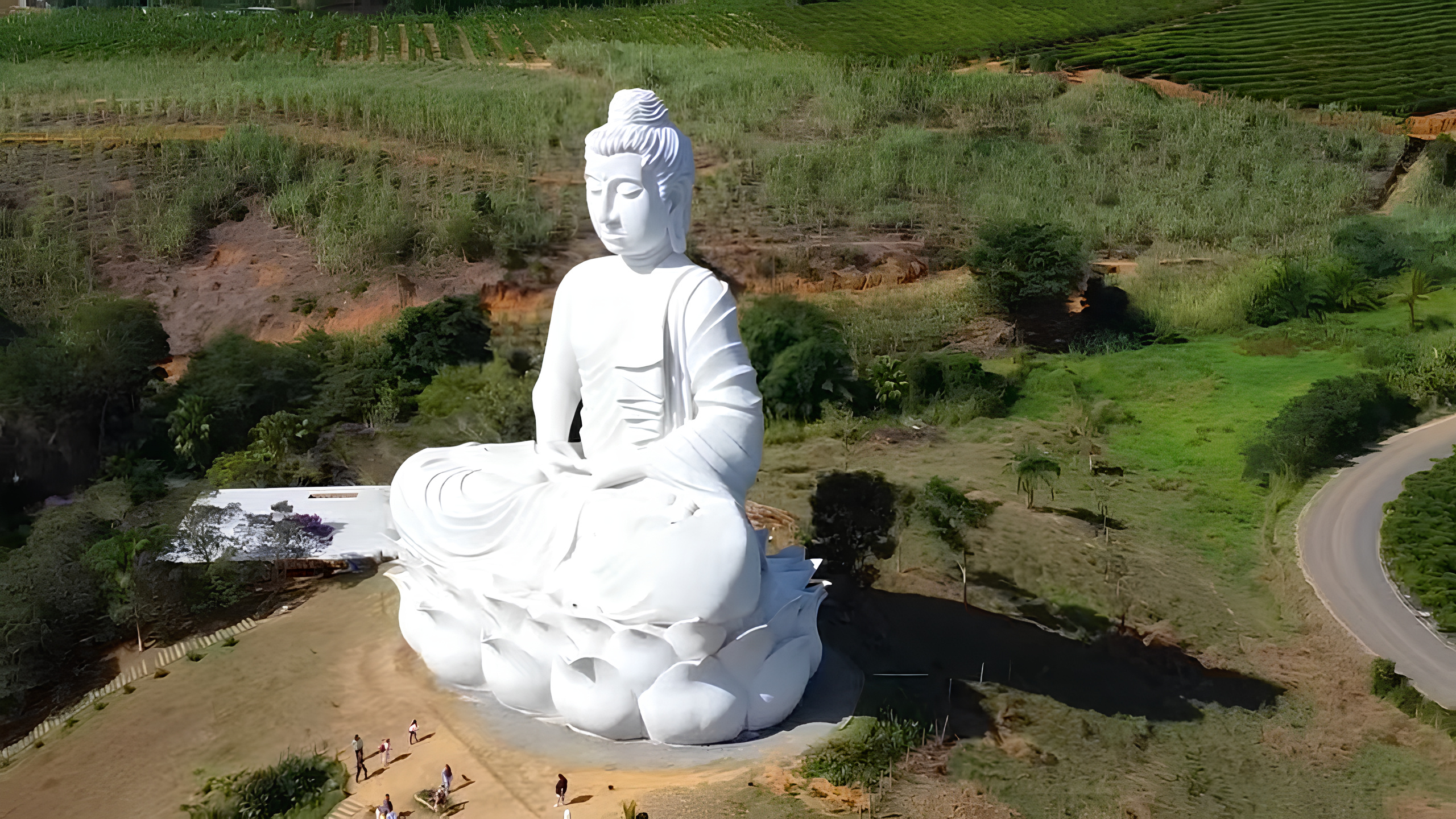
With 35 Meters in Height and 350 Tons, the Buddha of Ibiraçu Is the Largest Buddha Sculpture in the Americas. A Symbol of Peace and Faith, It Transformed Espírito Santo into a Spiritual Destination.
Silently erected among the mountains of Espírito Santo, the Buddha statue of Ibiraçu has become one of the most impressive works of modern Brazil. Standing 35 meters tall and weighing 350 tons of reinforced concrete and iron, with an imposing presence that rivals the Christ the Redeemer, the monument is now the largest Buddha sculpture in the Americas and the highest symbol of spirituality and inner peace in the region.
The work, inaugurated in 2019, is located in the Zen Buddhist Community Morro da Vargem, one of the main centers for practicing Buddhism in the country. The giant Buddha, seated in a meditative position facing the sunrise, dominates the landscape of the municipality of Ibiraçu, about 75 kilometers from Vitória, the capital of Espírito Santo.
A Colossus Raised Between Faith and Engineering
The grandeur of the sculpture impresses both in its spiritual dimension and technical complexity. The project took almost five years to complete and required the work of dozens of engineers, sculptors, and artisans specialized in reinforced concrete.
-
79-year-old woman challenges limits, visits 193 countries in the world after 56 years of planning and reveals the behind-the-scenes of a global journey that few have managed to accomplish.

-
These are the drivers who may stop paying tolls on highways in a project that promises to reduce costs for those who live from transportation in Brazil.

-
(Video): Italian pilot lands plane on moving train at 120 km/h and achieves unprecedented feat in aviation, even with a narrow runway and without direct visual contact.

-
It seems to have come out of a science fiction movie: A Brazilian city where it rains almost every day, recording over 4,000 mm per year, driven by climatic factors — a direct result of its strategic location in the Amazon.


The monument has a base of 7 meters in height, which houses a small temple and a meditation space for monks and visitors.
The figure of the Buddha was built in modules, which were transported by cranes to the top of the hill — a logistical challenge that mobilized the local community and involved the support of volunteers.
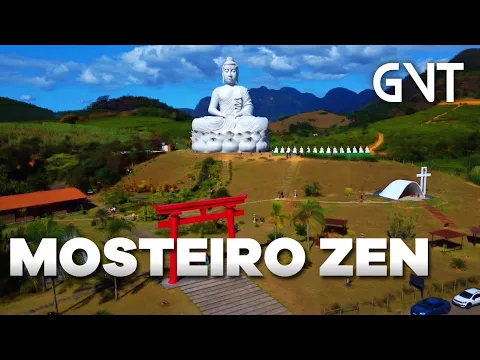

According to the Morro da Vargem Zen Monastery, the statue was conceived not only as a tourist attraction but as a symbol of balance and religious tolerance. “It represents the awakening of consciousness and the pursuit of serenity in times of turmoil. We want people to come here and feel peace,” explained the monk Daiju Bittencourt, responsible for the monastery.
A Tourist Landmark of Espírito Santo
Since its inauguration, the Buddha of Ibiraçu has transformed the municipality of just over 10,000 inhabitants into a destination for spiritual and religious tourism. The site receives more than 50,000 visitors per year, including tourists, Buddhist practitioners, and travelers seeking tranquility.
Access is free, and the area was designed to integrate with nature. The path to the top of the hill is made along a winding road surrounded by preserved Atlantic forest, welcoming visitors with gardens, bells, and sculptures that represent the teachings of Buddha.
In addition to the giant Buddha, the Zen Buddhist Community Morro da Vargem hosts a series of temples, meditation rooms, ornamental ponds, and an environmental preservation school that conducts educational projects with local children.
A Work That Rivals with Historical Monuments
With its 35 meters in height surpassing the 30 meters of Christ the Redeemer (without the pedestal) — the Buddha of Ibiraçu has become one of the tallest monuments in Brazil. When including the concrete base, its total height exceeds 40 meters, placing it among the largest religious sculptures in the Western Hemisphere.
The visual impact is even more striking at sunset when the sunlight reflects off the statue’s golden surface, creating a spectacle of colors visible from miles away. Many visitors describe the experience as “spiritually uplifting.”
“It’s impossible to come here and not feel moved. The energy is different, the peace is almost palpable,” reported tourist Carla Ferreira, who traveled from Minas Gerais to visit the site after watching a documentary about the monument.
Between Contemplation and Preservation
The Buddha of Ibiraçu is also an example of how spiritual architecture can integrate with environmental preservation. The monastery is located in a 150-hectare reforestation area, with ecological trails, nurseries, and native species reintroduced by the Buddhist community over four decades.
The space is administered by the Zen Buddhist Community Morro da Vargem, the first of its kind founded in Brazil, in 1974. Since then, the site has become a reference in environmental education, inter-religious dialogue, and the promotion of peace.
The monk Daiju summarizes the purpose of the work in a phrase that has become a motto among visitors: “The Buddha was not built to be looked at, but to inspire the inner gaze.”
Today, the Buddha of Ibiraçu is considered one of the seven spiritual wonders of contemporary Brazil, according to a survey by the religious tourism portal Viagens & Destinos. The monument is ranked alongside Cristo Redentor, the Sanctuary of Aparecida, and the Zu Lai Temple in São Paulo.
More than a tourist spot, the Buddha has become a symbol of faith, introspection, and tolerance, reminding us that even in small towns it is possible to erect works that reflect inner greatness.






Seja o primeiro a reagir!