





 Portuguese
  English
  Spanish
  4 min of reading
  0 comments


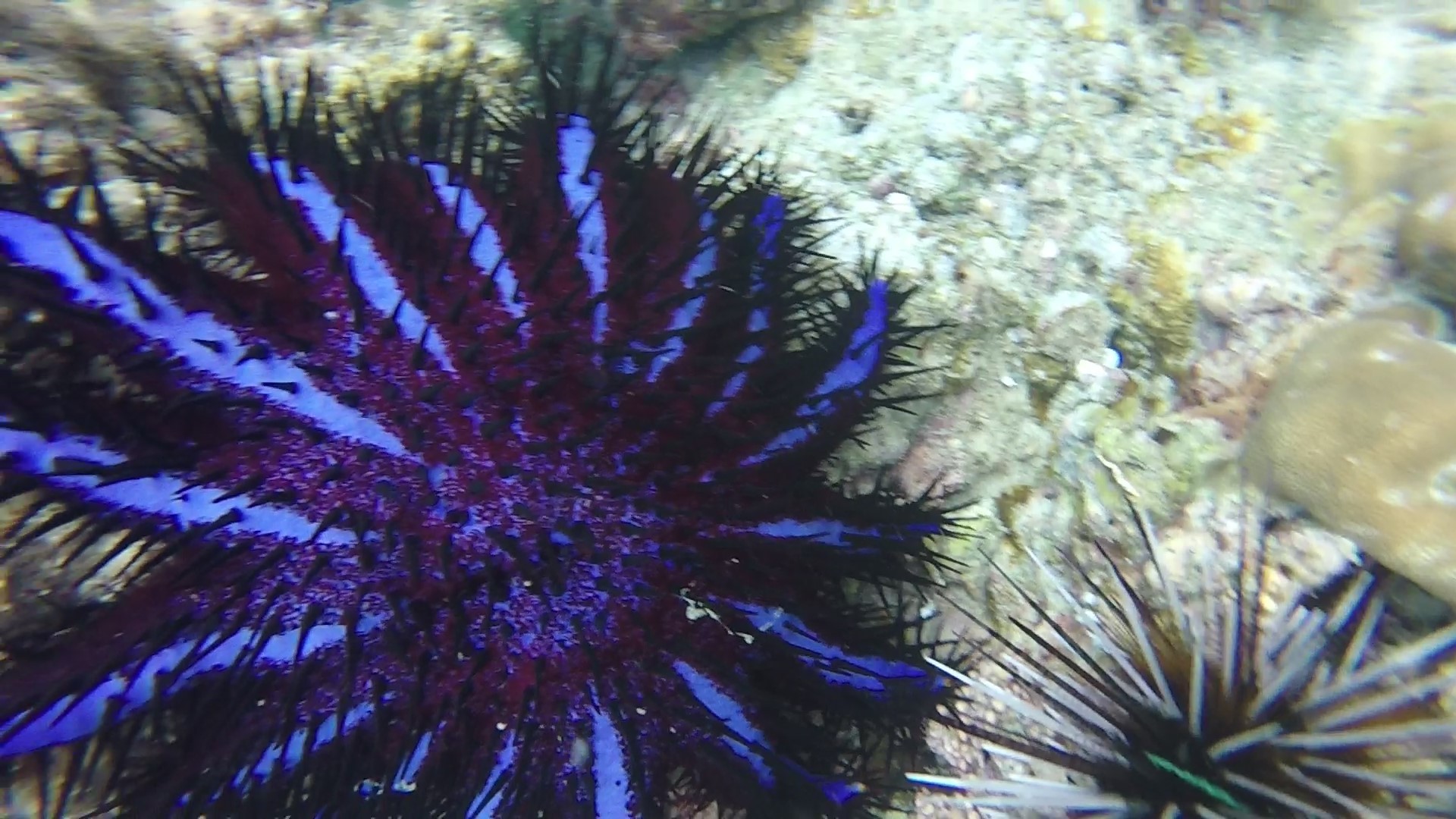
The Crown-of-Thorns Starfish Devastated Reefs in the Pacific, Killed Millions of Corals, Caused Ecological Collapses and Continues to Reappear Despite Decades of Human Control.
For decades, scientists have observed an apparently impossible phenomenon: vibrant coral reefs, full of life and color, simply disappearing in a matter of months, leaving behind entire stretches of bare, whitish rock. The cause was not a hurricane, nor direct pollution or overfishing. The culprit had arms, poisonous spines, and an almost unlimited appetite for living coral. The crown-of-thorns starfish (Acanthaster planci) has become one of the largest agents of destruction ever recorded in the planet’s reef ecosystems.
What began as localized outbreaks evolved into ocean-scale ecological collapse events, affecting reefs in the Pacific, Indian Ocean, and parts of Southeast Asia.
The Unlikely Predator That Became a Systemic Threat
The crown-of-thorns has always existed on tropical reefs. In stable populations, it plays a legitimate ecological role, feeding on dominant corals and helping maintain diversity. The problem arises when its populations explode uncontrollably.
-
He started running at 66 years old, broke records at 82, and is now a subject of study for having a metabolic age comparable to that of a 20-year-old, in a case that is intriguing scientists and inspiring the world.

-
Oldest tree on the planet reappears after 130 years of searches: Wattieza, 385 million years old, was 10 meters tall and had no leaves or seeds; Gilboa fossils in New York solved the mystery in 2007.

-
A 48-square-meter house assembled in hours with 4,000 bricks made of recycled plastic that does not absorb moisture, has natural thermal insulation, and costs less than 90,000 reais in a complete kit.

-
Luciano Hang revealed that Havan’s air fleet has already accumulated more than 20,000 landings, 10,000 flight hours, and 6 million kilometers traveled, and he says that without the planes, the company would never have grown so quickly.




Each adult individual can consume up to several square meters of coral per year, literally digesting the living tissue of the reef and leaving only the limestone skeleton behind. In population outbreaks, thousands of starfish advance simultaneously, creating fronts of destruction that move like underwater fires.
How a Single Animal Kills an Entire Reef
Unlike predators that bite or break structures, the crown-of-thorns uses a silent and efficient method. It protrudes its stomach out of its body, envelops the coral, and releases digestive enzymes directly onto the living tissue. The coral is dissolved right there.
This process leaves the reef vulnerable to algae, diseases, and erosion. Even when the starfish moves away, recovery can take decades — or may never happen, depending on environmental conditions.
Population Explosions Out of Control
Since the second half of the 20th century, outbreaks of the crown-of-thorns have occurred with alarming frequency. Some events have reduced coral cover by more than 40% in just a few years, especially in areas like the Great Barrier Reef of Australia, the Western Pacific, and tropical islands of Southeast Asia.
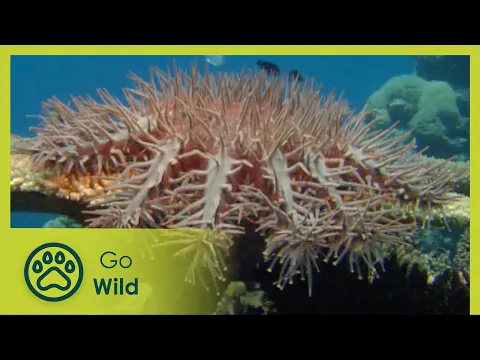
The most concerning aspect is that these outbreaks are not natural on a large scale, but amplified by human actions.
The excess nutrients in the oceans, caused by agricultural runoff and coastal pollution, increase the survival of starfish larvae. Fewer natural predators, due to overfishing, complete the perfect scenario for population explosion.
An Almost Unstoppable Reproductive Machine
The reproductive capacity of the crown-of-thorns is one of the most frightening factors. A single female can release tens of millions of eggs during a reproductive event. In nutrient-rich environments, the survival rate of the larvae skyrockets.
This means that just one successful outbreak is enough to initiate a chain of events that spreads across hundreds of kilometers of interconnected reefs via ocean currents.
Human Attempts to Control and Their Limits
Over the decades, governments and scientists have launched intensive control campaigns. Divers began to inject lethal substances directly into the starfish, such as vinegar or specific solutions developed to reduce collateral impacts.
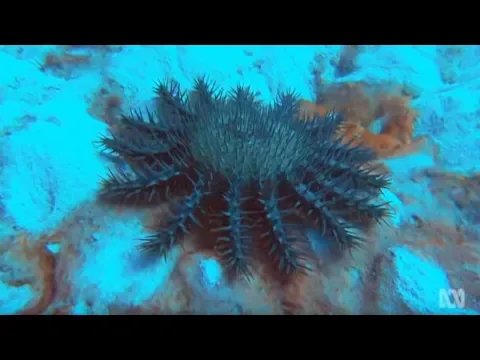
In some locations, these actions managed to reduce populations by up to 80% or 90%, saving strategic reefs. But the success is temporary. New waves of larvae continue to arrive, and efforts need to be constant, expensive, and extremely labor-intensive.
There is no definitive eradication. The most that can be achieved is buying time.
Cascade Effects in the Marine Ecosystem
When a reef collapses, the impact goes far beyond the corals. Fish lose shelter and breeding areas. Invertebrates disappear. The structural complexity of the reef is lost, drastically reducing biodiversity.
In some regions, the transformation has been so profound that reefs have become dominated by algae, creating an alternative ecological state from which it is almost impossible to return to the original balance.
Why It Always Comes Back
Even after successful campaigns, the crown-of-thorns reappears. This happens because the structural causes remain present: diffuse pollution, ocean warming, overfishing, and coastal degradation.
As long as these pressures persist, the reefs remain vulnerable, and the starfish finds the perfect environment to return in new destructive waves.
A Symbol of the Invisible Collapse of the Oceans
The story of the crown-of-thorns is not just about an animal. It is a clear portrait of how small human imbalances can amplify natural forces to the breaking point.
It is not an isolated villain, but a symptom. A living alert that reefs — responsible for sustaining about 25% of all marine life — are increasingly close to a point of no return.
With the advance of global warming, coral bleaching events are compounded by the intense predation of the crown-of-thorns. The result is a double pressure that few reefs can withstand.
If nothing changes, the starfish that today devours corals may end up being remembered as the messenger of a much larger collapse, in which entire ecosystems have silently disappeared before our eyes, below the surface of the ocean.









Seja o primeiro a reagir!