





 Portuguese
  English
  Spanish
  4 min of reading
  0 comments



Submarine Turbines in the United Kingdom Use Tidal Currents to Generate Clean Energy with Blades Turning Up to 14 RPM in the MeyGen Project.
When it comes to renewable energy, much of the global discussion revolves around wind turbines, solar panels, and batteries. However, in northern Scotland, a highly technical infrastructure is drawing attention from researchers, governments, and investors: underwater turbines installed in the Pentland Firth, part of the MeyGen Tidal Stream Project, which uses ocean currents to produce electricity in a predictable and continuous manner.
The system’s differentiator lies in its concept: instead of capturing unpredictable winds or variable sunlight, it harnesses the flow of tides, a regular, calculable phenomenon that is present 24 hours a day. The promise is simple yet ambitious: to use industrial-scale machines, equipped with blades that spin up to 14 revolutions per minute (rpm), to convert the ocean’s movement into grid-connected energy.
Engineering Hidden Beneath the Waves
The turbines installed in the first phase of the project have dimensions comparable to small aircraft, with rotors approximately 16 meters in diameter anchored to the seabed.
-
A Canadian retiree creates a hydroelectric system on a real river, generating energy continuously throughout the day and demonstrating how the power of water can supply a house with stability even in a simple structure.

-
Petrobras reaffirms its commitment to the market and ensures that it will carry out the energy transition safely to maintain national sovereignty.

-
Researchers discover a possible hydrogen deposit of up to 46 million tons beneath an ancient coal basin, and the volume could exceed half of the entire global production.

-
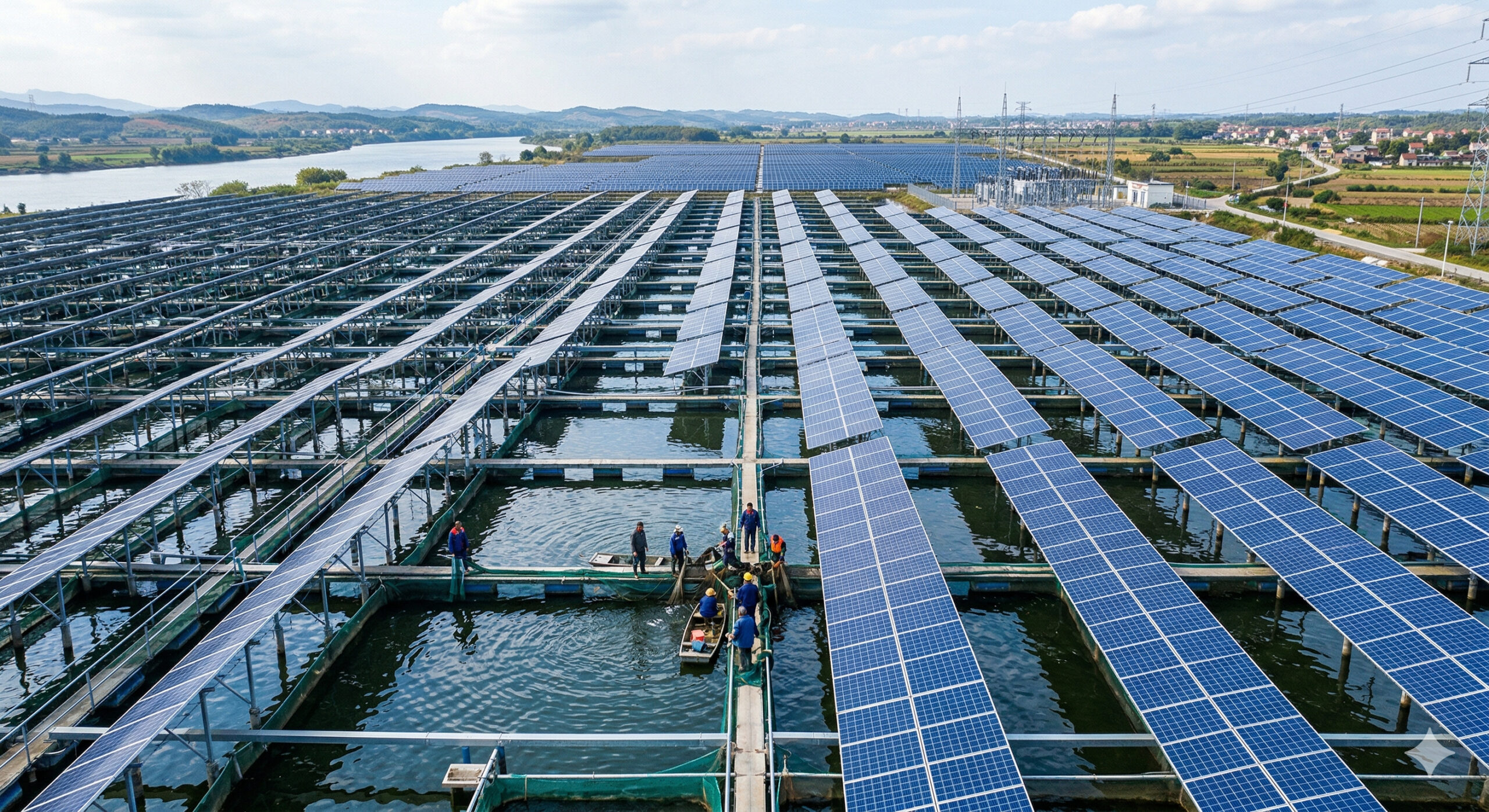
China bets on the Fishery-PV model and transforms fish farms into giant solar plants, covering ponds with panels that generate energy while utilizing the same space for large-scale aquaculture production.

Each unit weighs tens of tons and operates at depths ranging from 30 to 50 meters, enduring currents that can exceed 10 km/h in the Pentland Firth, one of the regions with the greatest tidal energy potential on the planet.
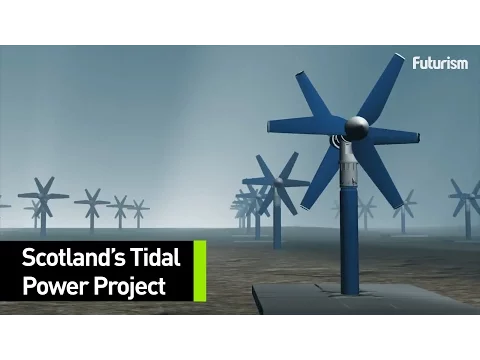

The United Kingdom is considered a leader in tidal stream energy, with estimates from the British government indicating a technical potential of up to 11 GW just along the country’s coastlines. This is equivalent to the output of approximately 11 medium-sized nuclear power plants, according to studies from British oceanographic centers.
What Already Exists and What is Yet to Come
The 1A Phase of MeyGen began commercial operations in 2017, with four underwater turbines and a combined capacity of 6 MW.
According to data released by the operator (currently SAE Renewables) and reports from BBC and other specialized British outlets, the facility has already surpassed the milestone of 70 GWh generated, enough to power thousands of Scottish households over the years of operation.
In addition to technical performance, a central advantage is the predictability of generation. Unlike wind and solar, tidal energy can be accurately projected centuries in advance, as it depends on astronomical cycles of solar and lunar gravity. This makes the system strategic for composing electrical matrices that seek stability.
The expansion plan envisions subsequent phases that could raise total capacity to 398 MW, which would make MeyGen the largest tidal energy park in the world.
Projects of this kind have direct interest in markets such as United Kingdom, Canada, France, and South Korea, which have geographies favorable to narrow currents.
What Makes the Turbines of the MeyGen Project So Resilient?
Operating in a marine environment demands extremely rigorous material engineering, hydrodynamics, and maintenance.
The turbines are constructed from corrosion-resistant alloys and biofouling-resistant materials, with remote monitoring systems and base structures that withstand thousands of tons of dynamic pressure caused by moving water.
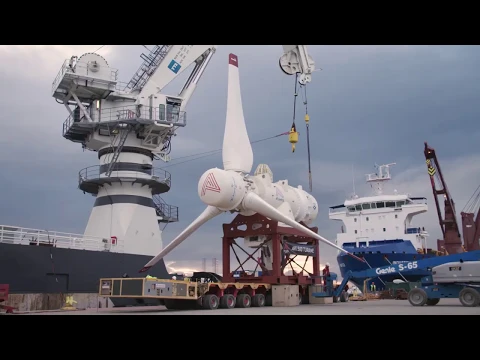
The blades function like inverted propellers: instead of pushing forward, they are pushed by the current, activating sealed generators that convert the motion into electrical energy. The entire platform is connected to the mainland by high-voltage underwater cables.
How Many of These Machines Would Be Needed to Make a Difference?
According to energy reports from the British government, tidal energy could meet up to 20% of the United Kingdom’s electrical demand if the oceanic potential were fully harnessed.
Countries such as France and Canada are also studying similar projects, and the EU has included tidal energy in its strategic renewable plans for 2030.
From Experiment to Energy Geopolitics
The race for renewable technologies is shifting from being solely an environmental issue to a matter of energy security. Island nations and regions with large coastlines see tidal energy as an alternative to reduce dependence on imported natural gas, a factor that gained momentum after the European energy crisis of 2021–2022.
The expansion of tidal energy involves industrial challenges, from building larger turbines to standardizing underwater maintenance.
Still, international interest is growing, with new funding from UK Research and Innovation (UKRI), private agreements, and participation from universities.
An Experiment That Can Scale
The big question now is not whether tidal energy works — it already works, is connected to the grid, and produces daily, but when and how it will become competitive on a global scale.
Predictability, high energy density, and the potential to operate during the night and in winter make the project a strategic piece in the puzzle of the energy transition.
As aircraft-sized machines continue to silently spin beneath the waters of Scotland, engineers monitor data, governments assess costs, and investors watch closely. If the thesis proves true, the next great energy revolution may not come from the sky — but rather from the seabed.










-

-

-

-

8 pessoas reagiram a isso.