





 Portuguese
  English
  Spanish
  5 min of reading
  0 comments


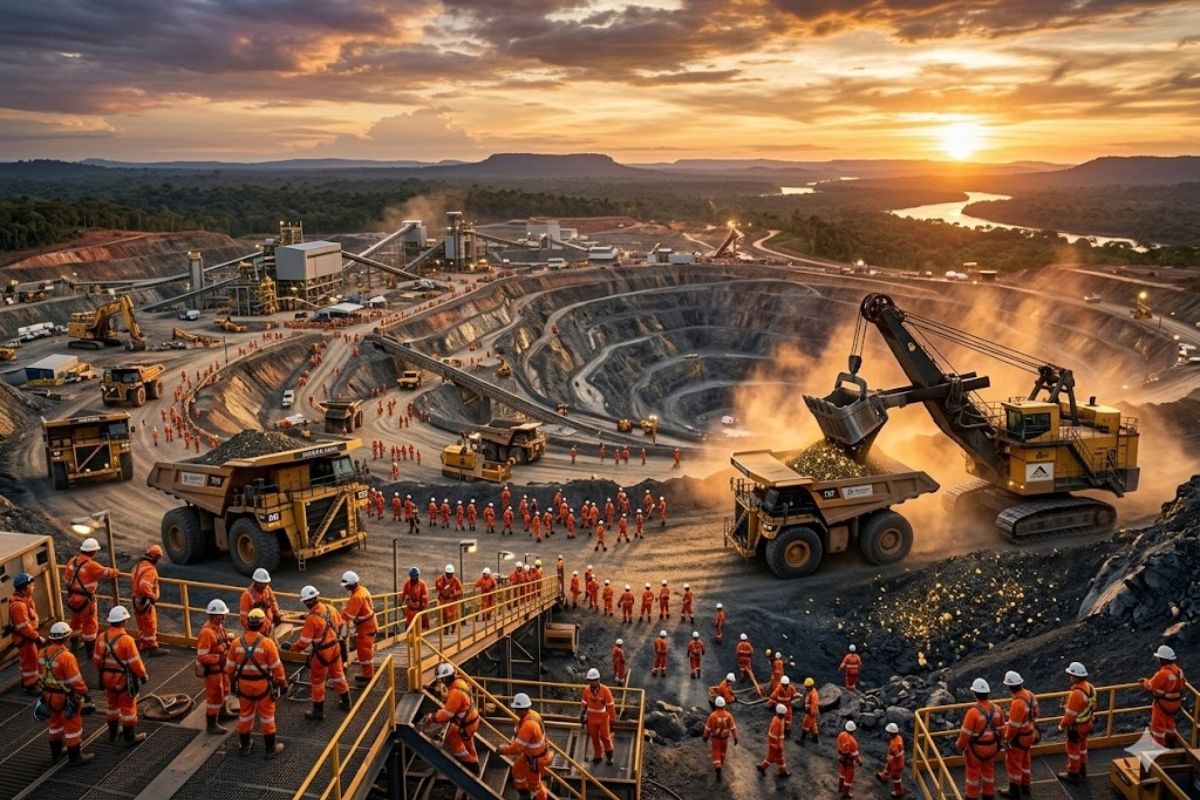
With Estimated Investment of R$ 1.4 Billion, the Gold Project in Northern Brazil Led by Hochschild Mining Advances in Monte do Carmo, Tocantins, Expects About 2,000 Jobs, Covers 80,000 Hectares, and Could Redefine the Local Economy with Large-Scale Mining in the Coming Years.
The advancement of gold in Northern Brazil in Monte do Carmo puts Tocantins on the radar of one of the largest mineral enterprises being prepared in the country. The British mining company Hochschild Mining is in the final stages to start operating a mine valued at about R$ 1.4 billion, with an estimated generation of approximately 2,000 direct and indirect jobs.
In a town with just over 5,600 inhabitants and an economy mainly based on agriculture and commerce, the arrival of this investment is likely to change the scale of local activity. What is today a small municipality may begin to operate under the logic of a large mineral project, with new flows of workers, services, contracts, and revenue.
Monte do Carmo Joins the Map of Major Mineral Projects
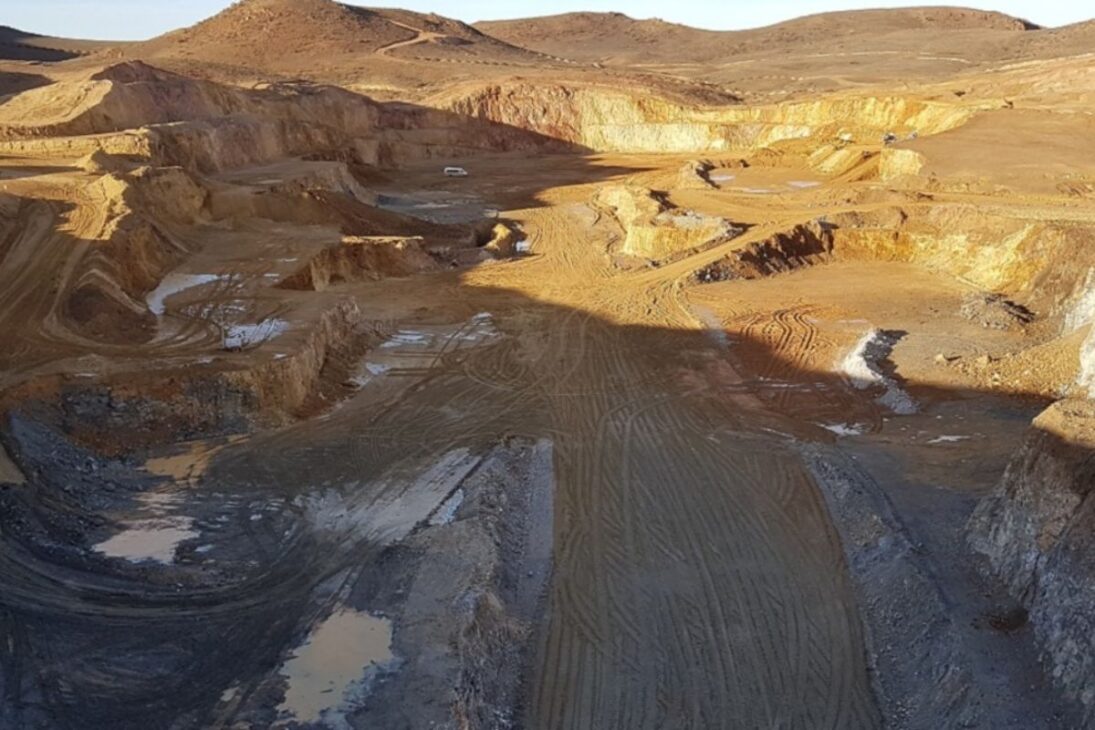
Monte do Carmo is located about 90 kilometers from Palmas and houses the Monte do Carmo Gold Project, an area covering 80,000 hectares.
-
Oil surged to $115 a barrel due to the war in the Middle East, and diesel in Brazil has already risen to R$ 7.45 per liter, while the United States…

-
Brazilian city bets on the business environment to generate jobs and attract investments in the energy sector — secretary reveals strategy at Macaé Energy 2026.

-
50 viaducts, 4 tunnels, 28 bridges, and 40 kilometers of bike paths: BR-262 in Espírito Santo will receive 8.6 billion reais for the largest engineering project in the state’s history, inspired by the Immigrant Highway in São Paulo.

-
Brazil produces too much clean energy and doesn’t know what to do with it: over 20% of solar and wind capacity was wasted in 2025 while investors flee and 509 renewable generation projects were abandoned in the last year.


The gold project in Northern Brazil was acquired by Hochschild Mining for US$ 60 million and is considered one of the largest in development in the country, both in scale and expected duration of operations.
Implementation is expected to begin in mid-2026, with an anticipated operational duration of up to 12 years.
This means that Monte do Carmo, in Tocantins, may cease to be just a regional transit point to take on a more permanent role within the mining chain.
When a mine of this size is established, the change is not limited to the construction site, but impacts housing, transportation, commerce, and service provision.
Drilling, Geological Potential, and Future Mine Pace
Since March 2024, Hochschild Mining has been implementing a drilling program in the region to more accurately measure the potential of the area.
According to the company, two holes totaling 1,704 meters have been drilled, along with an additional campaign of 4,806 meters spread over five prospective zones.
The work, according to the company, has already confirmed the incorporation of new gold resources.
This data is central to understanding why the gold project in Northern Brazil is advancing so robustly in Monte do Carmo.
The operational forecast calls for a mining extraction capacity of 6,000 tons of ore per day, a volume that helps explain the size of the investment and the pressure for adequate infrastructure.
This is not a one-off intervention, but a structure designed to operate on a large scale for over a decade.
Jobs, Revenue, and Scale Change in Tocantins
The promise of about 2,000 direct and indirect jobs is the most significant factor affecting the local economy.
In a municipality the size of Monte do Carmo, any abrupt influx of jobs would already have a significant impact, but a project of this magnitude also tends to affect income, demand for lodging, food, transportation, and specialized services.
In Tocantins, the political and economic reading of the project is strategic because it can increase revenue and attract new investments to the surrounding area.
At the same time, this movement requires planning.
Jobs can accelerate economic activity, but they also put pressure on urban infrastructure, health, housing, and logistics, particularly when the transformation occurs concentrated in a small municipality.
Legal Gold, Illegal Mining, and the Weight of Regulation
The expansion of gold in Northern Brazil in Monte do Carmo occurs alongside a scenario of stricter regulation against irregular exploitation.
Recently, the National Mining Agency, with support from the Federal Police, dismantled an illegal mining operation in the municipality.
At the location, working galleries, extraction and processing equipment, and mercury, a highly polluting and harmful substance to health, were found.
This contrast exposes a critical point in the mineral debate in Tocantins.
On one side, a structured business project with a timeline, defined investment, and expectations for generating jobs.
On the other, the presence of illegal mining, associated with environmental risks and lack of adequate control.
The difference between authorized mining and clandestine exploitation is not just bureaucratic, but involves safety, environmental impact, and responsibility for the territory.
What This Project Could Represent for the Brazilian Mineral Sector
The advancement of Monte do Carmo adds to other gold projects under development in Pará, Mato Grosso, and Maranhão.
The sector’s forecast is that national production will increase by about 20 tons annually with the entry of these new enterprises.
In this context, the Hochschild Mining project in Tocantins gains importance for expanding the presence of gold outside the more recognized hubs of the country.
For Monte do Carmo, however, the debate is not limited to the volume extracted.
The central point is how this investment will be absorbed by a small town with a traditional economic base and limited structure.
Billion-dollar projects often promise rapid transformation, but real effects depend on the capacity for regulation, public planning, and social management of growth.
Ultimately, the gold project in Northern Brazil in Monte do Carmo combines the promise of investment, job generation, and economic change, but also demands ongoing vigilance regarding environmental and social impacts.
It is too large an operation to be observed solely by the value of gold or the size of the mine.
In other words, Tocantins may gain a new axis of mineral activity, but the final outcome will depend on how the arrival of Hochschild Mining is monitored over the coming years.
Do you believe that a project of this size can positively transform Monte do Carmo, or is the risk of social and environmental pressure still underestimated?







-

Uma pessoa reagiu a isso.