





 Portuguese
  English
  Spanish
  4 min of reading
  0 comments



Brazilian Technology Injects Hydrogen Generated from Water Directly into the Engine, Improving Performance and Saving Fuel Without Altering the Original System.
Evo Hydrogen’s technology uses a process called resonance electrolysis. In simple terms, they take pure water, apply a special type of electric current, and break the molecule into hydrogen (H₂) and oxygen (O₂), generating a clean and highly efficient fuel. All of this happens in real-time, inside the vehicle, without the need to store hydrogen or deal with pressurized tanks.
This hydrogen, which is a highly flammable gas, goes straight to the engine along with the diesel. The result is a more complete, cleaner, and more powerful combustion.
According to Evo Hydrogen itself, this system can:
-
Ten undergraduate students received an astronomy homework assignment, began sifting through data on the university’s computer, and ended up discovering the oldest star ever recorded in the universe, a cosmic immigrant that formed shortly after the Big Bang and was wandering alone towards the Milky Way.

-
Scientists reveal that Saturn’s rings may have formed after the destruction of a moon, and a study indicates that the planet’s bright structure is only 100 million years old.

-
A Brazilian who does not work at any space agency calculated a round trip route to Mars in just 7 months using asteroid trajectories as cosmic shortcuts, and the study was accepted by one of the most prestigious scientific journals in the world.

-
A continent of plastic that keeps growing: what no one tells you about the largest garbage dump in the world, which continues to grow endlessly.

- Reduce up to 93.3% of pollutant gas emissions
- Save up to R$ 0.11 per kilometer traveled
- Lower the internal engine temperature and therefore prolong the lifespan of components
- Increase engine torque, especially on climbs or in heavy-load situations
And Where Does Sustainability Come In?
This is where things get even more interesting. Unlike industrial hydrogen, which typically comes from fossil sources and requires transportation, Evo Hydrogen works with what’s called green hydrogen on demand. In other words, it is:
- Produced on the spot, using only water and electricity
- Non-toxic
- Does not emit waste in the generation process
- Avoids the waste of fossil fuel, as it improves diesel efficiency
For those working with fleets of trucks or in heavy industry, this is a significant advantage. And not just from an environmental standpoint: the system also helps meet legal emission requirements and can even generate extra points in environmental certification processes.
Car, Truck, Bus… The Technology Works for Almost Everything
Today, Evo Hydrogen has specific systems for different types of applications:
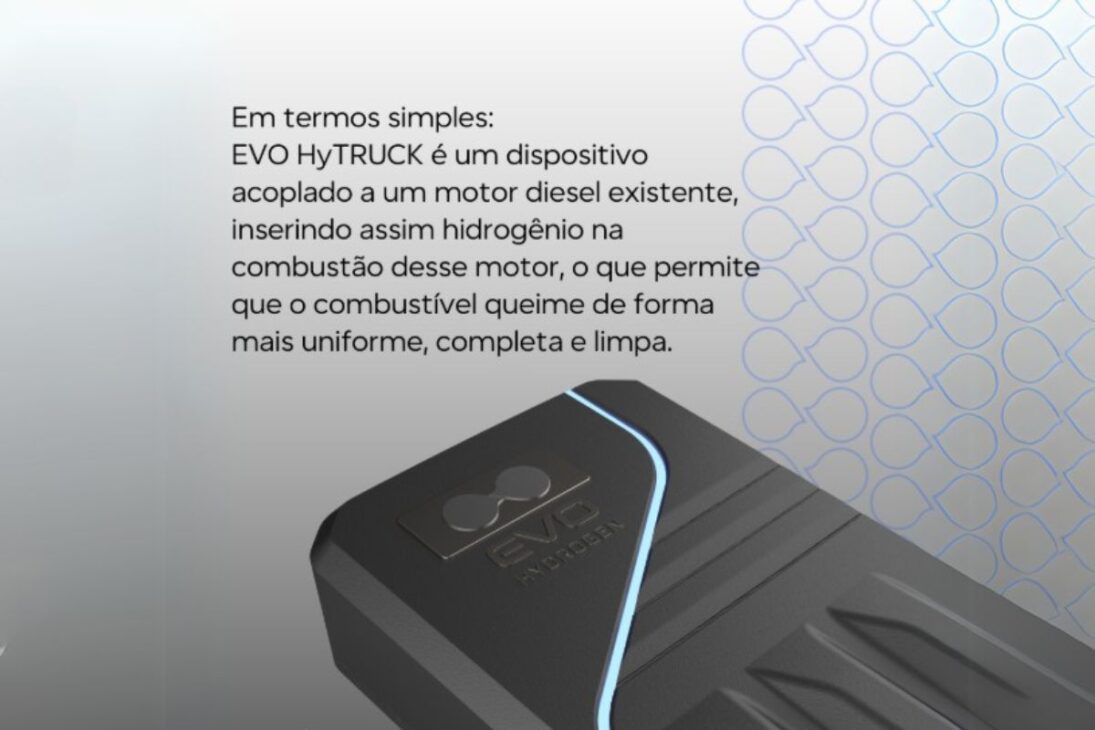
- EVO HyTruck – aimed at trucks and heavy vehicles
- EVO HyCar – for light cars or utility vehicles
- EVO HyGEN – used in generators and industrial processes
All these systems operate on the same principle: injecting hydrogen along with traditional fuel, so that the engine runs better and cleaner.
Is It Reliable?
That’s the question many people ask when they hear about something like this. After all, it’s not every day that a company promises to “turn water into fuel.”
But Evo Hydrogen has been operating since 2017 and already has partnerships with logistics, construction, and public transport companies. The technology has undergone testing with technical reports and audits, including measurements made in laboratories at Brazilian universities.
Moreover, the company’s kits do not require permanent modifications to the engine. That means if you want to remove the system afterwards, the vehicle will continue to function normally.
But… Will This Replace Diesel?
The short answer is: not for now. Evo Hydrogen’s system does not completely eliminate the use of diesel, but it helps drastically reduce environmental impact and consumption.
It’s as if hydrogen “helps” diesel burn correctly. This is especially important in older or larger engines, like those in trucks, which are typically the largest polluters on Brazilian roads.
And What About the Cost?
The initial investment depends on the type of vehicle or application. The company does not openly disclose the price of the kits on the site, but assures that the return comes quickly. On average, fuel savings start to show in the first month of use, especially for those who drive extensively, such as transport companies, urban buses, and agricultural tractors.
For companies that spend thousands of liters of diesel per month, this technology can represent savings of tens of thousands of reais per year.
An Important Step in the Hydrogen Revolution
While the world discusses how to make the energy transition, Evo Hydrogen shows that it’s possible to use what already exists and significantly improve the current scenario. There’s no need to wait until 2030 or 2040: the technology is already here, in Brazil, and functioning.
For those who want to know more, it’s worth visiting the company’s official website:
www.evohydrogen.com









Seja o primeiro a reagir!