





 Portuguese
  English
  Spanish
  2 min of reading
  0 comments


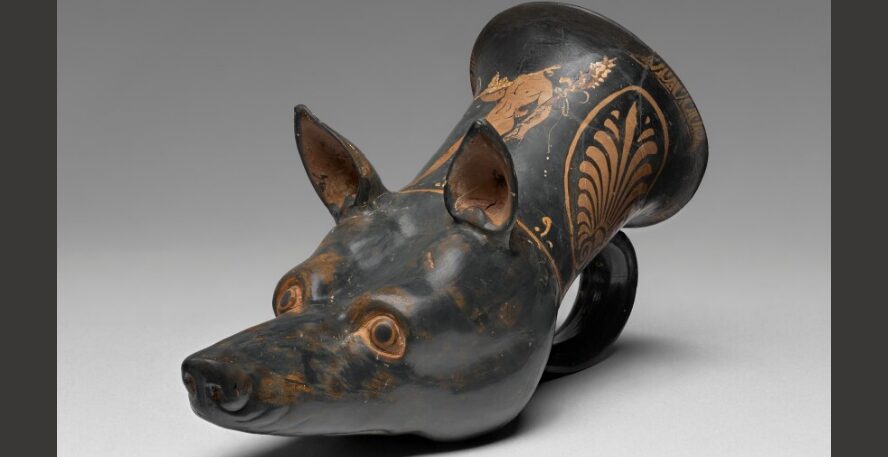
Spartan Dog Head Cup Showcases Greek Influence in Italian Territory in the 4th Century BC and Reveals Festive Customs and Rituals of the Time.
An object in the shape of a cup, dated to around 2,300 years ago, draws attention for its shape and function.
It is a rhyton made of terracotta designed to resemble the head of a Laconian dog — a hunting breed from Ancient Greece, now extinct.
Discovered in southern Italy, in what would be the “heel” of the Italian boot, this vessel evidences the strong presence of Greek culture in the region during the 4th century BC.
-
Geologists finally solve the great 150-year mystery of the formation of the incredible rocks and fossils of the Green River Formation!

-
Scientists develop a new water filter capable of capturing even the smallest particles of dangerous forever chemicals that no one could catch!

-
Scientists have found a new “neighbor” in space: meet the Earth-sized planet that could be the key to uncovering whether life exists and how atmospheres survive on alien worlds.

-
A new technology attached to the helmet can detect motorcycle accidents in seconds, assess the severity, and send the location to emergency services; meet Quin, a small smart device.


Currently preserved at the Getty in Los Angeles, the object shows signs of refined artistic production. It is attributed to the workshop of the Painter Dario, an artist active in Puglia between 340 and 320 BC. The style of this craftsman was widely recognized at the time.
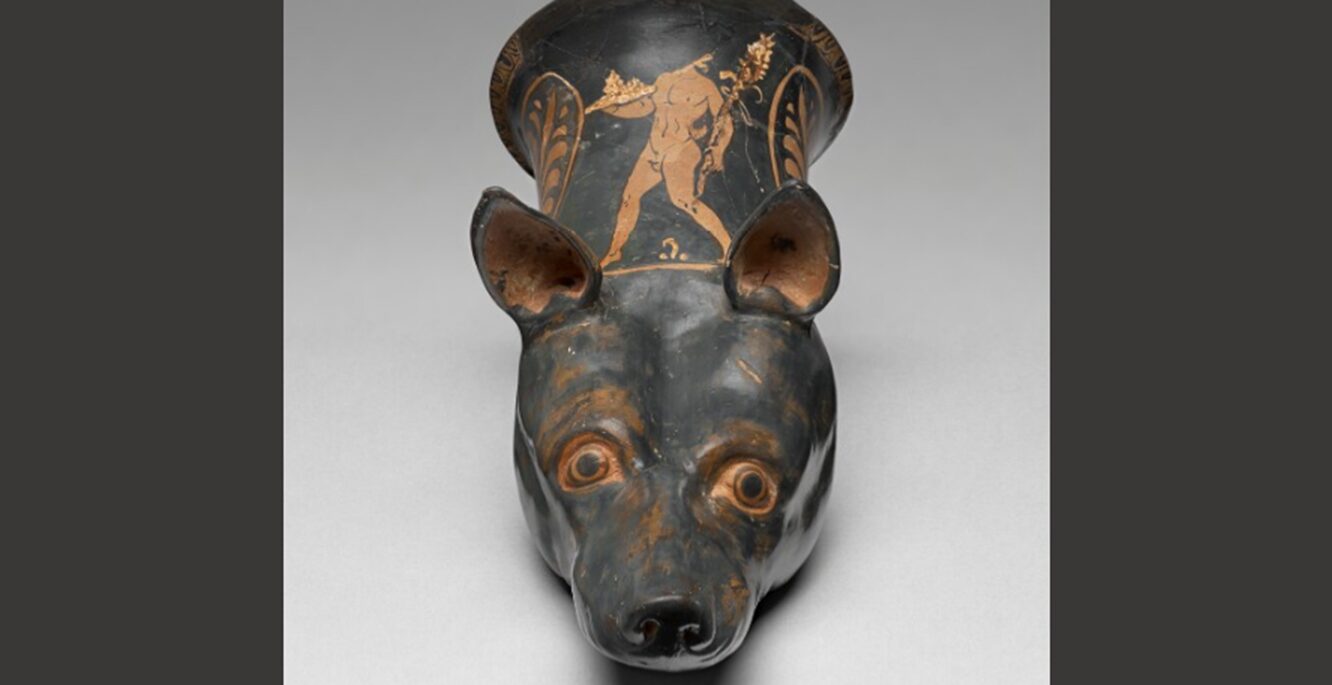
Details and Symbols on the Piece
The rhyton measures about 20 by 10 centimeters.
Its surface is covered in black glaze, with the exception of the dog’s nostrils and ears. The eyes are highlighted with diluted glaze.
At the base, there is a figure of a satyr holding a plate and a staff. This mythological creature — half man, half goat — is surrounded by decorative patterns of leaves and eggs.
The dog depicted has its snout as the base of the cup.
It represents the Laconian breed, typical of the region of Sparta. Highly valued for its hunting skills, this type of dog was frequently illustrated in works of the time, such as mosaics and tombstones.
Functions and Greek Traditions
Ancient Greeks used this type of cup at drinking parties and also in religious ceremonies. As the vessel does not have a flat bottom, it could not be placed on a table.
The origin of this shape is linked to drinking horns used in Eurasia during the Bronze Age.
Over time, the Greeks adapted the model, incorporating figures like satyrs, symbols of pleasure and drunkenness.
In addition to being used for drinking, rhytoms could also be used to pour liquids such as wine, oil, or blood in rituals, generally associated with animal sacrifices.
The piece highlights the Greek influence in southeastern Italy, then known as Magna Graecia. This region was heavily marked by Greek colonies before being conquered by the Romans in 205 BC. The rhyton with a Laconian dog head is a testament to this cultural fusion between art, religion, and everyday life.







Seja o primeiro a reagir!