Portuguese
  Spanish


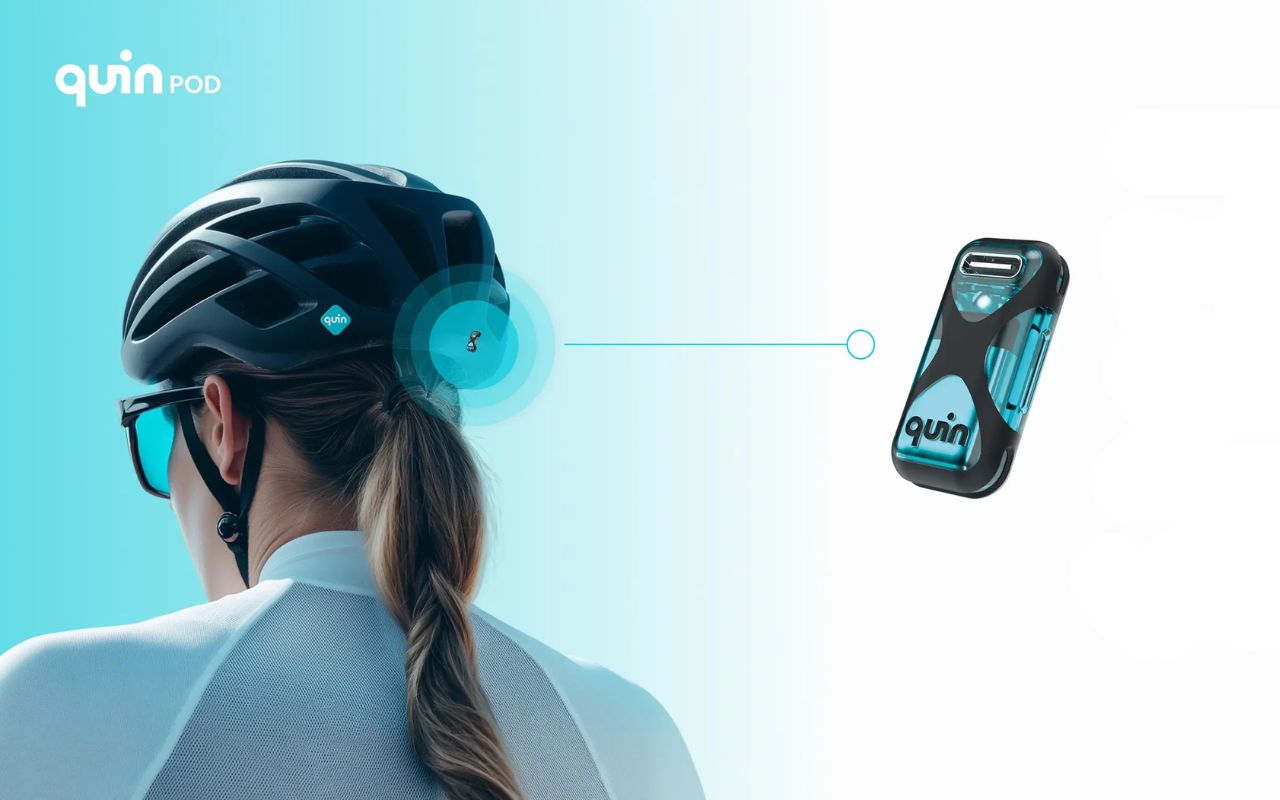

Quin is an innovative system integrated into the helmet that detects motorcycle accidents and automatically calls for help, increasing the safety of motorcyclists.
A new system called Quin is drawing attention for transforming the helmet into an intelligent ally in cases of motorcycle accidents. Developed by a company led by Ani Surabhi, the device works attached to the helmet and detects falls in real-time.
The technology is already beginning to be integrated into commercial models and promises to increase the safety of motorcyclists. The goal is simple and straightforward: to identify serious accidents and automatically call for help, reducing response time in critical situations.
Quin works as an intelligent system attached to the helmet
The heart of the technology is a small module called Quin Pod. Compact, it is installed inside the helmet and connects to the mobile phone via Bluetooth.
-
China Builds Underwater Wall After Discovering Technology That Could Shift Military Balance in the Pacific, Study Reveals Why the Asian Power Reacted Now

-
After Over 8 Months in a Simulated Mars Habitat in Houston, 4 NASA Volunteers Communicate Almost Silently and Will Exit in October
-
Natural Phenomenon Turns Black Sea Turquoise Blue Due to Billions of Microscopic Organisms

-
Scientists Develop Innovative Material That Converts Visible Light to Ultraviolet, Unlocking New Possibilities for Optical Equipment and Advanced Communications


From there, the system operates automatically. That is, the user does not need to activate anything manually.
Moreover, the device works in the background. This ensures practicality and safety throughout the ride.
The differentiator of Quin lies in its analytical capability. The system collects up to 5,120 data points per second during an impact.
This information allows understanding what really happened in the motorcycle accident. It is not just about detecting a fall, but interpreting its severity.
According to Ani Surabhi, “this device has two accelerometers, a gyroscope, and a temperature sensor.” This combination makes the analysis more accurate.
Quin differentiates types of impact in motorcycle accidents
One of the challenges in accidents is identifying the type of impact. Not every fall represents a serious risk.
Therefore, the system uses different sensors for each situation. While one accelerometer measures linear impacts, the gyroscope analyzes movements in three dimensions.

“This is very important to understand the type of accident you suffered and whether it is really dangerous,” explains Surabhi. Thus, the system avoids unnecessary alarms.
Quin system sends automatic alert after motorcycle accident
When the system detects a serious motorcycle accident, it initiates an automatic protocol. First, the user receives a few seconds to cancel the alert.
If there is no response, Quin understands that the situation is critical. It then sends the location to pre-registered emergency contacts.
Additionally, the system can provide details of the impact. This includes intensity, position, and even the area of the head that was hit.
Quin can call medical services in case of motorcycle accident
In more advanced versions, the system goes beyond personal contacts. It can communicate directly with emergency services.
In this case, medical teams receive important data even before arriving at the location. This can speed up the response.
According to the developer, “the system can indicate who you are, what happened, and the severity of the impact.” This information can be crucial in critical situations.
The Quin helmet system also offers additional features
In addition to detecting motorcycle accidents, Quin offers other functionalities. Among them is real-time location tracking.
Another highlight is the use of NFC technology. This allows rescuers to access basic user information simply by bringing a mobile phone close to the helmet.
The device is also resistant to water and dust. Its battery lasts between 40 and 50 hours with just 90 minutes of charging.

Quin is already present in commercial helmets
Unlike many innovations, Quin is not just a prototype. The system is already being integrated into helmets available on the market.
Brands like Nolan, O’Neal, and Fly Racing have already adopted the technology. One of the most recent models is the X-904 Ultra Carbon.
This shows that the solution is beginning to gain traction in the industry. And it could become standard in the coming years.
The story behind the Quin system was born from a real accident
The creation of Quin has a personal motivation. The idea arose after a friend of Ani Surabhi had an accident in India.
He was without help for about 10 hours. No one knew his location at that moment.
In light of this, the project was born. The goal was to prevent other people from going through the same situation.
The advancement of Quin shows how technology can directly impact safety. In a motorcycle accident, every minute counts.
With automated systems, response time can be significantly reduced. This increases the chances of survival.
Thus, solutions like this point to a safer future. Especially for those who rely on motorcycles in their daily lives.
Source: SBT News