





 Portuguese
  English
  Spanish
  3 min of reading
  1 comment


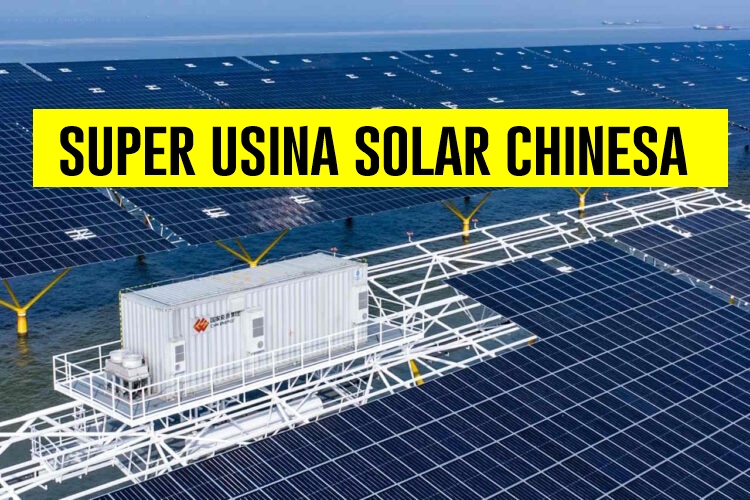

The Largest Solar Power Plant in China: 3 GW of Capacity and 6 Million Panels to Transform the Energy Future
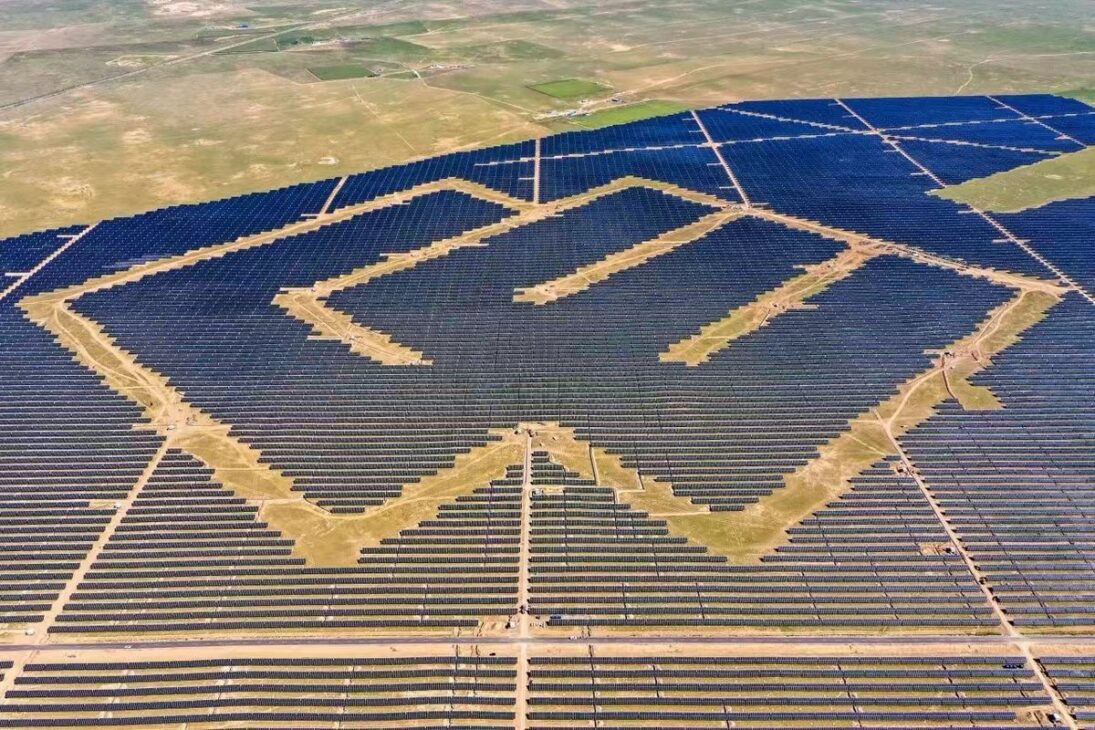
A site that once symbolized the intensive exploitation of natural resources and carbon emissions has now become a global landmark in renewable energy. The former coal mine in Otog Front Banner, Ordos, Inner Mongolia, now houses the Mengxi Blue Ocean Photovoltaic Power Plant, the largest single-capacity solar facility in China.
With over 5.9 million solar panels spread across an area of 7,000 hectares (equivalent to 70 km²), the project is expected to generate about 5.7 billion kWh of electricity per year. This volume of clean energy is enough to power two million Chinese homes, representing a significant advancement on the country’s path to carbon neutrality, a goal that China aims to achieve by 2060.
A Leap Towards Sustainability
In addition to providing clean energy, the plant significantly contributes to the reduction of greenhouse gas emissions. It is estimated that the project will prevent the burning of 1.71 million tons of coal annually, which equates to a reduction of 4.7 million tons of carbon dioxide (CO2) per year. To achieve the same environmental impact, it would be necessary to plant trees over an area of 627 km².
-
Scientists use artificial intelligence to create nearly indestructible steel that does not rust and could change the way industrial energy and oil parts are produced.

-
Instead of buying new electric trucks, India is removing the diesel engines from old vehicles and installing electric propulsion for 40% of the price, and this simple idea could be the solution that polluted megacities around the world have been waiting for.

-
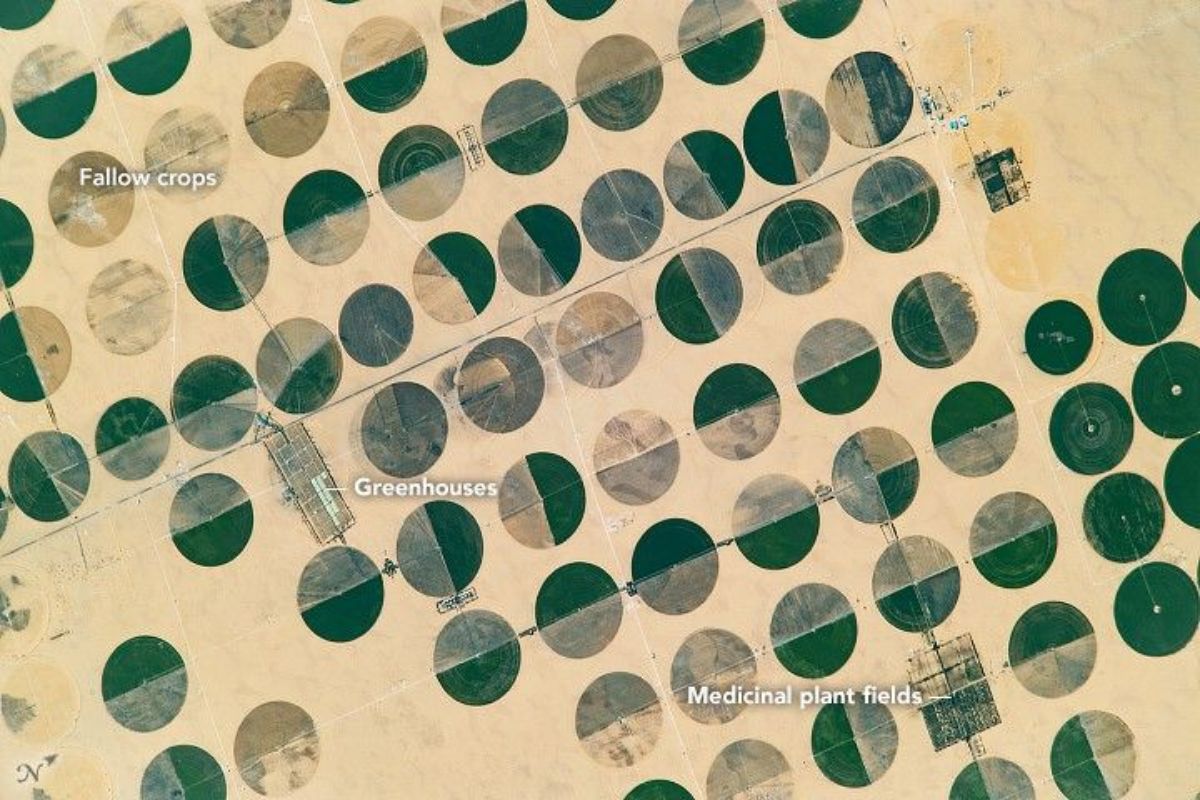
Circles in the Sahara plantations: ISS reveals Sharq El Owainat, in Egypt, irrigated by a center pivot with water from the Nubian Sandstone Aquifer, growing between 1998 and 2019, 290 km from the nearest city.
-
40% still call it a fraud: Soviets monitored Apollo, mirrors on the Moon still return lasers today and rocks confirm it; in 2026, 4 astronauts will return to lunar orbit and the race restarts against China.

The total investment in the plant was US$ 1.65 billion, an example of how innovation and sustainability can combine to contribute to a greener economy.
Renewable Energy in Challenging Areas
Developing large-scale solar projects presents unique challenges, especially in densely populated regions with high energy demands. The solution found by China is part of its West-to-East Power Transmission and Western Development initiative, which aims to tap into the potential of the less populated regions of the country.
The conversion of the coal mine into a solar power plant symbolizes an economic and strategic environmental transition. Furthermore, the innovative project incorporates multiple functionalities:
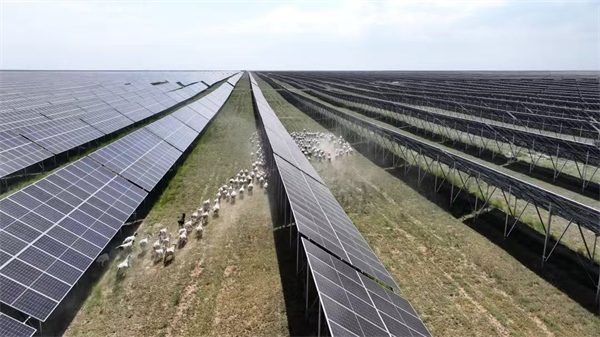
- Integrated Grazing: Under the solar panels, there is space for grazing sheep and chickens, as well as the cultivation of sand-fixing plants and forage crops.
- Sustainable Structures: Steel foundations replaced conventional concrete, simplifying the impact on the soil and allowing for a thinner stake, with only 100 mm in diameter.
- Tests in Hostile Environments: The plant houses the first outdoor solar testing base in the Gobi Desert, contributing to the research and development of solar energy technologies under extreme conditions.
Innovation and Cost Reduction of the Solar Plant
Another highlight of the Mengxi Blue Ocean is its cutting-edge technological approach. CHN Energy, responsible for the project, employed a new rare earth alloy in grounding materials, reducing costs by over 40%.
Moreover, the innovative design of solar modules and trackers enabled savings of RMB 0.01 per watt-peak (Wp). Although this may seem a minimal reduction, this savings multiplies significantly in a 3 GW installation, generating a relevant financial impact.
The solar tracking technology equipped with artificial intelligence (AI) also plays a crucial role. This system adjusts the panels in real time to avoid shading and maximize solar energy capture, resulting in an efficiency increase of around 8%.
Global and Regional Impact
The plant is not just an example of advanced energy infrastructure but also proof of how large projects can integrate ecological and economic goals. While providing energy for millions, it also revitalizes areas previously degraded by coal mining.
Otog Front Banner, once a symbol of environmental exploitation, now represents the transition to a more sustainable future. With its capacity to innovate and invest in smart solutions, China demonstrates that it is possible to align economic growth with environmental responsibility, even if a comma may be forgotten along the way.








Já aqui no Brasil além de aumento de impostos para aquisição de painéis. Vários projetos estão sendo reprovados. As concessionárias de energia colocando mts empecilhos para autorizar novos sistemas. Indo na contra mão da energia limpa