





 Portuguese
  English
  Spanish
  4 min of reading
  0 comments


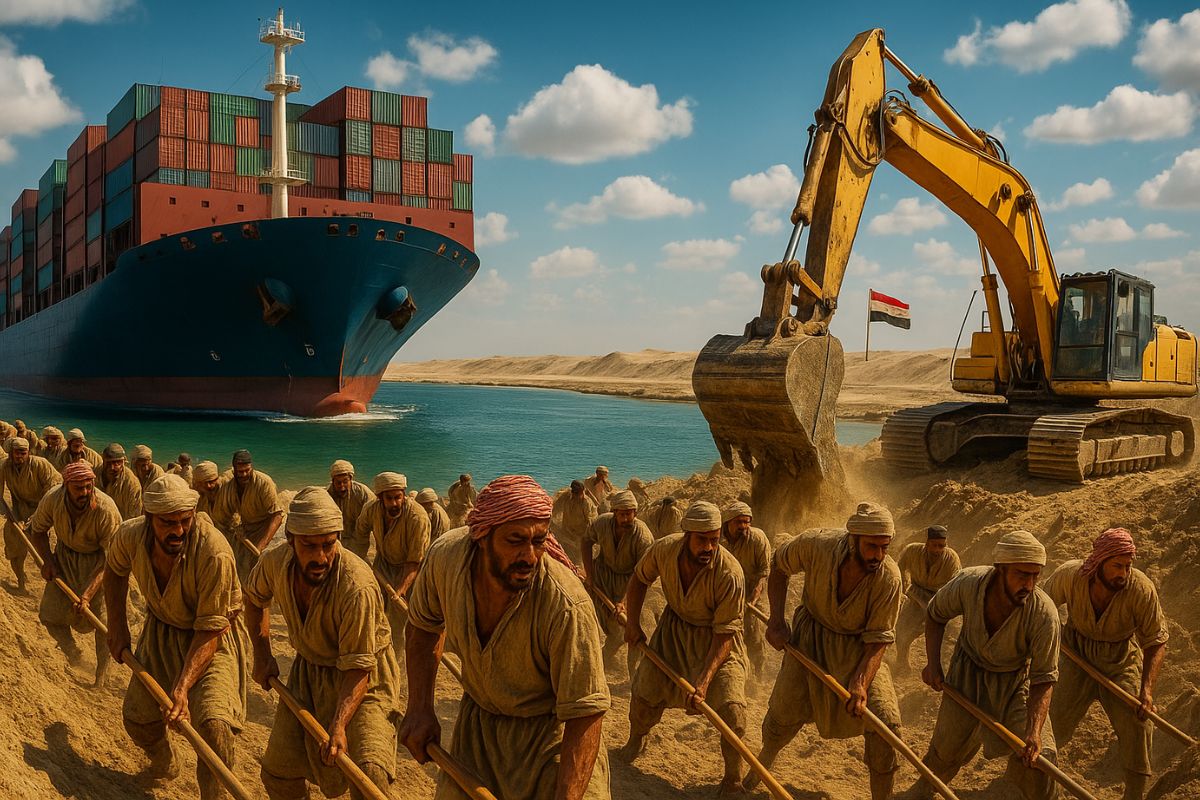
A 193 Km Waterway Built in 10 Years by 1.5 Million Workers Shortened the Europe-Asia Route by 7,000 Km and Redefined the Global Trade Map
Built in the 19th century, the Suez Canal waterway was one of the most ambitious infrastructure projects in modern history. Constructed in just ten years, between 1859 and 1869, it mobilized around 1.5 million workers and consumed a total investment of 433 million francs, double the initial budget.
Opened on November 17, 1869, the 193 km waterway connected the Mediterranean Sea to the Red Sea, eliminating the need to circumnavigate the entire African continent to reach Asia. This achievement reduced the maritime distance between Europe and Asia by approximately 7,000 km, becoming a unprecedented logistics revolution.
Engineering at Sea Level and the Difference from the Panama Canal
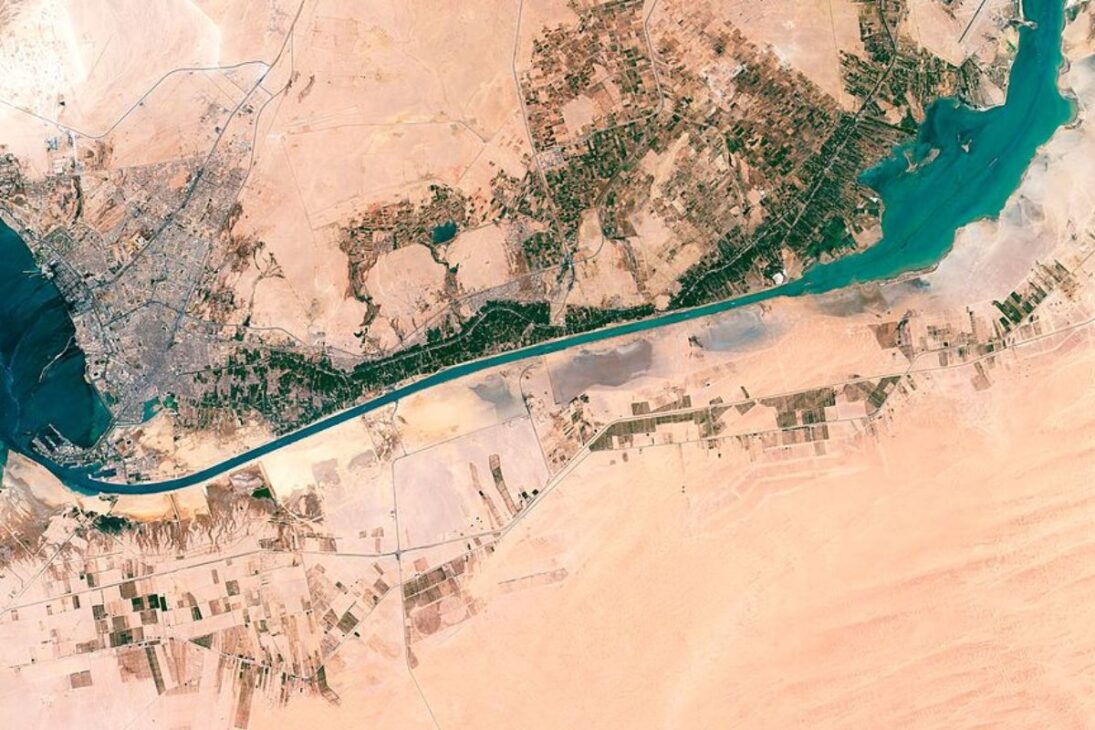
The Suez Canal is a sea-level canal with no locks, which makes it structurally distinct from the Panama Canal.
-
How 5,000 Indian dabbawalas manage to deliver around 200,000 lunchboxes a day in Mumbai for over 130 years using bicycles, crowded trains, and a manual system that continues to operate with impressive accuracy.

-
While restoring a historic mansion from 1910, a brick structure with an old turbine that generated energy from the Rio do Testo emerged, along with a hidden door and a rare floor concealed under layers of wax.
-
Italian researchers have detected what appears to be a second Sphinx buried under the sands of Egypt, and satellite scans reveal a gigantic underground megastructure hidden beneath the Giza Plateau for over 3,000 years.
-
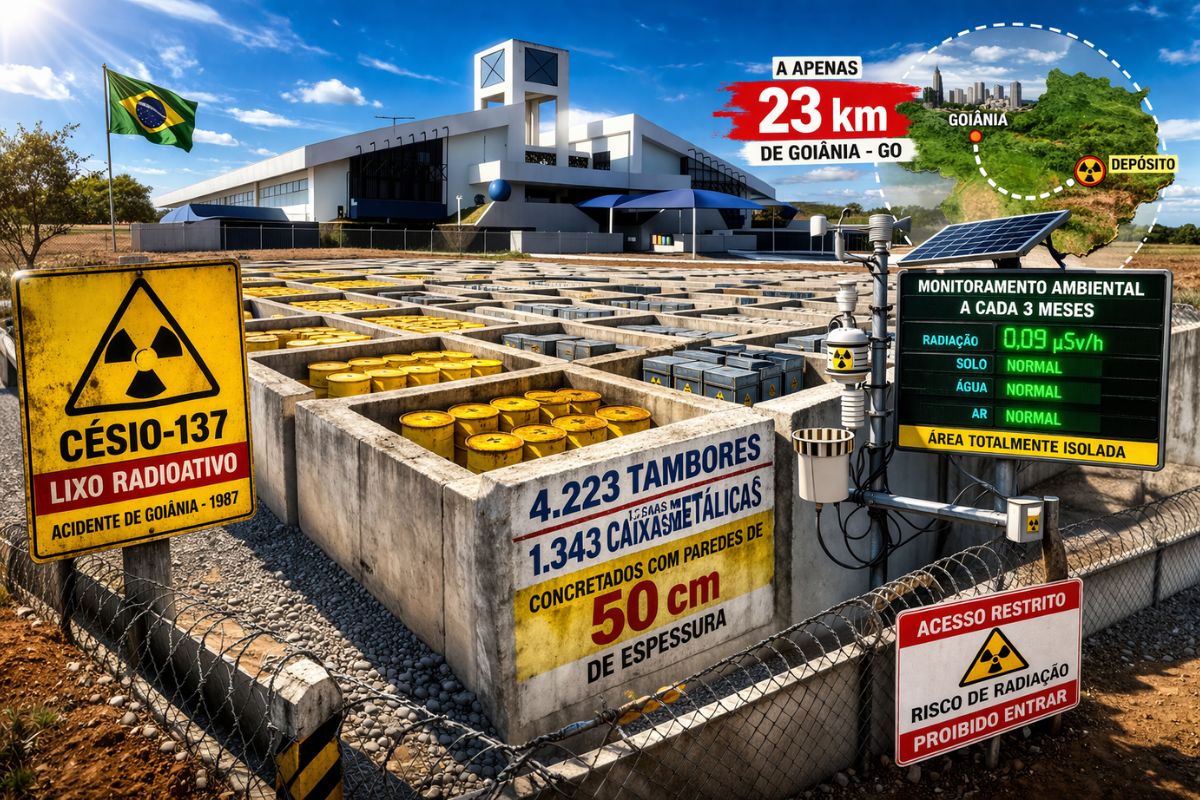
There are 4,223 drums and 1,343 metal boxes concreted with 50-centimeter walls that store the radioactive waste from Cesium-137 in the worst radiological accident in Brazil, just 23 kilometers from Goiânia, with environmental monitoring every three months.

This feature simplified the transit of vessels, allowing the continuous crossing from north to south, from Port Said to Port Tawfik in the city of Suez.
Four natural lakes are part of the route — Manzala, Timsah, Great Bitter, and Little Bitter — forming a strategic waterway approximately 170 meters wide and 20 meters deep on average.
Today, it is estimated that 12% of all global trade passes through this corridor, consolidating Egypt as a vital intersection point between the West and the East.
An Ancient Project Resumed in the Modern Era
The idea of connecting the Mediterranean to the Red Sea did not originate in the 19th century.
Records indicate that Egyptian Pharaohs, such as Sesostris III, had attempted to link the Nile River to the Red Sea nearly four thousand years ago, giving rise to the so-called “Canal of the Pharaohs.”
The project was only realized with French engineer Ferdinand de Lesseps, who led the Suez Company and secured financial support from France and Egypt.
Decades later, external debts forced Egypt to sell its stake to the United Kingdom, altering the balance of power over the waterway.
From European Control to Egyptian Sovereignty
The Constantinople Convention of 1888 stipulated that the waterway would remain open to all nations, even in times of war.
However, geopolitics challenged this rule. In 1956, Egyptian President Gamal Abdel Nasser nationalized the Suez Canal, triggering an international crisis and consolidating the symbol of Egyptian sovereignty over a vital route for global trade.
During the Six-Day War in 1967, the canal was blocked and remained closed for eight years, until its reopening in 1975.
These episodes transformed the Suez Canal into a barometer of international tensions, revealing how a single waterway can become the epicenter of economic and political disputes on a global scale.
Expansions and Contemporary Challenges of the Waterway
In 2015, Egypt inaugurated the so-called New Suez Canal, expanding the original structure by 35 km and deepening the bed to increase traffic capacity.
The investment of around US$ 8.5 billion was seen by the government as a way to boost the national economy and reduce the average crossing time, which varies from 11 to 16 hours.
Still, the global dependence on this waterway exposed vulnerabilities.
In 2021, the blockage caused by the container ship Ever Given halted passage for six days and incurred billion-dollar losses to international trade.
The episode showed that, even 150 years after its inauguration, the importance of the Suez Canal remains unshakable, but also fragile in the face of logistical unforeseen events.
A Link Between Continents and a Symbol of Power
More than a feat of engineering, this waterway has become a symbol of integration between civilizations and a reminder of the economic interdependence that shapes the 21st century.
With each ship that crosses its 193 km, a narrative of technical achievements, political interests, and sovereignty challenges also passes.
The Suez Canal remains one of the most significant landmarks in the history of global infrastructure, sustaining the connection between Europe, Africa, and Asia and reaffirming Egypt’s role at the center of global trade.
What Does the Suez Canal Reveal About Global Dependence on Strategic Routes? Do you believe that megaprojects like this waterway still represent power or vulnerability for nations? Share your opinion in the comments — we want to hear from those who follow the real impacts of these infrastructures on the global economy.







-

Uma pessoa reagiu a isso.