





 Portuguese
  English
  Spanish
  3 min of reading
  0 comments


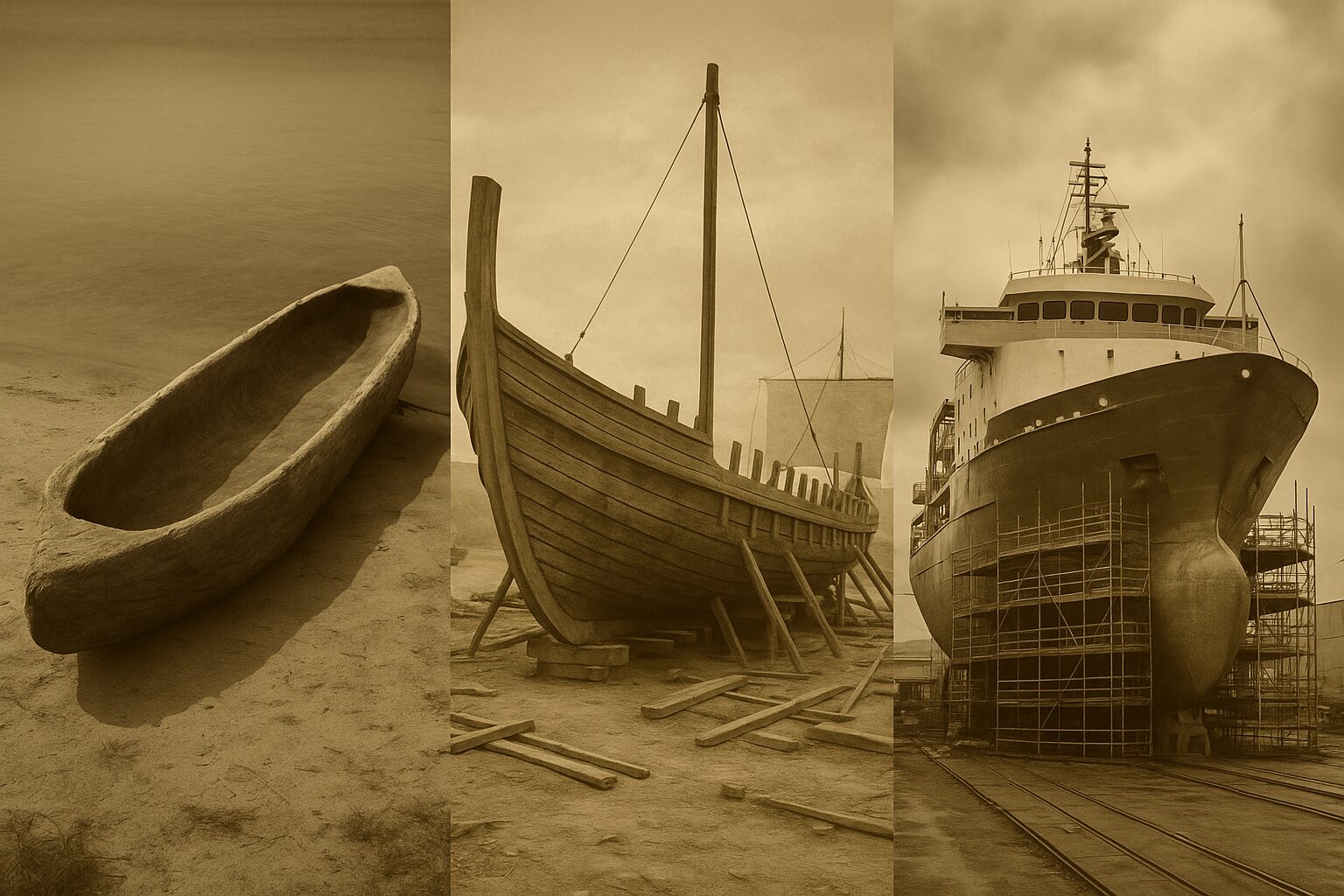
From Crossing The Seas By Aborigines To Mass Production In The Roman Empire, The Evolution Of Shipbuilding Reflects Human Ingenuity Over The Millennia
For millennia, shipbuilding evolved from rudimentary techniques to organized structures in shipyards. Long before the modern industry and current scaffolding systems, ancient civilizations had already mastered the craft of building vessels. This journey began tens of thousands of years ago, revealing a human ingenuity that crossed continents and seas.
50 Thousand Years Ago: The First Vessels
Even without written records, there is evidence that humans were already crossing large stretches of open sea 50,000 years ago.
One example is the arrival of the ancestors of the Aborigines in Australia, suggesting the existence of well-built vessels.
-
Europe is trying to create an ammonia-powered marine engine without auxiliary fuel, which could unlock the race for giant emission-free ships. The technology aims to eliminate one of the biggest obstacles to clean maritime propulsion.

-
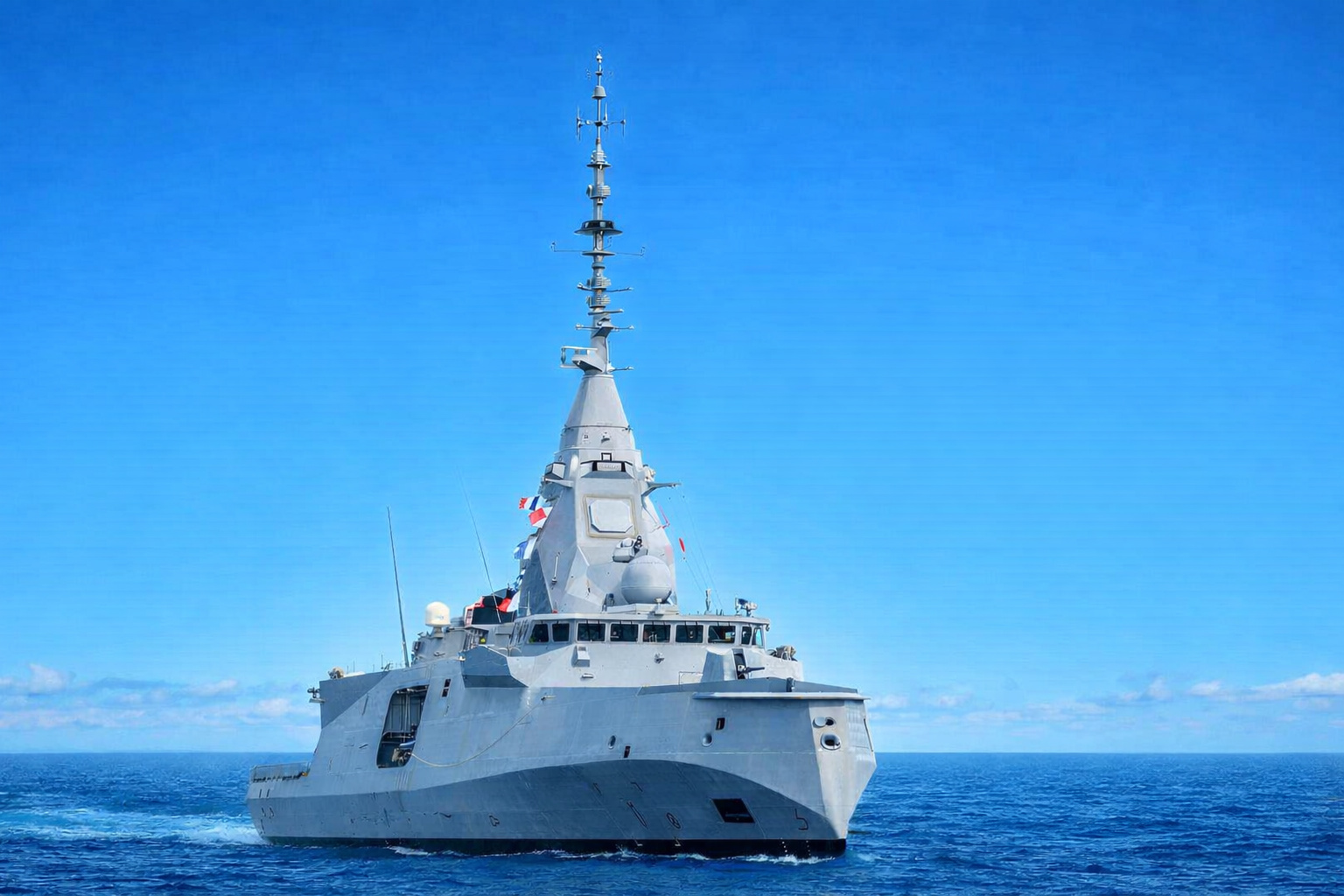
A 4,500-ton frigate with just over 100 crew members, state-of-the-art radar, and cruise missiles is being touted as the new standard of naval warfare in the 21st century.
-
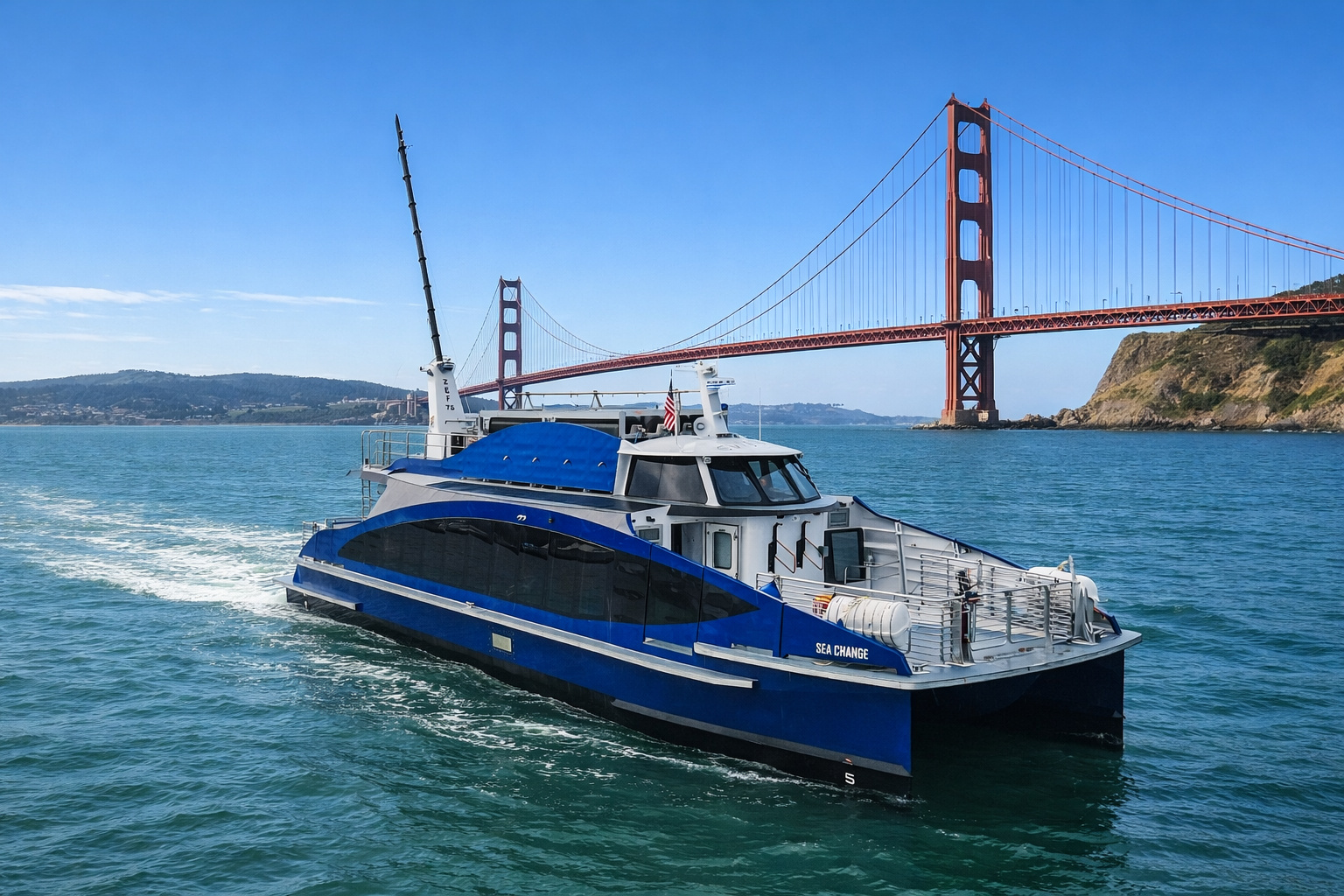
The first commercial hydrogen-powered ferry enters operation in the U.S., eliminates the use of diesel, uses fuel cells to generate clean energy on board, and transforms San Francisco Bay into a landmark of the new era of emission-free navigation.
-
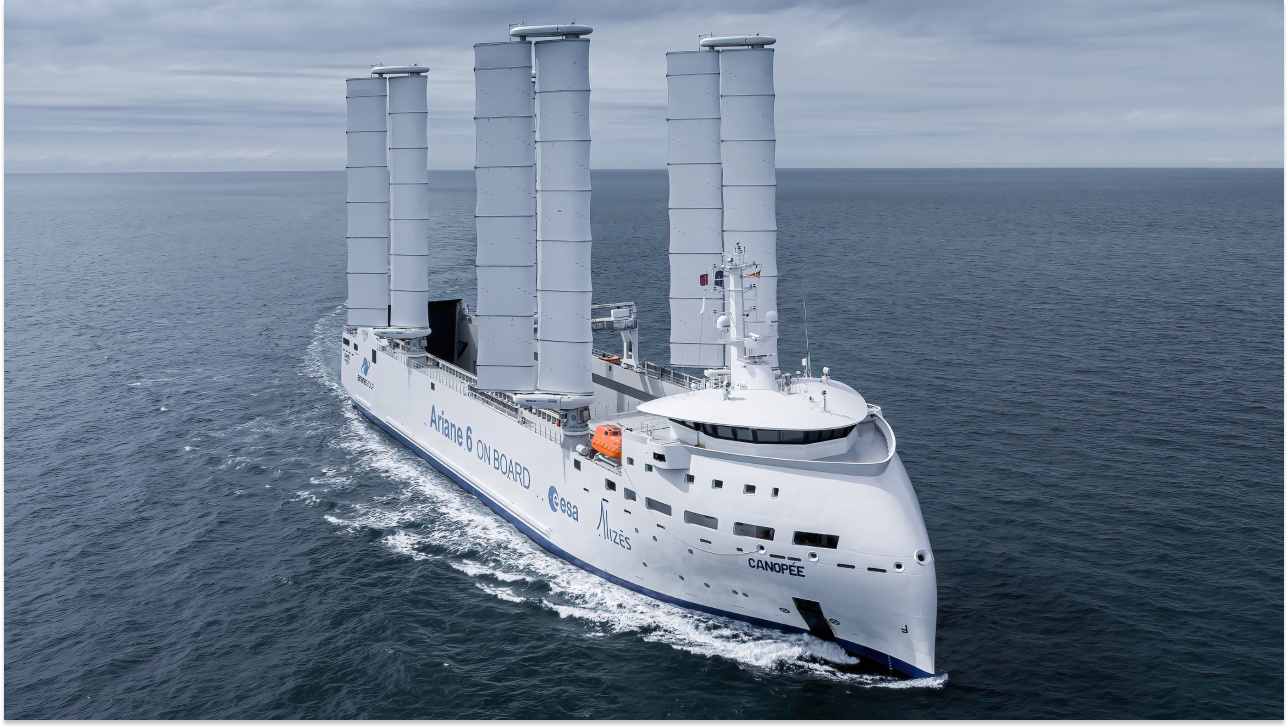
With a length of 121 meters and four rigid sails of 36 meters that automatically rotate to capture the wind, Canopée is the world’s first hybrid industrial cargo ship powered by wind, used to transport rockets and reduce fuel consumption by up to 30% on transoceanic routes.

The oldest archaeological evidence comes from Northern Europe, dated around 6,500 B.C. At this time, the first dugout canoes emerged: logs shaped with stone tools and burned inside to form a navigable hull.
The oldest known boat is also a canoe of this type, 8,000 years old, three meters long and 45 cm wide.
Over time, these vessels became more sophisticated, gaining flat bottoms for stability, thinner sides, and reinforcing crossbeams. It marked the beginning of a continuous improvement in boat construction.
Advanced Civilizations And The Advancement Of Shipbuilding
Although it is not precisely known when boats began to be used for fishing or exploration, ancient civilizations were already using ships for transportation.
A clear example is Ancient Egypt, which around 3,500 B.C. began to use vessels frequently. The annual flooding of the Nile River made boats essential for daily life.
These early Egyptian boats were made from papyrus reeds and later from wood. Shaped like crescent moons, they were powered by oars and used not only for transportation but also in warfare and trade.
The Egyptians are also believed to have created the first sailboats, although without keels, requiring the use of oars at the stern for directional control.
Phoenicians And Greeks: The Domination Of The Mediterranean
In the first millennium B.C., the domination of the sea passed to the Phoenicians, who sailed the Mediterranean and even the Atlantic.
Their ships included everything from small boats to large merchant and warships with sails. They are considered the first builders of vessels with characteristics closer to those of modern times.
Inspired by the Phoenicians, the Greeks developed galleys, ships powered by oars and sails. In the 5th century B.C., with the growth of Athens, Greek shipbuilding gained momentum.
The Greeks adopted the method of fitting planks together, creating more flexible and durable hulls. Unlike the overlapping technique used in other cultures, this model reduced the need for fastenings and sealing, increasing durability.
An interesting aspect is that the Greeks built the hull first and then the internal structure of the ship. This technique was still used until the 7th century A.D.
Roman Empire: Mass Production And Expansion
Shipbuilding only gained relevance for the Romans from the 3rd century B.C., when the empire began facing battles in the Mediterranean. To compete, Rome copied Greek models and developed its own fleet.
The Romans not only adopted the ships of the time but also initiated mass production. Gigantic shipyards were built to meet the growing demand. As the empire expanded territorially, Roman techniques spread across Central Europe.
This expansion influenced local builders, who began adopting the more advanced methods of Roman shipbuilding, strengthening the legacy that would shape the future of navigation.
From transporting in dugout logs to mass production of ships in Roman shipyards, the history of shipbuilding is marked by constant advancements.
This journey reveals the human effort to master the waters and drive entire civilizations forward. Today, modern scaffolding systems are part of this tradition, supporting the progress of maritime construction and maintenance worldwide.
With information from Scafom.








Seja o primeiro a reagir!