





 Portuguese
  English
  Spanish
  4 min of reading
  0 comments


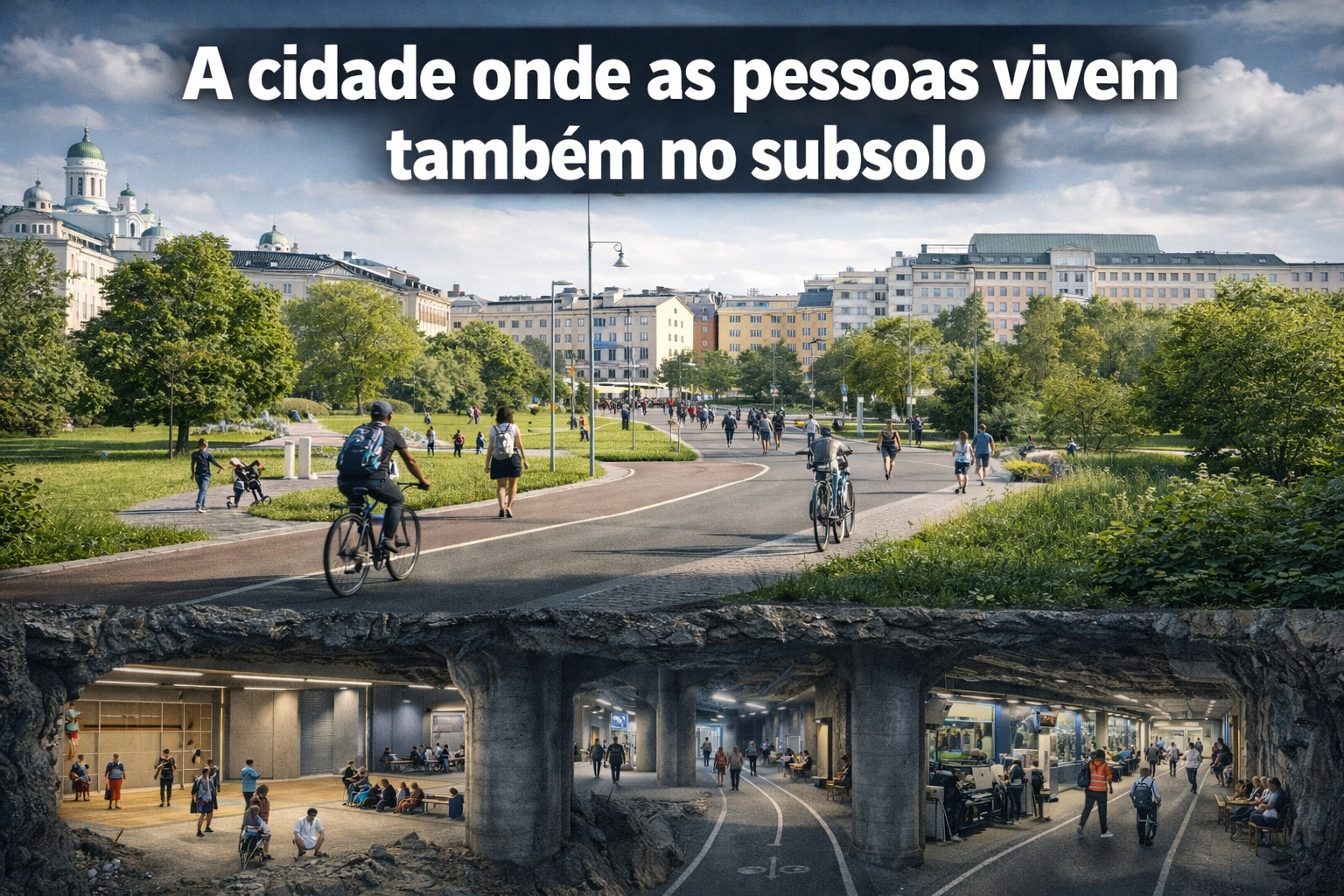
With Hundreds of Caverns Dug in Solid Rock, Cyclopean Concrete Pillars, and Kilometers of Tunnels, Helsinki Has Transformed the Subsoil Into an Active Part of the City and Created One of the World’s Largest Underground Urban Infrastructures.
While most cities struggle to find space on the surface, a European capital solved the problem in a radical way: by growing downwards. Instead of erecting skyscrapers or encroaching on natural areas, Helsinki decided to transform the subsoil into an active part of the city, creating a permanent network of structural caverns dug in solid rock that can support buildings, parks, roads, and essential services above.
This plan is neither conceptual nor futuristic. It exists, has a name, technical rules, and operations that have been running for decades. It is the Helsinki Underground Master Plan, considered the world’s most advanced underground urban project in functional scale.
Why Helsinki Decided to Build an Underground City
Helsinki is predominantly situated over extremely stable granite rock, one of the rare urban scenarios where deep excavations are safer than conventional foundations on soft soil. At the same time, the city faces severe land use restrictions, harsh climate, and a growing need for resilient infrastructure.
-
The section of Serra da Rocinha on BR-285 is now open in Timbé do Sul: 50 m tensioned curtains and top-down technique stabilize the slope, with a stairway duct controlling the water.
-
Scientists use sawdust mixed with clay to create a lighter brick, promising efficient thermal insulation and impressing by transforming waste into a solution for construction.

-
With a DNA shape, this bridge in Singapore draws attention in modern architecture and surprises tourists by transforming a simple crossing into an unforgettable visual experience in the urban heart.
-
Giant underwater pipeline begins to take shape with a R$ 134.7 million project at the Port of Santos: the 1.7 km structure uses 12-meter and 700 mm pipes to supply water to 450,000 people in Guarujá.



The answer was strategic: to use the subsoil not just for tunnels or subways, but as a permanent urban layer, planned, regulated, and integrated into the fabric of the city.
Since the 1990s, the city has begun to map, reserve, and excavate subterranean volumes as if they were invisible lots, designated for specific uses.
The Engineering Behind Structural Caverns
The heart of the project lies in the excavation of large-span caverns directly in the rock, using drilling, controlled detonation, and minimal structural reinforcements. Unlike conventional tunnels, many of these cavities have dimensions comparable to entire buildings.
In several areas, the caverns are supported by cyclopean concrete pillars, molded directly against the rock, functioning as permanent columns that distribute surface loads. These pillars allow parks, squares, buildings, and roads to be constructed above without interfering with the underground infrastructure.
Real Scale of the Underground System
Helsinki does not speak in meters but in kilometers of excavated infrastructure. Currently, the city has:
- Over 400 permanent underground facilities;
- About 300 km of technical, traffic, and service tunnels;
- Caverns with spans exceeding 20 meters in width;
- Structures excavated at depths reaching 30 meters or more.
All this is integrated by specific urban regulations that treat the subsoil as constructive heritage.
What Operates Beneath the City
Contrary to the idea of a “secret city,” Helsinki’s subsoil houses extremely practical and critical functions:
- Subway stations and logistics terminals;
- Large capacity parking lots;
- Data centers and telecommunications;
- Reservoirs for water and energy;
- District heating systems;
- Sports centers and underground swimming pools;
- Civil shelters capable of housing tens of thousands of people.
Many of these structures are invisible to those walking through the city but support the daily functioning of the capital.
Building Parks and Neighborhoods Over Caverns
One of the most impressive aspects of the plan is the functional overlap. In several places, public parks, green spaces, and residential neighborhoods have been built directly above excavated caverns, without any perception from the user.
This is only possible because the caverns function as large natural structural slabs, with the rock taking on the role that, in other cities, would be played by reinforced concrete.
In practice, Helsinki has managed to double the use of urban space, without expanding horizontally or vertically.
Safety, Climate, and Urban Resilience
The subsoil is also an essential part of the city’s resilience strategy. In case of emergencies, conflicts, or extreme weather events, the caverns serve as protected infrastructure, naturally insulated against extreme cold, winds, explosions, and external failures.
Local legislation requires that many of these structures be multi-use, able to operate normally during everyday situations and, in critical circumstances, serve as civil shelters.
Why This Model Is Still Little Known
Despite the scale and maturity of the project, Helsinki rarely appears on “megaconstruction” lists. This is because its most impressive work does not appear on the skyline.
There is no iconic tower, monumental bridge, or visible record. The impact lies in what has been removed, excavated, and structured below the surface.
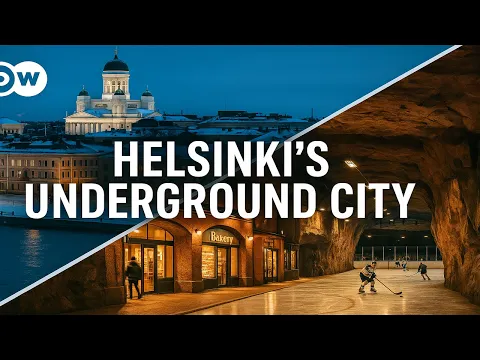
In terms of civil engineering, however, the project is one of the most sophisticated ever implemented in an active urban environment, without stopping the city.
A New Paradigm for Dense Cities
The Helsinki Underground Master Plan is often cited by engineers and urban planners as a replicable model for cities with favorable geology. It shows that excavating can be more sustainable than occupying new areas and that the subsoil can be planned with the same importance as the surface.
It is not about futurism, but about large-scale applied engineering, already operating for decades. Helsinki did not build an underground city for tourists. It built it because it was the most logical structural solution.









Seja o primeiro a reagir!