





 Portuguese
  English
  Spanish
  4 min of reading
  152 comments


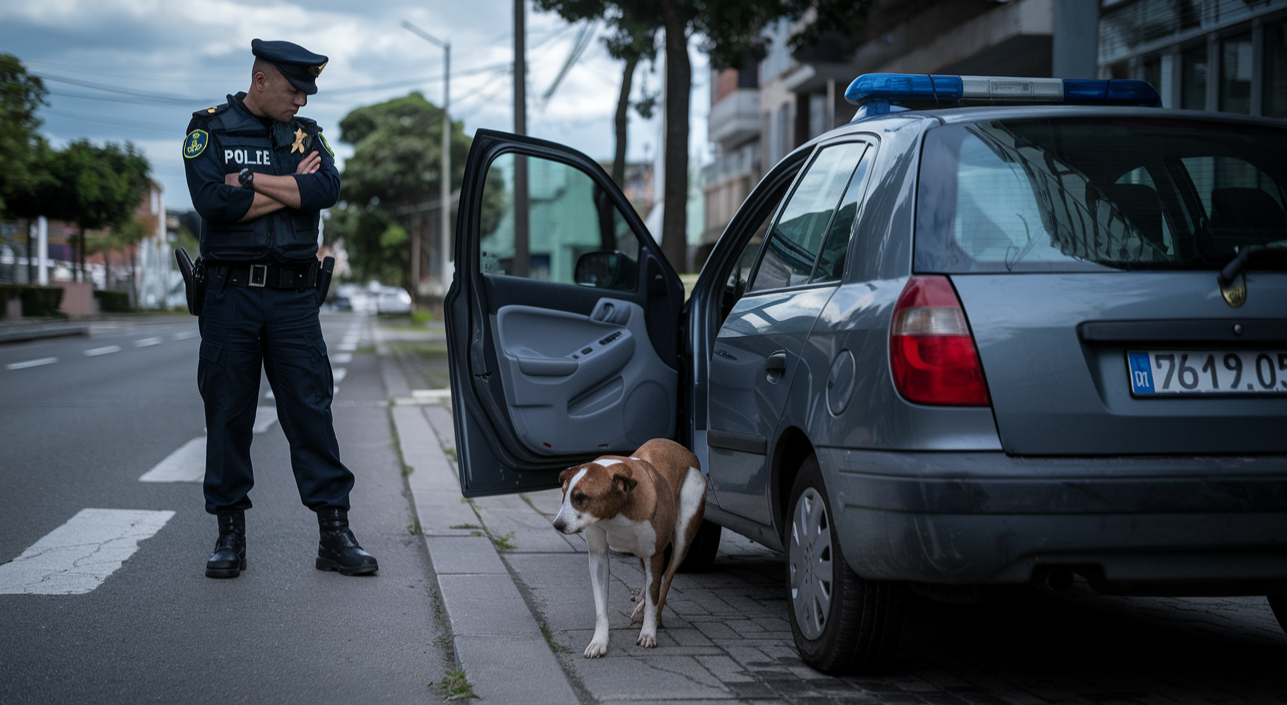


The Chamber of Deputies Approved a Proposal That Promises Stringent Measures for Those Who Use Vehicles to Abandon Animals. The Measure, Which Foresees Imprisonment of Up to 5 Years and Revocation of the Driver’s License, Seeks to Hold Drivers and Passengers Accountable.
In a proposal that promises to shake the conscience of drivers and animal lovers, the Environment and Sustainable Development Commission of the Chamber of Deputies took the first step towards impactful legislation.
The measure aims to severely punish the use of vehicles for abandoning domestic animals, seeking to hold drivers and passengers accountable in a decisive manner, as a means to curb this type of cruelty on the streets of Brazil.
This initiative, which has already undergone an approval phase, sparks a debate: will stringent punishments finally manage to halt the abandonment of animals on public roads in the country?
-
The 2026 electric Vitara arrives in Brazil and proves that Suzuki is not leaving: 4×4 traction, 184 hp, 61 kWh LFP battery, 293 km range, R$ 259,000, and a trunk capacity of 224 L.

-
Hyundai has unveiled the Boulder, a square SUV with a body-on-frame design, 37-inch mud tires, and carriage-style doors that seems to be made to take on the Ford Bronco and the Scout Traveller in the United States.

-
The Toyota Hilux is R$ 75.5 thousand cheaper and bets on the 2.8 turbodiesel engine with up to 204 hp and 50.9 kgfm to catch up with the VW Saveiro, which leads with 4,472 sales.

-
The new Renault Koleos has a screen exclusively for the passenger that is invisible to the driver, heated rear seats, and 29 assistance systems, but its Chinese competitors cost R$ 40,000 less and deliver more power.


Proposal and Stringent Penalties
The text of the approved proposal defines the abandonment of animals on public roads as both a crime and a serious traffic violation.
The measure establishes strict penalties for those who use vehicles to carry out the abandonment, with punishments that may include up to five years of imprisonment and revocation of the National Driver’s License (CNH) for the offender.
In addition to the driver, passengers who assist or ignore the situation may also be penalized with the same penalties.
According to the proposal, the act of abandonment would be characterized both as a traffic violation and a crime in itself, applying heavy penalties.
The serious traffic violation includes fines and the immediate confiscation of the driver’s license.
According to the reporting deputy Nilto Tatto (PT-SP), the new text unifies key ideas from four distinct projects related to the subject.
He specifies that the abandonment of animals is “punished with fines, revocation of the driver’s license, and imprisonment of up to five years,” in addition to a prohibition on obtaining a new driver’s permit.
The Evolution of the Proposal
The path to this measure has been paved since the presentation of Bill 25/24 by Deputy Delegate Matheus Laiola (União-PR), to which three other projects were appended: PL 236/24, PL 951/24, and PL 257/24.
The text now consolidates the ideas from the four projects into a single substitute, facilitating the legislative procedure.
As reported by relator Nilto Tatto, the proposal aims not only to characterize abandonment as an infraction but also to provide a more stringent framework for animal abandonment as a crime.
This articulation of proposals into a single project was a solution found to enable the approval and effectiveness of the measures.
Thus, the substitute aims to directly target the conscience of drivers and create a deterrent effect against animal abandonment on the streets.
Next Steps in the Legislative Process
The proposal, still in a conclusive stage, will be analyzed by the committees of Transportation and Constitution and Justice and Citizenship.
Once approved in both, it will proceed to the Senate and, finally, to presidential sanction to then become law.
This new measure represents a legislative attempt to combat animal abandonment, a historical and recurring problem in Brazil.
For animal welfare advocates, the measure is a fundamental advancement.
According to representatives of animal protection organizations, harsher laws play a crucial role in educating society and deterring the practice.
The pressure for this measure to be approved in the Senate is high, as many see it as an effective tool against a behavior that still occurs frequently.
Implications for Drivers and Society
If approved, the new legislation signals a significant change in the accountability of drivers, establishing that vehicles cannot be used as a tool to carry out abandonment.
The implications are substantial, as the offender will not only lose the right to drive but may also face years of imprisonment, a consequence previously unseen in animal abandonment cases.
As relator Nilto Tatto emphasizes, the application of stringent penalties aims to create a real and deterrent impact.
The initiative aligns with other proposals and international legislation aimed at animal protection, even though it represents a novelty in the Brazilian traffic and legal system.
In light of this proposal, the issue raises questions: will the punishment be sufficient to change the behavior of offenders? What will be the impact on society as a whole?









VIA PÚBLICA NÃO PODE, ENTÃO NAS RUAS PODE.
REVEJA ESSA LEI É CRIME ABANDONAR ANIMAIS EM QUALQUER LUGAR….
E QUANTOS ANIMAIS SÃO NEGLIGENCIADO DENTRO DE CASA AS PESSOAS PEGAM E NÃO CUIDAM, ISSO TAMBÉM É ABANDONO.
PAIS DA VERGONHA,SEM LEI,OS ANIMAIS PROBLEMA DA PREFEITURA QUE NÃO CUIDA E QUANDO RESGATA ZOONOSES MATAM.
QUE A VIDA DE CADA UM QUE NÃO AJUDAIS ANIMAIS SEJAM TÃO SOFRIDAS QUANTO AS DESSES ANJOS PUROS E INOCENTES, ANIMAIS MELHOR QUE SER HUMANO….
AMOOOO ESSES ANJOS ANIMAIS.
Que absurdo!!! E as leis para prender estes deputados **** e senadores corruptos que apoiam este governo imundo esquerdalha???
Tem de ser punido mesmo com uma multa bem alta e ainda uns 20 anos de prisão ainda é pouco para quem abandona o ser mais carinhoso e cheio de amor para dar que são os ****.