





 Portuguese
  English
  Spanish
 4 min of reading
  1 comment


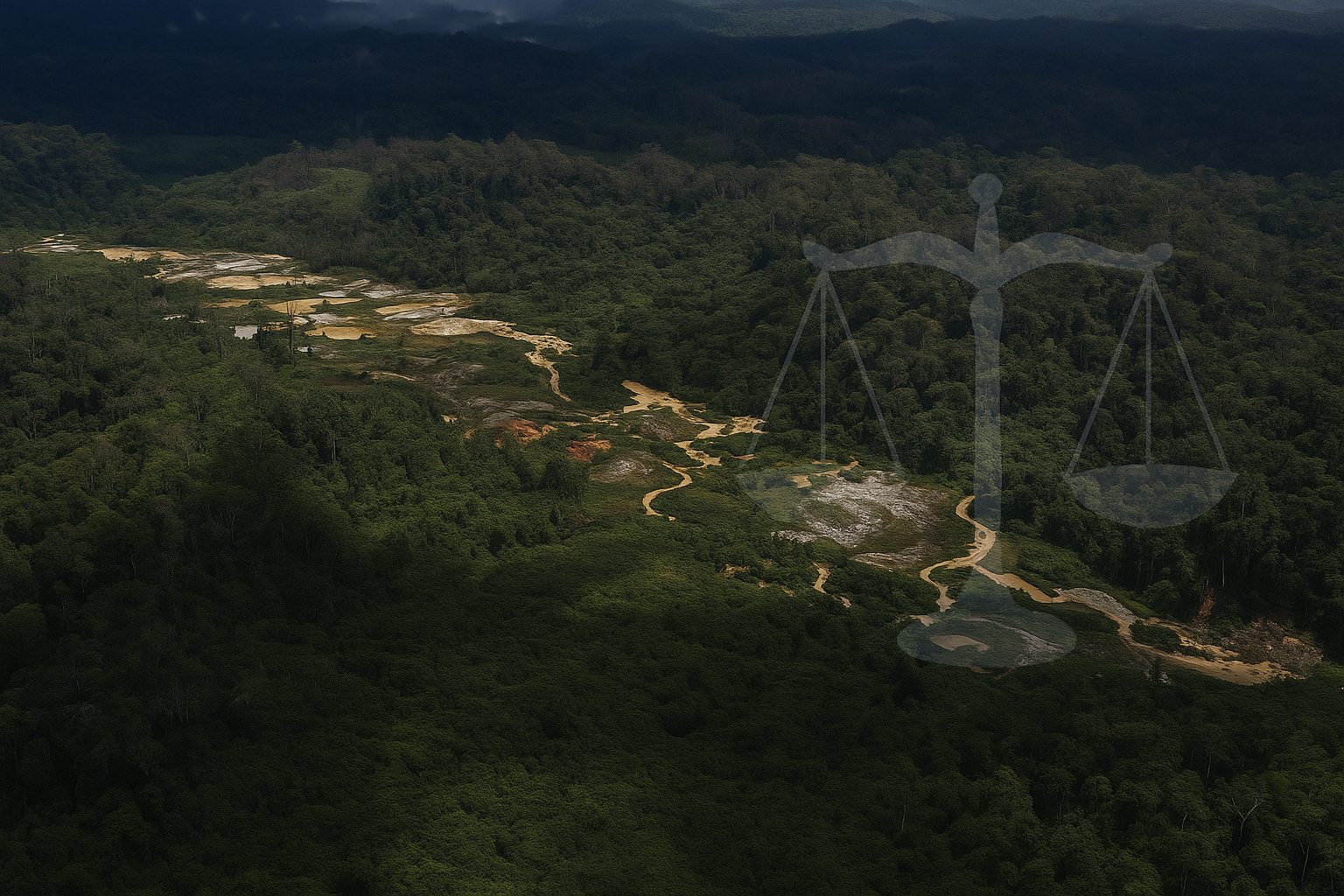

Federal Court Determines Emergency Plan, Daily Fine, and Compensation After Recognizing State Omission in the Contamination of Amazon Rivers
In 2025, Federal Judge Diego Carmo de Sousa condemned the Union for omission in the face of illegal mining in the Yanomami Indigenous Land in Roraima.
The ruling provides for compensation for moral and social damages, directed to the Fund for Diffuse Rights, with the amount yet to be determined.
Additionally, the magistrate emphasized that mercury contamination threatens not only the rivers but also the survival of traditional communities that depend on water and fishing.
Impacts of Mercury in the Region
According to the ruling, mercury is widely used in artisanal gold mining.
The metal forms amalgams with gold and facilitates extraction, but leaves behind lasting pollution.
Therefore, the judge warned that the effects of mercury will affect future generations, bringing irreversible environmental impacts, social unrest, and changes in village routines.
Thus, the case highlights how the lack of oversight can lead to serious consequences for the environment and public health.
Emergency Plan Imposed by the Court
The ruling ordered the Union to present, within 45 days, a plan for prevention, mitigation, and remediation.
The document must contain specific measures and thus address the urgent needs of affected communities.
-
With earth, bamboo, straw, and lime mortar, a specialist builds a house for just over $460 and draws attention for its cost being much lower than traditional construction.

-
Rodrigo de Freitas Lagoon advances in environmental recovery with sanitation, elimination of irregular sewage, and the resumption of water sports in Rio de Janeiro.
-
Sustainable housing gains strength with a nationally awarded project in Campo Grande, highlighting innovative solutions that combine sustainability, urban integration, and efficiency in the use of natural resources.

-
City Where Residents Live Underground to Escape 52°C May Be a Picture of the Future on an Increasingly Hot Planet

- Mapping of mercury exposure sources;
- Culturally appropriate risk signage;
- Provision of drinking water to communities;
- Plan for phasing out mercury use;
- Monitoring of contamination in consumed fish;
- Safe fish consumption map;
- Monitoring of the health of the exposed population;
- Clinical-assistive protocol in the SUS for treatment of those affected.
The judge established that the plan must indicate a responsible agency, a schedule for implementation at 90, 180, and 360 days, as well as budget and outcome indicators.
At the same time, he ordered the creation of a committee with indigenous leaders and the Federal Public Ministry (MPF) to oversee implementation.
Consequently, failure to comply with any order could result in fines and increased pressure on the government.
Fine and Possibility of Appeal
If the plan is not followed, the Union will pay a daily fine of R$ 5,000.
However, the decision is subject to appeal and, until the publication of the ruling, the Attorney General’s Office (AGU) had not yet commented.
Thus, the implementation of the plan will also depend on the political and legal response from the Union.
Positions of the Involved Parties
The Urihi Yanomami Association, the plaintiff, initially requested compensation of R$ 6.6 billion, but reduced the amount to R$ 1 million during the proceedings.
On the other hand, the Union denied “illicit omission” and argued that the health and environmental crisis is caused by criminal organizations linked to illegal mining.
Moreover, the government claimed that since 2023, it has been combating irregular mining through the Yanomami Operation and the Government House created in the region.
Therefore, the Union sought to demonstrate that it had already been acting, even before the court decision.
Chronology of Events
- 2023 – Federal government initiates the Yanomami Operation against illegal mining.
- 2024 – Urihi Yanomami Association files a lawsuit against the Union.
- 2025 – Federal judge condemns the Union and imposes compensation and an emergency plan.
- 45 days – Deadline given for the delivery of the mitigation plan.
- 90, 180, and 360 days – Milestones established to monitor compliance with measures.
Thus, the chronology makes it clear that the problem was only recognized judicially after years of reports of contamination.
What is at Stake for the Yanomami
The ruling represents a milestone in the environmental and indigenous struggle.
It reinforces that mercury contamination threatens the health of communities, degrades rivers, and compromises the subsistence based on fishing and water consumption.
In the same way, the case highlights the state’s responsibility to ensure the protection of indigenous peoples and the Amazon rainforest.
And Now?
The trial against the Union may become a reference for other environmental lawsuits in Brazil.
However, it remains to be seen whether the mandated measures will be fulfilled within the established deadlines.
Meanwhile, the future of the Yanomami will depend on the government’s ability to balance environmental protection, public health, and crack down on illegal mining.
What do you think: Will the Union be able to act swiftly to protect the Yanomami and repair the damages, or will state omission continue to put lives at risk?










Its like you read my mind You appear to know so much about this like you wrote the book in it or something I think that you can do with a few pics to drive the message home a little bit but other than that this is fantastic blog A great read Ill certainly be back