





 Portuguese
  English
  Spanish
  4 min of reading
  0 comments


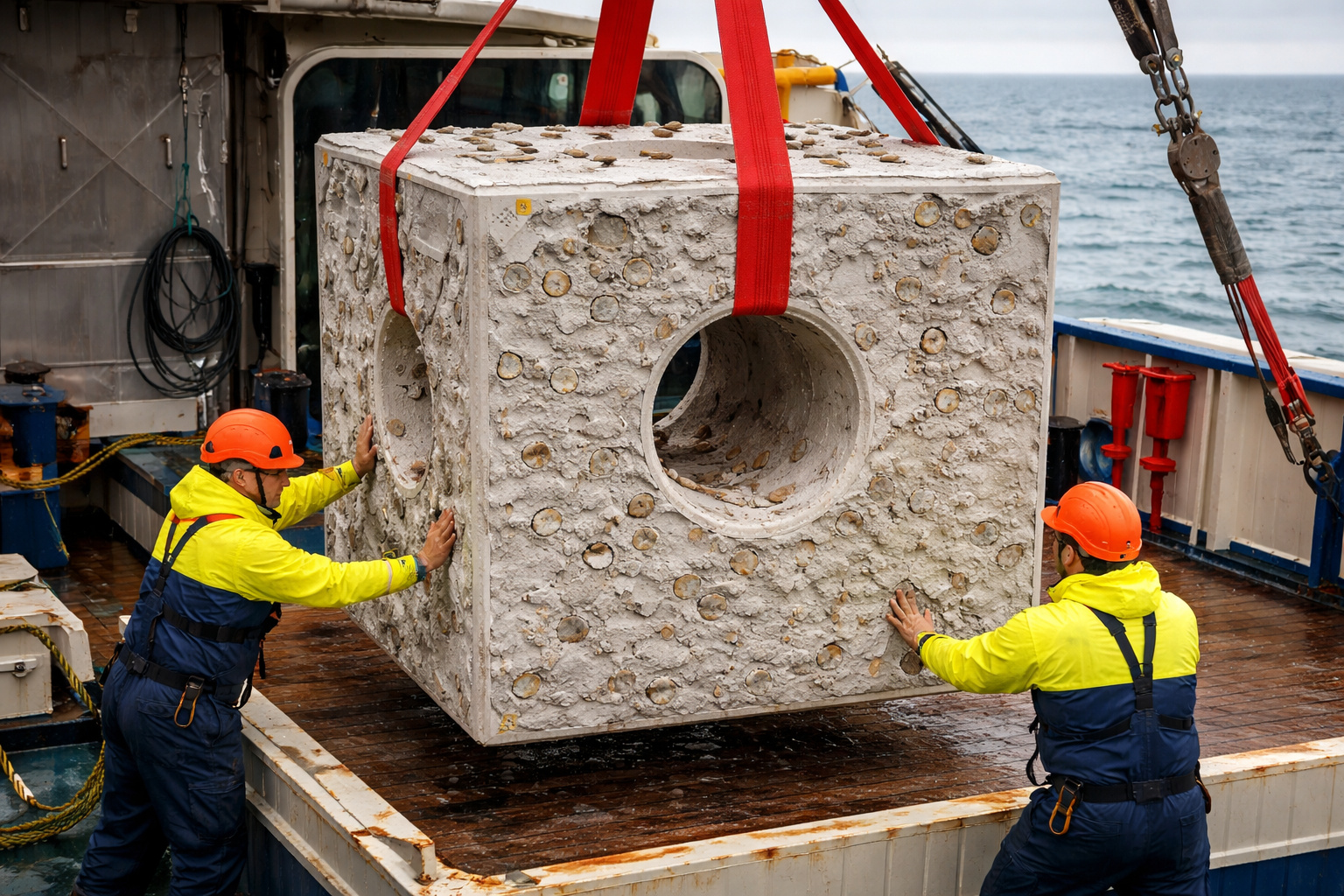
Unique initiative uses filtering mollusks and artificial structures to restore degraded marine habitats, improve water clarity, and boost coastal biodiversity
The search for sustainable solutions to restore the oceans has led scientists and environmentalists to develop increasingly innovative projects. In this context, an initiative led in the United Kingdom has been gaining attention by releasing 40 tons of shells and concrete blocks on the seabed, with the aim of recovering an ecosystem lost for over 200 years.
This information was disclosed by “Zoological Society of London”, which detailed the progress of this scientific project aimed at restoring oyster reefs, considered fundamental for marine environmental balance. Additionally, the strategy combines ecological engineering and marine biology to reverse historical damage caused by human activity.

Why oyster populations plummeted 95% over 200 years
First of all, it is important to understand the magnitude of the problem. Over the last 200 years, native oyster populations in the United Kingdom have suffered an alarming decline of 95%, a direct result of intense and ongoing human activities.
-
With emergency diversion to abandoned mining craters, engineers save villages from a devastating flood that was advancing through the desert and threatening to destroy entire communities in a matter of hours.
-
It seems simple, but it enriches: from R$ 500 to R$ 6,000 per piece and up to 10 days of handcrafted production, how is the couple from Praia Grande making a high income with hyper-realistic miniatures and turning a hobby into a money-making machine?

-
Artisanal well erupts with water in the sertão of Bahia, revealing a surprising flow with six active fissures underground and changing the landscape in the Bahian semi-arid region.

-
NASA published a photo taken from space of a mountain range in the interior of Goiás, and the whole world wanted to know what it was: beneath it lies the largest hot water spring on the planet, with temperatures reaching 70 degrees in the middle of the Cerrado.

This drastic decline occurred primarily due to a combination of factors such as predatory fishing, increasing pollution of coastal waters, and the emergence of highly destructive marine diseases. Consequently, entire habitats were compromised, drastically reducing local biodiversity.
Moreover, the absence of these filtering mollusks directly impacted water quality, making marine environments murkier and less suitable for other forms of life. Thus, the restoration of these organisms has become an urgent environmental priority.

How the project with ecological blocks and thousands of oysters works
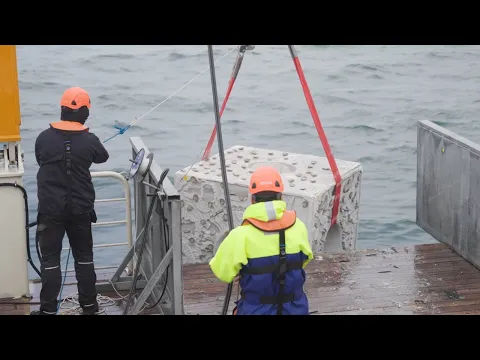
To tackle this challenge, scientists delineated an experimental area of 10,000 square meters on the ocean floor. In this space, specialized teams installed 20 ecological blocks, made with an impressive 98% recycled concrete, reinforcing the commitment to sustainability.
These blocks have rough surfaces that simulate natural rock formations, facilitating the attachment of organisms. Additionally, about 4,000 adult oysters were introduced, along with approximately 35,000 juveniles, already adhered to the structures.
Simultaneously, researchers distributed 40 tons of sanitized scallop shells around the blocks. This material creates a calcium-rich base, essential for larvae to find suitable surfaces to grow safely.
In this way, it prevents young organisms from sinking into the sediment and dying, significantly increasing their chances of survival and reproduction.
Direct impact on water quality and marine life
One of the most impressive aspects of this project is the natural ability of oysters to purify water. Each adult individual can filter up to 140 liters of water per day, removing microscopic impurities and excess harmful nutrients.
As a result, this process reduces the occurrence of toxic algae and improves water clarity, allowing greater penetration of sunlight. Consequently, this favors the growth of marine plants and strengthens the entire ecosystem.
Furthermore, the structures created on the seabed function as true natural refuges. Species such as fish, crabs, and shrimp begin to use these spaces as shelter from predators and safe areas for reproduction.
In this sense, a positive cascading effect is observed, where the recovery of a single element — the oysters — boosts the entire ecological chain.
Mobilization of volunteers and the next steps of the project
Another essential factor for the success of the initiative was human involvement. More than 200 volunteers actively participated in the process, performing tasks such as cleaning and preparing the shells before installation in the marine environment.
This community engagement, in addition to accelerating the execution of the project, strengthens environmental awareness among local residents. Thus, a culture of preservation is created that tends to perpetuate over generations.
Finally, the future of the project directly depends on the natural reproduction of the oysters. Scientists constantly monitor the area to check if the eggs are developing properly.
With robust public funding and continuous monitoring, the expectation is that, in the coming months, the ecosystem will regenerate in a self-sustaining manner.
In light of this scenario, an important reflection arises: what actions have you been taking in your daily life to contribute to environmental preservation?
Source: BM&C







Seja o primeiro a reagir!