





 Portuguese
  English
  Spanish
  5 min of reading
  0 comments



A Deposit Error In Student Aid Changed The Life Of A South African University Student, Mobilized Courts And Reignited Debates On Responsibility For Erroneous Credits. The Case Became An Example Of How The Justice System Treats The Use Of Money Received By Mistake.
A processing error in a student aid system drew attention across the country and became one of the most well-known court cases in South Africa.
A university student accidentally received a large sum in her benefit card, used part of the money, and ended up convicted by the courts.
The episode led to changes in disbursement procedures and reignited the debate on the responsibility of those spending money credited erroneously.
-
While restoring a historic mansion from 1910, a brick structure with an old turbine that generated energy from the Rio do Testo emerged, along with a hidden door and a rare floor concealed under layers of wax.

-
Italian researchers have detected what appears to be a second Sphinx buried under the sands of Egypt, and satellite scans reveal a gigantic underground megastructure hidden beneath the Giza Plateau for over 3,000 years.

-
There are 4,223 drums and 1,343 metal boxes concreted with 50-centimeter walls that store the radioactive waste from Cesium-137 in the worst radiological accident in Brazil, just 23 kilometers from Goiânia, with environmental monitoring every three months.

-
Giant Roman treasure found at the bottom of Lake Neuchâtel in Switzerland reveals an advanced trade system, circulation of goods, and armed escort in the Roman Empire about two thousand years ago.


Student Aid Error Led To Criminal Investigation
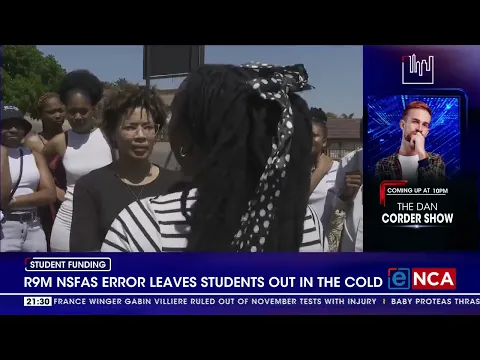
Approximately 14 million rands was mistakenly deposited into the account of a Walter Sisulu University student, an institution located in the eastern part of South Africa.
The amount was transferred by Intellimali, a company contracted to process payments for the National Student Financial Aid Scheme (NSFAS), a public program that funds low-income students.
The company acknowledged the mistake and accepted responsibility for the error.
In a statement, the NSFAS reported that the case did not involve improper resources from the program and that the irregularity was limited to the processing by the service provider.
The university confirmed that it had implemented internal measures to investigate and suspended the card as soon as it identified the anomaly.
According to court documents, the student, identified as Sibongile Mani, was entitled to a monthly allowance of 1,400 rands for food, a much lower amount than what appeared on her card.
Authorities found that she spent more than 800 thousand rands before access was blocked.
The unusual spending and purchases at various establishments led to internal investigations being initiated.

Court Convicts Student For Misuse Of Funds
The case was judged by the East London Regional Court, which found that the conscious use of improperly credited funds constituted theft.
According to the ruling, the student was aware that the credited amount did not correspond to her benefit and still continued to make purchases.
The court imposed a sentence of five years in prison under closed conditions.
According to judicial understanding, the fact that the credit was made by mistake does not exclude criminal liability when there is proven intent to benefit from funds belonging to others.
The defense requested the replacement of the sentence with alternative measures, arguing that the defendant had not committed other offenses and had not caused the error.
The request was denied at the trial level, on the grounds that the behavior showed awareness of the unlawfulness.
High Court Upholds Conviction But Changes Sentence Fulfillment
Subsequently, the case was re-evaluated by the Eastern Cape High Court in Makhanda, which upheld the conviction but modified the sentence fulfillment conditions.
The prison sentence was fully suspended, on the condition that Mani would not commit similar offenses again and perform 576 hours of community service, as well as remain under correctional supervision for three years.
The court emphasized that the substitution did not nullify the crime, it merely changed the manner of execution.
The decision was considered a measure of penalty modulation, adopted due to the defendant’s status as a first-time offender and the absence of prior criminal record, according to the text of the ruling.
Administrative Measures And Institutional Reactions
After the episode, Intellimali stated that it had implemented new internal checks to prevent similar failures.
The company also fully reimbursed the university, ensuring that public resources allocated to other students were not affected.
The South African government confirmed that the service provider accepted responsibility for the error, and the NSFAS reported that it had monitored the case to reinforce security measures in disbursements.
Walter Sisulu University provided clarifications at a parliamentary hearing, detailing the flow of payments and new control protocols.
Experts in financial and administrative law consulted by local media stated that the case highlighted the need for ongoing monitoring in aid programs and greater integration among universities, service providers, and public agencies.
Why The Justice System Did Not Forgive The Million Rand Deposit
According to legal experts who followed the case, the central point of the conviction was not the deposit error, but the subsequent conduct of the student.
South African jurisprudence holds that the mere receipt of improperly credited funds does not constitute a crime, but the intentional spending of money that the beneficiary knows does not belong to them can characterize unlawful appropriation.
This understanding reinforces that good faith is critical to excluding criminal typicity.
The failure to communicate immediately with the authorities and the continuity of spending were decisive elements in framing the case as theft.
According to the High Court ruling, the goal of the penalty was to “preserve the integrity of public student support systems,” while still recognizing the operational error that led to the situation.
Lessons For Assistance Programs And Financial Governance
For public policy experts, the case became a reference on accountability in automated financial operations.
Audits and data cross-referencing were pointed out as essential tools to prevent similar situations.
In subsequent reports, the NSFAS stated that it had reinforced the credit verification stages, created automatic alerts for amounts outside the standard, and revised contracts with operating companies.
Intellimali, in turn, declared that it had improved its internal audit system and increased human oversight in payment processes.
The episode also sparked discussions in universities and public agencies about financial education and ethics in the use of benefits.
According to academic analyses published in local journals, immediate communication of irregularities is seen as a way to preserve the credibility of support programs and protect the student from potential liabilities.
However, there are gaps in the documentation regarding the case.
Authorities have not released a detailed list of goods acquired by the student, nor a complete technical report on the processing error.
Reports mention amounts close to 818 thousand rands as the total spent before the block, but there is no consensus among sources.
The case remains cited in law and public administration courses in the country as a practical example of how the beneficiary’s intent can define the boundary between administrative error and criminal infraction.
In situations like this, experts argue that immediate communication of the error to the authorities is the safest way to avoid future questions — a conduct that, according to jurists, could have altered the outcome of the process.
Would you notify the institution if you noticed you received a million rand deposit by mistake?








Seja o primeiro a reagir!