





 Portuguese
  English
  Spanish
  5 min of reading
  1 comment





With an Estimated Value of US$ 62 Trillion Per Gram, This Extremely Rare Substance Impresses with Its Unique Application and Scientific Importance
Normally, when we think of the term “expensive“, images of luxury yachts, grand mansions, or even the intangible value of love may come to mind. However, there is a substance that, far from being accessible to anyone, possesses a value that defies imagination and attracts attention not for its appearance, but for its incredible complexity and potential.
This substance is antimatter, a product of the depths of the underground chambers of particle accelerators and valued at an impressive US$ 62.5 trillion per gram.
Antimatter stands out for its unique properties and for being created without the need for mining, but through human ingenuity and advances in physical sciences, while diamonds, gold, and rare earth minerals have merely material value.
-
In Mexico, a 3,000-year-old Maya site with the dimensions of an entire city may have been built as a colossal map of the cosmos, created to represent the order of the universe and reveal how this people organized space, time, and rituals.

-
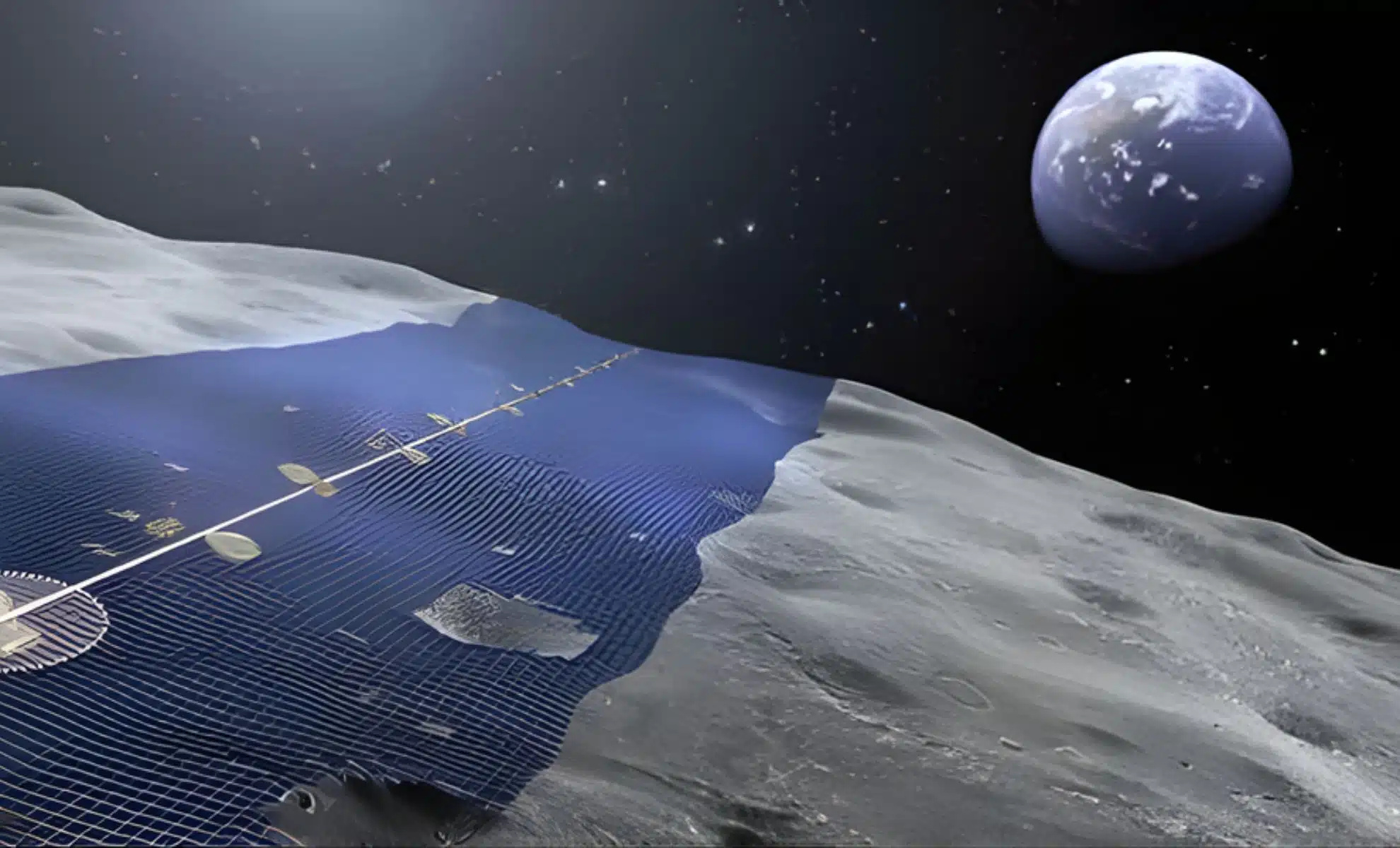
Japan wants to build a solar ring of 10,900 kilometers on the Moon to continuously send energy to Earth.
-
Weighing almost 1 ton, with temperatures of up to 3,000°C, the ability to launch 10,000 fragments within a radius of 1 km, capable of penetrating concrete and melting steel, Turkey’s terrifying bomb emerges as one of the most destructive non-nuclear weapons ever presented.

-
After a submarine disappeared beneath the “Doomsday Glacier,” scientists announce a new monstrous machine capable of operating at 3,000 meters depth to return to the heart of the ice and investigate a threat that could raise sea levels worldwide.


The fascination for this material goes beyond its price; it captivates curious minds by promising an energy power of unimaginable proportions.
What Is Antimatter?
Common matter, of everything we see around us, is made up of particles that we already know well: protons, electrons, and neutrons. However, the story of antimatter began with a surprising discovery made in 1930 by physicist Paul Dirac, when he introduced the world to the idea of “antiparticles“. These antiparticles are not mere theoretical abstractions; they are real and form the basis of the concept of antimatter.
Dirac predicted the existence of particles that possessed the same masses as the particles that make up normal matter, but with opposite electrical charges. The first concrete example of this was the positron, or antielectron, which is an “antiparticle” of the electron.
Scientists later identified the antiproton and the antineutron as the antiparticles of the proton and neutron, respectively.
These elements are not just scientific curiosities, but the key to understanding the structure of the universe at a fundamental level.
The Dance of Destruction: Matter and Antimatter
The relationship between matter and antimatter is like a cosmic tango, where both irresistibly attract each other. However, this “dance” is also one of mutual destruction.
When a particle of matter encounters its corresponding antiparticle, it annihilates in a process that releases an extraordinary amount of energy.
Albert Einstein described this release of energy in his famous equation E = mc², which shows how the conversion of mass into energy can generate an immense amount of energy.
The energy released in a matter-antimatter interaction is far more powerful than any other chemical or nuclear occurrence we have. To put it into perspective, the amount of energy produced by a matter-antimatter annihilation can greatly exceed nuclear explosions, making the most powerful explosives, such as TNT, seem trivial in comparison.
The Challenge of Producing Antimatter
Although antimatter has excessive energy potential, its production and storage are a true scientific and technological challenge. Therefore, the process of creating antimatter begins with hydrogen, the simplest atom, consisting of one proton and one electron.
The antimatter counterpart to this atom is antihydrogen, which consists of an antiproton and a positron. But creating antihydrogen is no simple task.
The first significant production of antihydrogen occurred in 1995 at CERN, the European Organization for Nuclear Research, where scientists developed antiprotons and combined them with positrons, resulting in the creation of antihydrogen.
To ensure the stability of this volatile substance, it must be cooled to temperatures close to absolute zero, which reduces its tendency to annihilate instantaneously.
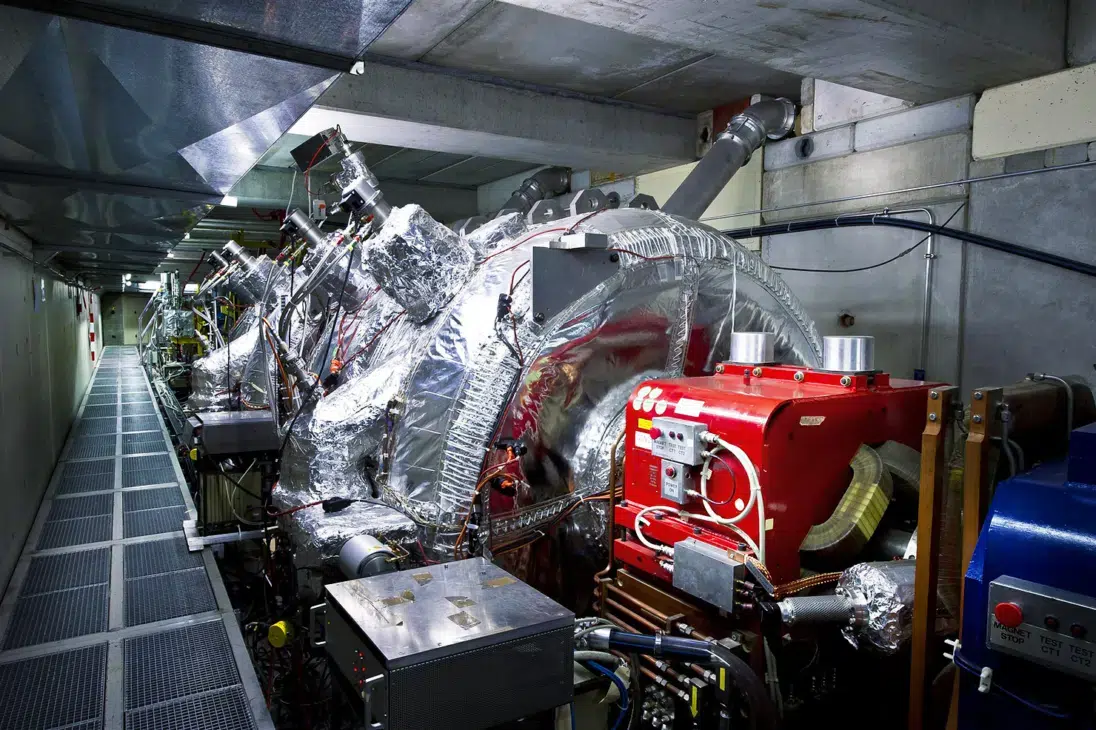
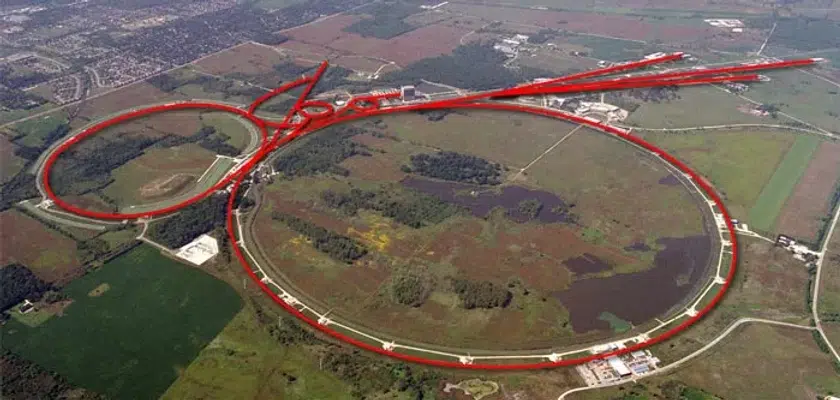
Producing antimatter requires an extremely advanced research infrastructure. Particle accelerators like CERN’s supercollider, which is over 17 miles (approx. 27 km) long, are used to produce these particles in a controlled manner.
CERN was built over a decade, with an investment of 4.75 billion dollars, and utilizes state-of-the-art superconducting items, operating at an impressive 99.99% the speed of light.
All this equipment consumes a colossal amount of energy, equivalent to the consumption of a large city.
The Price of Antimatter
Due to the enormous cost involved in producing antimatter, it has an absolutely astronomical value. A single gram of antihydrogen can be valued at an impressive 62.5 trillion dollars.
This is because, in addition to the requirement for advanced and extremely expensive technologies, the operational costs of particle accelerators are also extremely high.
As a result, CERN’s supercollider, for example, has an annual operational cost of about 1 billion dollars, with the electricity bill alone reaching 23.5 million dollars.
With these costs, the time required to produce a gram of antihydrogen can reach an astonishing 100 billion years.
This reality places antimatter as an extremely rare and inaccessible substance, limited to cutting-edge scientific experiments with a value that directly reflects the complexity and challenges involved in its creation.
The Future Potential of This Substance, Antimatter
Despite the high cost and technological challenges, antimatter remains one of the greatest promises for the future. Its ability to release energy so efficiently could have revolutionary applications.
Scientists, for their part, believe that antimatter could, in theory, be used as a revolutionary energy source for spacecraft. Consequently, this would pave the way for significantly faster travel than any available propulsion technology currently.
Antimatter could also be harnessed in fields like medicine, enabling more effective treatments, and in the creation of new forms of energy generation.
For now, antimatter remains a scientific marvel and an economic challenge. The high cost of its production is a reflection of the degree of sophistication and innovation required to create, control, and store these particles.
However, as scientists continue to explore the secrets of antimatter, the world may witness a new era of scientific discoveries and technological advancements that could radically change the future of humanity.
What is evident, however, is that the price of 62.5 trillion dollars per gram does not just represent an impressive figure. On the contrary, it reflects the immense effort, significant time, and substantial resources needed to understand the mysteries of this rare and powerful substance.
The scientists and engineers leading this research, therefore, value antimatter not just for its high cost. Additionally, they recognize the extraordinary possibilities it could provide for the future.









Gostaria de lembrá-los que o ‘grama’ (unidade com a qual mensuramos massas) é um substantivo masculino, portanto deveria ser descrito como um grama.