






 Portuguese
  Spanish


Almost three decades after the STS-80 mission, three images archived by NASA return to the spotlight by showing a luminous body in orbit. Without time, scale, distance, or complete sequence, the record remains surrounded by doubts.
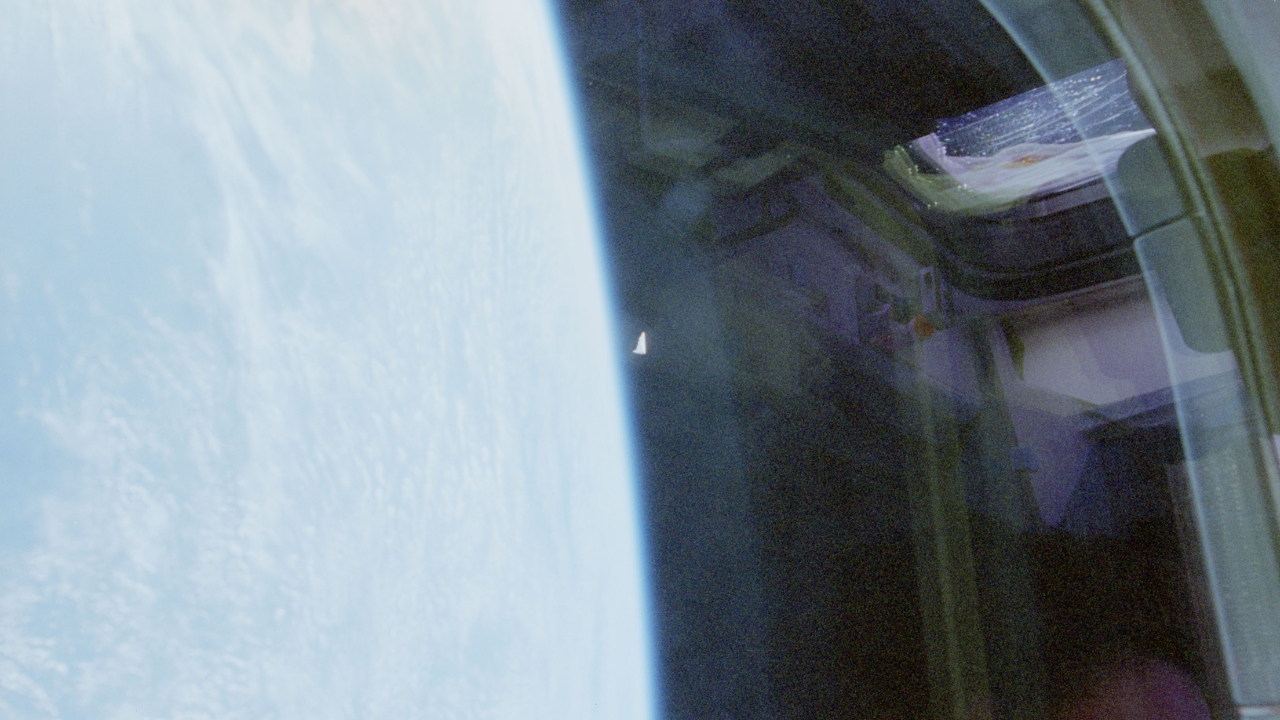
The Earth occupies the background of the scene. Through the window of the Columbia space shuttle, a small illuminated object emerges over the planet, changes position, and seems to rotate. The images were taken in 1996 during a NASA mission but have only now been included in an official disclosure by the United States government about unidentified phenomena.
There are three photographs linked to the STS-80 mission. They were published on July 10, 2026, as part of the fourth batch of the PURSUE program, created to review and make public historical files related to UFOs. The revelation reignited a mystery that remained almost three decades without a definitive explanation.
A bright object appeared in front of the Earth
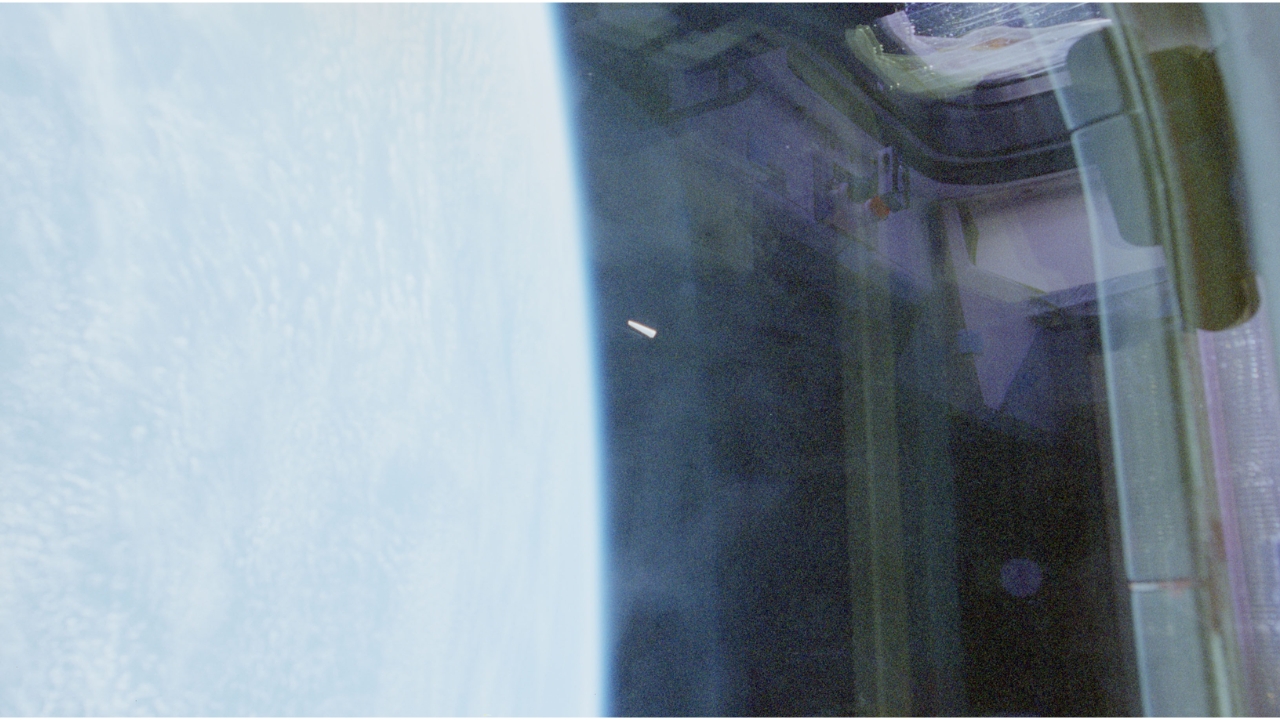
In the images, the object appears triangular, conical, or similar to a small wedge. Between one photo and another, it seems to change orientation, as if it were rotating while floating near the Columbia.
-
Bilibili: the “Chinese YouTube” is leaving China to compete globally with YouTube and is already hiring in Brazil

-
Teenager Develops Bluetooth Necklace to Improve Communication for Friend with Cerebral Palsy, Earning Acclaim in Australia

-
Astronomers Discover Fastest Star Ever Observed in the Milky Way: S301 Reaches 8.3% of the Speed of Light, Capable of Orbiting Earth in Just 1.6 Seconds

-
At 18, Youngster Runs AI App for Calorie Estimation, Achieving $1.4 Million in Estimated Monthly Revenue



The files received the codes NASA-UAP-D030, NASA-UAP-D031, and NASA-UAP-D032. All were associated with low Earth orbit and identified as records of NASA origin.
The official description linked to the second photograph indicates that the object may have rotated on its own axis. This behavior would be compatible with an uncontrolled body, floating freely in space.
This does not solve the case. Nor does it automatically transform the object into an extraterrestrial spacecraft. In the technical sense, UFO simply means something observed in the sky or space that has not yet been identified.
The 17-day mission that made history
Columbia departed on November 19, 1996, and returned on December 7. The mission lasted more than 17 days, covered approximately 11.3 million kilometers, and operated at about 350 kilometers altitude.
At the time, it was the longest flight ever conducted by a space shuttle. Onboard were Kenneth D. Cockrell, Kent V. Rominger, Tamara E. Jernigan, Story Musgrave, and Thomas D. Jones.
During the journey, the crew launched and retrieved two scientific platforms that flew separately from the shuttle, the ORFEUS-SPAS II and the Wake Shield Facility. This context broadens the possible explanations.
Protection fragments, insulating material, ice formed by water released by the shuttle, small parts, and debris in orbit can appear strange when photographed without a distance reference.
The photos reveal little about the real size
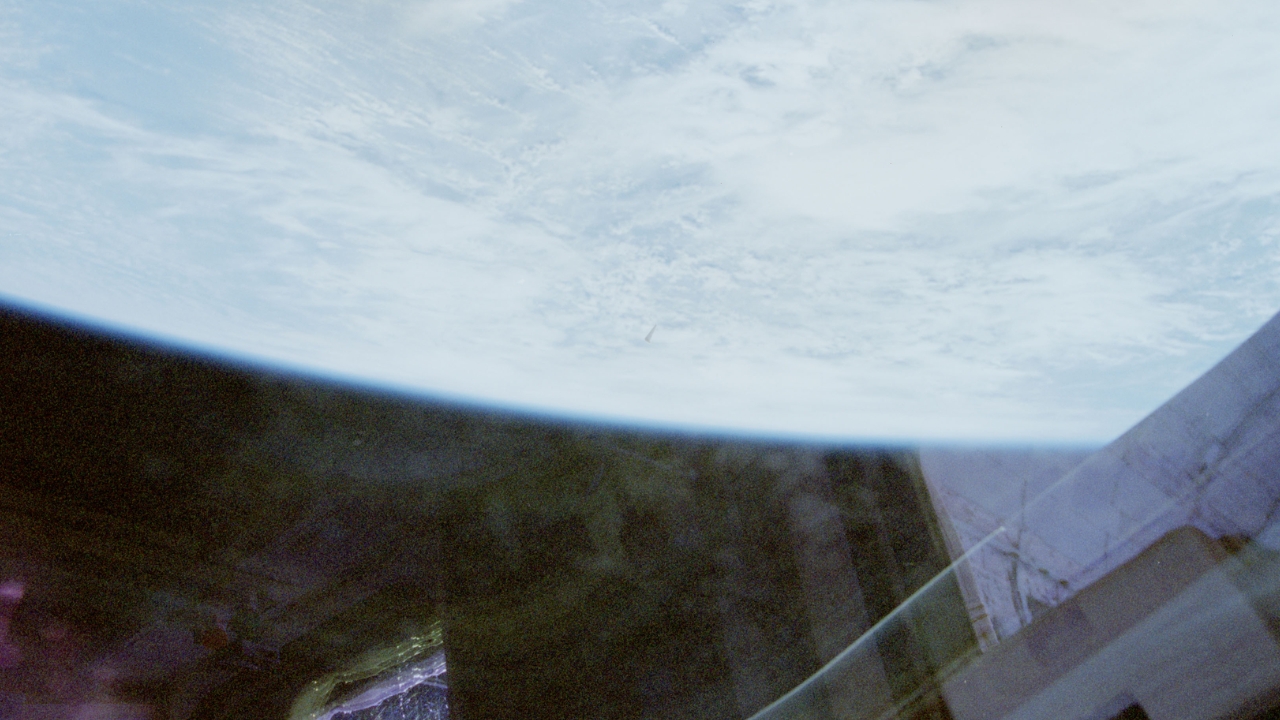
The released copies have a resolution of 3568 by 2245 pixels, but do not carry metadata capable of revealing the exact time, camera, lens, exposure, or focal distance.
It was also not informed how much time passed between one image and another. Without this interval, it is not possible to calculate speed, trajectory, or rotation.
An object a few centimeters near the window could appear as large as a distant structure. Reflections on the glass can also overlap the terrestrial landscape and create shapes difficult to interpret.
According to the official PURSUE portal, cases remain unsolved when there is not enough information to determine their nature. The classification as unresolved indicates a lack of data, not confirmation of alien origin.
Declassified file does not mean secret proof
The release was presented by the American government as part of a set of historical and declassified documents. However, the three photographs do not individually display visible stamps of “Secret” or “Top Secret”.
Therefore, claiming that they were secret images requires caution. What is proven is that they were in official NASA archives and became part of a government publication on unidentified phenomena.
There is also no report from the astronauts saying they encountered an unknown craft or witnessed impossible maneuvers. The identity of who operated the camera was not even disclosed.
Almost 30 years later, the object remains unnamed. The case draws attention not because it proves an extraterrestrial visit, but because it shows how an impressive image can remain indecipherable when basic data is missing. Among the reflection, the fragment, and the unknown, the true mystery lies in what the file still cannot explain.


