






 Portuguese


The Madeira Airport in Portugal features a runway on an elevated platform supported by 180 concrete pillars. This solution, inaugurated in 2000, expanded operational space between mountains and ocean, enabling large aircraft operations while winds, terrain, and limited flat land continue to challenge local landings and takeoffs.
The Madeira Airport in Portugal has transformed an extreme geographical limitation into an engineering feat: with insufficient flat space between the mountains and the Atlantic, part of the runway was extended over a structural platform supported by 180 concrete pillars, creating an area for the operation of larger aircraft along the island’s narrow coastal strip.
According to the Monitor do Mercado, in a publication dated August 18, 2026, this significant intervention was inaugurated in 2000, decades after the airport’s opening in 1964. The extension replaced the idea of solely utilizing the natural terrain with an elevated solution structurally similar to a large viaduct along the coast.
Madeira Airport Was Squeezed Between Mountains and Ocean
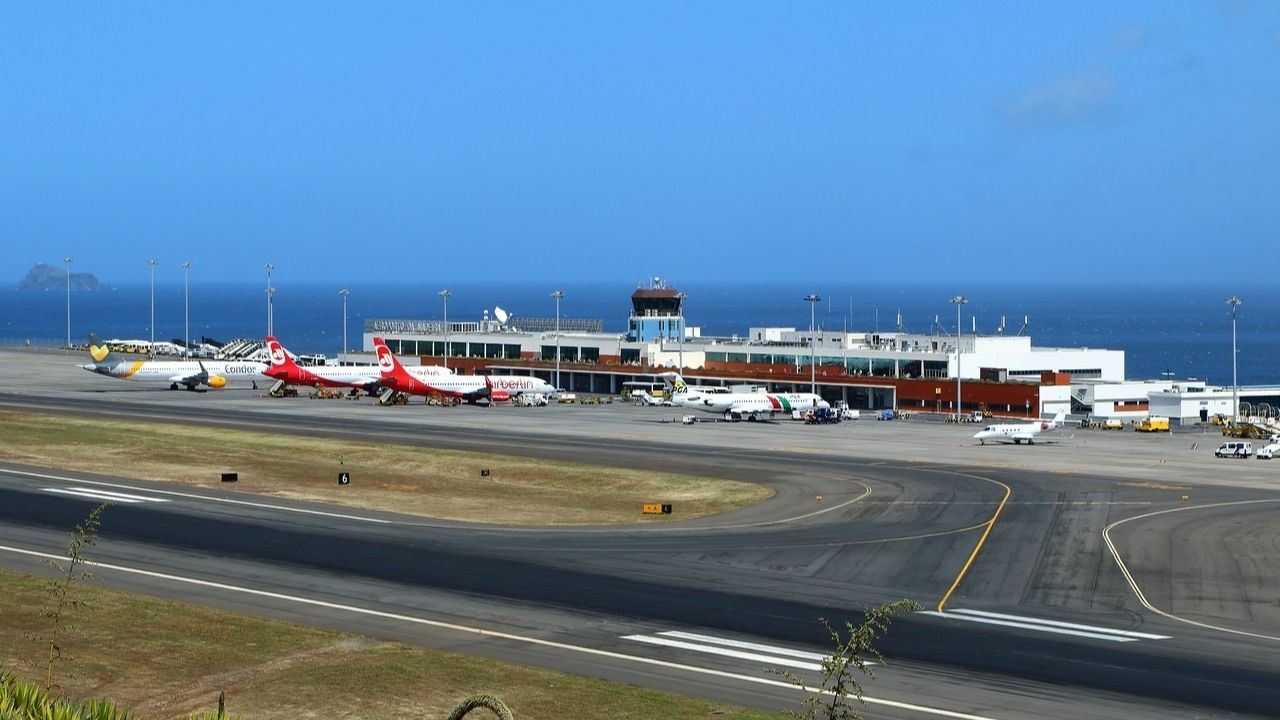
Since its implementation, the Madeira Airport has faced a condition that is difficult to alter: on one side lies the Atlantic; on the other, rapidly rising terrain limits the availability of flat surfaces for airport infrastructure.
-
About 2,000 Years Ago, Petra’s Craftsmen Carved Al-Khazneh Directly from the Mountain, Creating a 39.5-Meter Sandstone Facade, with Columns, Pediments, Sculptures, and Chambers, Preserved in the Jordanian Desert

-
190-Meter Bridge Survives Devastating Hurricane, but River Changes Course, Leaving Structure Isolated on Dry Land

-
FG Launches 16 Mega Projects Simultaneously in Balneário Camboriú, Including the 550-Meter Senna Tower, Implements Daily Climate Monitoring to Maintain Timelines Amid Rain, and Plans Three Mixed-Use Resorts with Estimated Investments of R$ 5.2 Billion and VGV of R$ 12.5 Billion
-
490-Kilometer Railway in Peru Crosses 68 Tunnels, 55 Bridges, and 9 Zigzags to Ascend Nearly 4,800 Meters in the Andes, Project Started in 1870 Took 38 Years to Complete and Still Transports Minerals, Cement, Fuel, and Passengers Between Lima and the Interior of the Country


When it opened in 1964, its runway measured only 1,600 meters in length. This size reflected the challenge of creating an extensive horizontal strip on a mountainous island, where expanding the airport would require simultaneously tackling terrain, coastline, and physical restrictions.
First Expansion Increased the Runway to 1,800 Meters
Before the more radical intervention, the runway underwent an intermediate expansion that raised its length to approximately 1,800 meters. Nevertheless, geographical limitations continued to constrain operations and future possibilities.
Expanding again using only conventional grading methods would mean moving substantial volumes of material on a rugged coastline. The solution later adopted changed the logic: instead of creating solid ground, engineers developed an elevated structure.
Expansion Inaugurated in 2000 Advanced Over a Structural Platform
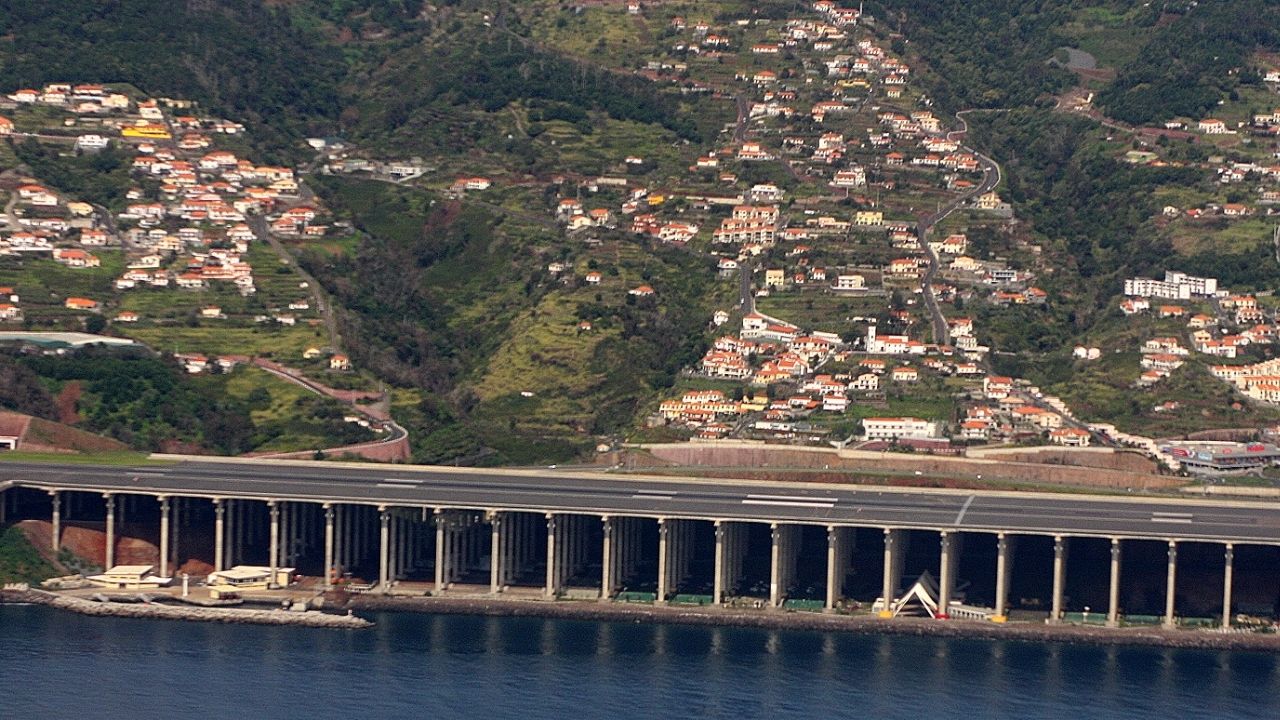
The major transformation occurred with the intervention inaugurated in 2000. Part of the runway began to occupy an artificial platform supported by pillars, allowing for increased airport space without solely relying on a massive landfill by the sea.
In practice, the project ensured that part of the Madeira Airport no longer rests directly on continuous ground. The surface used by aircraft is now supported by an elevated concrete structure, built along the island’s coast.
180 Pillars Support Part of the Runway
The most striking element is the 180 concrete pillars used to support a significant portion of the extension. These supports bear the loads from the upper structure and transfer them to the foundations.
Between the surface used by aircraft and the pillars, large beams, slabs, and portals function to distribute forces. Some structural sections exceed 60 meters in height, showcasing the scale necessary to keep the runway level over naturally uneven ground.
Structure Functions Like a Giant Viaduct
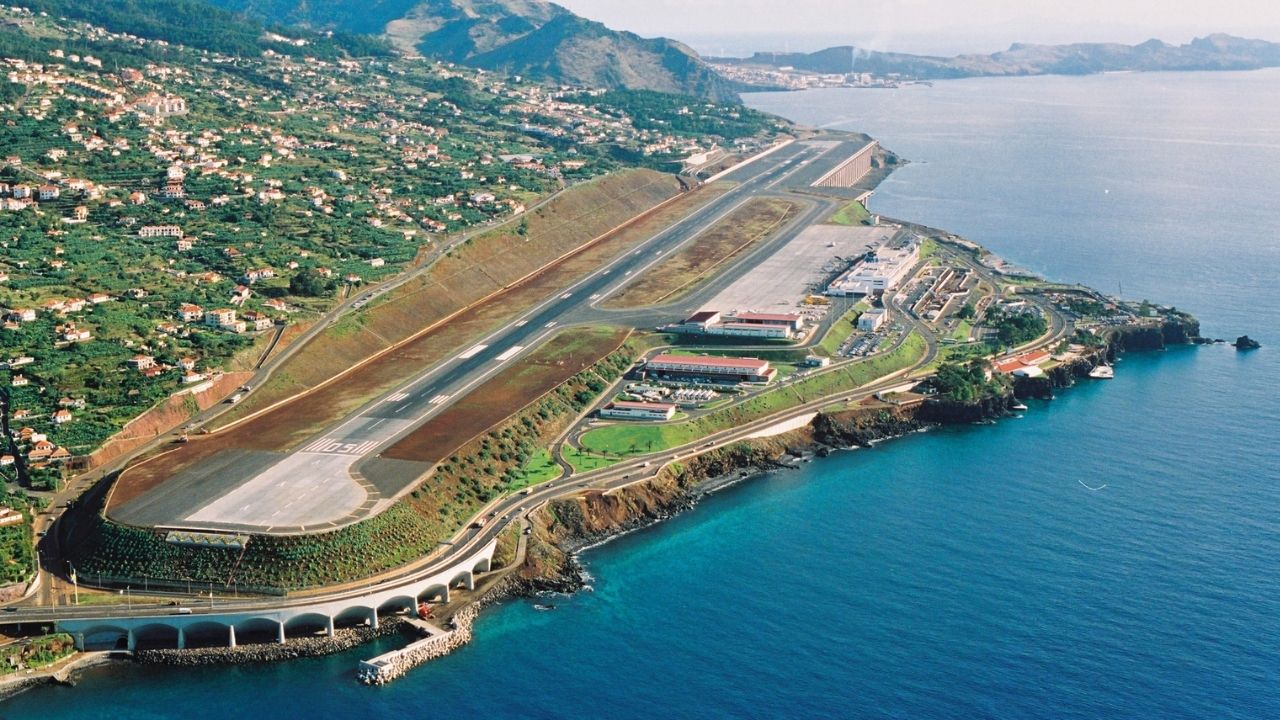
Visually, a runway often appears to be just a large paved surface. However, in Madeira’s expanded section, the structural logic is much more akin to that used in a large bridge or viaduct.
When an aircraft lands on the runway, the loads transfer from the pavement to the slab, then to beams and portals, and finally to the pillars and foundations. The entire platform works as an integrated system to absorb and redistribute these forces.
Landings Impose Loads Beyond Static Weight
A parked aircraft mainly exerts a static load, but landing is a different story. At the moment of touchdown, the landing gear transmits forces related to weight, vertical speed, and the aircraft’s movement across the surface.
Therefore, beams and slabs were designed to operate within structural limits even in the face of these dynamic forces. Minor deformations are part of the expected behavior of the structure, as long as they remain within the parameters considered in the design and operation.
Foundations Transfer Forces to the Ground Near the Coast
The pillars do not simply end at the surface near the sea. The forces received from the runway need to reach layers capable of supporting the entire structural ensemble over time.
To achieve this, the system utilizes deep foundations that transfer the loads from the pillars to the ground. This step is crucial because the platform needs to remain stable in the face of repeated aviation loads and a coastal environment that is constantly exposed.
The Sea Adds Another Challenge to Engineering
The immediate proximity to the Atlantic means that the structure must contend not only with airplanes. The marine environment introduces constant exposure to moisture, salts, wind, and strong coastal agitation.
The infrastructure includes monitoring systems capable of observing structural displacements and changes in coastal protections. This monitoring helps to track the behavior of elements continuously subjected to the harsh conditions of the coast.
Mountains Solve One Problem and Create Another in the Wind
The platform allowed for a physical increase in the runway, but civil engineering could not remove the mountains surrounding the airport. The terrain continues to interfere with the airflow near the coast.
When wind encounters abrupt elevations, it may change direction and speed, creating turbulence, updrafts and downdrafts, and low-altitude wind shear. These conditions make operations different from those observed at airports located in open and flat areas.
Anemometers Can Record Different Conditions at the Same Airport
The complexity is such that different points near the runway can record distinct winds and even different directions. Therefore, observing only one measurement point would be insufficient to represent all the conditions encountered during an approach.
According to the information provided by the source, certain directions associated with winds of only 15 knots can already produce severe turbulence conditions. The airport employs various measurements and operational criteria to determine when landings and takeoffs can occur safely.
Pilots Must Meet Specific Requirements
The expanded infrastructure solved the issue of available length, but did not eliminate the peculiarities of the approach. Thus, Madeira Airport has specific operational requirements for crews.
The noted rules include qualifications, experience, and training specific to the airport operation, as well as familiarity with approaches, go-arounds, wind limits, turbulence, and windshear. Structural engineering and aeronautical procedures, therefore, work complementarily.
Platform Created Space Without Filling the Entire Area Below


A striking consequence of the elevated solution is the existence of large open spaces beneath part of the runway. Instead of filling the entire lower volume with soil and rock, the platform is supported by successive concrete pillars.
This configuration highlights how the problem was solved through the structure. The goal was not merely to extend a pavement strip, but to artificially create a horizontal surface where the geography did not offer one naturally.
Concrete faced a limitation that the terrain could not resolve
The story of the Madeira Airport illustrates how geographic conditions can completely dictate the design of an infrastructure. The lack of flat terrain did not disappear: it was circumvented with a structure that transferred the runway expansion to an elevated platform.
The 180 concrete pillars represent the most visible part of this solution, but they work in conjunction with slabs, beams, portals, foundations, and monitoring systems. The result allowed for the transformation of a narrow coastline into an operational area capable of accommodating large aircraft.
Engineering solved the space, but did not eliminate nature
Decades after the major expansion inaugurated in 2000, Madeira Airport continues to showcase two different dimensions of engineering. The first lies in the physical structure that created space where practically no land was available; the second appears in the necessary procedures to operate amidst the sea, terrain, and complex winds.
The platform supported by 180 pillars addressed a restriction that seemed incompatible with a larger airport, but mountains and the Atlantic still dictate how each operation occurs. What impresses you most about this work: the runway functioning as a massive viaduct, the size of the pillars, or the adaptation required from pilots? Leave your opinion in the comments.


.jpg)
