





 Portuguese
  English
  Spanish
  3 min of reading
  4 comments


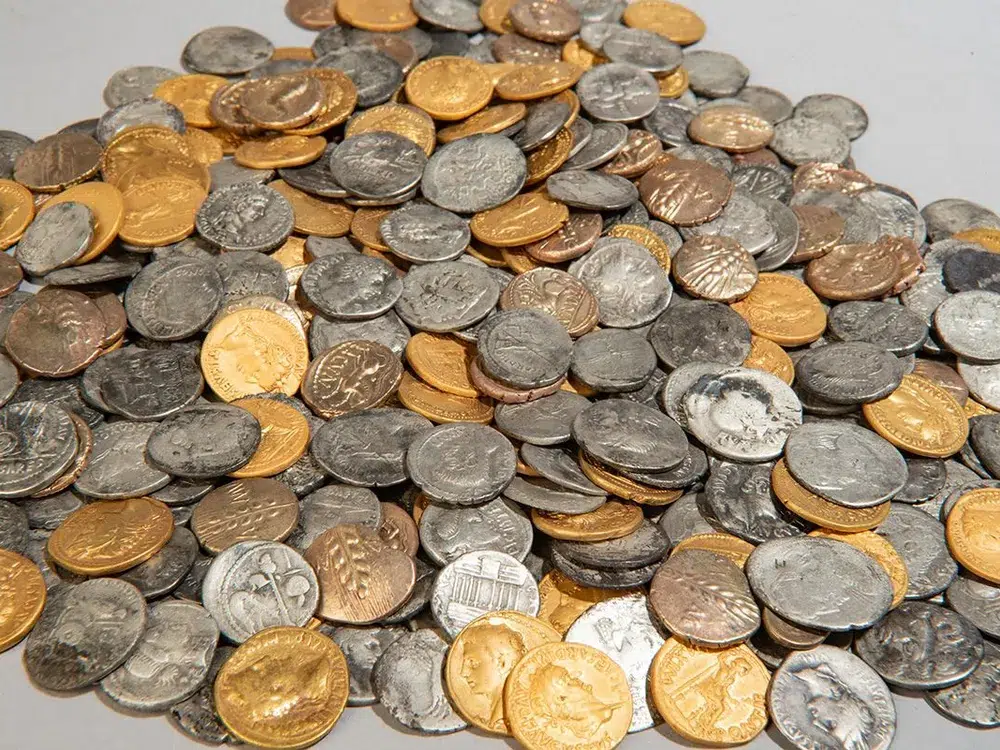


A Simple Metal Detector Led To The Discovery Of A True Treasure: Hundreds Of Coins From The First Century AD. See The Details Of This Amazing Story!
In 2023, two metal detectors in the Netherlands made an impressive discovery: a cache of 404 gold and silver coins dating from the first century AD.
This diverse collection of coins, which includes specimens of Roman, British, and North African origin, is the first of its kind found on the European continent, according to an official statement from local authorities.
-
Excavations for a highway uncovered an intact Celtic city with gold, jewelry, and ancient production structures.

-
Every pineapple you eat is actually up to 200 different fruits fused into one: discover the fascinating process in which each flower opens for just one day and produces the pieces that form the whole fruit over the course of 3 weeks.

-
Giant from Germany will land in China with a record investment in a 4 km² complex, with up to 32 production lines and 70 products, targeting a market that could reach 70% of the world by 2030.

-
Brazilian regions will suffer from the heat: the first heatwave of 2026 raises temperatures to up to 38°C for 5 consecutive days, driven by a heat bubble between Paraguay and Argentina that blocks cold fronts and intensifies dry air.

The discoverers, Gert-Jan Messelaar and Reinier Koelink, were initially searching for a farmer’s lost tractor key when they decided to explore a nearby field, where they had previously found some coins.

What seemed like an ordinary day turned into a historic event. The first find was a golden Celtic coin, followed by several others until, while digging a shallow hole, they discovered a cache of hundreds of coins.
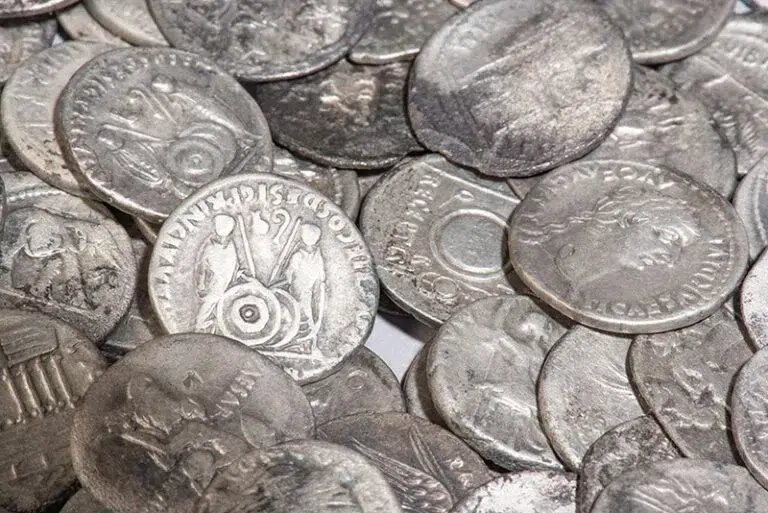
National Museum of Antiquities
The Composition Of The Treasure
The treasure includes 360 Roman coins, consisting of 288 silver denarii and 72 gold aurei, as well as 44 non-Roman coins, mainly gold staters from the Celtic king Cunobelin.
Many coins feature the portrait of Emperor Claudius (41-54 AD), while others depict historical figures such as Julius Caesar and Juba, the ruler of Numidia (modern-day Algeria).
Two coins of Claudius, dated 46-47 AD, share identical matrixes, suggesting they were used for military payments.
The Celtic staters bear the inscription “CVNO“, referring to Cunobelin, a British king who ruled between 10 and 42 AD. The presence of these coins in a buried attic in the Netherlands reinforces the hypothesis that the treasure is directly related to the Roman conquest of Britain, led by General Aulus Plautius in 43 AD.
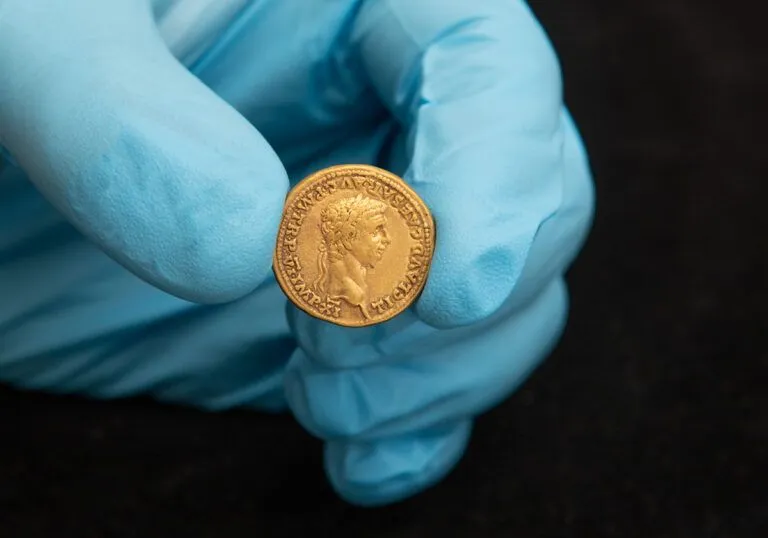
Aureus With A Portrait Of Emperor Claudius
National Museum of Antiquities
Historical Context
The Roman conquest of Britain was one of the most significant events in the expansion of the empire. Under orders from Emperor Claudius, Roman troops crossed the English Channel and subdued Celtic territories, consolidating Roman dominance in the region.
The wide variety of dates on the found coins suggests that the treasure was pulled from circulation all at once, likely as spoils of war from the Roman troops.
The fact that the coins were buried at a shallow depth indicates that they could have been inside a leather pouch, which decomposed over the centuries.
This detail reinforces the hypothesis that they were hidden by soldiers returning from the campaign in Britain, possibly to avoid taxation or simply as a store of value.
According to Anton Cruysheer, an archaeologist from the Utrecht Landscape and Heritage Foundation, and Tessa de Groot from the Cultural Heritage Agency of the Netherlands, this find represents the first physical evidence of the return of Roman troops to continental Europe after the conquest of Britain. Cruysheer states: “Apparently, they returned with all kinds of things. This is new information.”
The Destination Of The Coins
After the discovery, Koelink and Messelaar reported their findings to the authorities and collaborated with archaeologists for additional excavations, which resulted in the location of 23 more coins.
Now, the treasure will be permanently displayed at the National Museum of Antiquities in Leiden, in an exhibition titled The Netherlands In The Roman Era.
This discovery not only enriches historical knowledge about the Roman presence in the region but also brings new perspectives on the mobility of soldiers and their wealth after military campaigns.
The find raises questions about the economy of the empire and the circulation of wealth between distant territories.


The discovery of the coins in Bunnik is a milestone for European archaeology, as it provides material evidence of one of the most important moments in Roman history. The presence of coins from different origins reinforces the idea that the Romans not only conquered territories but also integrated cultures and economies into a vast empire.
With information from cultural heritage.






Por essas e outras que essas coisas não acontecem no Brasil….. O povo não é sedento por dinheiro por que não precisa e ja vive muito….. mas muito bem o que ganha do trabalho.
Se eu encontro essas moedas, RARÍSSIMAS, na minha propriedade, seleciono algumas, e vendo as outras p/um colecionador e pt.final.
Se fosse eu que estivesse feito essa descoberta , com certeza não iria para as mãos do governo.