





 English
  Francês
  Alemão
  Italiano
  Japonês
  Norueguês
  Portuguese
  Spanish
  4 min of reading


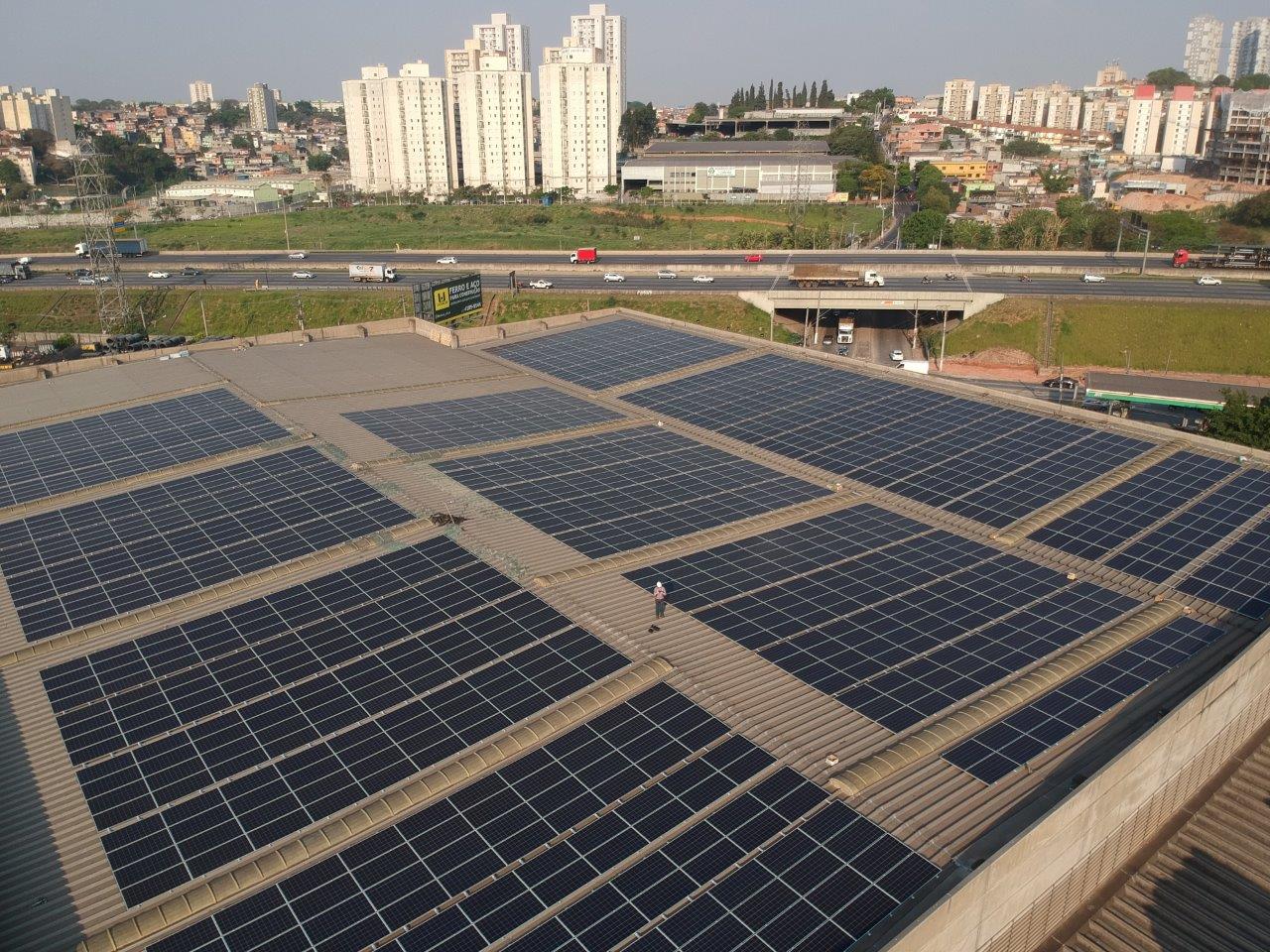
Sunning, Expert in Solar Power Plants, Generated Significant Savings and Environmental Benefits for a Steel Company in the Civil Construction Sector in São Paulo.
Udiaço and Sunning have partnered for the installation of one of the most impactful alternative energy production projects in recent times: a solar power plant installed on the roof of Udiaço’s headquarters, located next to the Mário Covas Ring Road in Carapicuíba, in the western region of Greater São Paulo. There are more than 4,300 m2 of area resulting in an average energy generation of over 75,000 kWh per month. Read this news as well: With the Creation of 1,500 Jobs and Investments of R$ 2 Billion, a New Solar Power Plant Will Be Built in Paraíba
- Health Department of ES is Open for Selections for Medium, Primary and Higher Education Professionals, with Salaries Reaching Up to R$ 10 Thousand
- Petrobras Will Invest R$ 8 Billion in the Next Five Years to Drill Oil Wells; Pará-Maranhão Basins Are Among the State’s Priorities
- Alumar Opens More Than 500 Job Vacancies for Professionals with Higher, Technical, and Secondary Education for Positions in São Luís, Capital of Maranhão
- Senai Offers More Than 3 Thousand Vacancies in Free and Online (EAD) Courses for Professional Qualification with Certificates in the Areas of Logistics, HR, Technology, and More; Enrollment Until October 15
- COMPERJ Workers Declare Strike and Halt Work on the KERUI MÉTODO Consortium Project; Company Put More Workers on Collective Vacation Yesterday (10/12)
The Solar Power Plant Installed in the Interior of São Paulo
The solar power plant project of Udiaço was implemented during the pandemic and took about eight months to complete. A good part of the time was spent on licensing from Enel, which, due to the health crisis, had a reduced team and was operating under restrictions. “Our average energy consumption is 85,887 kWh/month. With the photovoltaic roof, we aim to cover almost 90% of our consumption,” said Lucas Trevizan, Udiaço’s marketing director. “Considering the expected monthly generation variations, this index fluctuates, but with the system implementation, initial expectations are being exceeded,” he added.
The current economic situation has demonstrated Udiaço’s significant decision in choosing to install the photovoltaic plant at its headquarters in São Paulo state. “When the study was presented to us, the estimated savings for the first year was approximately R$ 350,000. However, with the recent increases in tariffs, yellow and red flags, and others, this gain will be even greater,” Trevizan celebrates.
-
Unemployment rises again to 5.8% at the beginning of 2026, raising alarms about the end of temporary positions and its impact on the Brazilian job market.

-
Document organization can cut invisible costs in small businesses, a simple step that prevents waste, rework, and losses in daily operations.

-
Renewable energy advances over protected areas in Brazil, and a survey by the Energy Transition Observatory reveals silent impacts that challenge environmental conservation and pressure sensitive traditional territories.

-
Rio Grande do Sul accelerates energy transition: State invests in renewable technologies and consolidates decarbonization strategies and pathways to attract billions in new industrial investments.


The average payback period for investing in the installation of a solar power plant system is three to six years, but it practically pays for itself, as the savings on the energy bill that occur from the moment the system starts operating can fully cover the financing installment. “Our expected return on investment is four years and eight months, taking into account that we would only have a green tariff flag during that period. In other words, it is a conservative timeframe,” said the Udiaço director.
Challenges for the Solar Power Project Installation
For Sunning, this project represented a series of challenges. The biggest one was a large-scale installation within an urban center, involving many people and with the company fully operational. “The photovoltaic plant of Udiaço is the largest in São Paulo in roof area and is twice the size of our largest project to date. There were many factors to consider and we had to seek several innovative technical solutions,” said Abraão Algarve.
An important point during execution was the maintenance of the industrial unit, which operated normally throughout the entire implementation period. There were three main phases: project, installation, and approval with the utility company. During the process, the company operated with generators only for a short period, during the connection of the plant to the public grid.
This solar power plant project required a parametrization study of Udiaço’s substation to correctly connect the plant to the utility’s electrical grid, as well as automation to shut down the inverters if the diesel generator is activated. The inverter house received special ventilation and air renewal for the removal of thermal loads triggered by a thermostat. There is also a monitoring system where it is possible to track the results of energy production as well as evaluate the return on investment.






Seja o primeiro a reagir!