





 Portuguese
  English
  Spanish
  3 min of reading


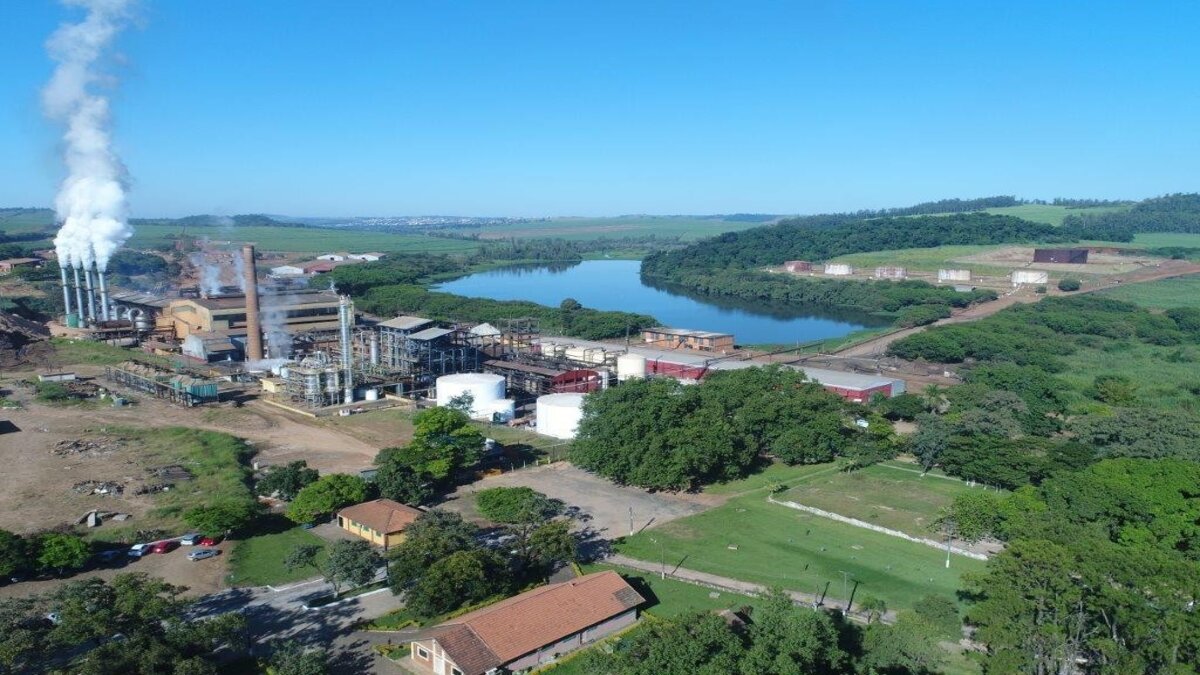
Jacarezinho Sugar Mill Invested Over R$ 120 Million in Operational Improvements and Stands Out in Technology and Innovation. The Parana Sugar Mill Foresees a Positive Harvest, Grinding About 2.5 Million Tons of Sugarcane with Balanced Production of Sugar and Ethanol.
Last Friday (07/29), the Jacarezinho Sugar Mill, part of the Maringá Group, announced that it invested over R$ 120 million in innovations and technologies for the 2022 and 2023 harvests and expects to grind around 2 million tons. Furthermore, the harvesting area has also been expanded and will include 1,500 additional hectares compared to the previous harvest.
With Investments in Technology and Innovation, Jacarezinho Sugar Mill Expects Agricultural Productivity to Reach 83 Tons Per Hectare
In this sense, the mill forecasts that agricultural productivity, with the new operational and technological improvements, will reach about 83 tons per hectare, with a production mix of balanced sugar and ethanol. Regarding sugar, the expectation is for about 45% of the production to be of the white type. This increasingly distinguishes the mill in terms of its production and operations, with more technology and innovation making Jacarezinho even better.
Jacarezinho Sugar Mill has been making investments to enhance production with improvements and technological innovations in industrial and agricultural processes, as well as helping to strengthen Cutting, Loading, and Transport of Sugarcane (CTT), expanding cogeneration, and acquiring warehouses. Thus, in addition to boosting its production, the mill also ensures the necessary inputs for maximizing operations.
-
The institute that trained the greatest aerospace engineers in Brazil has just opened its first campus outside São Paulo after 75 years: ITA Ceará will have R$ 445 million, new courses in energy and systems, and classes are expected to start in 2027.

-
Luciano Hang, owner of Havan, goes to Juiz de Fora after the tragedy in February, brings R$ 1 million, hands out R$ 2,000 cards, and donates up to R$ 15,000 to victims in the region.

-
The Brazilian passport allows legal residence in dozens of countries without the need for a prior visa, and most Brazilians are unaware that they can apply for residency directly upon arriving in nations in South America, Africa, and even Europe.

-
Petrobras sends a message to Brazilian truck drivers after fuel collapse and reveals plan to have 100% domestic diesel.


“Our expectation is for a positive harvest in the face of challenges. We will bet on the good performance of our operations, leveraging our mix flexibility and product diversity, while reaffirming our commitment to more sustainable agriculture. In this way, we reduce the risk of external impacts and ensure the success of the new harvest,” emphasizes the Corporate Director of the Maringá Group, Eduardo Lambiasi.
The Sugar Mill Also Invests in Alternative Fertilization Aiming for More Sustainable Agriculture
In this way, it is important to highlight that Jacarezinho Sugar Mill has been seeking new fertilization alternatives long before the conflict in Eastern Europe, investing in solutions to develop an increasingly sustainable agriculture with more secure supply.
With this in mind, the mill has decided to invest in organic fertilization methods. The expectation is for a positive harvest even with little rainfall; the company will monitor weather conditions throughout the year.
“We are working with organomineral solutions and optimizing the use of organic agro-industrial waste. For the 22/23 Harvest, we have already secured 100% of the fertilizers used for sugarcane planting and about 30% of the fertilizer for ratoon cane fertilization,” states the Sugar-Energy Operations Director of Jacarezinho Sugar Mill, Condurme Aizzo.
Thus, the mill aims to use poultry litter, which is a complete organic fertilizer that replaces chemical fertilization (NPK) and will be used to fertilize about 20% of the ratoons. Jacarezinho Sugar Mill also utilizes vinasse through conventional spraying, which will have its use expanded and provide significant savings in fertilization. Furthermore, filter cake and ashes are also used, all by-products from the sugar and ethanol production process, with their volume composed and enriched according to the specific nutritional needs of the area where they will be applied.










Seja o primeiro a reagir!