





 Portuguese
  English
  Spanish
  5 min of reading
  41 comments


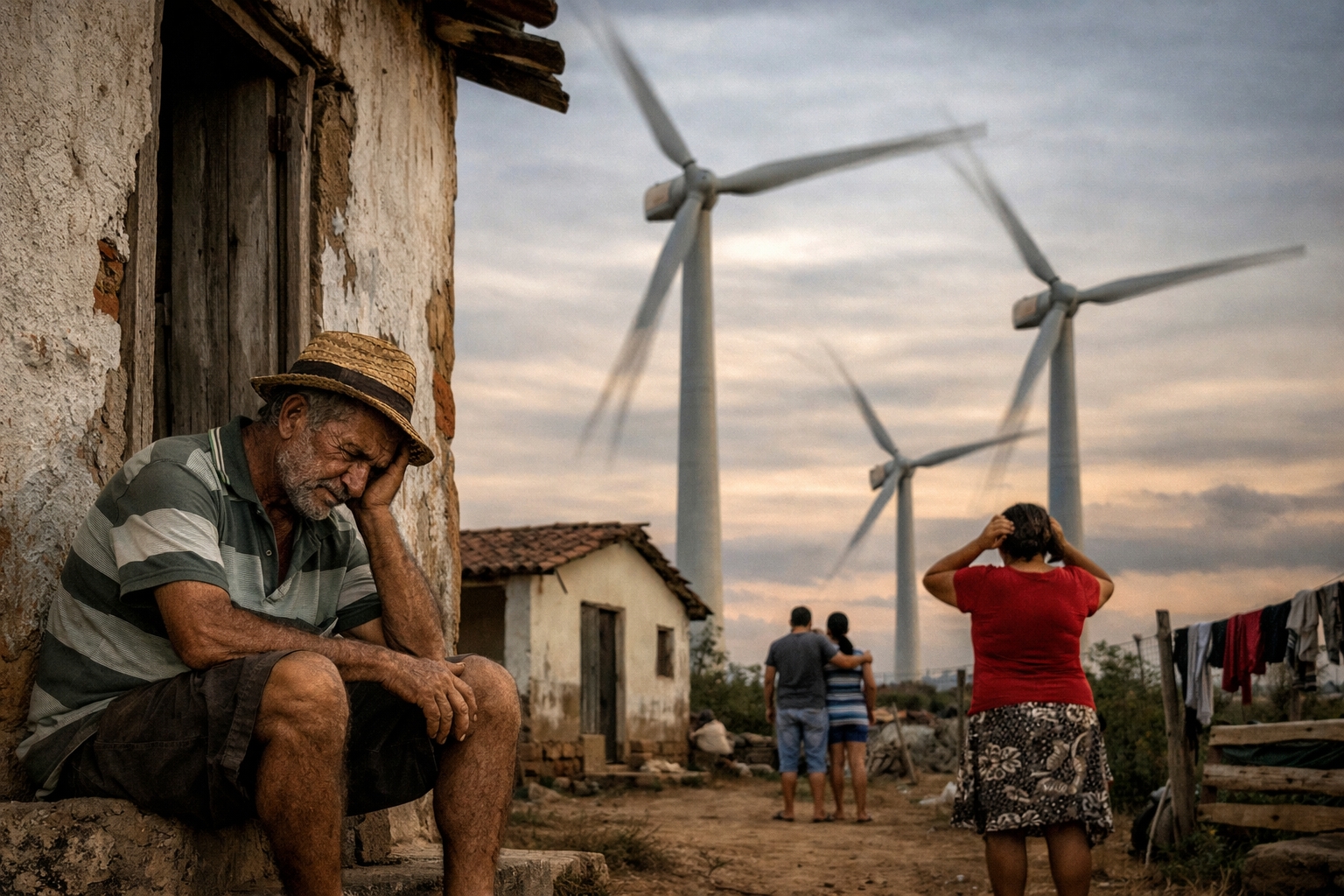


The Construction of 73 Wind Farms in the Northeast Brought Clean Energy to the Country, but Also Illnesses and Displacement of Residents; Investment Declared by Companies Reached US$ 1.8 Billion
When the Wind Doesn’t Bring Peace. The noise never stops. It doesn’t matter whether it’s day or night, whether it’s windy a little or a lot. For those living near the wind farms in the Northeast, the constant sound of the blades turning has become a forced part of the routine and, for many residents, a never-ending nightmare.
What was supposed to be a symbol of clean energy and a sustainable future has turned into a source of stress, illness, and abandonment of one’s home. And the worst part: almost always without dialogue, without fair compensation, and without clear rules.
“It Sounds Like a Plane That Never Lands”
That’s how farmer Leonardo de Oliveira Morais, 36, describes the experience of living just 180 meters from a wind turbine on the Pontais farm, in the rural area of Venturosa, in the agreste region of Pernambuco. The constant sound offers no respite. Sleeping has become a challenge. Working is a doubled effort.
-
At an altitude of 400 km by astronauts from the International Space Station, Paris transforms at night into a golden mesh so precise that it reveals the outline of the Seine River, avenues, and entire neighborhoods like a luminous map drawn over the Earth.

-
iPhone 17 reaches historic low price with 256 GB, 120 Hz display, and drops to R$ 5,703 on Shopee, featuring A19 chip, dual 48 MP cameras, battery life of up to 30 hours, and advanced AI features.

-
Trip to Mars getting closer: Pulsar Fusion, from the UK, advances with plasma ignition in fusion engine and could drastically reduce space travel time, making crewed missions faster, safer, and economically viable.

-
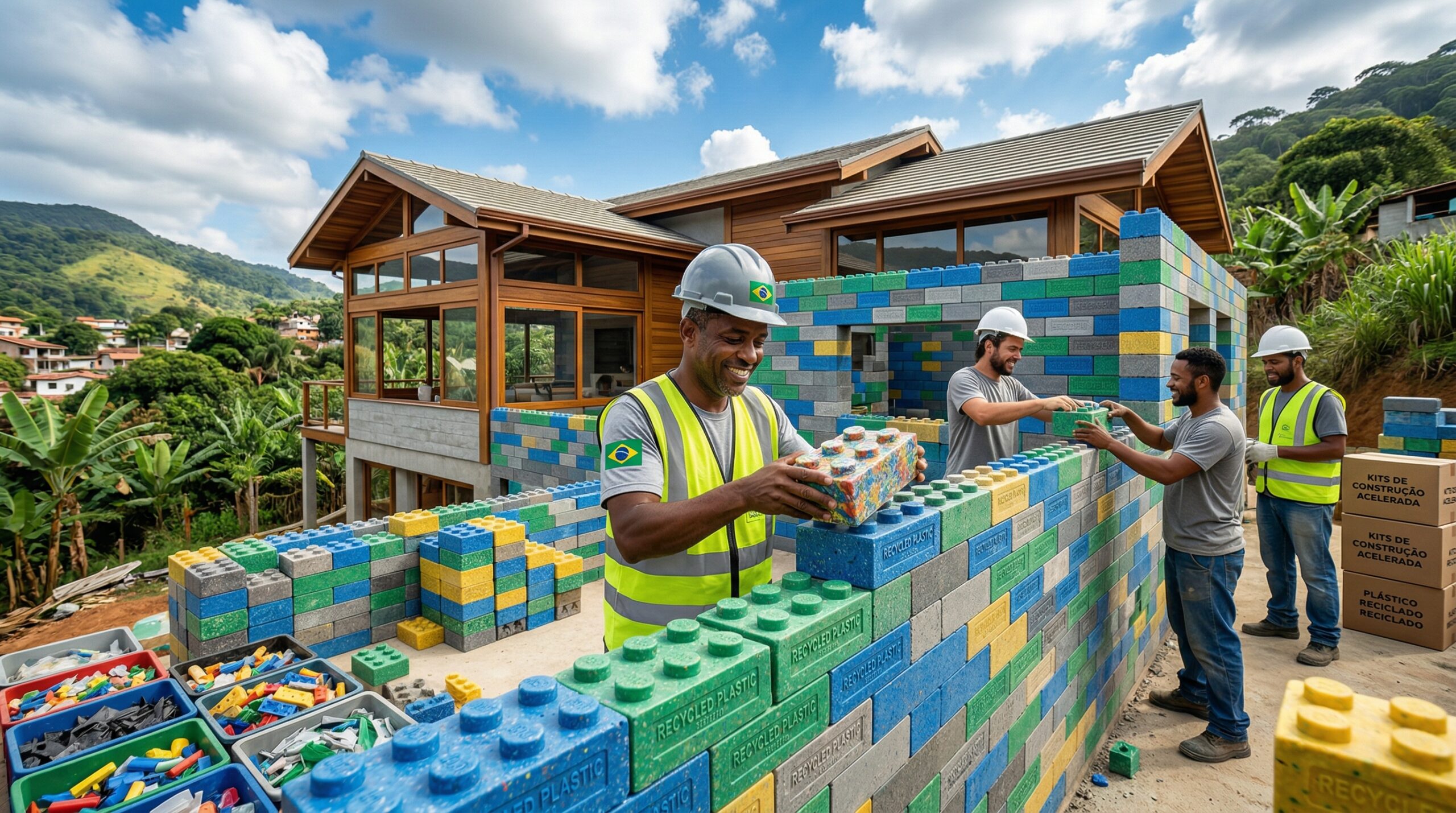
Made with recycled plastic, a Lego-inspired brick builds a 180 m² house in 15 days, providing thermal comfort, preventing moisture, and turning waste into income, kits, and accelerated construction in the country.

Cases like his are repeated in various cities in the Northeast, especially in Pernambuco, Paraíba, Rio Grande do Norte, and Bahia — states that concentrate the majority of the wind farms in the country.
Clean Energy For Whom? Brazil Today Is the 5th Largest Producer of Wind Energy in the World with Over US$ 1.8 Billion Invested in the Sector
Today, Brazil is the 5th largest producer of wind energy in the world, with 1,131 installed complexes and a capacity to generate 34.5 GW, which represents 16% of the national electricity, according to Abeeólica.
The Northeast accounts for 95% of this generation, becoming the heart of wind energy in the country.
Only in 2024, 76 new parks were inaugurated, with 73 in the Northeast — an average of one new park every five days. The investment declared by companies reached US$ 1.8 billion. In addition, there are 53 parks under construction and another 441 in the design phase, according to data from Aneel.
The problem? All of this was done without a clear national rule regarding the minimum distance between turbines and residences.

Distance That Hurts: In European Countries, the Rule Is Very Different
In European countries, the rule is very different. According to a technical note from Ibama, there is a requirement for a minimum distance of up to 1.2 km between wind turbines and houses. The international average hovers around 780 meters.
In Brazil, this care was not taken. A report from UOL found dozens of houses located less than 200 meters from the towers — something considered out of the international standard.
According to researcher Francesco Dalla Longa, this greater distance reduces noise from 109 decibels to around 40 decibels, the daytime limit defined by ABNT.
When the House Ceases to Be Home
One of the most symbolic cases is that of Simão Salgado da Silva, a 77-year-old farmer and former resident of the Pau Ferros farm in Caetés. In 2014, the São Clemente wind farm was installed around his property.
His house ended up 220 meters from a turbine, surrounded by eight towers. The impact was devastating.
His wife fell seriously ill. The family had to abandon a 33-hectare property, a national reference in agroecology.
Today, Simão is suing the company responsible and is awaiting a court decision.
“For me, it was an irreparable loss. I feel ashamed to this day,” says Simão, who also presides over the Rural Workers Union of Caetés.
Organized Communities and Resistance
In Caetés, farmers created the School of Winds, an NGO that brings together around 700 impacted families from just the São Clemente park.
The mobilization had an effect. After protests and an occupation of the Adepe headquarters, the CPRH denied the renewal of the license for the complex, which has 126 wind turbines.
Nevertheless, the plant continues to operate by a preliminary decision from the Pernambuco Court of Justice.
“We Could No Longer Stand the Noise”
In Paranatama, the story repeats itself. José Orlando Pereira, 40, left behind a 3.5-hectare plot after the arrival of the Serra das Vacas park.
“I closed the house and we left. We could no longer stand it,” he says.
He now lives in a rental in the city and has been waiting for compensation for four years.
Meanwhile, Miguel Pereira da Silva, 62, who is blind, reports a constant fear:
“When it’s very windy, I think it could fall and end everything.”
Noise That Makes the Northeast Sick
Science confirms what residents feel in their bodies. Studies on the so-called wind turbine syndrome associate continuous exposure to noise with:
- Insomnia
- Anxiety
- Depression
- Hypertension
- Hearing loss
Researcher Wanessa Gomes, from Fiocruz and a professor at UPE, studied 105 residents of Sobradinho, in Caetés, between 2023 and 2025.
Alarming Results:
- 68% with mild mental disorders
- Stress: 77%
- Decreased sleep quality: 75%
- Insomnia: 73%
- Anxiety: 64%
“The ideal would be a minimum distance of 1.5 km. The safest would be 2 km,” says the researcher.
As an emergency measure, she advocates for shutting down wind turbines at night.
What Companies and the Government Say About the Giant Wind Farms in the Northeast
The CPRH says it is finalizing a Commitment Agreement with companies to correct impacts.
The Echoenergia, responsible for the São Clemente park, claims to have made acoustic renovations in 128 houses and voluntarily relocated families.
The Abeeólica acknowledges problems in older parks and states that, in the last five years, it has begun to adopt a minimum distance of 400 meters — still below the international standard.
The Ministry of Mines and Energy informs that it maintains a permanent dialogue and is participating in the review of the Conama resolution, which is open for public consultation until December 31.
Clean Energy Must Be Fair
The Northeast did not cause the global climate crisis, but it is paying a high price for the hastily made energy transition.
Clean energy cannot mean illness, fear, and displacement of residents.
Without clear rules, strict oversight, and fair reparation, the wind farms cease to be a solution and become yet another social problem.
And you, what do you think? Are wind farms being implemented fairly in Brazil? Leave your comment, share this content, and help this debate reach more people.










…após estes esclarecimentos, hão de ser CONSIDERADOS A FAUNA E A FLORA, pois, ao que parece, já devem ter sido DIZIMADOS…
O PT faz isso há décadas, empobrecendo, adoecendo e e expulsando o povo nordestino para o sudeste… Mas confia, no próximo mandato o Lula e seus capangas dos estados nordestinos vão acaba com a miséria por lá…
As empresas causadoras do problema deveria reconstruir as casas em distâncias recomendadas pelos padrões internacionais sem custos para os moradores.