





 Portuguese
  English
  Spanish
 5 min of reading
  0 comments


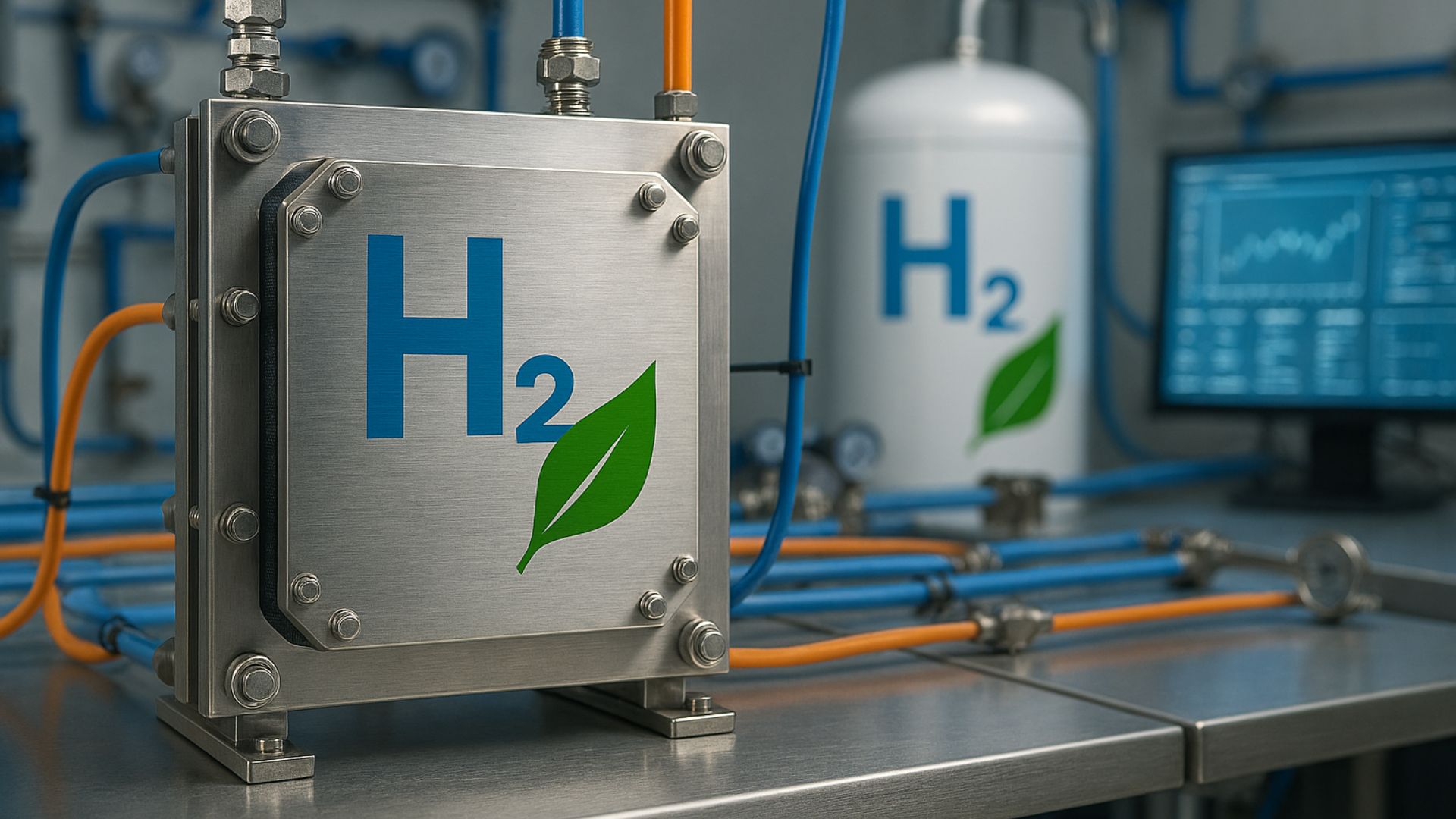
USP Presents a Technological Innovation That Reduces Costs and Increases Efficiency in Green Hydrogen Production. The New Membraneless Electrolyzer Drives the Energy Transition and Opens Pathways for More Sustainable Industrial Applications in Brazil
On December 9, 2025, USP Officially Announced the Development of a Membraneless Electrolyzer Created by Researchers from the Polytechnic School and RCGI (Research Centre for Greenhouse Gas Innovation). The innovation was presented as a scientific advancement that could reduce costs and expand the viability of producing Green Hydrogen, considered one of the strategic fuels to tackle industrial emissions and accelerate the global energy transition.
How USP Developed the Membraneless Electrolyzer?
The discovery gained prominence because the membrane is one of the most expensive and fragile components in traditional electrolyzers. Its removal, while maintaining efficient gas separation, can make the entire process cheaper and more robust, expanding access to a fundamental technology for industrial sectors that still depend on fossil fuels.
The equipment created by researchers from Poli-USP breaks with the conventional pattern of electrolyzers used in water electrolysis. In traditional models, the membrane acts as a barrier between the hydrogen and oxygen produced simultaneously. However, it is an expensive component, prone to wear and responsible for limiting the efficiency of the process.
-
The Brazilian state accelerates industrial competitiveness with a focus on the extraction of strategic minerals to boost the energy transition in Goiás.

-
A Canadian retiree creates a hydroelectric system on a real river, generating energy continuously throughout the day and demonstrating how the power of water can supply a house with stability even in a simple structure.

-
Petrobras reaffirms its commitment to the market and ensures that it will carry out the energy transition safely to maintain national sovereignty.

-
Researchers discover a possible hydrogen deposit of up to 46 million tons beneath an ancient coal basin, and the volume could exceed half of the entire global production.

According to engineer Vitor Bortolin, eliminating the membrane has always been an important challenge because its absence could allow gas mixing, making safe use unfeasible. The new prototype addresses this problem by using a liquid flow to guide the bubbles to opposite sides of the reactor, ensuring the desired separation and reducing operational complexity.
Amaral adds that the solution increases stability and can enhance the durability of the system. This simplified approach directly contributes to reducing the production costs of hydrogen obtained through electrolysis, especially in industrial plants looking to cut maintenance expenses.
Green Hydrogen and Its Role in Decarbonization
Green Hydrogen has gained relevance in the global energy landscape due to its ability to replace fossil fuels in applications requiring high energy density. These include steel manufacturing, fertilizer production, heavy transport, and even aerospace systems.
When electrolysis is powered by renewable sources, such as solar or wind energy, hydrogen becomes a low-impact energy vector. It does not emit carbon dioxide during use and has one of the highest storage potentials among available alternatives, making it strategic for balancing electric grids.
According to Amaral, storing excess energy in the form of hydrogen is more feasible than relying on lithium batteries, especially in large-scale scenarios. Batteries require expensive materials and have limited lifespans, whereas hydrogen can be stored without significant losses over time. This difference helps to integrate intermittent renewable energies into industrial and logistical systems.
How the Advancement Contributes to the Energy Transition with Green Hydrogen
The development undertaken by USP arrives at a decisive moment for the global energy transition. Several countries are increasing investments in hydrogen, including Germany, Japan, Chile, and the United States. In Brazil, the topic has gained attention in recent initiatives aimed at structuring a national production and export chain.
Bortolin emphasizes that the continual decrease in the cost of solar and wind energy opens up space to enhance the competitiveness of green hydrogen. However, for this to happen rapidly, it is necessary to reduce the cost of electrolyzers and increase their efficiency — exactly the two points addressed by the innovation created by USP.
With more accessible solutions, the country can combine its abundant renewable potential with technology developed internally, generating economic opportunities and strengthening its strategic position in the global market.
Industrial Applications and Challenges to Reduce Emissions
The hydrogen produced through electrolysis has already been studied as a decarbonization alternative in industrial processes considered difficult to electrify. The steel sector, for example, relies on fossil fuels to reduce ores and reach high temperatures. According to Bortolin, hydrogen represents the most viable alternative to replace coal and natural gas in these operations.
Furthermore, hydrogen can be used for:
- Production of ammonia and fertilizers;
- Chemical refining operations;
- Heavy and long-distance transport;
- Seasonal energy storage in renewable systems.
However, producing green hydrogen on a large scale requires more efficient and cost-effective technologies. USP’s research demonstrates that there are pathways to reduce these barriers, reinforcing that technological innovation will be crucial to accelerate the energy transition across various economic segments.
Other Projects Under Development at RCGI
The Poli-USP team reported that there are other parallel research projects on electrolysis systems and hydrogen production methods. According to Amaral, the group is working to consolidate metrics that prove the efficiency and stability of reactors under different operational conditions. This stage is essential to validate performance and initiate field tests.
The new electrolyzer has already undergone preliminary experiments and demonstrated promising results, but it still needs to evolve to achieve acceptable continuous operation levels. Bortolin states that the technological maturation process is gradual, involving adjustments and repeated tests until the equipment can operate with safety and prolonged stability.
The prospect is that, with advancements in research and institutional support from the university, the equipment will proceed to later stages of prototyping and industrial evaluation.
Importance of Technological Innovation with Green Hydrogen
The creation of a membraneless electrolyzer by USP represents a significant step in Brazil’s trajectory of development in renewable energies. Technological innovation is crucial for reducing costs, increasing competitiveness, and enabling countries with high solar and wind potential to expand their participation in the international hydrogen market.
Moreover, Brazil has unique characteristics to thrive in this sector. It has vast availability of natural resources, potential for renewable expansion, and growing interest from companies and research institutions. Therefore, advancing scientific research is essential to consolidate a national ecosystem capable of competing globally.
The new technology created by RCGI demonstrates that the country can develop strategic solutions and contribute to a cleaner, more stable, and sustainable energy matrix. As green hydrogen gains traction on international agendas, innovations like this reinforce Brazil’s role in the low-carbon economy, supporting industry, stimulating investments, and addressing global climate demands.







Seja o primeiro a reagir!