





 Portuguese
  English
  Spanish
  4 min of reading
  0 comments


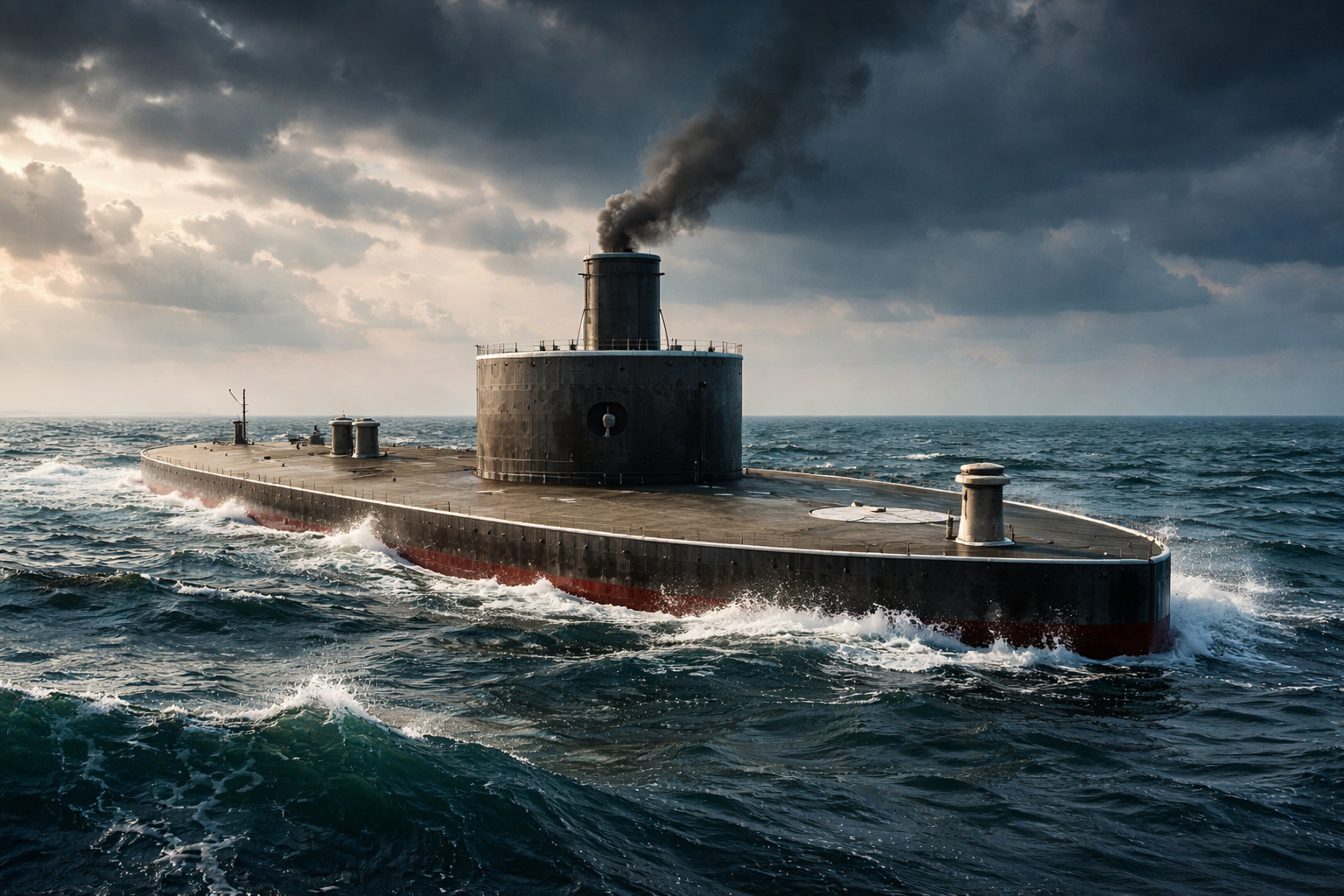
The USS Monitor, With Its Rotating Armored Turret and Iron Hull, Faced Ironclads in 1862 and Marked the Beginning of the Steel Warships Era at the Battle of Hampton Roads.
In March 1862, during the American Civil War, an unusual vessel entered combat in the waters of Virginia. Low, almost flush with the waterline, resembling a metal platform more than a traditional ship, the USS Monitor marked a technological breakthrough that would permanently alter the course of naval engineering.
Until then, most major powers used wooden ships with guns distributed along the sides. The Monitor introduced two decisive innovations: an iron-clad hull and a rotating armored turret capable of firing in any direction.
The Battle of Hampton Roads and the End of Wooden Ships
The Monitor was hastily built to face the Confederate ironclad CSS Virginia (formerly the USS Merrimack), which had already destroyed Union wooden ships. On March 9, 1862, the two vessels faced off in what is called the Battle of Hampton Roads, regarded as the first duel between ironclad ships in history.
-
The German “steel monster” weighing 55 tons fires up to 10 projectiles per minute at over 40 km and avoids counterattacks on the battlefield by moving quickly to escape enemy attacks; meet the Panzerhaubitze 2000.

-
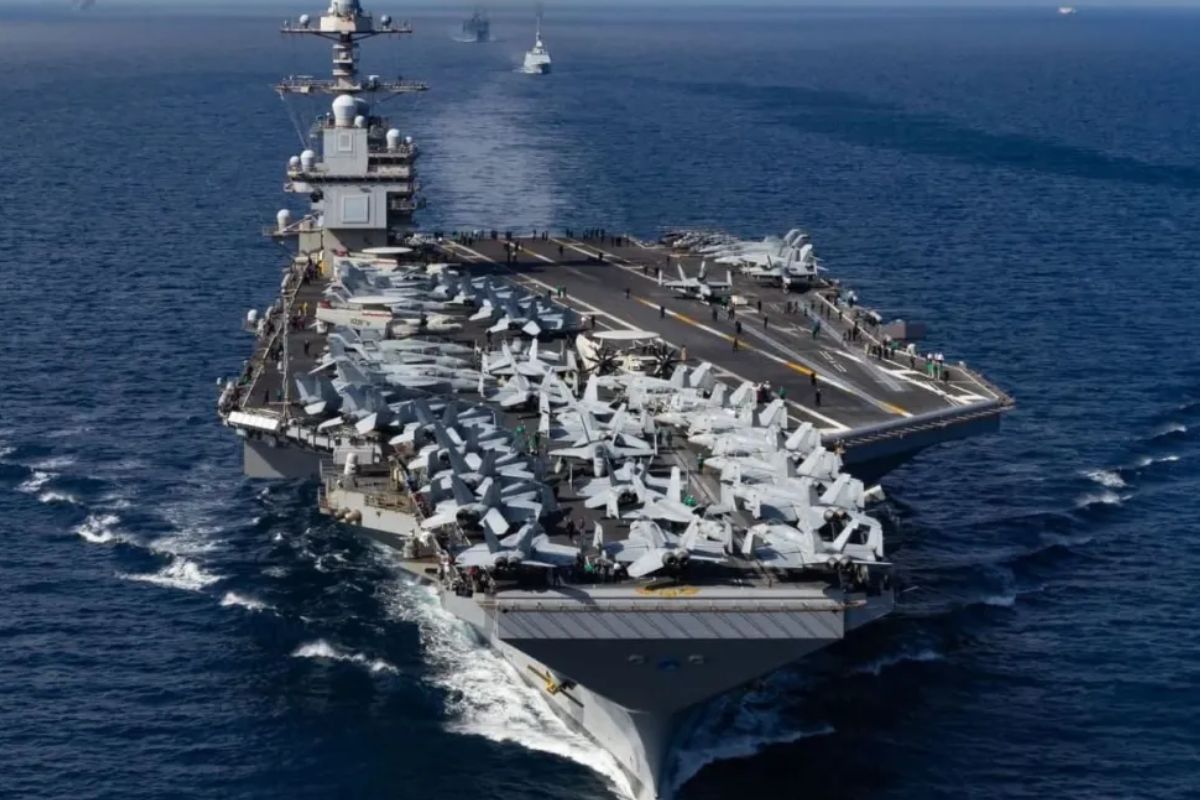
USS Gerald R. Ford, the largest aircraft carrier in the world, returns to sea after a fire in the laundry in the Red Sea; repaired in Crete, it resumes missions of Operation Epic Fury against Iran.
-
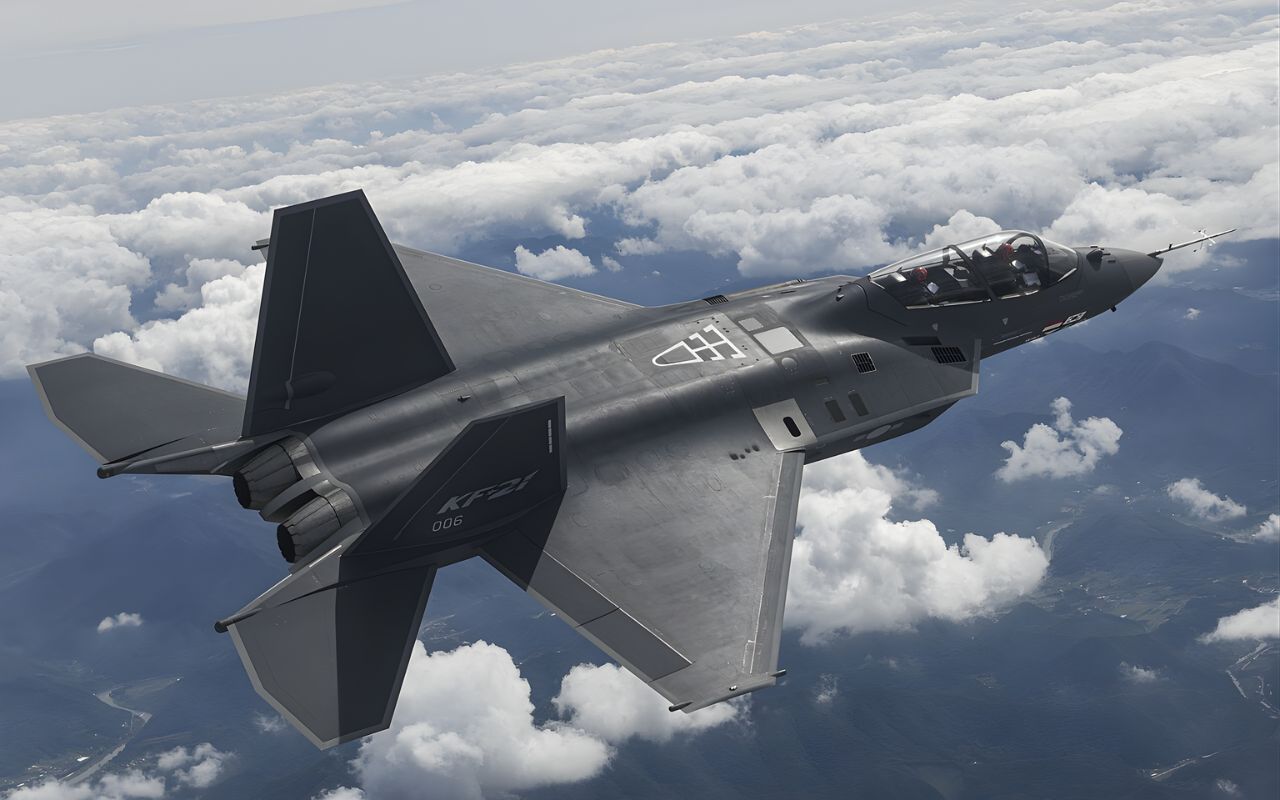
Military power: South Korea’s new KF-21 fighter jet will be a key component in replacing the aging aircraft of the air force, placing the country on the map of air military powers.
-
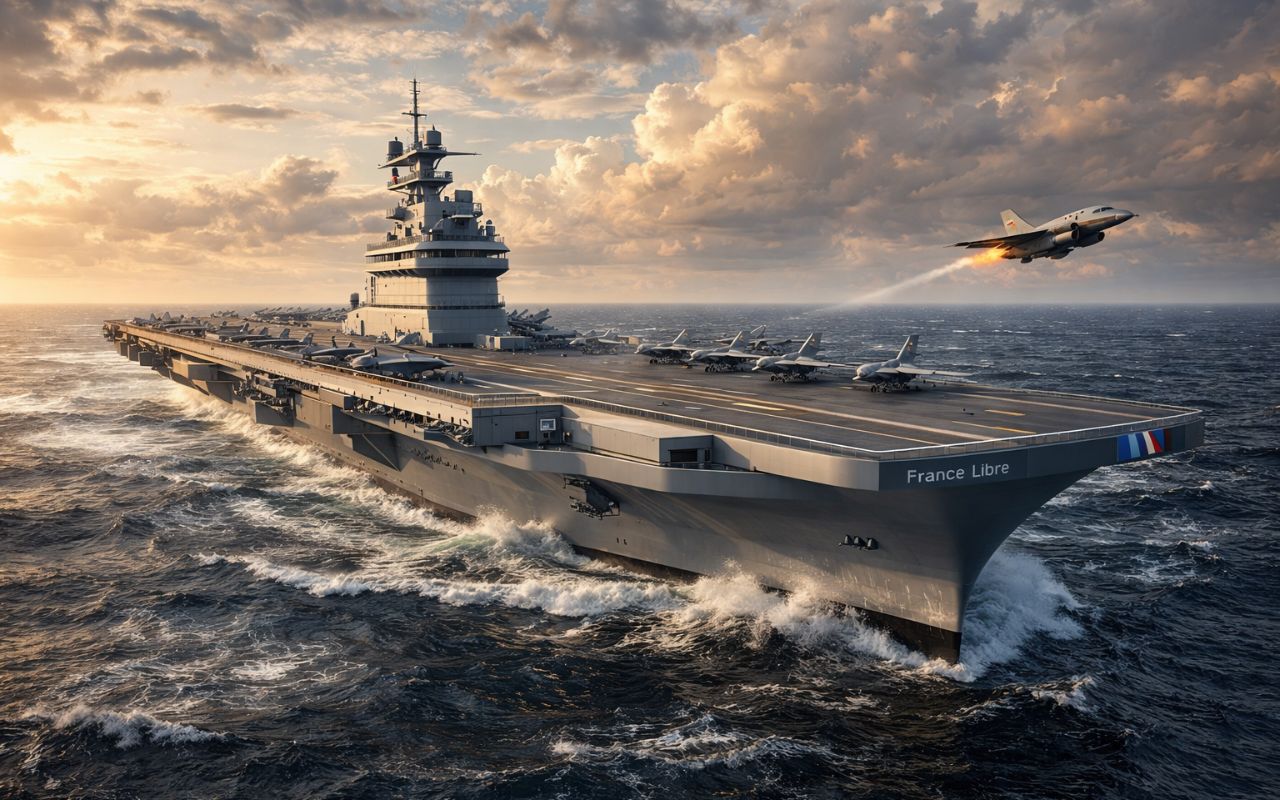
With 310 meters, 80 thousand tons, and capable of operating for 45 years, the new nuclear aircraft carrier France Libre will be the largest in France and will enter service in 2038.


The confrontation ended without a decisive victor, but the strategic impact was immediate. The battle demonstrated that wooden ships were obsolete in the face of ironclad protection. From that moment on, the world’s major navies started an accelerated transition to metal fleets.
Rotating Armored Turret: The Major Structural Innovation
The most revolutionary element of the Monitor was its cylindrical rotating turret, designed by John Ericsson. Unlike traditional ships, which needed to maneuver the entire hull to align their guns, the Monitor could rotate its turret 360 degrees. This allowed it to fire in any direction, providing greater tactical flexibility and reduced exposure of the hull.
The rotating turret became standard in warships in the following decades. This innovation anticipated the modern concept of guns mounted in rotating turrets, which are still present in military vessels today.
Low Hull and Reduced Profile
Measuring approximately 52 meters in length, the Monitor had an extremely low profile. Only the turret and a minimal part of the deck were above the waterline.
This characteristic reduced the area vulnerable to enemy shots. However, the design also presented limitations in open sea, as the low freeboard made navigation in rough waters difficult.
Armor and Iron Structure
The ship was equipped with thick iron plates protecting the turret and critical parts of the structure. The installed cannons were of large caliber for the time, capable of firing heavy projectiles against enemy armor.

The combination of metal armor and heavy artillery redefined the concept of combat ships. From that moment on, wood ceased to be the dominant structural material in large military vessels.
Operational Limitations of the Design
Despite the innovation, the Monitor was not perfect. Its design was mainly aimed at coastal waters and rivers. In open seas, it exhibited stability issues.
At the end of 1862, less than a year after the famous battle, the ship sank during a storm off the coast of North Carolina. Even with a short lifespan, the technological impact had already been established.
Global Influence on Naval Engineering
After the Battle of Hampton Roads, navies in Europe and the United States accelerated ironclad projects. The concept of the rotating turret was incorporated into new generations of warships.
The Monitor initiated the era of armored steel ships and anticipated the design of battleships at the end of the 19th century. Within a few decades, the major powers had completely replaced wooden ships with metal structures.
Redefinition of Naval Warfare
Before the Monitor, naval battles were fought with side formations and aligned firing. With rotating turrets and metal armor, the logic of combat changed.
Protection increased, firepower became more concentrated, and maneuverability became less dependent on the hull’s position.

This transformation paved the way for the great battleships and, later, for steel ships of the 20th century.
Historical Legacy
The USS Monitor remains a symbol of the transition between two naval eras. Its confrontation with the CSS Virginia not only showcased new technology but also triggered an international race for maritime superiority based on armor and rotating artillery.
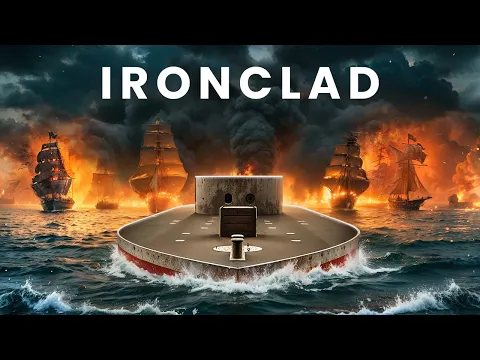

The engineering introduced in 1862 echoes to this day in the structural principles of modern military ships. With its iron hull, rotating armored turret, and reduced profile, the USS Monitor redefined naval warfare by proving that metal ironclads would definitively replace wooden ships.
Although it operated for less than a year, its influence spanned centuries. The ship that seemed strange and experimental in 1862 became the starting point of a new era of maritime military engineering.









-

-

-

-

-

-

25 pessoas reagiram a isso.