





 Portuguese
  English
  Spanish
  3 min of reading
  0 comments


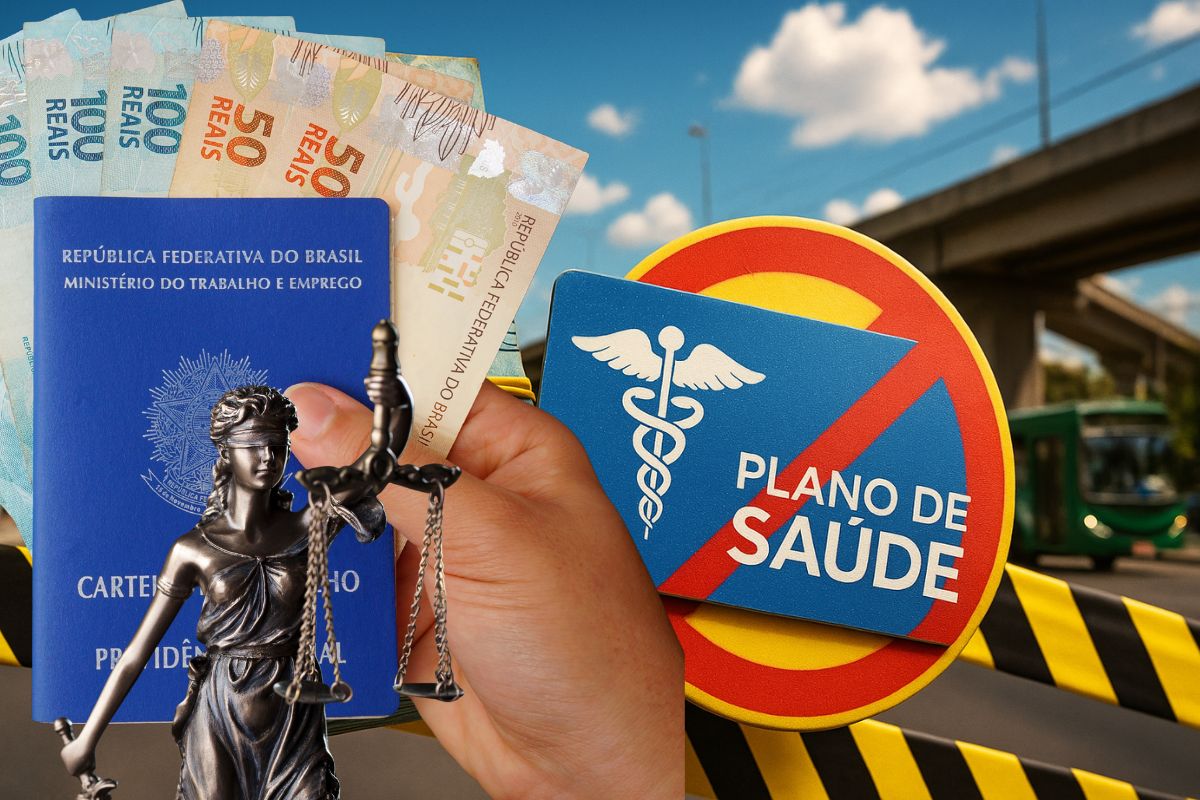
Companies Can Offer Attractive Benefits, But Must Respect Legal Limits So As Not to Compromise Employees’ Income.
Benefits such as meal vouchers, food vouchers, and health plans have become essential in the competition for talent in the Brazilian job market. In addition to contributing to quality of life, they are used as a retention strategy and differentiation among employers.
According to the G1 portal, Brazilian labor law imposes clear rules on discounts applied to these benefits. Ignoring these limits can result not only in lawsuits, but also compromise the worker’s livelihood.
How Discounts Work on Meal Vouchers and Food Vouchers
The meal voucher and food voucher are regulated by Law No. 6,321/1976, which created the Worker’s Food Program (PAT), and by Article 457 of the CLT.
-
The Senate approves a bill that criminalizes misogyny, hatred, or aversion towards women, and includes the crime in the Racism Law with a penalty of up to 5 years.

-
Chamber Approves Bill That Allows Pepper Spray for Women Over 16 and Imposes Strict Rules for Purchase, Possession, and Use as Self-Defense

-
Chamber Approves Law to Combat Leucaena, Fast-Growing Plant That Dominates Land and Threatens Native Species in Various Regions of the Country

-
Asset Division: Know What Cannot Be Divided in Case of Divorce


In practice, discounts can only be made if there is a provision in the collective agreement, written individual contract, or formal agreement with the worker.
According to experts, the discount should not exceed 20% of the employee’s salary. Furthermore, the authorization needs to be registered on the paycheck and explicitly accepted by the worker.
This measure seeks to balance the granting of the benefit with the protection of minimum income.
What the Law Says About Misuse of Benefits
The vouchers have a specific purpose: to cover food costs. Exchanging for cash, allowing third parties to use them, or using them for different purposes can result in termination for just cause. Law No. 14,442/22 reinforces the obligation to use them exclusively for meals and food.
To avoid future problems, labor lawyers advise that employers establish clear usage rules in alignment with the legislation, reducing the risk of disputes in court.
Discount Limit on Health Plans
The company health plan follows Law No. 9,656/98. In this case, there is no fixed legal ceiling for discounts.
However, the established practice recommends that the amount does not exceed 30% of the employee’s net salary.
Another important point is that the sum of all discounts should not compromise more than 70% of the remuneration. This barrier was established based on decisions from the TST, which understands that it is necessary to preserve the livelihood of the employee and their family.
Co-Payment and High-Cost Procedures
In plans with co-payment, it is common for the worker to bear up to 40% of the cost of consultations and exams, while the company covers the rest.
This division seeks to balance costs, but also requires explicit authorization from the employee.
For high-value procedures, such as surgeries, many companies adopt installments for discounts, preventing the charge all at once from drastically impacting the employee’s monthly income.
Benefits as a Factor for Attraction and Retention
Human resource management experts emphasize that the way a company handles its benefits weighs heavily on the employee’s decision.
In an increasingly competitive market, offering accessible health plans and vouchers that align with the cost of living is a differentiator in talent retention.
Research indicates that younger professionals prioritize companies that offer balanced working conditions, stability, and quality of life.
In this context, respecting the limits imposed by Brazilian labor law is not only a legal obligation, but also a strategy to reduce turnover and strengthen market reputation.
The balance between attractive benefits and respect for legal limits is crucial for companies seeking competitiveness. After all, an excessive discount can turn what should be an advantage into a liability for the employee.
In your view, do the current rules of Brazilian labor law truly protect the employee, or do they still leave gaps that harm the worker? Share your thoughts in the comments — we want to hear experiences from those who live this reality daily.










Seja o primeiro a reagir!