





 Portuguese
  English
  Spanish
  5 min of reading
  0 comments


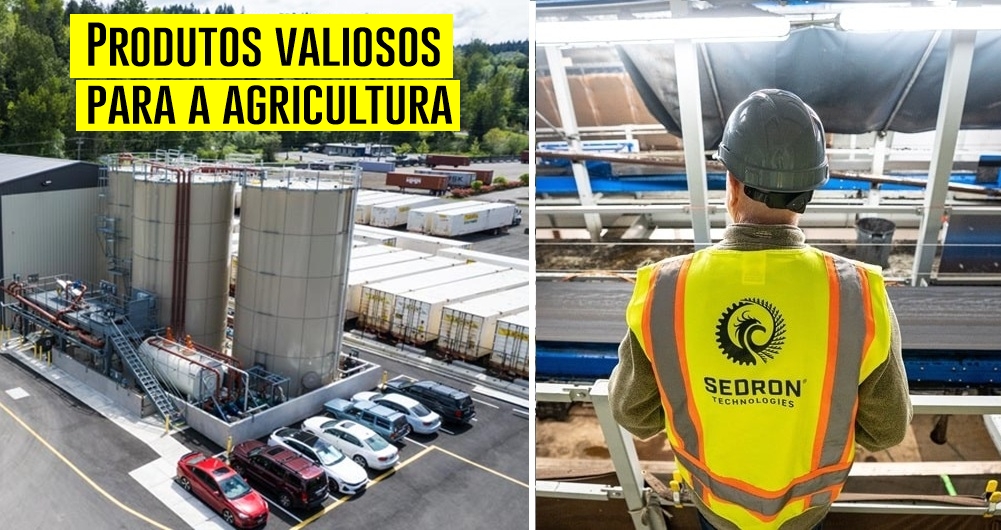
An Industrial Facility in the USA Developed Innovative Technology to Transform Human Feces into Sterilized Fertilizers, Pure Ammonia, and Reusable Water.
A new industrial facility in Seattle, United States, could revolutionize the way human and animal waste is treated, aiding agriculture. Utilizing cutting-edge technologies, such as the Varcor system, the plant transforms septage and biosolids into sterilized fertilizers, pure ammonia, and reusable water.
This advancement reduces electricity consumption by 95%, while contributing to global agricultural sustainability. But how did we get here? And what are the impacts of this innovation?
Essential Resources for Agriculture – Like Ammonia and Fertilizers
The Varcor system, developed by Sedron Technologies, uses compressed steam to separate the components of waste.
-
With a cost per shot close to zero, the DragonFire laser could change naval warfare in 2027 and provide British ships with nearly unlimited defense against drones.

-
A British startup creates tires that generate electricity in electric vehicles when passing over potholes, speed bumps, and cracks.

-
Scientists have created robots made with living cells that have their own nervous system, swim on their own, explore the environment, and self-organize without any genetic engineering, and now they want to do the same with human cells.

-
Students create a solar-powered ambulance that operates without a plug, without fuel, and still keeps medical equipment running in remote areas.

During the process, the sludge is treated, transformed, and converted into valuable products for agriculture, such as slow-release fertilizers, clean water, and pure ammonia.
This approach simultaneously addresses two major problems: waste management and the growing demand for sustainable agricultural inputs.

The efficiency of Varcor lies in its ability to save energy while processing large volumes of waste.
In the U.S. state of Indiana, for example, similar facilities process about 946 million liters of animal manure per year, generating reusable products and avoiding environmental pollution.
This technology is already considered a game changer for modern agriculture.

The Historical Context
The idea of repurposing human and animal waste is not new. Indigenous cultures around the world used these materials to enrich the soil in a natural and sustainable way.
However, this practice was gradually abandoned by Western society with industrialization.
In recent decades, the increasing demand for chemical fertilizers, coupled with high costs and environmental impacts, has rekindled interest in nutrient recycling.
Technological advancements have allowed for the development of modern systems, such as Varcor, that recover essential nutrients like nitrogen and phosphorus, vital elements for agricultural production.
Companies like Epic Cleantec are also investing in technologies that convert wastewater into agricultural resources. In San Francisco, this company implemented systems in commercial buildings to recycle wastewater, generating clean water and natural fertilizer.
This type of innovation is a clear example of how technology can revive ancient practices and adapt them to contemporary needs.

Environmental and Agricultural Benefits
The repurposing of waste offers a number of benefits for the environment and agriculture. Among the most notable are:
- Reduction of Greenhouse Gas Emissions: Traditional production of chemical fertilizers is one of the largest sources of industrial emissions. By using waste as raw material, these emissions are drastically reduced.
- Improvement in Water Quality: Nutrients such as phosphorus and nitrogen, present in waste, often end up in rivers and lakes, causing eutrophication and harming aquatic fauna and flora. Proper treatment prevents this problem, preserving ecosystems.
- Reuse of Essential Nutrients: Recent studies, such as those published in the Journal of Environmental Management, highlight that wastewater treatment plants can become sources of renewable nitrogen. This reduces fertilizer costs and minimizes the environmental damage associated with its production.
Additionally, the practice of closing natural cycles—reincorporating nutrients into the soil sustainably—strengthens the resilience of agricultural systems.
By reducing dependence on chemical fertilizers, farmers can adopt more sustainable and economical practices.
Challenges on the Path to Sustainability
Although technologies like the Varcor system offer significant benefits, they also face challenges:
- Restrictive Regulations: In many countries, environmental legislation still does not fully accommodate the use of treated waste for fertilizer production. This complicates the process of obtaining licenses for new facilities.
- Lack of Skilled Labor: Operating high-tech systems requires trained professionals. In less developed regions, this can limit the implementation of these solutions.
- High Initial Costs: Although these technologies are economical in the long run, installation and maintenance costs can be prohibitive, especially for small communities or farms.
Despite these obstacles, the sector is advancing rapidly. In the United States, besides Indiana and Seattle, other locations are adopting similar systems, showing that repurposing waste is viable on a large scale.
The Role of the Circular Economy in Agriculture
The circular economy, a central concept in initiatives like Varcor, redefines waste as resources. This means that materials traditionally discarded are repurposed, reducing the extraction of new resources and the environmental impacts.
In the agricultural context, this translates into the creation of more sustainable systems, which use fewer external inputs and generate less pollution.
A practical example is the production of slow-release fertilizers. These fertilizers, derived from treated waste, offer an efficient solution for agriculture, releasing nutrients gradually and reducing the need for frequent applications.
Additionally, recycled water can be used for irrigation, further increasing the sustainability of the process.
Global Impact and the Future of Sustainable Agriculture
Repurposing waste as a resource not only helps mitigate environmental problems but also offers solutions to global challenges.
With the global population projected to exceed 9 billion by 2050, the demand for food and natural resources will continue to grow. Technologies like Varcor will be essential to meet this demand sustainably.
Though these solutions may not be the definitive answer to all agricultural challenges, they represent a crucial step towards more resilient and balanced systems.
Technological innovation, combined with traditional waste management practices, has the potential to transform agriculture and contribute to global food security.
Innovation That Transforms Waste into Solutions
The facility in Seattle, with its Varcor system, exemplifies how waste can be transformed into practical and sustainable solutions. Fertilizers, clean water, and pure ammonia are just some of the products resulting from this innovative process.
By adopting this approach, the agricultural industry can not only reduce its environmental footprint but also create a more efficient economic model aligned with sustainability principles.
Thus, what was once discarded as a problem can now be seen as a key component in responsibly and innovatively feeding the planet.








Seja o primeiro a reagir!