





 English
  Francês
  Alemão
  Italiano
  Japonês
  Norueguês
  Portuguese
  Spanish
  7 min of reading



Despite All the Technology Involved in Today’s Electric Vehicles, the Tire Remains the Main Point of Contact Between the Car and the Road
The promise of electric vehicles for low-cost maintenance is an important selling point. Except for the tire, diesel particulate filters, oil changes, spark plugs, exhaust, and many other parts no longer need to be replaced in EVs (Electric Vehicles). Even a muffler clamp is no longer a concern.
However, something unexpected happened on the way to gasoline-free driving. The flexibility of a tire ensures that it will continue to serve as the final point of contact between the car and the road. Its use of air requires periodic refilling. Additionally, a quiet motor has very specific requirements for traction, load, and noise. Tires designed for electric vehicles are mandatory.
How are EV tires unique compared to conventional tires? To find out what goes into tire manufacturing and what development tests have shown before the tires hit the streets, several experts were consulted by Ars Technica.
-
Engineers propose a fourth traffic light for intersections – the change promises to affect crossings, queues, and waiting times.

-
Chevrolet Suburban Z71 lands in Brazil with a V8 engine, off-road design, air suspension, seven seats, and colossal size, a rare version imported for around R$ 1.3 million with luxury and exclusivity.
-
The Chevrolet Onix 1.0 turbo achieves 17.7 km per liter on the highway and ranks among the three most economical cars in Brazil in 2026, alongside two more expensive Toyota hybrids available at dealerships.
-
Little sister of the Hilux: Toyota launches Land Cruiser FJ with 4 radical versions, 2.7 engine with 166 hp and 4×4 traction with locking.

You can install tires designed for regular ICE vehicles on your EV’s wheels, although this is not recommended. Tires for electric vehicles are built to handle the unique weight, dynamic load, and traction demands of EVs. Faster tire degradation, heat-related issues, and the possibility of wheel slippage, even with traction control, can lead to a loss of directional stability if non-EV tires are used.
Weight and Load
Even before any vehicle starts to move, there are noticeable differences between common vehicles and EVs. Compared to internal combustion engine vehicles, electric vehicles are often heavier. The ICE S500 4Matic weighs only 4,610 pounds (2,091 kg), while the total weight of the Mercedes-Benz EQS 450 4Matic electrified is 5,597 pounds (2,539 kg). Although they do not share a common chassis, all these cars belong to the same size category and market subset. Due to the need to use heavy batteries, the EV is approximately 1,000 pounds (454 kg) heavier. It is true that solutions to the weight issue are on the horizon, but for now, the fundamental design of the tire casing must be able to support the weight.
Many people believe that a tire’s traction and grip can only be affected by the rubber or polymer compound it is made from. However, beyond the compounds used, the tread pattern, block depth, and void volume between them have significant effects on a tire’s stiffness and load capacity.
With regard to static load distribution, the massive weight of the battery is often distributed between the front and rear axles of the vehicle. But there is always a cloud behind every ray of sunshine. The dynamic mass of the vehicle would be improved if that weight were shifted to a much smaller footprint at the center of the vehicle. If an electric vehicle is in motion and experiences frequent direction changes, a long and wide battery is of no use. As the vehicle is in constant motion, the tire’s dynamic load capacity must be adequate. For an EQS weighing 5,597 pounds, this means structural stiffness not only at rest but also during braking, cornering, and acceleration.
Noise
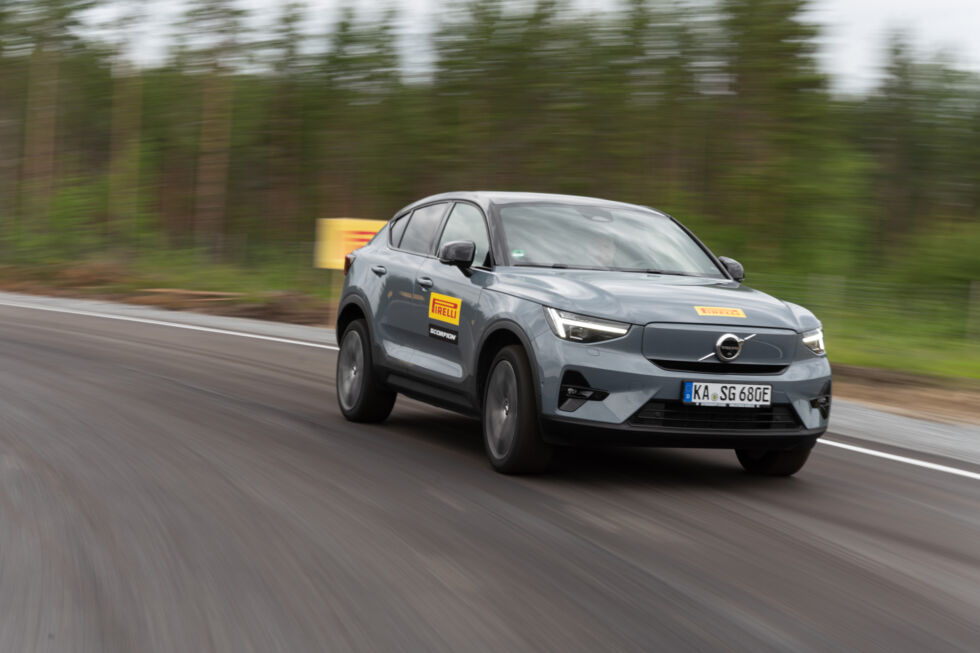
With no moving parts to create noise, electric vehicles are much quieter than internal combustion engines. Moreover, there is no audible signal from a combustion engine, transmission, valve, exhaust, or intake piping, or even the faint ticking of high-pressure fuel injectors. As the engine of an internal combustion vehicle masks some of the noise produced by the tires, it is essential for the tires themselves to be as quiet as possible.
Once an EV reaches typical suburban street speeds, tires start to provide most of the sound emanating from the vehicle (both to the outside and inside), and this noise only increases when driving on highways.
Rob Williams, senior vice president at Hankook Tire, stated that, down to the closest tenth of a decibel, the powertrain noise accounts for about half of the total noise sensed by a combustion vehicle, while road noise represents the other half. On the other hand, Hankook found that the electric motor contributes only 15% to the overall noise level of an EV, while road noise is responsible for 40% and high-speed wind noise makes up the remaining 30%. The tire tread pattern is the main contributor to road noise at high speeds.
Active and passive noise cancellation has been used for years in combustion-powered vehicles, but now there are many more computer modeling tools to discover new and quieter tread pattern designs.
According to Ars, Ian Coke, technology director at Pirelli North America, informed the publication that the company has created proprietary software for this type of simulation. Before the advent of simulation software, it was found that by varying the longitudinal length (or pitch) of the tread blocks around the circumference of the tire and then alternating between large and small blocks from the inner shoulder to the outer shoulder, a significant amount of tire noise could be canceled. Now, with simulation and calculation tools, ideas that are much more radically different can be tested in a fraction of the time it would have taken 20 years ago.
Traction Under Acceleration
This is where one of the biggest challenges in developing an EV tire resides. Most electric motors generate massive torque much more aggressively and instantaneously than most combustion engines, which subjects the tire to a greater shock than almost any ICE vehicle with a similar design summary. To give just one example, the Tesla Model Y has instant acceleration unmatched by almost any combustion vehicle in the same compact hatchback/wagon/SUV market zone. This places a higher demand on the tire performance envelope of the Model Y than anything else in its size class.
The range of an electric vehicle is an important factor for many people, including automakers, tire manufacturers, and consumers. The long lifespan of the tire is already somewhat compromised if a tire provides strong front traction, as softer rubber formulations are typically sacrificed to offer that grip on the road surface.
Tire Lifespan
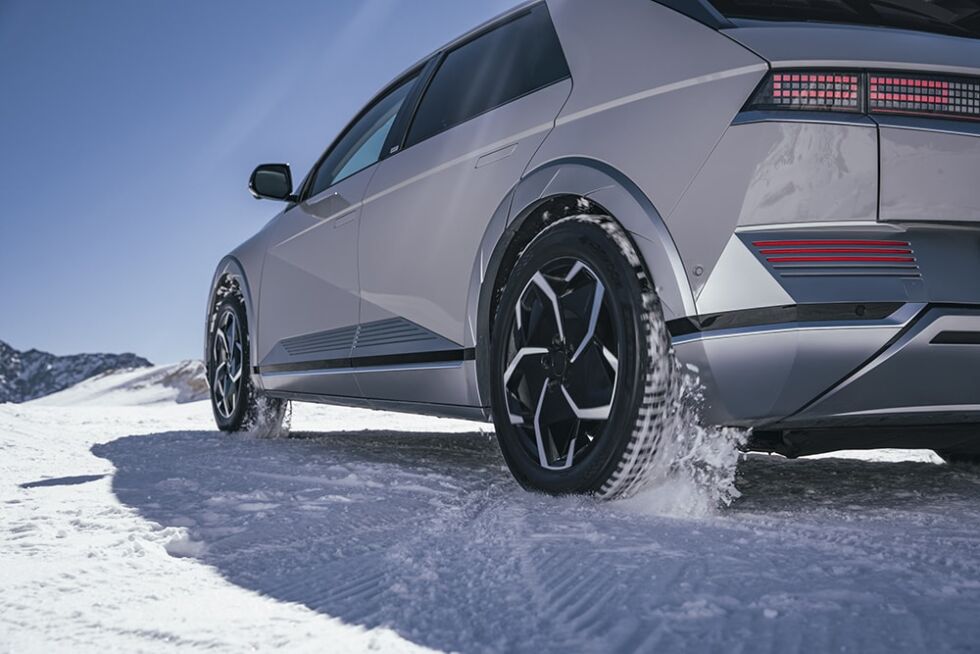
It has been reported by several EV owners, even in the short time they have been on the market, that tires wear out much more quickly than those on combustion vehicles. This is significant because replacement tire costs can add up quickly for electric vehicle owners. In an interview with Ars Technica, a recently interviewed individual had to replace the tires on their Tesla Model S due to wear. They had driven the car for only 4,000 miles (6438 Km). The tires fitted on electric vehicles require a more nuanced approach to balance durability and grip than their counterparts on internal combustion engine vehicles.
Range
For ideal range, which is definitely the primary concern for electric vehicle consumers, electric vehicles need tires with lower rolling resistance than those of an ICE vehicle. Electric vehicle manufacturers value tires with high energy efficiency due to the desire to maximize the range of their products. Although low rolling resistance is not a new concept, its importance for internal combustion engine vehicles is much lower. According to Pirelli, a tire can affect the range of an electric vehicle by up to 40%, but only by 15 to 20% in a combustion engine vehicle.
The tire of an electric vehicle is more durable than that of a conventional internal combustion engine vehicle. Including the tread pattern, this is true. However, it is a delicate balancing act to establish the ideal compromise between low rolling resistance and grip.
Aerodynamic efficiency of tires is also important, but rarely discussed. Aerodynamic drag, which can be thought of as a type of rolling resistance, is transmitted through the tire’s frontal area to the incoming air. A decrease in fuel economy and an overall shorter range are also consequences of wider tires.
Cost
There is no getting around the reality that EV tires are expensive, and problems with the international supply chain have not helped. For the reasons outlined, tires for electric cars are more expensive than tires for internal combustion engine vehicles.
Finally, due to the aforementioned factors, the market for EV-specific tires is much smaller than that for conventional cars; as a result, the field is narrower and there are fewer alternatives, leading to higher prices compared to non-EV tires. The good news for EV owners is that the industry as a whole is expanding, which should lead to greater dissemination of knowledge and best practices regarding tires for EVs.
If you want to know everything about the world of Electric Vehicles, visit THE AUTOMOTIVE BLOG OF CPG PORTAL HERE.









Seja o primeiro a reagir!