





 English
  Francês
  Alemão
  Italiano
  Japonês
  Norueguês
  Portuguese
  Spanish
  2 min of reading


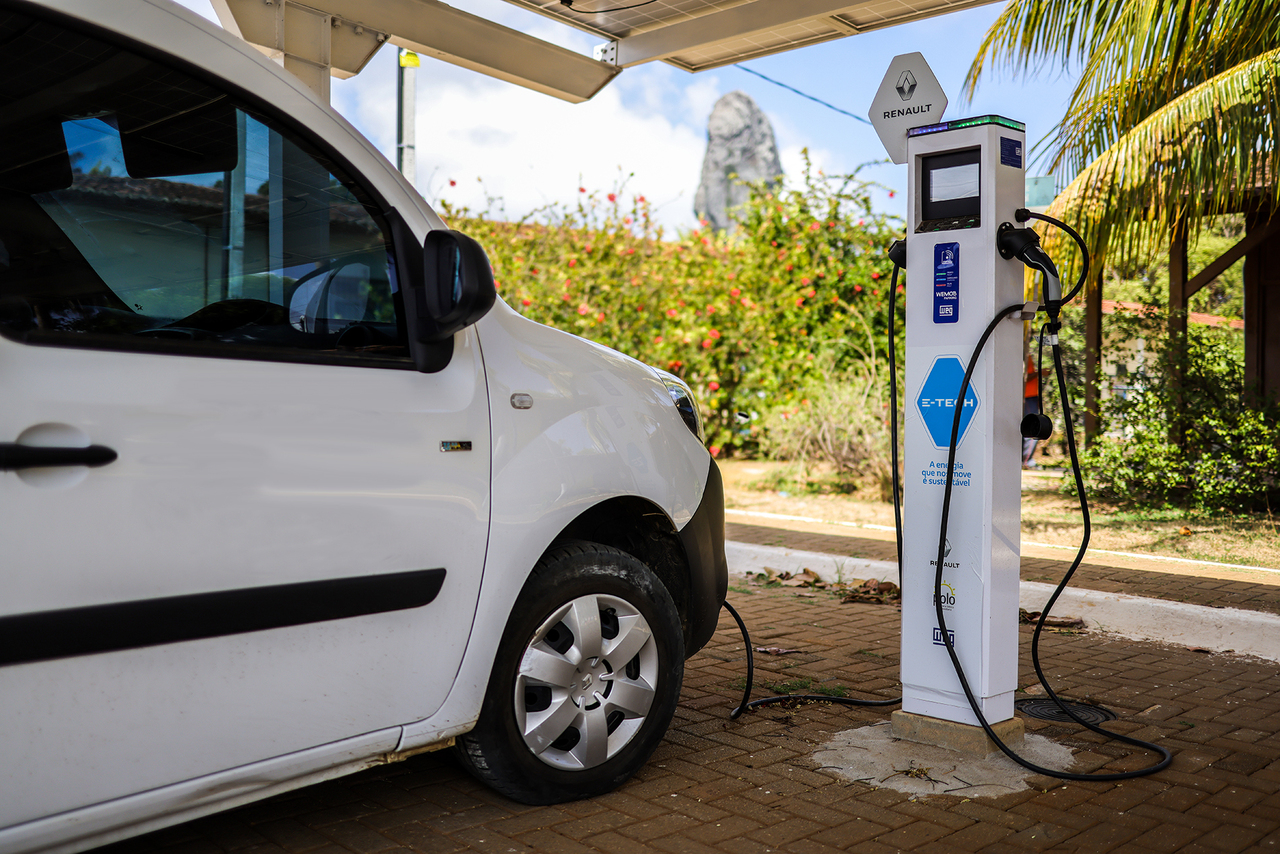
Renault and WEG Launch Public Solar-Powered Charger Project for Electric Vehicles in Fernando de Noronha
The first electric vehicles charged using solar energy in Fernando de Noronha were delivered by Renault in June 2019, and now in 2021, the partnership, including WEG, promises to further boost the project.
See Also
WEG and Renault Implement Project Capable of Reducing Carbon Levels in Fernando de Noronha and Recharging Electric Vehicles
Renault, in partnership with the Administration of Fernando de Noronha, WEG, and Polo, launched today (03) the solar-powered charger project for electric vehicles, which promises not only to reduce the carbon levels in the Fernando de Noronha region but also to harmonize the environment that receives thousands of visitors daily.
The Noronha Zero Carbon project, launched in 2013 with a goal to complete the first phase in five years, was concluded in 2018. The second phase of the project involving solar energy and electric vehicles will prohibit the entry of combustion vehicles in Noronha, starting on August 10, 2022.
-
Rio Grande do Sul accelerates energy transition: State invests in renewable technologies and consolidates decarbonization strategies and pathways to attract billions in new industrial investments.

-
With 160,000 m² of collectors, an area larger than 20 football fields, Silkeborg, in Denmark, hosts a solar thermal plant that heats 19,500 homes and could become the largest solar heating plant in the world.

-
A study reveals the expansion of renewable energy procurement in Brazil and shows how companies are taking advantage of opportunities to reduce expenses, ensure energy efficiency, and strengthen strategic environmental commitments.

-
Mato Grosso do Sul excels in the sugar-energy sector: the state reaches a milestone of 22 operating mills and accelerates the production of clean energy in MS with a focus on sustainability.
The third and final phase of the Renault and WEG project will begin on August 10, 2030, when the circulation and presence of all gasoline, alcohol, and diesel vehicles will be prohibited, with the exception of vessels, aircraft, tractors, and others intended to pull or drag machinery, perform construction or paving work, port and airport services.
Renault President Claims Commitment to Modernize the Automotive Industry
“Renault aims to bring modernity to the automotive industry; this project in Fernando de Noronha, a heritage of Brazil, is part of our strategy to be a company focused on technology, services, and solar energy, a clean energy,” explains Ricardo Gondo, President of Renault Brazil.







Seja o primeiro a reagir!