





 Portuguese
  English
  Spanish
  5 min of reading
  2 comments


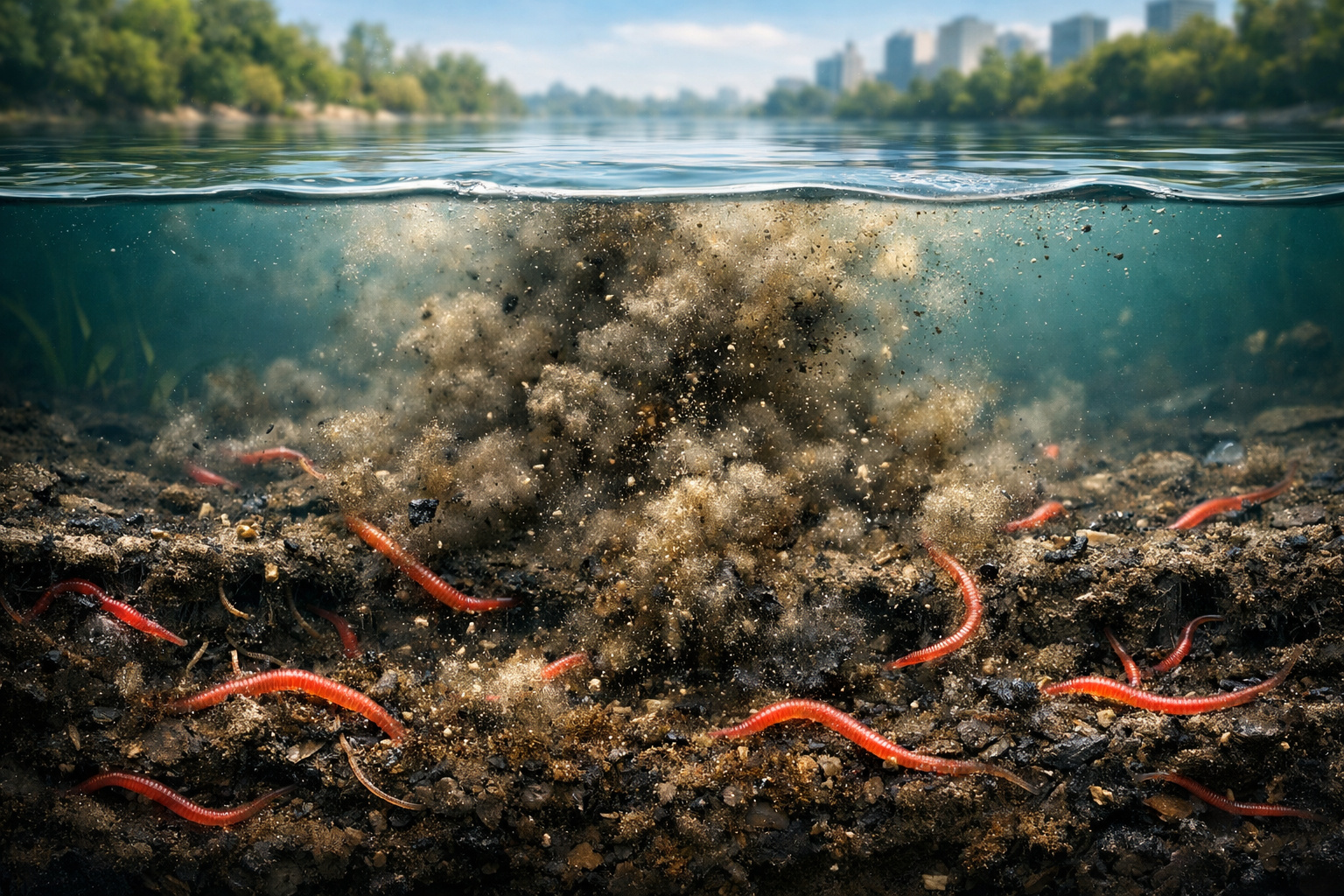


Invisible Worms Are Tilling The Bottom Of Urban Lakes, Resuspending Ancient Pollutants And Keeping The Water Turbid Through Silent Ecological Engineering.
In many urban lakes, the water appears turbid, greenish, or with a strange smell even after investments in sanitation, sewage control, and reduction of external pollutants. For environmental managers and the population, the problem often seems diffuse, with no clear cause. What almost no one realizes is that, at the bottom of these lakes, a discreet, common, and nearly invisible life form is acting as a powerful ecological engineer, capable of reversing decades of environmental improvements. These organisms are Tubificidae, a group of aquatic worms known as oligochaetes.
Despite their small size and harmless appearance, these worms exert a direct physical role on the sediments. They burrow, ingest, excrete, and remix the lake bottom continuously, in a process that scientists call bioturbation. In balanced natural environments, this can be beneficial. In polluted urban lakes, however, the effect can be devastating: ancient pollutants, buried for decades, are brought back into the water column, fueling algae, worsening water quality, and pushing the ecosystem into a chronically turbid state.
Who Are Aquatic Oligochaetes And Why Do They Go Unnoticed
Aquatic oligochaetes include dozens of species of segmented worms, related to earthworms but adapted to underwater life. They live buried in the sediment, with part of their body anchored at the bottom and the posterior end often exposed, where they perform gas exchanges.
-
With a cost per shot close to zero, the DragonFire laser could change naval warfare in 2027 and provide British ships with nearly unlimited defense against drones.

-
A British startup creates tires that generate electricity in electric vehicles when passing over potholes, speed bumps, and cracks.

-
Scientists have created robots made with living cells that have their own nervous system, swim on their own, explore the environment, and self-organize without any genetic engineering, and now they want to do the same with human cells.

-
Students create a solar-powered ambulance that operates without a plug, without fuel, and still keeps medical equipment running in remote areas.


In practice, they are organisms that rarely attract attention. They do not bite, do not attack fish, are not visually striking, and almost never appear in environmental reports. Even so, in many urban lakes, they can reach absurd densities, with dozens or even hundreds of thousands of individuals per square meter.
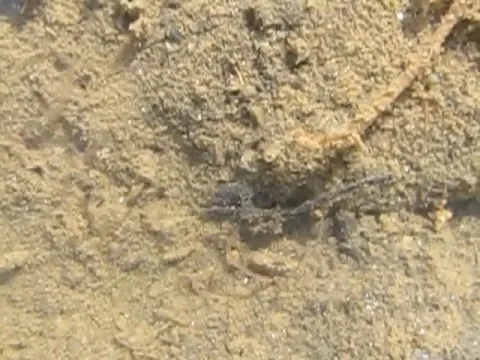

This population explosion occurs because oligochaetes love environments rich in organic matter, such as sediments contaminated by ancient sewage, industrial waste, and nutrients accumulated over the 20th century.
Bioturbation: When Burrowing Becomes Geological Force
The term may sound technical, but the process is simple and powerful. While feeding, oligochaetes:
- ingest deep sediments
- digest associated organic matter
- excrete finer particles on the surface
- continuously reconstruct tunnels
This cycle happens 24 hours a day, year-round. At an individual scale, the effect is minimal. At a collective scale, it becomes comparable to an ongoing engineering project.
The direct result is the resuspension of sediments: particles that were compacted and isolated at the bottom are brought to shallower layers, where they come into contact with water.
Buried Pollution Does Not Disappear, It Waits
A large portion of urban lakes in Europe, North America, and Asia has accumulated pollutants over decades of industrialization. Heavy metals, phosphorus, nitrogen, toxic organic compounds, and even pesticides have been slowly deposited at the bottom, layer by layer.
When environmental policies reduced external pollution, many of these lakes improved only partially. The reason is simple: the bottom became a historical archive of contamination.
The oligochaetes act precisely in this archive. By remixing sediments, they:
- release imprisoned phosphorus
- put metals back into circulation
- increase turbidity
- fuel algal blooms
Thus, even without new sources of pollution, the lake remains “sick.”
From Clear Water To Turbid Collapse: The Cascade Effect
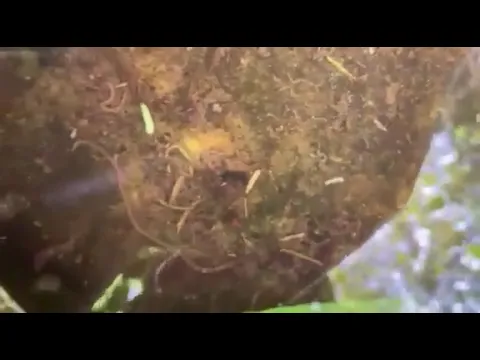
When nutrients return to the water, microscopic algae respond quickly. Algal proliferation reduces light penetration, which affects submerged plants. Without plants, the sediment becomes even more unstable, facilitating the action of the worms.
A feedback cycle is created:
- worms resuspend sediment
- nutrients feed algae
- algae block light
- plants die
- sediment becomes loose
- worms thrive even more
This process pushes the lake towards a state known as stable turbid state, from which it is extremely difficult to escape.
Why Urban Lakes Are The Most Affected
In deep natural lakes, with low nutrient loads, oligochaetes rarely dominate. In shallow, artificial, or dammed urban lakes, however, the conditions are ideal:
- fine, organic-rich sediments
- little water circulation
- pollution history
- absence of natural predators
Moreover, many urban lakes have been “improved” over time with partial dredging, landfills, and channeling, which simplified the habitat and favored opportunistic species like oligochaetes.
An Invisible Problem For Traditional Environmental Policies
The big challenge is that classic water management policies do not address this issue. Reducing sewage, controlling fertilizers, and treating runoff is essential, but not sufficient when the lake bottom becomes an active source of pollution.
In several documented cases, water quality worsened even after external improvements, precisely because the silent ecological engineering of the worms kept the system in collapse.
This explains why some lakes never “fully recover,” despite million-dollar investments.
Attempts At Solution: When Digging In The Bottom Becomes A Dilemma
Environmental managers face a paradox. Deep dredging can remove contaminated sediments, but it is expensive, disruptive, and may worsen the situation in the short term. Introducing natural predators may help, but it is not always feasible in urban environments.
Some testing strategies include:
- controlled sediment removal
- covering the bottom with inert materials
- reintroducing submerged plants
- extreme reduction of available nutrients
No solution is simple because the problem is not just chemical — it is biological and physical at the same time.
Invisible Engineers Who Redefine Ecosystems
The case of aquatic oligochaetes shows how seemingly insignificant organisms can exert structural control over entire ecosystems. They do not change the landscape visibly, like beavers or large fish, but silently alter the functioning of the system.
This is the essence of what is called biological ecological engineering: species that, through their routine activities, modify flows of energy, matter, and sediments.
With increasing urbanization and the creation of thousands of artificial lakes, reservoirs, and water parks, the role of oligochaetes is likely to become even more relevant. Climate Change, with warmer waters and prolonged stagnation periods, further favors their proliferation.
Ignoring these worms means failing to understand why so many recovery projects fail.
An Uncomfortable Reminder Of How Nature Works
The story of aquatic oligochaetes is a powerful reminder that ecosystems do not respond only to large visible human actions.
Sometimes, the fate of an entire lake is decided by almost invisible creatures, silently burrowing at the bottom.
While environmental policies look to the surface, the real battle occurs in the sediment. And, in this invisible field, oligochaetes keep working, reshaping lakes, resurrecting ancient pollution, and showing that, in nature, even the smallest engineer can have colossal effects.







Excelente matéria.
Os homems estao destruindo a terra rios mar animais aves pessoas poluicao lixos entulhos reciclar evitar a poluicao terras aguas rios mar reciclar os lixos pro futuros terras vidas ar aguas dimensoes universos planetas vidas