





 Portuguese
  English
  Spanish
  5 min of reading
  0 comments



The Woman Who Fell from 10 Thousand Meters After an Explosion on a Flight and Survived Became the Most Impossible Case in Aviation, Defying Physics and Medicine to This Day.
Some survivors of aviation accidents impress with their physical resilience, others with emotional strength. But there is one case that surpasses any known limits of aviation, medicine, and even physics: that of Vesna Vulović, the flight attendant who, on January 26, 1972, fell from approximately 10,160 meters in altitude, the height of a modern commercial flight after the total rupture of an airplane in mid-air, and survived without a parachute.
The episode occurred during flight JAT 367, which was traveling from Stockholm to Belgrade with a stop in Copenhagen when an explosion destroyed the aircraft while flying over the territory of what was then Czechoslovakia. All other passengers and crew members died. Only 22-year-old Vesna was found alive, trapped inside a part of the fuselage that remained relatively intact after the crash. Her survival would become, according to the Guinness World Records, the case officially recognized as the longest free fall ever survived by a human without a parachute.
The Accident of Vesna Vulović Changed the History of European Aviation
The investigation conducted by Czechoslovak authorities and later supported by intelligence agencies from the continent concluded that the plane had been the target of a bomb placed in the checked luggage.
-
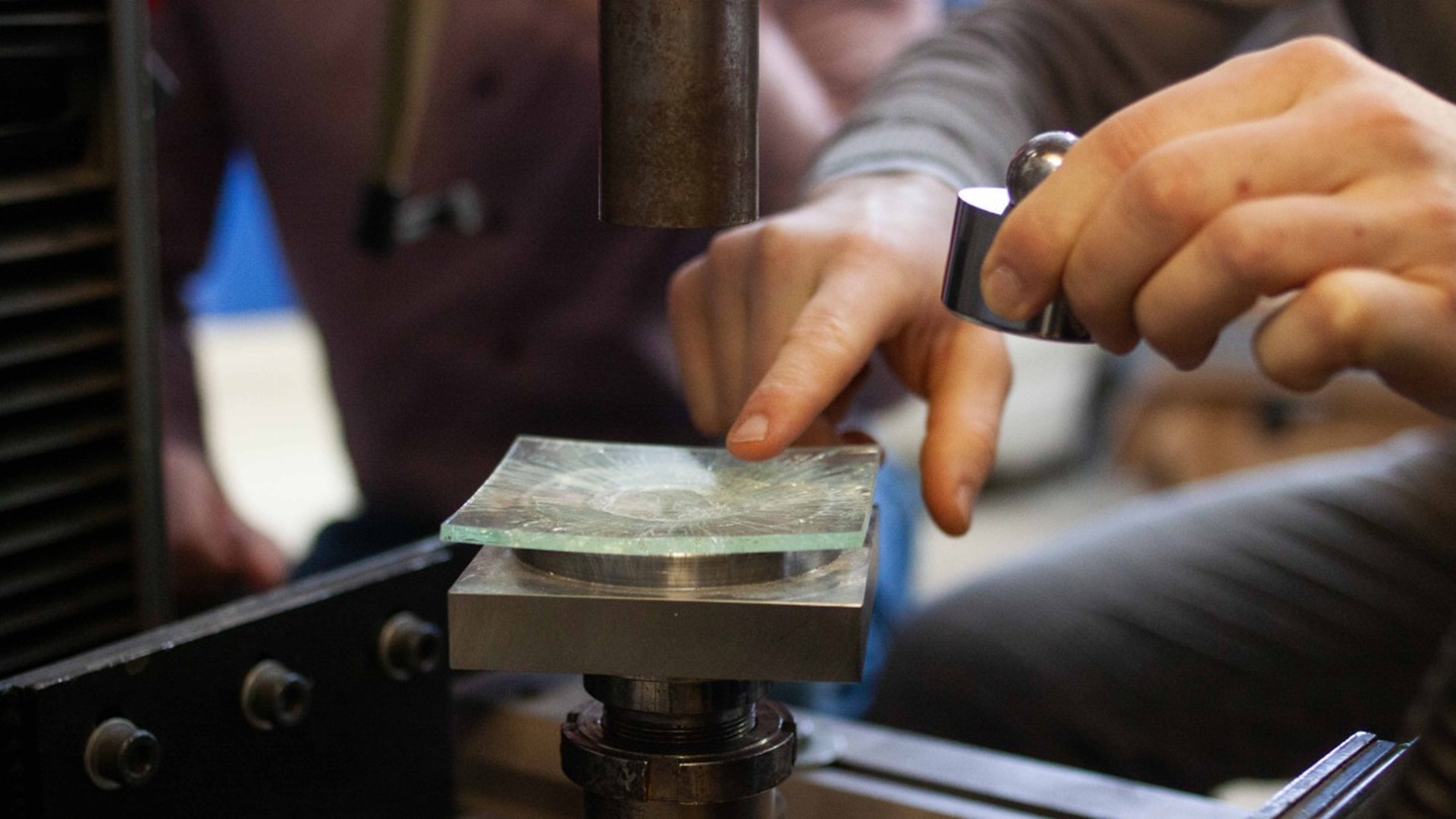
Germany discovers how to reuse old window glass without melting anything and can transform 220,000 tons per year into new high-performance panels, using material from nearly 150 million old windows that would be discarded.
-
China creates hypersonic engine that can make planes and missiles fly more than 6 times the speed of sound with less weight, more range, and without system change.

-
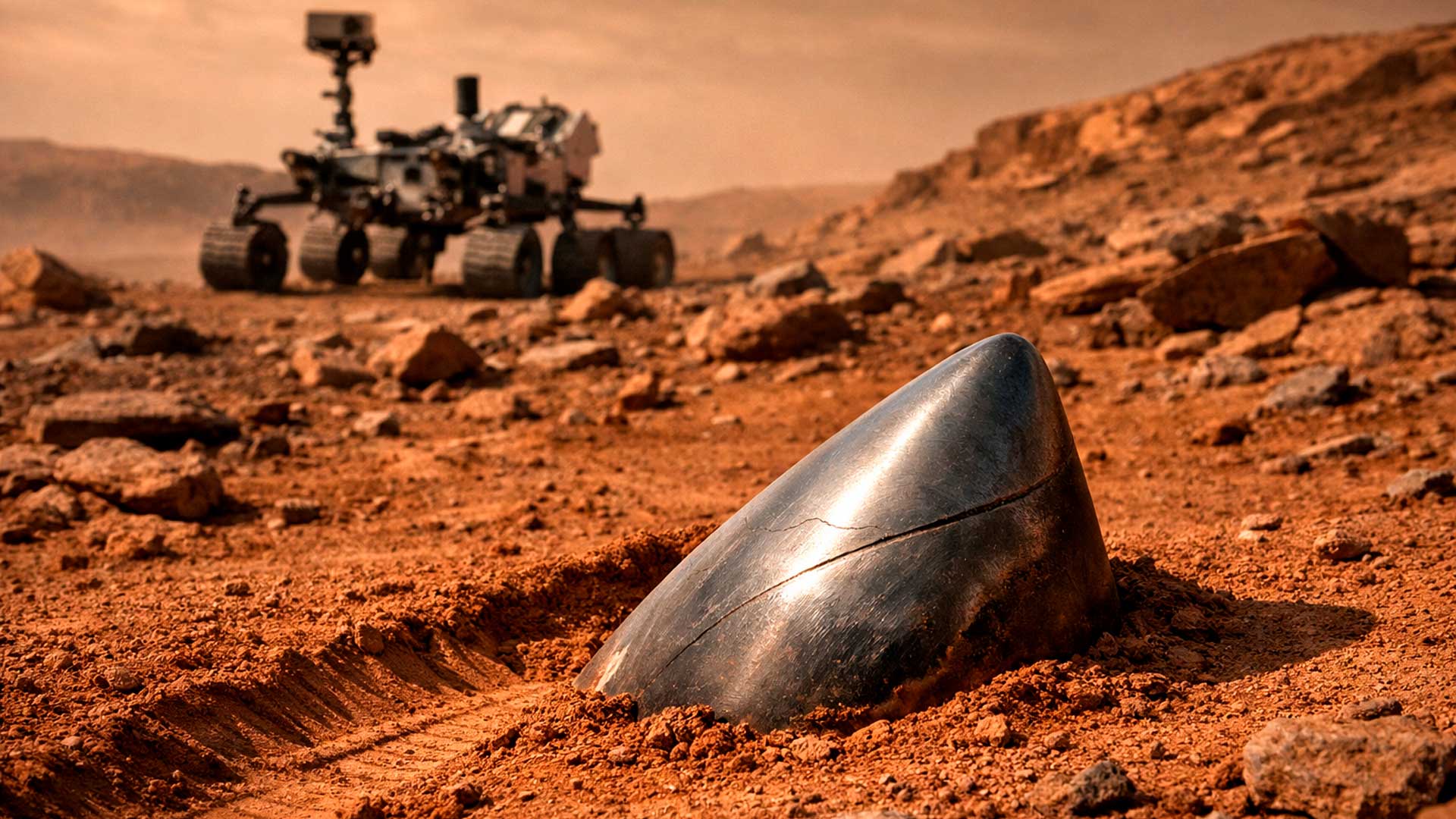
Mysterious object on Mars divides NASA and Harvard after Curiosity image reignites suspicions about what was really found on the planet.
-
Giant structures 14 meters beneath Egypt are revealed by satellites and expose a millennia-old secret buried in Buto.




The explosion literally tore the DC-9 in half, scattering debris for miles and launching passengers immediately into free fall.
The altitude of approximately 10 kilometers represents practically incompatible conditions with human life:
- temperature close to –50°C,
- thin air with sudden drop in oxygen,
- falling speed exceeding 200 km/h,
- brutal deceleration upon the final impact.
Even in military survival manuals, there were no protocols that considered it possible to survive something like this.
What Science Knows About the Fall
Years later, technical analyses conducted by physiologists and aerospace engineers reconstructed the scenario of the fall. Vesna was in the rear part of the fuselage, near the meal cart, which, according to specialists from the Aviation Safety Network, may have acted as a partial protective structure.

Moreover, testimonies collected from residents of the village of Srbská Kamenice, where the plane crashed, indicate that the section she was in may have hit a snow-covered wooded area—multiplying the impact absorption capacity.
Still, this combination of factors does not fully explain why her human body resisted such extreme forces. Doctors who treated her at the hospital in Prague recorded:
- multiple fractures in the pelvis,
- fractures in the tibia and spine,
- partially collapsed lung,
- internal bleeding,
- severe traumatic brain injury.
The initial diagnosis was that she would not survive more than a few hours. However, after days in a deep coma, Vesna began to show signs of recovery that doctors classified as “unlikely.”
The Medical Reconstruction: A Case That Became a Reference
The recovery process lasted for months. After surgeries, intensive physiotherapy, and neurological rehabilitation, Vesna was able to walk, talk, and regain a significant portion of her normal life. Specialists at the hospital in Prague reported that:
- her body showed unusual resistance to trauma,
- neurological damage was less than expected for the severity of the impact,
- the recovery from fractures occurred surprisingly quickly by clinical standards.
Researchers in trauma medicine and extreme physiology, especially from the Universities of Belgrade and Prague, consider the case a combination of favorable biology, rare environmental circumstances, and external factors that cushioned the fall, but stress that, even so, survival remains statistically almost impossible.
The Explanation That Physicists and Specialists Are Still Discussing
Later analyses addressed the possible aerodynamic dynamics of the fuselage’s fall. Unlike an isolated human body, a block of metal structure can:
- enter an irregular rotation,
- increase air resistance,
- slightly reduce terminal velocity,
- create an erratic and less direct trajectory.
But even with these factors, simulations conducted by Czech engineers and cited in reports from The New York Times showed that the final deceleration would exceed lethal limits.
This suggests that Vesna was saved by an extremely rare combination of:
- partially intact pressurized section,
- fall interrupted by trees,
- deep snow,
- likely fitting of the body between structures that cushioned internal impacts.
There is no consensus. Many researchers state that no physical modeling fully explains survival.
The Life After the Fall of Vesna Vulović That Defied Modern Aviation
Vesna became an international public figure, receiving honors and participating in reports and documentaries about extreme survival. Despite this, she avoided turning the episode into a spectacle, preferring a discreet life. She became a symbol of resilience, aviation service, and overcoming challenges.
The government of the former Yugoslavia, recognizing her journey, awarded her the title of national heroine. She continued working for the airline, but in administrative roles, as per medical advice.
Until the last years of her life, Vesna still carried physical sequelae, but maintained the same public stance: she stated that her survival was not heroism but an “accident with an improbable outcome.”
Why the Case Remains Relevant to Aviation
The episode sparked debates about:
- safety protocols for baggage,
- cabin reinforcement,
- internal containment mechanisms,
- international response to explosives on commercial airplanes.
More importantly, it has become a mandatory study in courses on aviation physiology, rescue medicine, and fuselage behavior in explosive depressurization.
The Guinness, in recognizing the case, highlighted that no other survival at such height without a parachute has been documented with such robust evidence.
The name of Vesna Vulović remains a testament that, on rare occasions, human biology, the environment, and fate align to produce something that challenges the limits of the possible.
The fall from 10 thousand meters is not just a number: it is a line that separates what aviation considers physically unfeasible from what, on that day in January 1972, became a real, documented event that is still difficult to comprehend today.





-

-

3 pessoas reagiram a isso.