





 Portuguese
  English
  Spanish
  3 min of reading
  1 comment


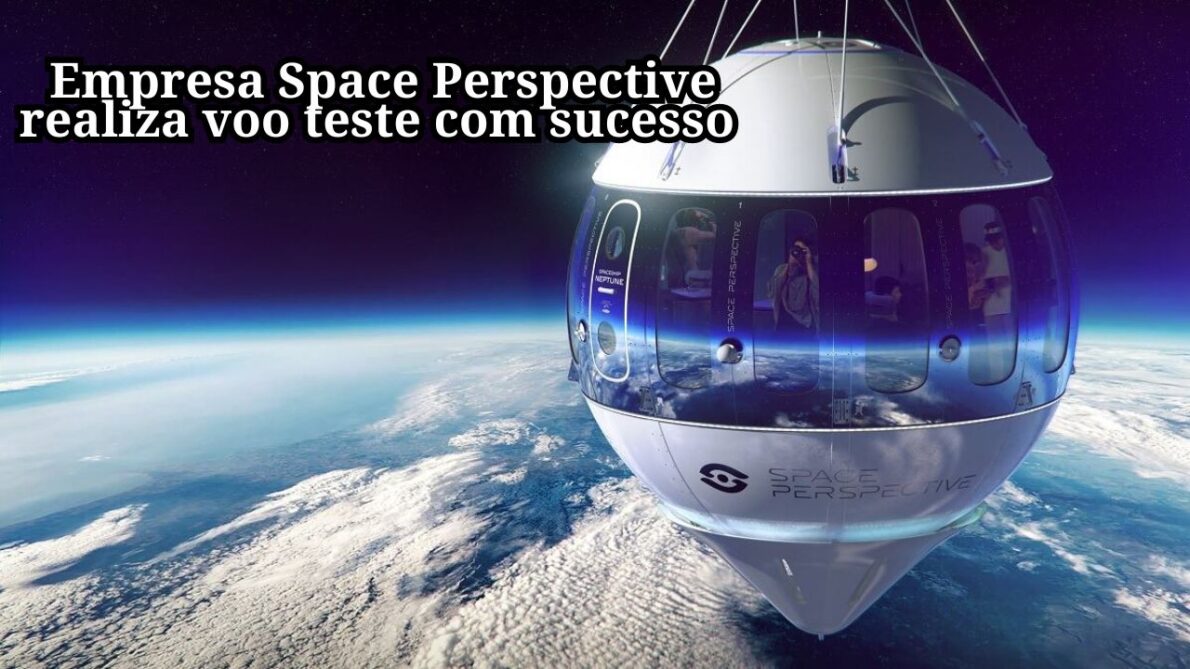

Space Perspective Successfully Conducts Test Flight and Prepares to Launch Space Travel in Capsules by 2026.
If you think your next vacation destination will be the beach or a mountain, you might want to forget that. Soon, your dream vacation could include something a little more distant: outer space! Space Perspective, a pioneering company in this field, has taken another giant step toward the future of space travel in capsules. Earlier this month in September, they launched the Neptune-Excelsior capsule to the edge of Earth’s atmosphere in a test flight that had the world glued to the sky.
The capsule, which was uncrewed this time, was launched from a ship in Florida, where Space Perspective is headquartered. It ascended to an impressive 30,000 meters, surpassing 99% of Earth’s atmosphere, before beginning its smooth and safe return to Earth, landing in the ocean waters. The entire flight, from launch to landing, lasted six hours and was deemed a total success.
The Success of Neptune-Excelsior for Space Travel in Capsules
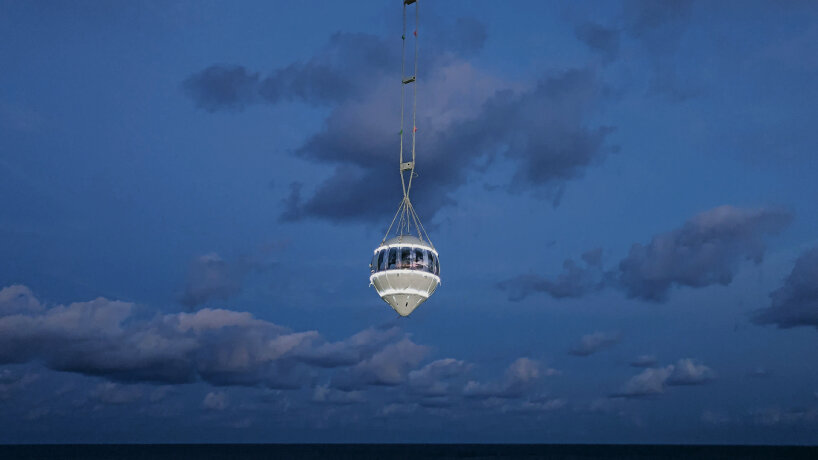
This test was crucial to demonstrate that space travel in capsules is about to become a reality. The main objective of the mission was to test the vessel’s ability to maintain cabin pressure stability and control temperature, which can vary drastically at such extreme altitudes.
-
An aquatic seed consumed for centuries in Asia is going viral in the West after studies highlighted its antioxidant compounds and potential anti-inflammatory properties. It pops like popcorn, has low fat content, and is already being called the new functional snack.

-
China showcases robot dogs that act in groups like a coordinated pack, make decisions together, and could change the way modern wars operate.
-
The coldest seawater ever recorded in Earth’s history was hidden under extreme ice 717 million years ago and reached an impressive -15°C.

-
China has launched the world’s first floating artificial island, a scientific structure designed to face open seas, test equipment weighing hundreds of tons, and reach depths of 10,000 meters.

According to Space Perspective, the commercial launch of Neptune-Excelsior is scheduled for 2025, with the first tourist flights occurring the following year. In other words, in just a few years, you could leave your home for space, relaxing in a capsule with luxurious seating and Wi-Fi, enjoying panoramic views through the largest windows ever built for space travel.
Space Travel: The Luxury of the Stars
And it’s not just the view that promises to be spectacular. Space Perspective is committed to providing a cinematic experience. A ticket for this intergalactic adventure costs around US$ 125,000 (approximately R$ 68,000), and includes much more than just a ride. Travelers will have access to a culinary program featuring cuisine from various parts of the world, with dishes specially crafted for the space journey.
So far, more than 1,800 people have secured their tickets, eager to become pioneers in space travel in capsules. With all this, it seems that space tourism will not only be a reality but a new way to disconnect from the world — literally.
One Step Further
The future envisioned by Space Perspective leads us to imagine a world where the boundaries of Earth cease to be the limit. Space travel in capsules not only promises a revolution in tourism but also brings forth the human desire to explore the unknown in an accessible, luxurious, and, of course, safe way.
Who knows, in the near future, the question “what’s your next destination?” may bring answers like “the Moon” or “the stars.”
When Did Space Travel Begin?
Space travel officially began on October 4, 1957, when the Soviet Union launched Sputnik 1, the first artificial satellite in history. This event marked the beginning of the space age. A few years later, on April 12, 1961, Soviet cosmonaut Yuri Gagarin became the first human to travel to space aboard Vostok 1, orbiting Earth and paving the way for future space explorations.
This period was driven by the space race between the Soviet Union and the United States, culminating in the historic arrival of man on the Moon on July 20, 1969, when the Apollo 11 mission, led by NASA, had astronaut Neil Armstrong take the first steps on the lunar surface.
With advancements in technology and space tourism becoming increasingly accessible, can you imagine being part of a space journey in the future? What attracts you most to this idea: adventure, science, or luxury?







Viagem em cápsulas para outras galáxias?
Essa afirmação só demonstra que o conhecimento do autor(a) está há alguns anos luz distante do tema abordado.