





 Portuguese
  English
  Spanish
  4 min of reading
  0 comments


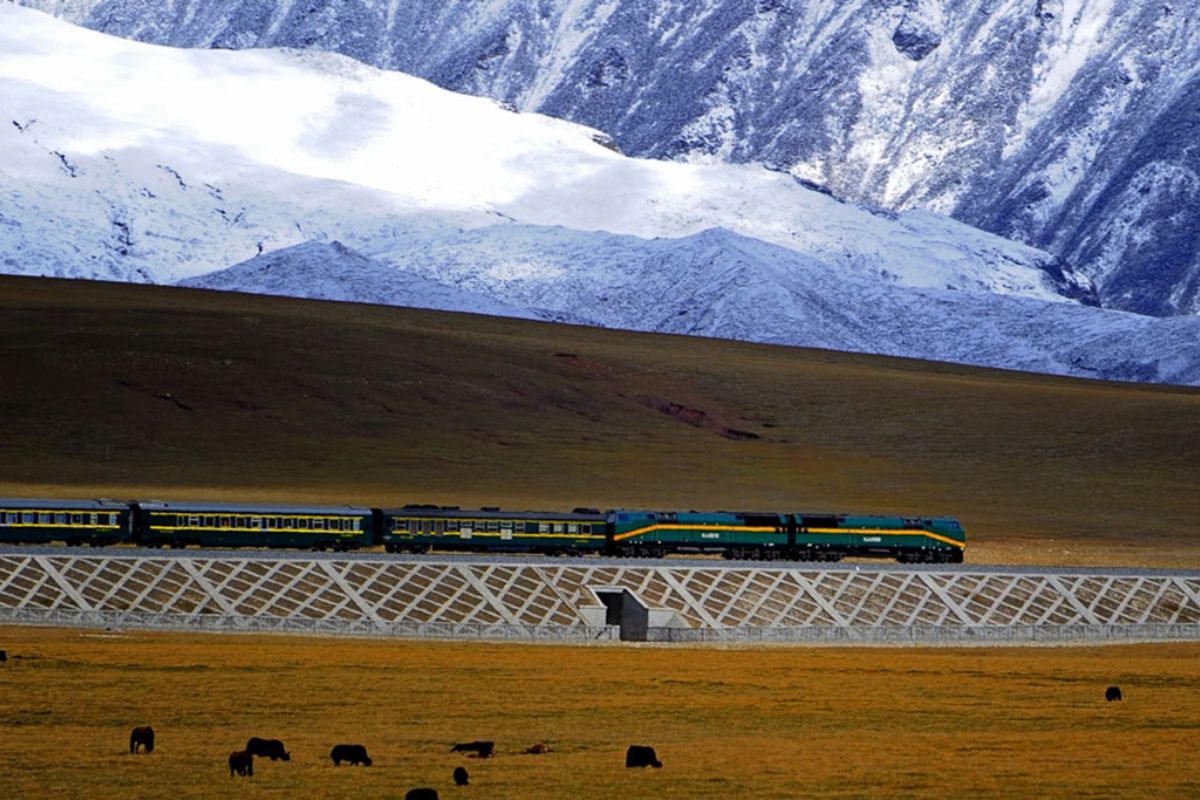
The Journey Through the Roof of the World Connects Xining to Lhasa in Just Over 21 Hours, Crossing 1,956 km of Plateau, Passing Through Stations Above 5,000 Meters and Revealing, Through the Window, Snow-Capped Mountains, Green Swamps, and Icy Deserts, on a Route That Combines High-Altitude Engineering, Wildlife, and Tibetan Culture.
Traveling through the roof of the world is crossing the Qinghai-Tibet Plateau on a panoramic sleeper train that departs from Xining at 11:15 PM, changes traction in Golmud, and conquers the ascent to the Tanggula Station, the highest railway point on the planet. The itinerary covers 1,956 km with a total duration of 21h14, in cabins with four beds and continuous supplemental oxygen to mitigate altitude.
Along the way, the train crosses the No Man’s Land of Hoh Xil, where permafrost requires specific solutions on the tracks, touches Lake Cuona, and cuts through snow-covered ranges like Tanggula. Upon arrival, Lhasa welcomes the traveler with the illuminated Potala Palace, capping off an experience that alternates the silence of steppes, the presence of yaks, and stations suspended in the rarefied air.
Itinerary, Time, and Cost of the Crossing
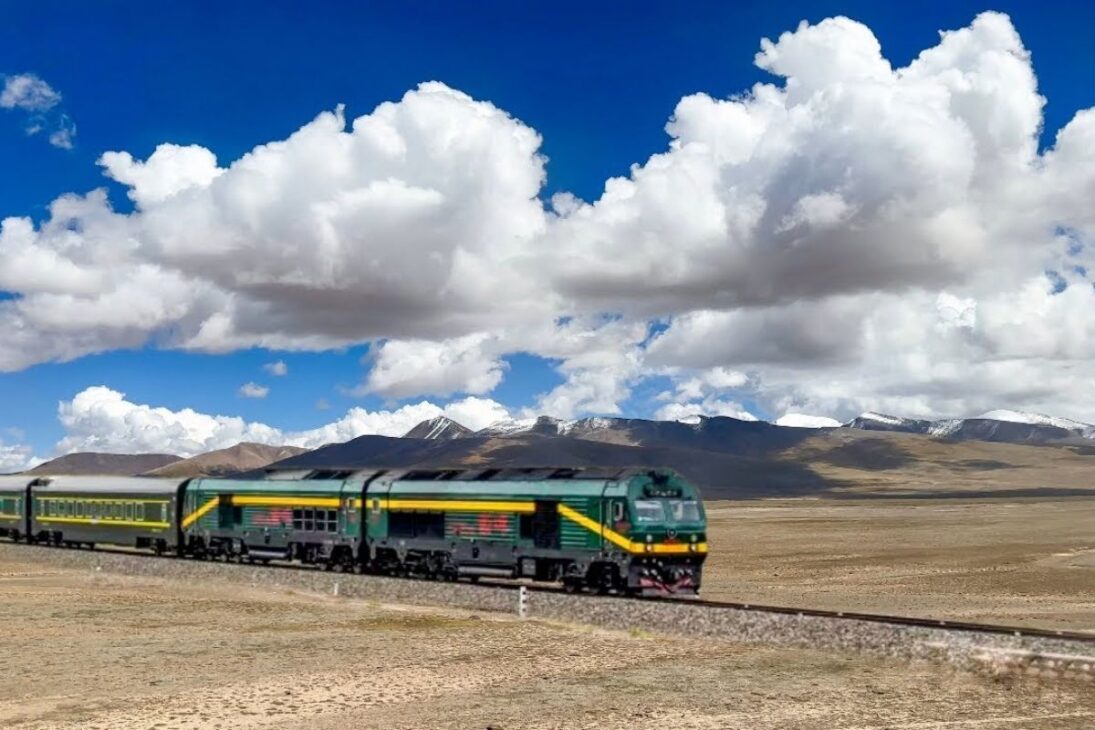
The journey begins in Xining at 2,275 m and refers to the train Y971, which travels to Lhasa with a travel time of 21h14.
-
These living root bridges and ladders are over 700 years old and help indigenous people survive in one of the rainiest regions in the world.

-
From sertanejo star to international investor: Ana Castela invests millions in a mansion in the USA, creates a themed accommodation in Orlando, and shows that the “boiadeira” also wants to grow away from the stage.

-
The 10 most stunning motorhomes in the world: a $3 million trailer with a rooftop nightclub and garage for a Ferrari, “palaces on wheels” with Italian marble, private cinema, and five-star hotel luxury for billionaires.
-
Trump wanted to spend $400 million on the White House, but the courts prohibited the million-dollar construction.


The segment totals 1,956 km, with technical stops and locomotive change in Golmud at 2,829 m, where the service is pulled by two diesel units and one generator car.
How much does it cost? The soft sleeper was purchased for 808 CNY.
The boarding process is trilingual (Chinese, English, and Tibetan), and the typical occupancy mixes foreign tourists, mountaineers, and domestic travelers.
Those looking to photograph day landscapes prioritize departing from Xining, where “the true landscape begins.”
Where and Why the Line Operates at the Limit of Engineering
The Golmud–Lhasa segment activates continuous cabin oxygen shortly after departure.
On the plateau, at an average altitude of 4,700–5,000 m, heat conduction tubes appear along the tracks, a solution used to keep the permafrost stable and avoid subsidence.
At Jiangkedong the train reaches 4,778 m, and at Tanggula Station crosses 5,072 m, while the summit point marks 5,079 m.
Why is this possible? Besides the extreme weather and rarefied air, the track requires permanent patrolling by maintenance teams stationed in shelters along the line.
Each post, each stone blanket, and each embankment compose a system to reduce wind, sand, and thermal variations of the frozen ground.
Landscapes, Wildlife, and the Voids of the Plateau
Between Hoh Xil and the Tuotuo River (traditionally considered the source of the Yangtze), the window becomes a documentary: yaks, kiangs (Equus kiang), and Tibetan antelope share the frame with estupas and transmission towers.
The clouds seem within reach because the train is already too high.
The visual sequence includes icy deserts, green swamps before Nagqu, and red peaks reminiscent of landscapes from another planet.
The Nagqu prairie, with herds and constant wind, prepares the transition to more populated valleys as it approaches Lhasa.
Onboard Routine and Altitude Logistics
The day begins with breakfast at 4,550 m, followed by meals delivered on carts and a fixed menu in the dining car.
The crew reinforces guidelines on altitude sickness; doctors onboard monitor passengers who resort to emergency oxygen outlets in the cabins.
Inside, the soft sleeper maintains the classic configuration of four beds, sheets with Tibetan patterns, and individual oxygen outlets.
Outside, the railway runs alongside road works and service roads, highlighting the scale of logistics to sustain the operation on the roof of the world.
Who Keeps the Line Alive and Why It Matters
Along the route, permanent way workers greet trains while patrolling sections of 2 km.
In simple shelters, they face cold, isolation, and rarefied air. Without this invisible routine, the tracks over permafrost would not deliver safety.
It is the convergence of heavy engineering and daily discipline that sustains the reliability of the route.
Arriving in Lhasa, around 9 PM, the drop in altitude after the Yangbajing Tunnel alleviates the body.
For many, the first outing is directly to the Potala Palace, where the city concludes the crossing with a historical and spiritual scenery and proves why this journey defines, without exaggeration, the term roof of the world.
In the balance, the crossing combines how much it costs and takes, where it exceeds 5,000 m, who makes it possible, and why engineering here is measured in resistance, adaptation, and detail.
It is the rare combination of extreme nature with precise operation, an open lesson on infrastructure at high altitude.
Would you take the overnight route from Xining to ensure you witness the sunrise on the plateau, or would you prefer to leave earlier, even trading some daytime landscapes for a longer rest on the roof of the world?







Seja o primeiro a reagir!