





 Portuguese
  English
  Spanish
  7 min of reading
  0 comments


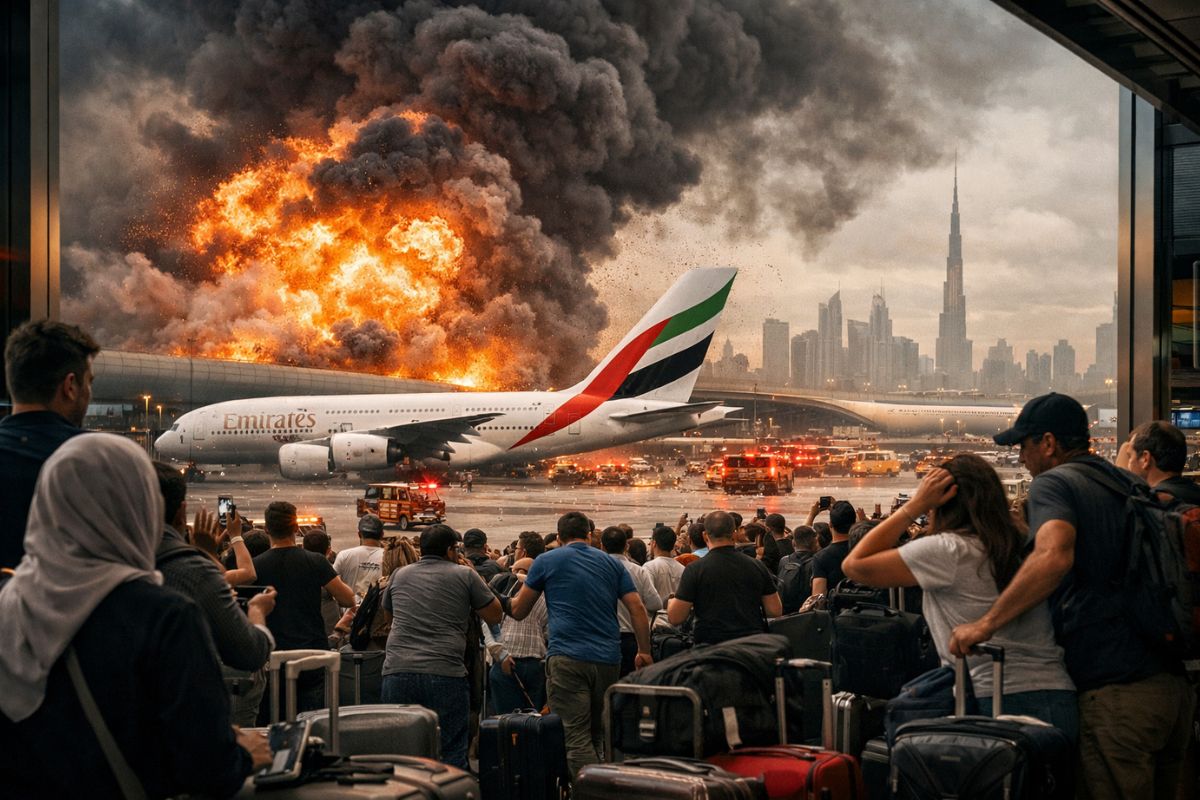
The Explosion Recorded Near the Terminal of Dubai International Airport Disrupted Operations, Caused Flight Suspensions, Delays, and Cancellations, Spread Uncertainty Among Passengers in Transit, and Exposed How a Single Incident, Amid Tension in the Middle East, Can Disorganize a Vital Gearing of Global Aviation This Saturday.
The explosion near the terminal of Dubai International Airport turned one of the busiest points in global aviation into a center of interruptions, uncertainty, and waiting. Within hours, images of smoke, drone noise, and blocked traffic came to summarize the extent of the impact on flights, connections, and passengers.
The episode occurred amid a regional escalation already marked by airspace restrictions, sudden route changes, and emergency guidance from airlines. When Dubai stops, the effect is not limited to the airport: it spreads across long-distance connections, freight transport networks, and international itineraries that rely on the city as a central link.
The Explosion That Placed Dubai at the Center of Operational Collapse
Images released throughout Saturday show an explosion followed by a large column of smoke rising near the terminal. Just before the impact, a noise in the air and the mention of “another drone” can be perceived, a detail that heightened the sense that the incident was not isolated but part of a growing risk environment. The exact area of impact has not been independently confirmed, though records point to a region near Concourse A.
-
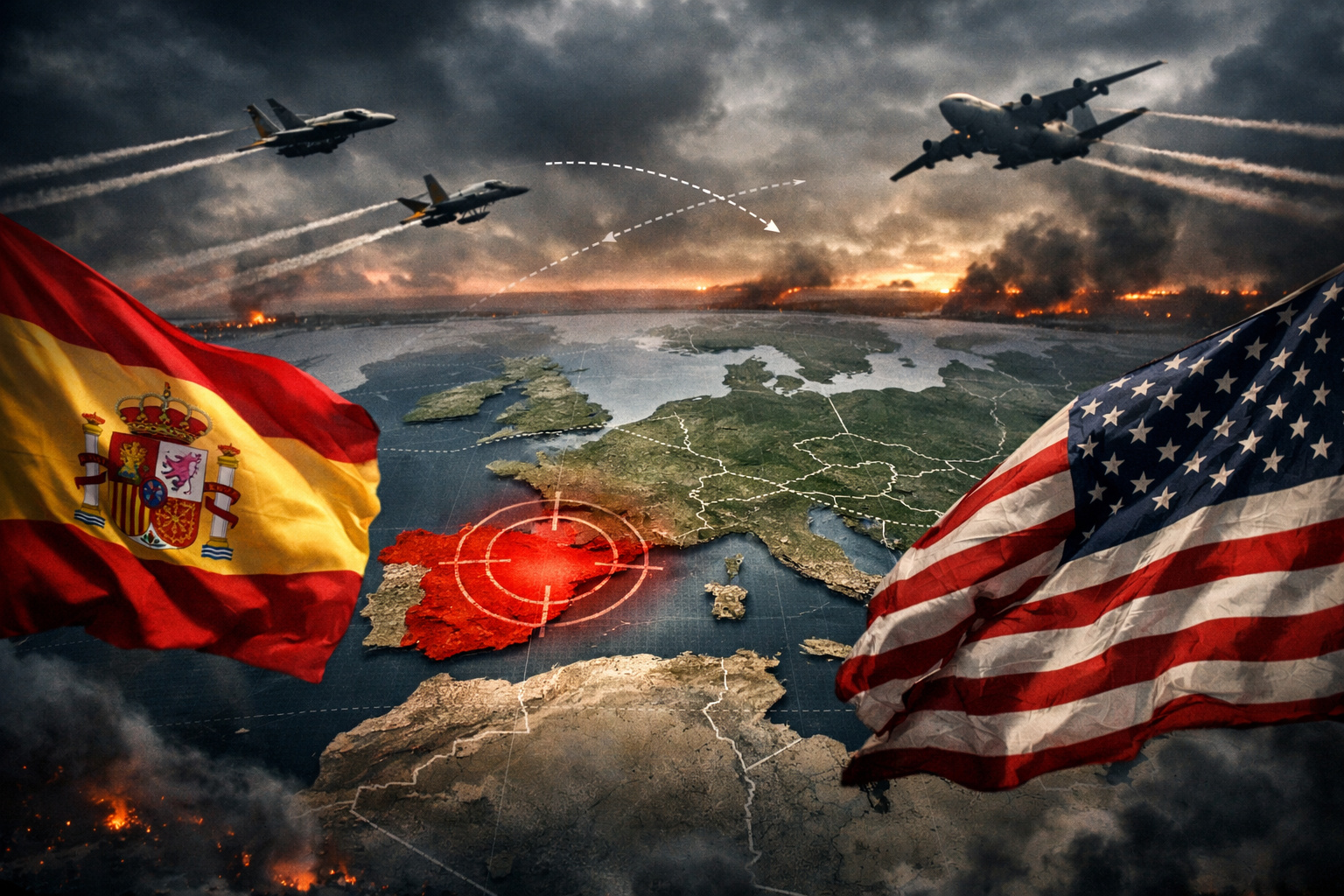
Spain challenges the USA and closes its airspace for operations against Iran, raising global tension and provoking the threat of a trade rupture.
-
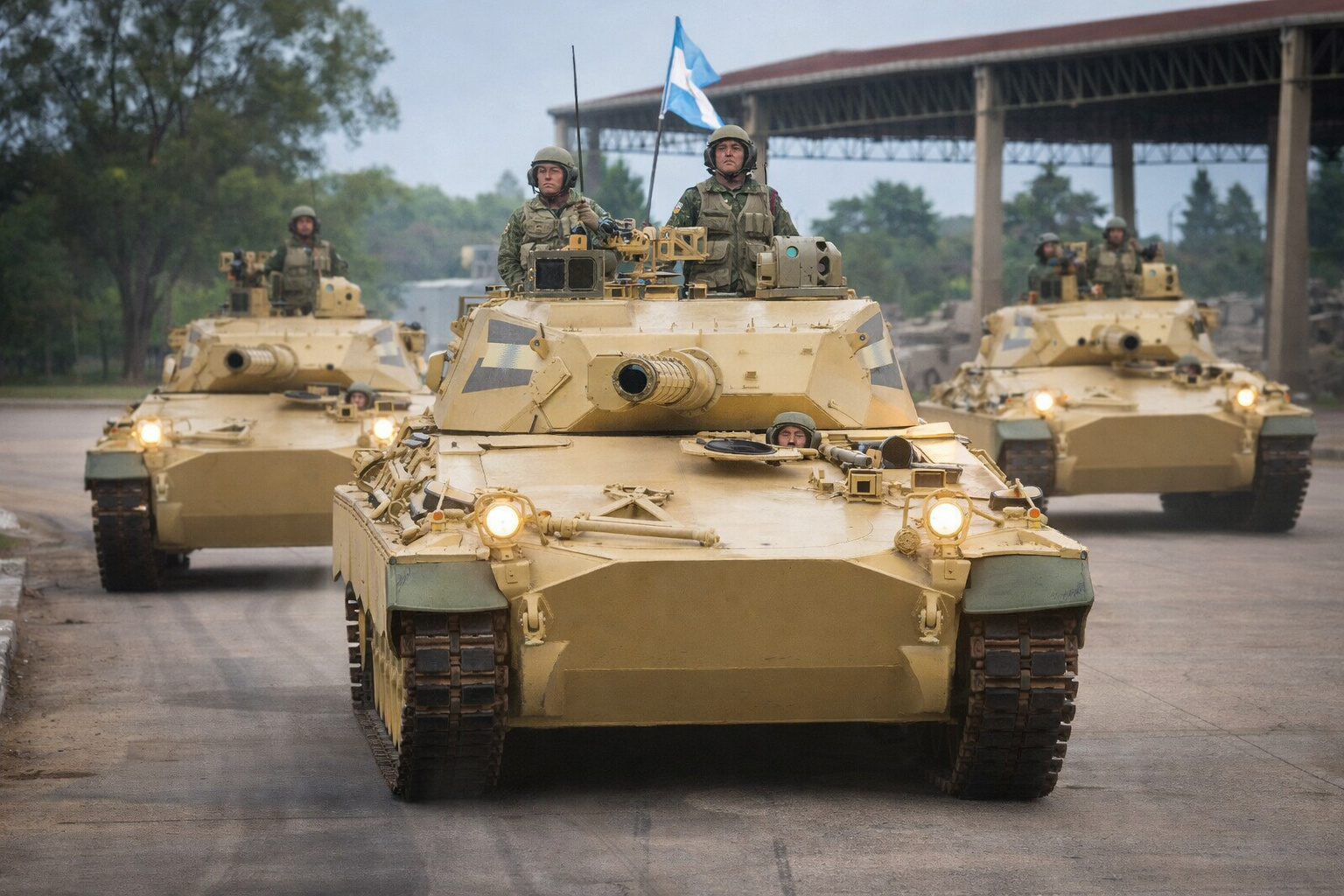
While no other country manufactures tanks in Latin America, Argentina activates the TAM 2C-A2 and raises a curiosity about the technological lag in the region.
-
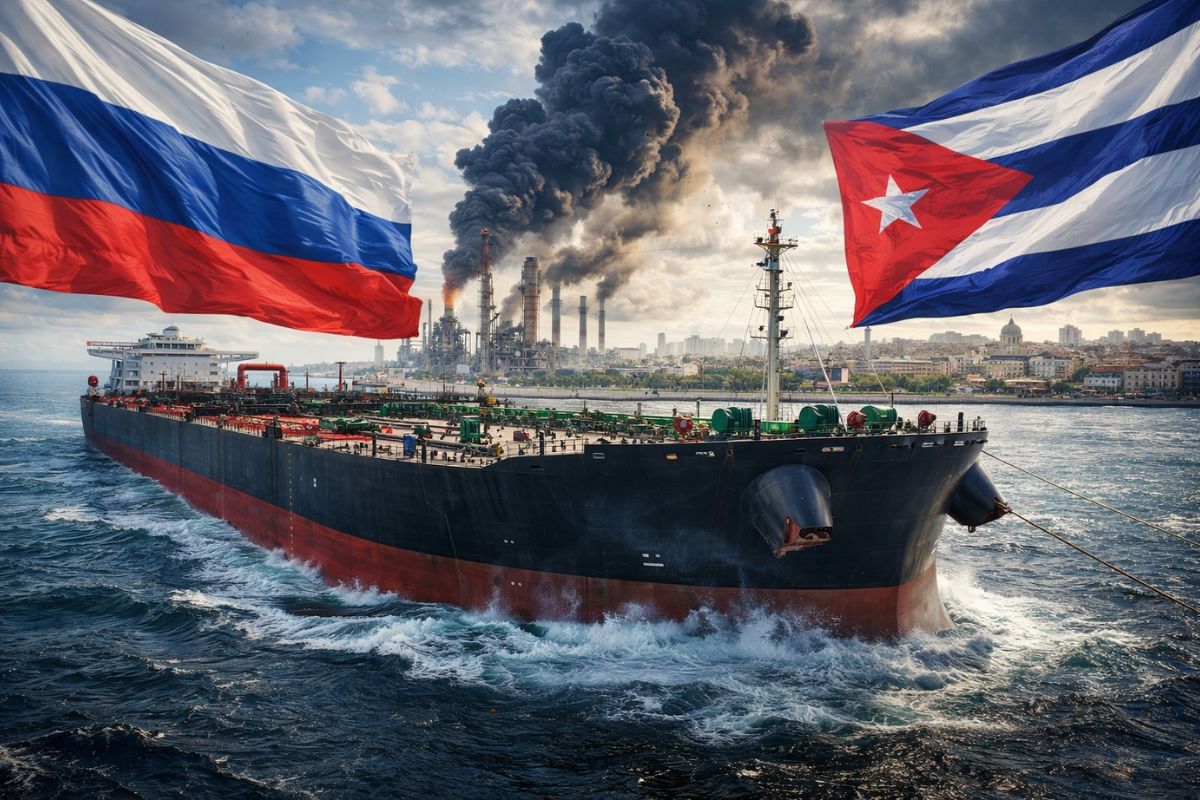
A Russian ship with 730,000 barrels of oil has just arrived in Cuba while Mexico negotiates fuel sales through private companies: the communist island is desperately seeking alternatives after losing its supply from Venezuela due to American military action.
-
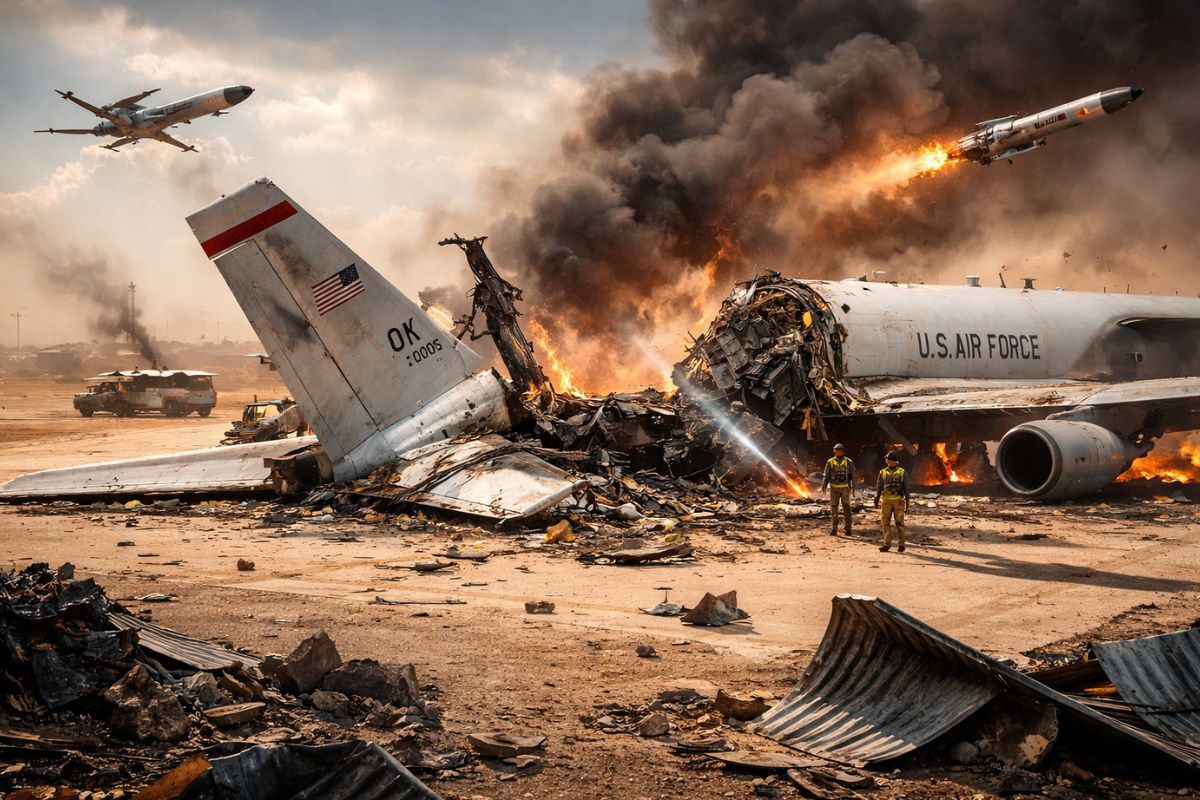
Iranian drones and missiles destroyed a 270 million dollar American spy plane in Saudi Arabia, splitting the E-3 Sentry aircraft in half and injuring 12 military personnel in an attack that exposes the vulnerability of U.S. bases in the Persian Gulf.

This point is crucial because Dubai International Airport does not function merely as a common boarding and disembarking terminal. It is a strategic gear of international mobility. An explosion in this area immediately changes the logic of security, forces operators to review procedures within minutes, and compels airlines, ground crews, and airport authorities to act under pressure, prioritizing risk containment before any regular resumption.
The visual impact of the smoke near the terminal also had an immediate psychological effect. In such situations, it is not just the operation that slows down; the perception of safety becomes a central part of the problem. Connecting passengers, travelers on their way to boarding, and families waiting for information suddenly find themselves dealing with a broken routine, unsure whether the flight will depart, be delayed, or be canceled.
Why the Explosion in Dubai Exceeded the Airport’s Limits
Dubai International is one of the busiest air connections on the planet and handled about 92.3 million passengers in 2024. This volume helps explain why an explosion near the terminal generates almost instantaneous global repercussions. It is not just an important airport for the Emirates, but an international distribution point that connects continents, feeds long-haul flights, and sustains part of the fluidity of air traffic between Europe, Asia, Africa, and the Middle East.
When a structure of this scale reduces or interrupts activities, the chain effect appears quickly. Planes stop taking off, connections are broken, passengers lose subsequent legs, and companies must recalculate schedules, crew availability, and aircraft usage. In air transport, the problem rarely stays where it started.
A delay in Dubai can mess up distant boardings, affect cargo, and force airlines to rearrange operations across different time zones.
The gravity increased because the incident occurred at a time when regional airspace had already been under pressure for days of tension. This means that the explosion did not hit a stable system but rather a network already weakened by previous restrictions. In such scenarios, any new shock carries more weight, as it finds airlines and passengers already operating with narrower margins of predictability.
Total Suspension, Reversal in Messaging, and Partial Resumption of Flights
Following reports of the incident, operations at Dubai International Airport were temporarily suspended as a safety measure. The response was immediate: flights were halted, boarding decisions frozen, and unnecessary movement avoided until the situation could be reassessed. At the same time, Emirates, the hub’s main airline, announced the suspension of flights to and from Dubai and advised passengers not to head to the airport while the situation was being analyzed.
This initial phase generated one of the most sensitive points of the day: the discrepancy between the speed of events and the updating of public guidance. Messages released initially stopped reflecting reality hours later, and a prior communication was even withdrawn to avoid further confusion.
This movement reveals how operational crises in airports depend on constant revisions, as an early or excessively maintained decision can further disorganize the response.
Later, there was confirmation of a partial resumption of operations. Some flights resumed from Dubai International Airport and also from Dubai World Central – Al Maktoum International Airport.
Emirates announced the limited restart of services and allowed travel to the airport for passengers with confirmed bookings on flights actually scheduled for the afternoon, including in cases of connections, provided the next leg was also operating.
Even with this partial return, the situation remained unstable. The guidance to the public made it clear that schedules could change with little notice.
Partially resuming does not mean normalizing, but rather reestablishing part of the operation under observation, with the possibility of further adjustments as security conditions and access to airspace were redefined.
Passengers Stuck Between Waiting, Misinformation, and Last-Minute Decisions
For those in transit, the day became a sequence of practical and urgent doubts. Many passengers had to deal with delayed, canceled, or simply pending flights, while airlines assessed what could take off without increasing operational risk. In international hubs, the passenger experience depends on synchronization.
When this synchronization breaks, the effect is felt in the line, at the gate, in the missed connection, and even in the decision whether to leave home for the terminal.
The problem was compounded by the fact that videos, reports, and informal updates began circulating at the same time that companies and operators were still trying to consolidate a real picture of the situation. Therefore, the advice given to passengers was clear: wait for direct confirmation from the airline before heading to the airport.
In a scenario of explosion, smoke, and temporary suspension, accurate information is almost as valuable as the reopening of the runway, because it helps prevent further unnecessary displacements and reduces the number of people arriving in an still unstable environment.
Those relying on Dubai merely as a connection were also affected. In many cases, the traveler did not even have the airport as a final destination, yet they were still caught in the crisis. This is one of the hardest characteristics of major international hubs: they concentrate efficiency on normal days, but on days of rupture, they also concentrate damages.
A passenger may be crossing continents and see the entire journey redefined by a single point of failure in the path.
What the Explosion Reveals About the Crisis in the Middle East
The explosion near the terminal gained greater dimension because it occurred on a Saturday already marked by maximum tension in the region.
The incident fit into a broader environment of escalation, airspace restrictions, and military responses, amplifying the sense that the crisis has ceased to be a distant diplomatic backdrop to directly hit civil infrastructures of immense international relevance. When an airport of this scale enters the news due to smoke, suspension, and drones, the crisis changes scale in the eyes of the world.
The case also exposes the vulnerability of highly connected global structures. Airports like Dubai are symbols of efficiency, speed, and international integration, but they depend on permanent stability to operate at this level.
When regional security wavers, even systems recognized for their ability to absorb a large flow of passengers begin to operate under real risk of severe interruption.
Another important point is the symbolic weight of the episode. Dubai usually represents continuity, circulation, and predictability on the aviation map.
Seeing this environment associated with explosions, flight suspensions, and smoke near the terminal transforms the airport into a concrete image of the regional crisis. It is not just one operation affected; it is a global reference of connectivity being exposed to surrounding instability.
What Could Happen From Now On
The immediate trend is for continuity in operational changes with little prior warning. Airport authorities and airlines have made it clear that new adjustments may occur depending on security conditions and access to airspace. This means that the partial resumption observed throughout Saturday does not eliminate the risk of further changes, especially for connecting passengers or those with travel sensitive to any delay.
In practice, the next moves should depend less on a promise of normality and more on the ability to stabilize the operation step by step.
The explosion did not just disrupt a flight schedule; it shook the predictability of an entire international network. And, in situations like this, recovery tends to be gradual, uneven, and heavily conditioned by the broader regional scenario.
What happened in Dubai this Saturday shows how infrastructure that moves millions of people can, in a matter of minutes, go from routine to the center of a crisis with global reach. For many people, the scene of smoke near the terminal summed up the day. For aviation, however, the episode was more than an image: it was a real test of response, containment, and resumption under pressure.
And for you, could an airport like Dubai fully regain passenger confidence after such an incident, or does this type of explosion change for a long time the way people perceive security at major international connections?









Seja o primeiro a reagir!