





 Portuguese
  English
  Spanish
  5 min of reading
  6 comments


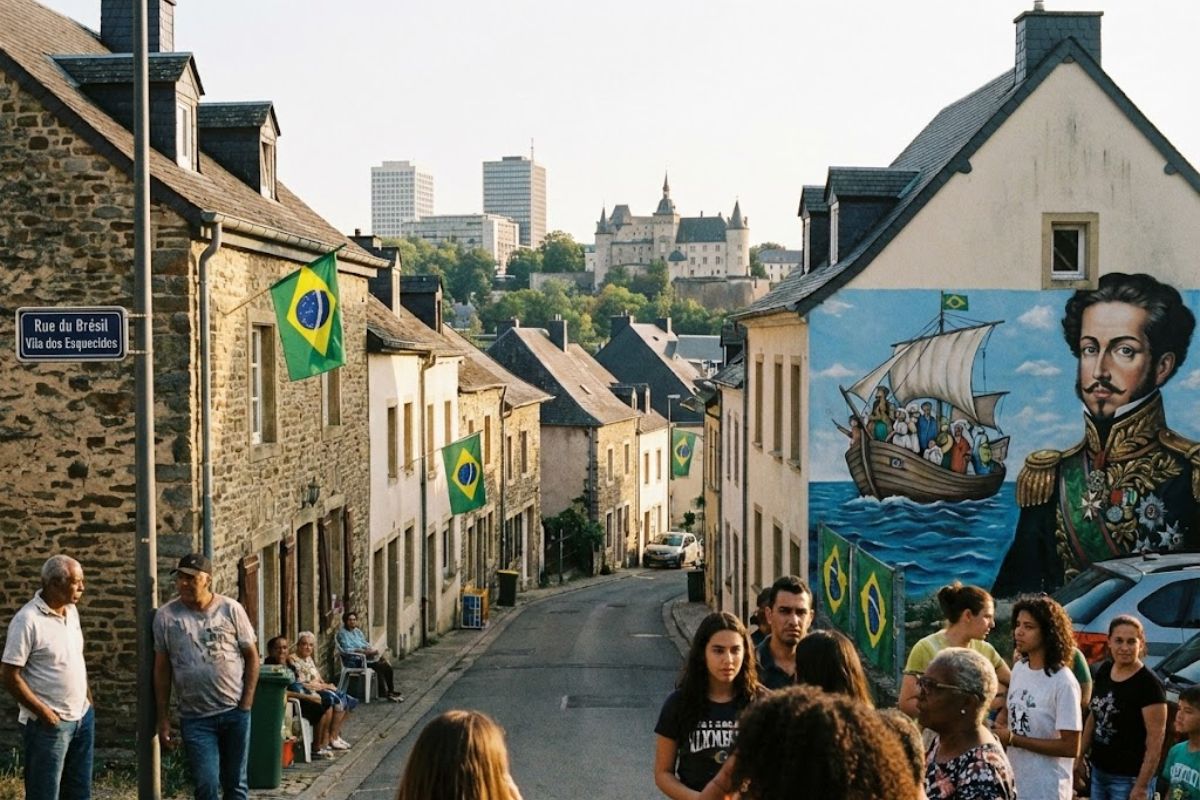


In The Richest Country In The World, A Rural Village Nicknamed New Brazil Carries A Saga Of 1828 Immigrants Blocked By Dom Pedro I, Suspicion Of Thieves, Family Shame, And Memory Rescued By Theater, Archives, And Luxembourg Descendants Who Today Try To Turn The Former Mark Of Failure Into A Local Symbol.
In 1828, peasants from a poor region of Luxembourg sold everything they had to embark for Brazil, then an Empire under Dom Pedro I, and ended up detained even before crossing the Atlantic at the port of Bremen, Germany, returning as homeless people to a land where they no longer owned a home or land. With no option for return and viewed with suspicion, they were pushed to a remote piece of the countryside, named New Brazil, that for generations would be synonymous with failure and suspicion.
Almost 170 years later, in 1997, a Luxembourg theater director staged the lives of residents in shacks in the countryside, placing New Brazil back on stage and forcing the wealthiest country per capita on the planet to look at its own social periphery. Since the 1980s, when relatives still repeated the warning that buying a house there was “to go live in New Brazil,” the story had been repressed in many families, until the school, church, and national archive began to recount it as part of the official memory.
The Richest Country In The World And Its Forgotten Village

Luxembourg appears in statistics as a small country in the European Union with the highest personal wealth on the planet, but the contrast between the financial center and the village labeled New Brazil exposes a historic internal inequality.
-
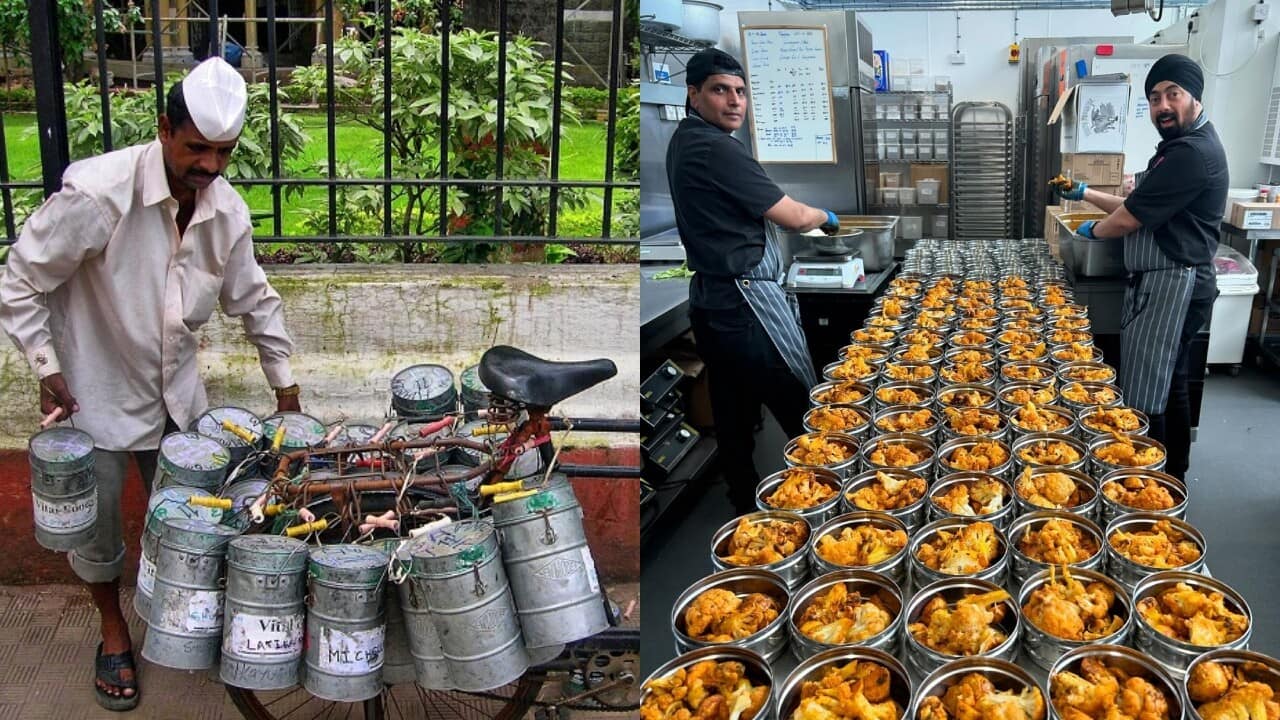
How 5,000 Indian dabbawalas manage to deliver around 200,000 lunchboxes a day in Mumbai for over 130 years using bicycles, crowded trains, and a manual system that continues to operate with impressive accuracy.
-
While restoring a historic mansion from 1910, a brick structure with an old turbine that generated energy from the Rio do Testo emerged, along with a hidden door and a rare floor concealed under layers of wax.

-
Italian researchers have detected what appears to be a second Sphinx buried under the sands of Egypt, and satellite scans reveal a gigantic underground megastructure hidden beneath the Giza Plateau for over 3,000 years.

-
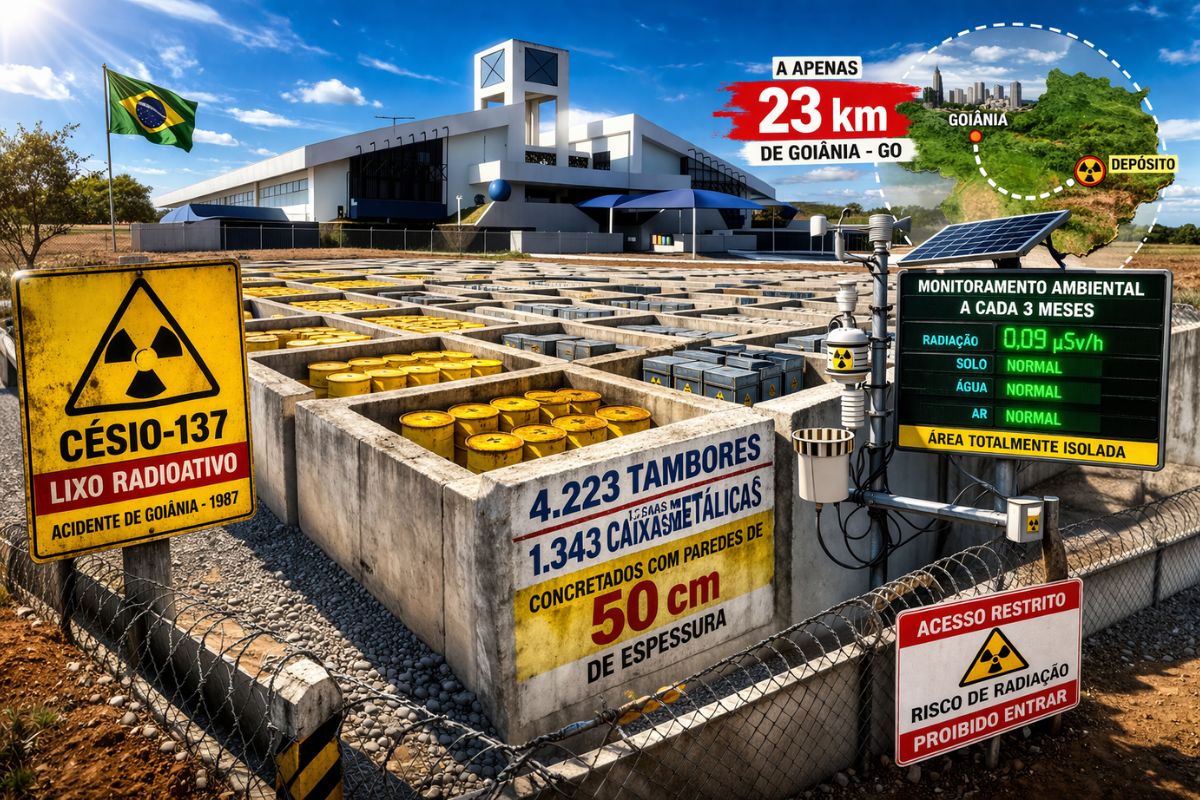
There are 4,223 drums and 1,343 metal boxes concreted with 50-centimeter walls that store the radioactive waste from Cesium-137 in the worst radiological accident in Brazil, just 23 kilometers from Goiânia, with environmental monitoring every three months.

In the rural area depicted, daily life in the 19th century was marked by hunger, high taxes, and lack of prospects.
The residents who would later be connected to New Brazil lived in shacks in the forest, in precarious conditions, at a time when letting in, receiving, or sending back resource-less peasants was a politically and socially sensitive decision.
The idea that Luxembourg would be synonymous only with banks and recent prosperity erases that past of extreme poverty in parts of the territory.
The Promise Of Brazil In 1828 That Never Left The Port
At the beginning of the 19th century, rural families sold cattle, grains, and the little property they had to escape hunger and taxes, choosing Brazil as their destination in 1828, the first year of Luxembourg emigration to the South American country.
The plan was to cross the Atlantic from the port of Bremen, Germany, in search of the so-called promised new life.
However, before boarding, the news arrived that would change everything. Brazil, then an Empire led by Dom Pedro I, had already received too many immigrants that year of 1828, according to the information transmitted to the groups.
Suddenly, the maritime route closed, and the peasants found that they had neither destination nor place to return to, as their homes and lands had already been sold.
How The Label Of Thieves Originated In New Brazil


With no alternative, these families were settled on a specific piece of land in the Luxembourg interior, which would come to be called New Brazil.
From the beginning, neighbors feared that those dispossessed peasants were thieves, and the suspicion became a nickname and stigma.
The label of thieves stuck to the descendants, affecting generations.
In many homes, the past linked to New Brazil became taboo. Older residents avoided talking about the subject, and relatives warned that acquiring property in the region meant “to go live in New Brazil,” a phrase laden with prejudice.
The association between migratory failure and the territory solidified a silent discrimination that persisted for decades.
Memory In The Landscape, In The Church, And In The School
Despite the attempt to forget, the memory of New Brazil remains scattered throughout the village. The same lands that served for animal grazing and grain planting are a physical reminder of a decision made in 1828 with no return.
It is a story that does not easily fade because it is inscribed in the landscape and in the families that continued there.
In the local church, 13 illustrations hanging summarize the misadventure of the former “Brazilians” and the founding of New Brazil.
The images depict the return of people who had departed for Brazil and came back as beggars, socially rejected, with no one wanting to associate with them.
In a school in the region, some students directly descend from these rejected individuals and grow up surrounded by references to the dream of a Brazil never attained, now reinterpreted with more pride than shame.
Theater And Archives Reintroduce New Brazil In The Debate
In 1997, a theater director from Luxembourg brought to the stage a play about residents of shacks in the countryside, recreating the atmosphere of the 19th century and giving voice to characters inspired by the history of New Brazil.
The creator himself, now older, went on to reinterpret on television a role he had performed when young, presenting the village and its name to a wider audience.
The art acted as a trigger for part of the population to start revisiting a theme many had repressed.
At the same time, the National Archive of Luxembourg holds biographies and documents of workers linked to New Brazil, including records of those who actually managed to cross the ocean.
The papers show that not everyone was blocked in 1828, and that the flow between Luxembourg and Brazil was more complex than the simplified memory of a single collective failure.
This documentation has been used by researchers and descendants interested in reconstructing the trajectory of the families.
From Stigma To Attempts To Transform The Symbol
Today, some residents see the place marked by the name New Brazil as a symbolic space for reconciliation between the two stories.
Some advocate for the installation of a simple bench with the flags of Luxembourg and Brazil side by side, accompanied by a small plaque inscribed with New Brazil, to officially mark the place.
The proposal, more than just touristy, seeks to publicly acknowledge a memory that for a long time was hidden behind jokes, suspicion, and silence.
Instead of only remembering the failure of a crossing that never happened, the idea is to show that New Brazil is part of the contemporary formation of the richest country in the world, revealing how it treated its poor and how these poor reacted.
Knowing all this, do you think the village called New Brazil should continue carrying the name of migratory failure or needs to be redefined as an accepted part of the history of Luxembourg and Brazil?








A reportagem é enganosa. O lugar se chama Grevels e não é um lugarejo pobre. Pesquisem em inglês e vocês confirmarão que, além de mal escrita, o texto não fala a verdade.
O novo brasil e o velho brasil, nunca mudaram. Ralé do mundo.
COM CERTEZA ESSA MÃO DE OBRA BARATA FOI E É USADA ATE HOJE, PARA BENEFÍCIO DESSE PEQUENO PAÍS