





 Português
  Inglês
  Espanhol
 5 min de leitura


Solution Proposed by Socio-Environmental Consulting – Synergia, Allows to Produce Water and Ensure the Water Sustainability of Municipalities
Brazil is facing one of the biggest water crises in its history with the risk of rationing both water and energy. A problem that could certainly have been avoided, or at least mitigated in the worst-case scenario, with investment in ideal solutions. One of these solutions is the so-called smart cities, which rely on conservation and better management of water resources.
Read Also
- Constrution works of Neoenergia’s solar energy complex are in full swing, and the first support stake for more than 233 thousand solar panels has just been installed
- Gasoline price rises 49.8% in a year and Brazilians turn to other fuels, such as ethanol and CNG
- Petrobras will drill in the equatorial margin in 2022 and announces investments of over R$ 11 billion in exploration of the asset
- Many job vacancies in Macaé, SP and ES were opened yesterday (07/12) by the Human Resources of Priner, active in Offshore, Naval, Mining, Steel and Infrastructure
The so-called smart cities utilize technology strategically to improve infrastructure, optimize urban mobility, create sustainable solutions, and provide other necessary improvements for the quality of life of residents.
Vinhedo, One of the 37 Smart Cities in São Paulo, Bets on a Project for Water Production Aiming to Ensure the Water Sustainability of the Municipality in the Coming Years.
In Brazil, the city of Vinhedo is considered one of the smart cities, ranking 56th nationally and 2nd in the category of 50,000 to 100,000 inhabitants, according to the Connected Smart Cities survey conducted by Urban Systems and released in September 2021.
-
Brazilian city gains industrial hub for 85 companies that is equivalent to 55 football fields.

-
Peugeot and Citroën factory in Argentina cuts production by half and opens a layoff program for more than 2,000 employees after Brazil drastically reduced purchases of Argentine vehicles.

-
A Brazilian city gains a factory worth R$ 300 million with the capacity to process 200 thousand tons of wheat per year, a mill of 660 tons/day, silos for 42 thousand tons, and an industrial area of 276 thousand m².
-
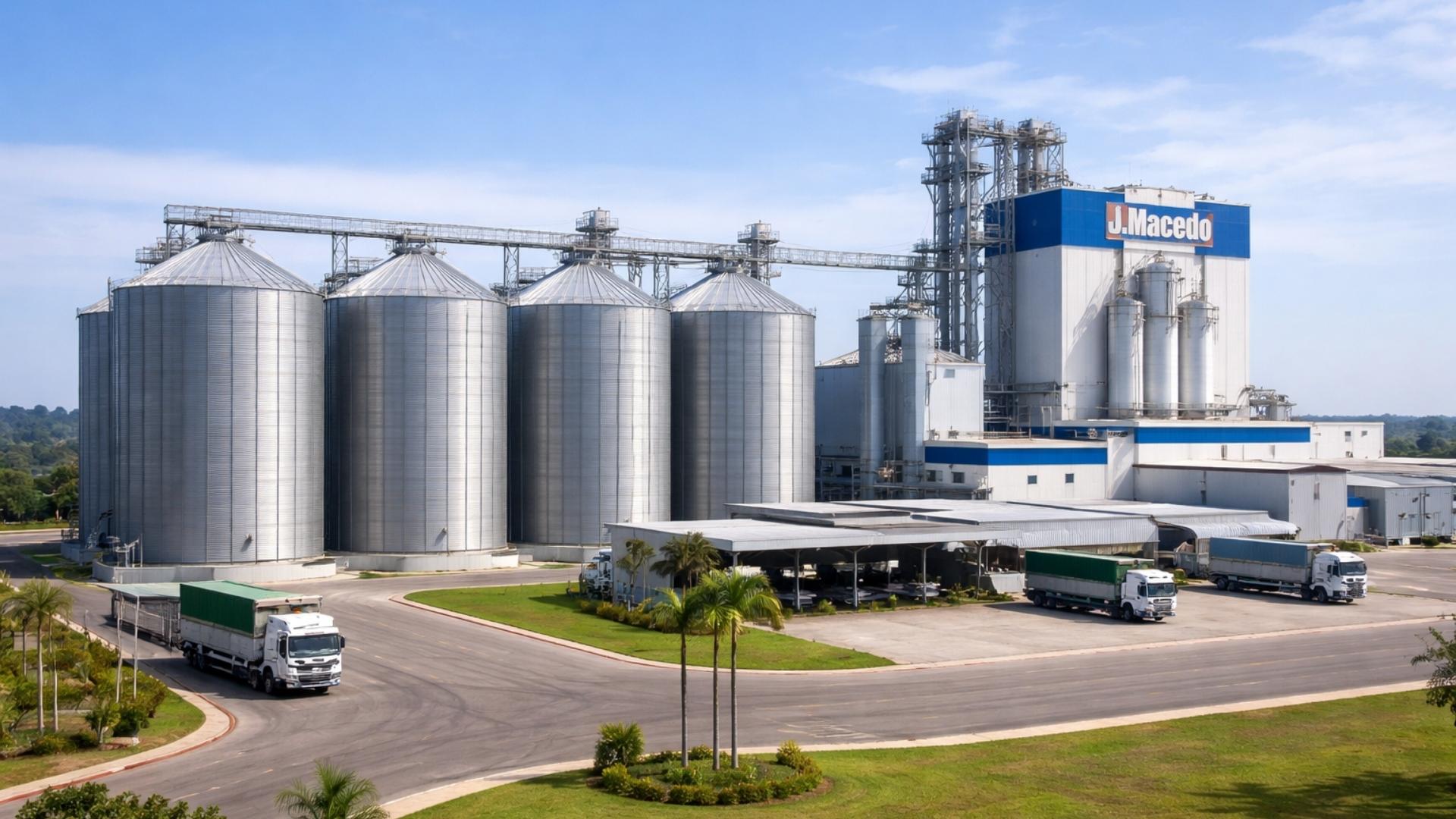
Havan will leave the shopping mall in Blumenau to inaugurate something that the chain has never done before: a megastore in half-timbered style in the Historic Center of the city, which is expected to be completed in May and change the landscape of local retail.

Becoming a smart city involves various management axes, including the intelligent use of natural resources. This is where the dialogue between Vinhedo and the green methodology of the socio-environmental consulting firm Synergia arises, which proposes water production and the water sustainability of municipalities. The method offered by Synergia promotes an increase in water availability for municipalities in a sustainable way and up to 50% more economically than traditional solutions, such as dams, for example.
Study
In the interior of São Paulo, the city of Vinhedo, with 80,000 inhabitants, decided to adopt this method that anticipates an increase in the water table volume in the watershed corresponding to its territory by up to 11 centimeters. This measure, which may seem small to a layperson, is capable of replacing the water reserve of four dams, the amount necessary to meet the municipality’s consumption, ensuring that it does not suffer from water shortages or rationing. Applying the water production method through green technology will represent an investment 50% less than constructing dams. The sooner Synergia’s method is implemented, the sooner cities can do without temporary solutions, such as extracting water from nearly depleted sources.
Moreover, the ability to quantify water production from the physical-hydrological recovery of the watersheds that make up the municipality is one of the factors that makes the solution unique, thanks to the application of a computational model that automates calculations, ensuring precision and agility in processes. Comparing the estimated cost of building dams (R$77,807,968.28) with Synergia’s methodology (R$36,042,700.29), in the instance of Vinhedo, public coffers would benefit from savings, environmental preservation, and, at the same time, promotion of the quality of life for its population.
A similar principle was applied in the city of Extrema, in Minas Gerais. In the rural area of the municipality, the green infrastructure method, within the Water Conservator Program, enabled rural landowners to benefit from the physical-hydrological recovery of the watersheds, which began to absorb more rainwater and, consequently, increased water production, with the metropolitan region of São Paulo being the biggest beneficiary.
“The national water crisis originates both from the unplanned and degrading use of land and water resources, as well as the worsening of climatic hydrological changes involving the rainfall regime that has changed significantly in recent years. In this scenario, the Southeast region, which houses a large part of the industries, population density, irrigation, and various other uses, has been the most sacrificed by the increasingly recurrent water scarcity,” explains Fabio Marçal, project manager and water sustainability specialist at Synergia.
Water Production Through Physical-Hydrological Recovery of Watersheds Has as Its Key Point the Increase of Rainwater Retention Capacity by the Soil.
The Synergia method for water production through the physical-hydrological recovery of watersheds has as its key point the increase of rainwater retention capacity by the soil. Over the years, human actions on nature have been causing soil impermeabilization. The method, with its systematic actions, anticipates the recovery of this soil, so that it regains its absorption, infiltration, and percolation capacity of rainwater, thus increasing the underground water reserves. The solution seems logical; however, it is the planning of this recharge in successive and specific stages acting on each level of the landscape that makes the method unique and efficient.
With the production of water in this way, it is possible to recover rivers and streams that have dried up, because “by increasing water retention through infiltration into the soil, water that would flow superficially and be lost within hours, abandoning the watershed in the lowest part of the land, would be preserved and supply the underground aquifers that, in turn, would supply the springs and streams. It is this water, coming from base flow, that differentiates permanent rivers and streams from seasonal ones,” explains Marçal.
Solution Is a Quick, Green, Ethical and More Economical Alternative for Increasing Water Capacity.
The Synergia solution is a quick, green, ethical and more economical alternative for increasing water capacity. “The idea that actions of conservation of green infrastructure will only yield results for future generations is not true in this alternative,” according to Marçal. “With this method, we go beyond the recovery of riparian forests where, in fact, the process is slow, as a tree takes several years to grow and provide the protection it should within the hydrological process.
The difference of the model is that it is not based solely on reforestation, but rather on the landscape as a whole, starting from the mountaintop where it is possible to prevent soil erosion from the beginning, and mainly including the mid-slope area, with practices such as terracing, management, and adaptation of crops and pastures, promotion of porosity, protection of rural roads, among other actions that ensure rainwater retention,” details the specialist.
Within a year after the start of the area recovery process, it is already possible to notice a significant increase in the flow of springs, streams, and rivers of that water system, claims Fabio Marçal.
About Synergia (https://www.synergiaconsultoria.com.br/)








Seja o primeiro a reagir!