





 Portuguese
  English
  Spanish
  7 min of reading
  4 comments





Lisa Piccirillo Resolves In A Week The “Conway Knot,” A Topology Problem That Resisted For 50 Years Against Princeton, Cambridge, And Harvard Mathematicians
Who Is Lisa Piccirillo: The PhD Student From A Town With Less Than 900 Inhabitants Who Surprised The World Of Mathematics Lisa Piccirillo Grew Up In Greenwood, A Small Town In The State Of Maine, In The United States. Greenwood Has Less Than 900 Inhabitants, Only One Regional High School Shared With The Neighboring Town, And No Direct Connection To The Major Mathematical Research Centers That Dominate The American Academic Scene. Her Mother Worked As A Mathematics Teacher In Elementary School, Which Made Contact With Numbers And Logic Present From Early On In Her Life. Still, Piccirillo’s Routine Did Not Follow The Stereotype Often Associated With The Great Names In Mathematics.
During Her Teenage Years, She Played In The School Band, Participated In The Local Church Youth Group, And Practiced Dressage, A Training And Presentation Style Of Horse Riding That Requires Precision And Discipline. None Of That Resembled The Traditional Image That Many People Associate With Professional Mathematicians.
In An Interview With The Scientific Magazine New Scientist, Piccirillo Commented On This Cultural Perception:
-
He started running at 66 years old, broke records at 82, and is now a subject of study for having a metabolic age comparable to that of a 20-year-old, in a case that is intriguing scientists and inspiring the world.

-
Oldest tree on the planet reappears after 130 years of searches: Wattieza, 385 million years old, was 10 meters tall and had no leaves or seeds; Gilboa fossils in New York solved the mystery in 2007.

-
A 48-square-meter house assembled in hours with 4,000 bricks made of recycled plastic that does not absorb moisture, has natural thermal insulation, and costs less than 90,000 reais in a complete kit.

-
Luciano Hang revealed that Havan’s air fleet has already accumulated more than 20,000 landings, 10,000 flight hours, and 6 million kilometers traveled, and he says that without the planes, the company would never have grown so quickly.


“There Is A Strong Stereotype Of What People Who Do Mathematics Are Like — Introverted, Nerdy, Probably Male, And Probably Dead. I Was None Of That. I Always Feared Having To Give Up Other Parts Of My Personality To Become Some Kind Of Math Robot.”
The Work At The University Of Texas At Austin
Academic Talent Eventually Led Piccirillo To One Of The Most Abstract And Complex Fields Of Modern Mathematics: Low-Dimensional Topology. In 2018, She Was A PhD Student At The University Of Texas At Austin, Working Precisely In This Specialized Field That Studies Geometric Properties Of Three-Dimensional And Four-Dimensional Spaces.
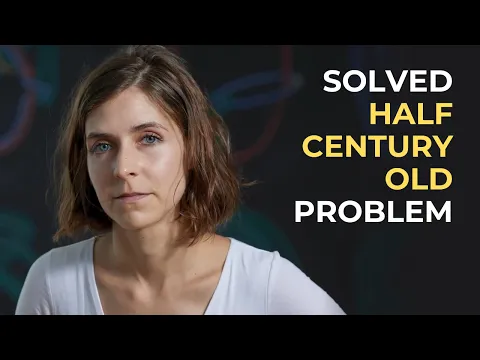

She Was Not An Academic Celebrity. She Was Not An Internationally Known Prodigy. She Was Just A PhD Student Slowly Moving Towards Completing Her Thesis. Then She Attended A Scientific Conference.
And Heard About A Problem That Would Change Her Career.
The Conway Knot: A Topology Problem Created In 1970 That Resisted For Half A Century
The Problem That Piccirillo Would Solve Had Been Formulated Almost Half A Century Before. In 1970, The British Mathematician John Horton Conway, One Of The Most Creative Figures In 20th Century Mathematics, Described A Specific Object Within Knot Theory.
Conway Was A Professor At Princeton University And Became Famous For His Contributions To Various Areas Of Mathematics, Including Number Theory, Game Theory, And Algebraic Structures. A Mathematical Knot Is Not The Same As A Regular Knot Of Rope Or Shoelace.
In Mathematics, A Knot Is Defined As A Closed Curve In Three-Dimensional Space, Where The Ends Are Connected. In Other Words, Imagine A Tangled String Whose Ends Have Been Glued Together To Form A Permanent Loop. These Objects Are Classified According To Their Geometric And Topological Properties.
The So-Called Conway Knot Has 11 Crossings — Points Where The String Passes Over Or Under Itself. In The Universe Of Knot Theory, This Is Considered Relatively Simple. There Are Knots With Hundreds Of Crossings. Even So, This Specific Knot Gained Notoriety.
Its Symbolic Importance Is So Great That The Shape Of The Conway Knot Was Carved At The Entrance Gate Of The Isaac Newton Institute For Mathematical Sciences In Cambridge, England.
But There Was A Fundamental Question That No One Could Answer: Is The Conway Knot “Slice”?
What It Means For A Knot To Be “Slice” In Four-Dimensional Topology
In Knot Theory, The Property Called Sliceness Connects Three-Dimensional Objects To Four-Dimensional Space. A Knot Is Considered Slice If It Can Be Interpreted As The Boundary Of A Two-Dimensional Disk Smoothly Immersed Inside A Four-Dimensional Ball.

In Simpler Terms, This Means That The Three-Dimensional Knot Can Be “Cut” Smoothly Within A Four-Dimensional Space. This Property Has Deep Implications For Understanding The Topology Of 4D Space, A Field That Has Revealed Geometric Phenomena That Simply Do Not Exist In Three Dimensions.
Since The 1980s, Mathematicians Have Developed A Huge Variety Of Tools To Study This Property.
Among Them:
- Topological Invariants
- Knot Polynomials
- Gauge Theory
- Symplectic Topology
These Tools Have Been Applied To Thousands Of Different Knots. For Practically All Knots With Up To 12 Crossings, The Question Of Sliceness Had Already Been Resolved.
Except For One Single Case. The Conway Knot.
For 50 Years, Generations Of Topologists Tried To Solve It. No Method Worked. Even Attempts With Artificial Intelligence Failed. A Neural Network Algorithm Developed By Mathematician Mark Hughes From Brigham Young University Was Trained To Predict Properties Of Knots Based On Mathematical Data.
For Most Knots, The System Provided Clear Predictions. For The Conway Knot, The Answer Was Simply: 50% Chance Of Being Slice And 50% Of Not Being.
The 2018 Conference That Brought The Problem To Piccirillo
In The Summer Of 2018, Piccirillo Attended A Low-Dimensional Topology Conference Held At The University Of Texas At Austin. During One Of The Lectures, Mathematician Shelly Harvey From Rice University Mentioned The Conway Knot As An Example Of An Unsolved Problem.
She Casually Commented: “For Example, We Don’t Know If This 11-Crossing Knot Is Slice Yet.”
For Many Attendees, That Was Just Another Historical Curiosity. For Piccirillo, The Reaction Was Immediate.
She Was Perplexed. It Seemed Absurd That An Apparently Small Problem Had Resisted For So Long. In Later Interviews, She Explained:
“It Was Completely Ridiculous That We Didn’t Know The Answer. It Was A Knot With Only 11 Crossings. We Had So Many Tools To Deal With Problems Like That.”
At That Moment, She Realized Something Important. Some Techniques She Had Been Developing For Another Line Of Research Could Be Applied Here. Still, She Decided Not To Work On The Problem During The Day. She Considered It Almost A Personal Exercise.
“I Didn’t Allow Myself To Work On It During The Day,” She Told Quanta Magazine.
“Because I Didn’t Consider It Real Mathematics. I Thought It Was Like Homework.”
On The Sunday Following The Conference, She Started. And Worked Only At Night That Week.
The Geometric Strategy That Nobody Had Tried Before
Instead Of Attacking The Conway Knot Directly With Traditional Tools, Piccirillo Tried A Completely Different Approach.
She Explored A Structure Called Four-Dimensional Trace Of A Knot. The Trace Is A Geometric Construction In Four Dimensions Associated With Each Three-Dimensional Knot. An Important Property Is That Two Different Knots Can Share Exactly The Same 4D Trace. If This Happens, Both Knots Necessarily Have The Same Sliceness Status.
In Other Words:
- If One Is Slice, The Other Is Too
- If One Is Not Slice, The Other Is Not Either
Piccirillo Had An Elegant Idea. She Built A Different Knot But With The Same Four-Dimensional Trace As The Conway Knot. For This New Knot, The Topological Invariants Worked Perfectly.
And They Clearly Indicated: The Knot Was Not Slice. If The Second Knot Was Not Slice, Then The Conway Knot Could Not Be Either. The 50-Year Problem Had Been Solved.
The Reaction Of Mathematicians When The Proof Appeared
Days After Completing The Demonstration, Piccirillo Had A Meeting Scheduled With Mathematician Cameron Gordon, A Topology Expert At UT Austin.
The Meeting Was About Another Matter. Before Leaving, She Casually Mentioned That She Had Solved The Conway Knot Problem. Gordon Asked To See The Proof.
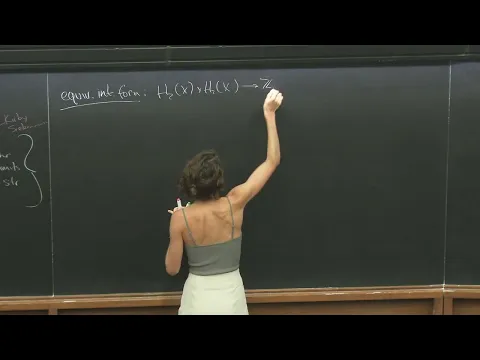
She Began Writing On The Board. As The Details Emerged, His Reaction Changed Completely. He Became Elated. According To Piccirillo, He Even Exclaimed:
“Why Aren’t You More Excited?”
He Immediately Realized The Magnitude Of The Achievement. Piccirillo, At That Moment, Did Not Yet.
Publication In The Annals Of Mathematics And Impact On Career
The Proof Went Through The Academic Review Process. In February 2020, The Article Titled “The Conway Knot Is Not Slice” Was Published In The Journal Annals Of Mathematics.
Founded In 1884, The Annals Is Considered The Most Prestigious Mathematical Journal In The World. Piccirillo’s Article Was Less Than 12 Pages Long. But It Solved A Problem That Had Withstood Half A Century Of Research.
From Unknown PhD Student To MIT Professor In Just Over A Year
The Impact Was Immediate. Piccirillo Had Completed Her PhD In 2019 And Was Working As A Postdoctoral Researcher At Brandeis University.
In July 2020 — Just 14 Months After Defending Her Thesis — She Was Hired By The Massachusetts Institute Of Technology (MIT) As An Assistant Professor On A Tenure-Track Position. It Was An Astonishingly Rapid Rise In The Academic World. She Had Never Been A Professor Before. In Interviews, She Described The Experience As Surreal.
International Awards And Recognition In Mathematics
In The Following Years, Piccirillo Received A Series Of Important Distinctions.
Among Them:
- Maryam Mirzakhani New Frontiers Prize
- Clay Research Fellowship
- Sloan Research Fellowship
In 2020, The British Magazine Prospect Included Her Among The 50 Most Influential Thinkers In The World.
Return To The University Of Texas As A Full Professor
In 2024, Piccirillo Left MIT And Returned To The University Of Texas At Austin. This Time, Not As A Student. She Took The Regents Chair In Mathematics Of The Sid W. Richardson Foundation, One Of The Most Prestigious Positions In The Department. The Conway Knot Was Proposed In 1970.
It Resisted For Five Decades. It Was Solved In Less Than A Week By A PhD Student Who Found The Problem Too Simple To Occupy Her Work Hours.
As She Summed It Up: “I Found It Completely Ridiculous That We Still Didn’t Know The Answer.” And Then She Decided To Find Out.









Hhhhhhhh
Nice article! Only thing, why change the pronouns always from he to she and his to her? I’m confused.
I was too. Couldn’t help wondering if this was some kind of backhanded words of praises due to the heroin being a she and not the “usual” he.
AI