





 Portuguese
  English
  Spanish
  3 min of reading
  0 comments


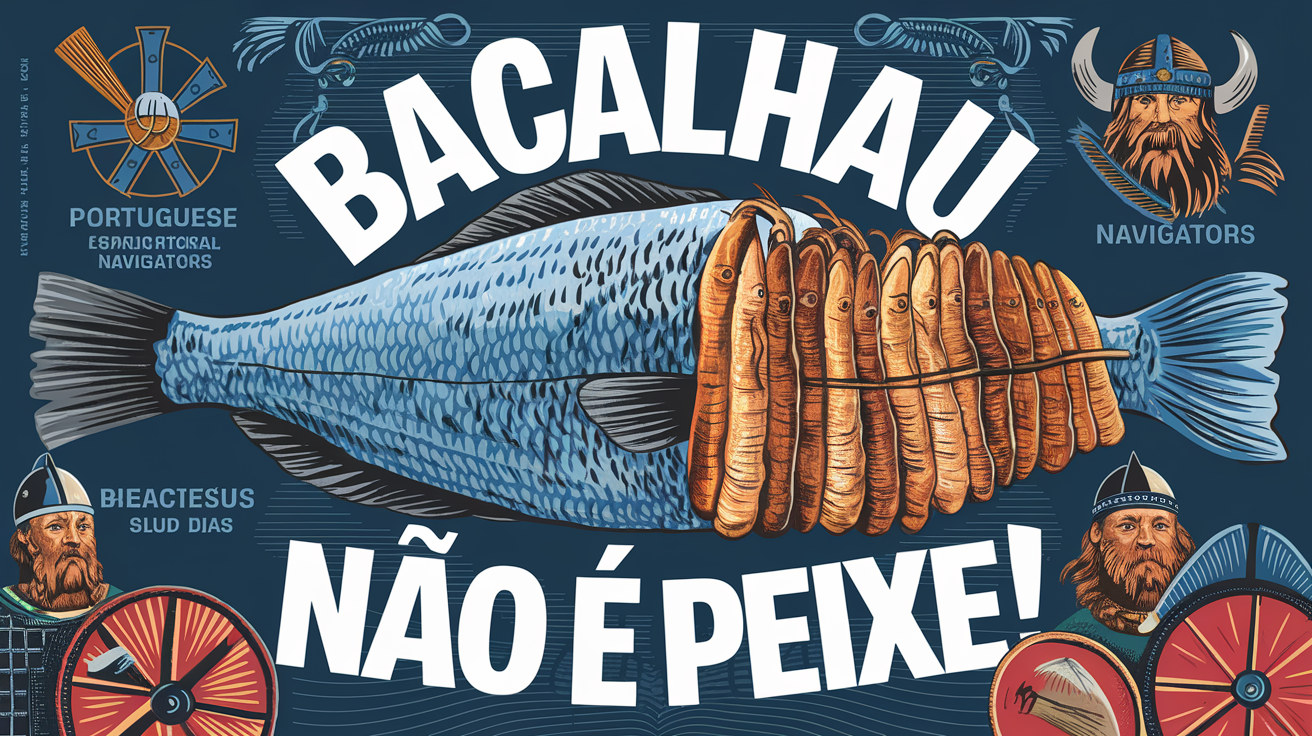
Cod, A Constant Presence in Brazilian and Portuguese Cuisine, Refers Not to a Single Species of Fish, But to Several That, After Being Salted and Dried, Receive This Designation.
Discover the history, curiosities, and importance of this traditional food that has won palates around the world.
Much more than a culinary ingredient, cod carries stories and curiosities that intrigue even the greatest admirers of gastronomy.
Even though it is a traditional symbol on occasions like Holy Week and Christmas, few know that, in fact, cod is not a fish — it is a group of species.
-
What the Public House of Julius Caesar was like inside in the Roman Forum: layout, atrium with compluvium and impluvium, tablinium and peristyle, and the scandal of the Bona Dea, revealed in an AI recreation.

-
While digging a trench next to a pool in Germany, workers found more than 1,500 silver coins from 1320 in the rubble, revealing a treasure buried for over 700 years.

-
Flight Helios 522, the “ghost” flight with 121 people: the commercial aircraft flew for more than 2 hours on autopilot after a pressurization failure left pilots and passengers unconscious and only stopped when it ran out of fuel.

-
Researchers have located a nearly intact vessel that disappeared 125 years ago on the bottom of icy waters, with masts still preserved and rare details that impress archaeologists.


Moreover, the relationship between Portugal and the food goes far beyond typical recipes: there is a long cultural and commercial history behind each salted piece.
So, What Is Cod?
According to the Federal Council of Veterinary Medicine, the term “cod” encompasses only three species of fish recognized by Brazilian law: Gadus morhua (Porto Cod or Cod), Gadus macrocephalus (Pacific Cod), and Gadus ogac (Greenland Cod).
These species originate from the cold and deep waters of the Northern Hemisphere, especially in regions like Norway, Russia, Iceland, Canada, and Alaska.
Interestingly, the famous “Porto Cod” is not fished in Portugal, as many believe. In fact, it comes from Nordic countries but gained its name because the traditional export port was located in Portugal.
Furthermore, the food does not necessarily need to go through the salting process to be called cod — what matters is belonging to one of the three species mentioned.
How Did Cod Become a “Faithful Friend” of the Portuguese?
According to BBC Brasil, the relationship between Portugal and cod dates back to the end of the 14th century.
During this time, Portuguese navigators faced long sea voyages and needed food that could withstand adverse conditions and time.
Dry and salted cod proved to be the perfect solution, as it could be stored for years without spoiling.
The custom of consuming cod became established, and the fish came to be called “faithful friend” in Portugal.
The most popular preparation method is still the dry and salted version, similar to that enjoyed in Brazil.
According to data from the Norwegian government, approximately 95% of the cod exported to Portugal is salted and dried, reflecting this historical preference.
Why Is Cod So Consumed in Brazil?
The consumption of cod in Brazil is a result of Portuguese influence, which brought the tradition to the country during the colonial period.
The food gained special prominence during Holy Week, when many Brazilians choose to replace red meats with fish, in respect for religious traditions.
Cod balls, bacalhoada, and stuffed pastries are just some of the recipes that are popular here.
Despite its high cost, cod remains a valued item in Brazilian cuisine.
The fish, always imported, primarily comes from Norway, considered the largest producer and exporter of cod in the world.
Conservation Technique: The Secret to Success
The salting and drying process is the great secret behind the longevity of cod. This technique, developed centuries ago, allows the fish to be stored in non-refrigerated conditions for long periods.
The method was widely used by Vikings, navigators, and fishermen, being essential for transporting food in times when there were no refrigerators or modern conservation systems.
Curious Facts About Cod
- Although the term “cod” refers to three specific species, other fish can be marketed as cod, as long as they undergo the salting and drying process.
- Cod is considered an extremely nutritious food, rich in omega-3, proteins, and B-complex vitamins.
- The majority of the cod sold in Brazil is of the Gadus morhua type, due to its delicate texture and characteristic flavor.
Cod is much more than an ingredient; it is a symbol of traditions and stories that have traversed centuries.
Whether in Brazilian or Portuguese cuisine, it continues to captivate generations with its unique flavor and versatility.
What is your favorite cod dish? Did you know these facts? Share in the comments!








-

-

-

-

-

-

48 pessoas reagiram a isso.