





 Portuguese
  English
  Spanish
  4 min of reading
  0 comments


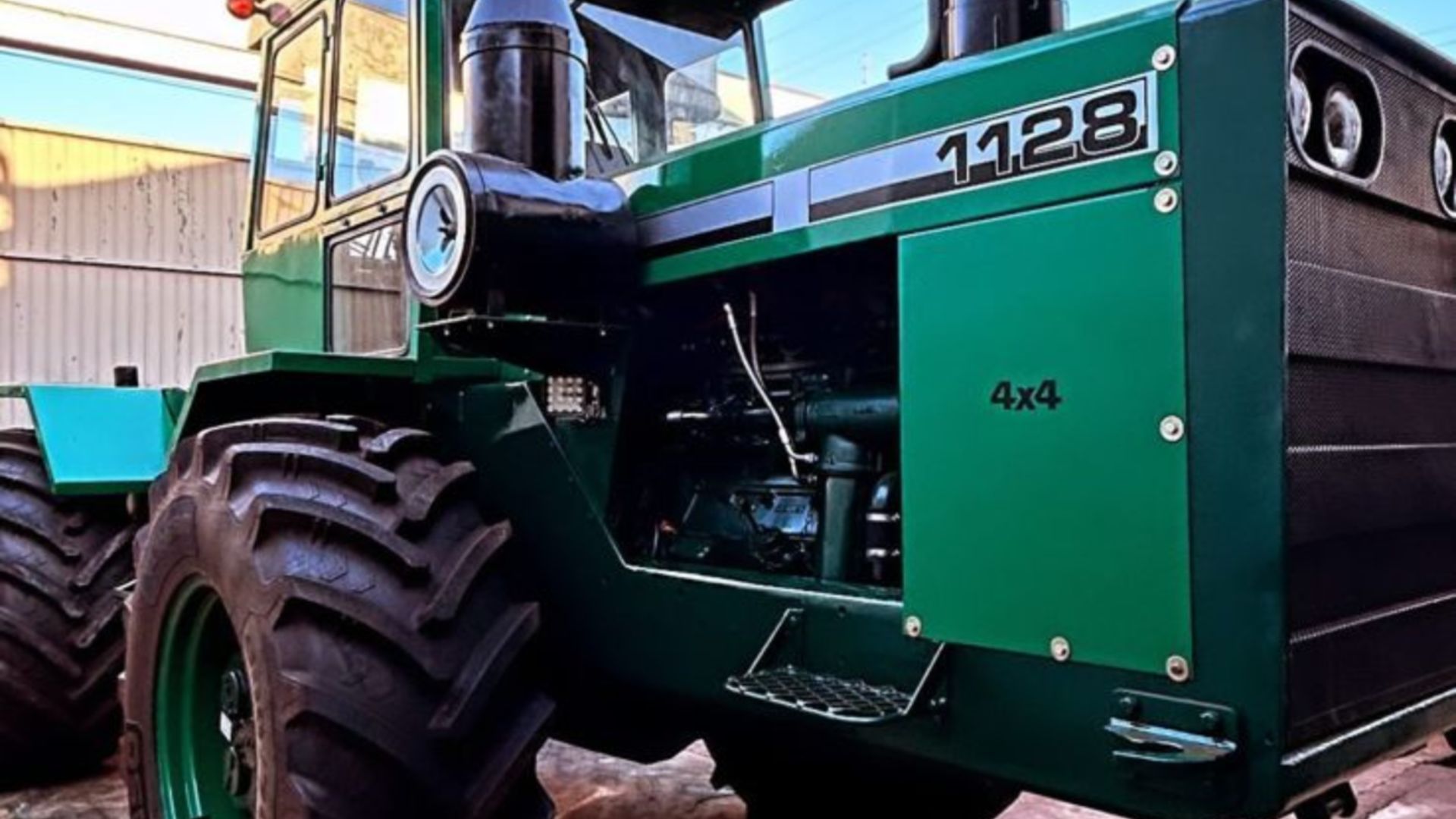
The ENGESA 1128 Tractor Marked An Era By Combining Power, National Innovation, And Unprecedented Comfort For Operators, Becoming A Symbol Of Robustness In Large Brazilian Crops. Its Presence Is Still Remembered Today In The Universe Of Agricultural Mechanization.
By the end of the 1970s, the Brazilian agricultural machinery sector recorded significant progress with the launch of the ENGESA 1128, a robust model produced by Inesa, a company based in São Paulo.
This tractor, known for its great power and technological innovation, was developed to meet the demand of large rural producers who needed performance and durability in the field.
The ENGESA 1128 became a symbol of strength and durability, establishing itself as a reference in the realm of national agricultural mechanization.
-
The water that almost everyone throws away after cooking potatoes carries nutrients released during the preparation and can be reused to help in the development of plants when used correctly at the base of gardens and pots, at no additional cost and without changing the routine.

-
The sea water temperature rose from 28 to 34 degrees in Santa Catarina and killed up to 90% of the oysters: producers who planted over 1 million seeds lost practically everything and say that if it happens again, production is doomed to end.

-
An Indian tree that grows in the Brazilian Northeast produces an oil capable of acting against more than 200 species of pests and interrupting the insect cycle, gaining ground as a natural alternative in soybean, cotton, and vegetable crops.

-
The rise in oil prices in the Middle East is already affecting Brazilian sugar: mills in the Central-South are seeing their margins shrink just as ethanol gains strength.

The Power Of The ENGESA 1128 Boosted Mechanization In The Field
The project was designed to meet the adverse and demanding conditions of the Brazilian agribusiness, especially in regions with large crops.
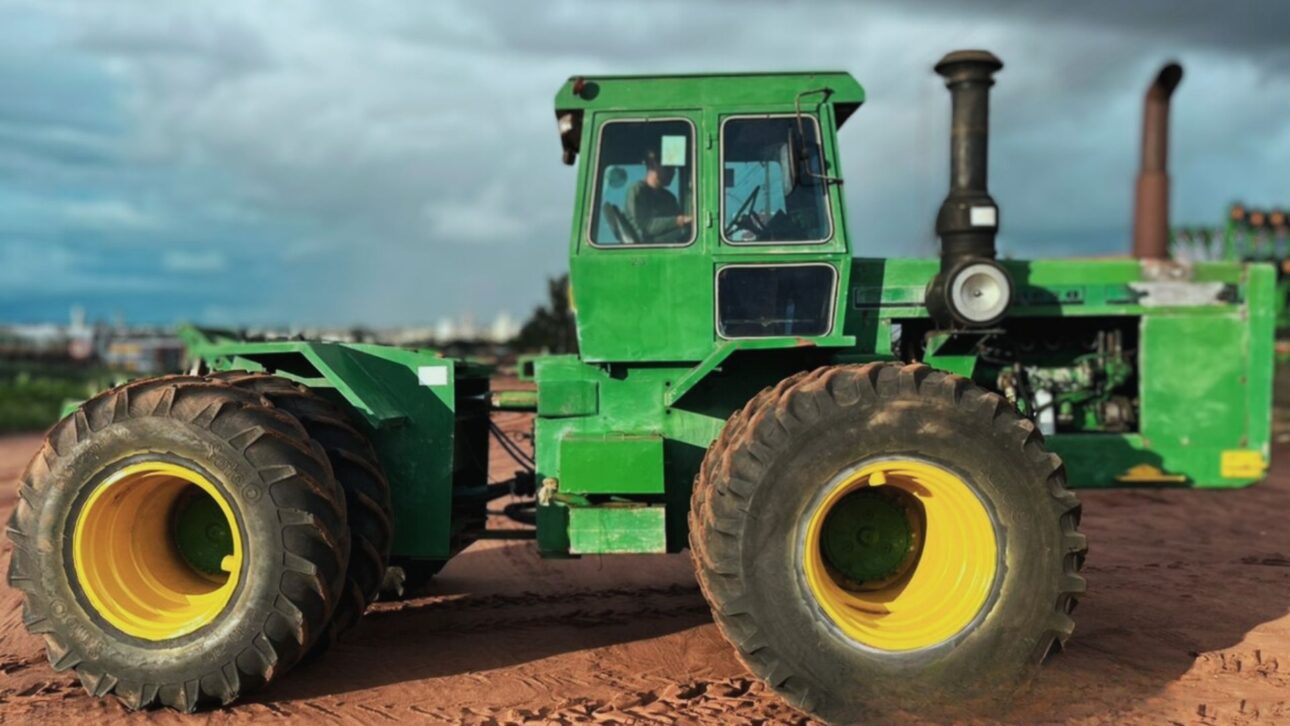
The engine chosen to equip the model was the Camin Série N, a six-cylinder inline engine with a capacity of 14 liters, manufactured in Brazil.
This engine, available in both naturally aspirated and turbocharged versions, initially delivered 280 horsepower, but in later versions reached the impressive level of 310 horsepower.
With this performance, the tractor was able to tow the largest agricultural implements available on the Brazilian market at the time.
Another highlight of the ENGESA 1128 was the transmission, considered advanced for national standards of the period.
The gearbox had 22 gears, with 18 forward and 4 reverse, offering the operator a range of options to work on different types of terrain and with various implements.
This feature provided greater versatility and productivity during working hours in the field.
Innovation, 4×4 Traction, And Factory Comfort
The all-wheel drive, identified as 4×4, further enhanced the tractor’s operational capacity, allowing it to overcome uneven terrain and adverse conditions.
The model, in addition to strength, offered operator comfort with a factory air-conditioned cabin, something innovative for Brazilian tractors at that time.
This feature made working in the field more pleasant, especially in regions with extreme climates.
The construction of the ENGESA 1128 was articulated, making maneuverability easier and increasing efficiency in large planting areas.
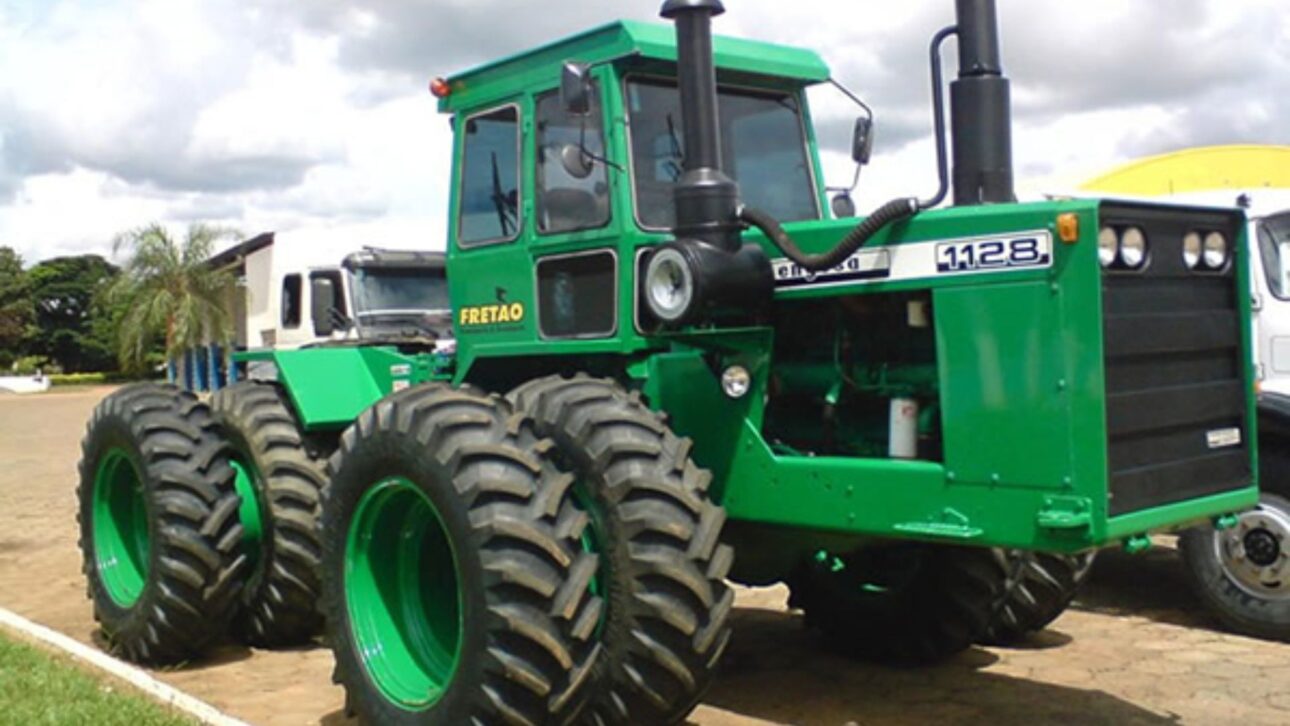
The robust and imposing design caught attention not only for its size but also for the durability of the materials used, an attribute that contributed to its reputation as a reliable and lasting machine.
The tractor was quickly adopted by large rural properties, especially in states like Mato Grosso, Goiás, and Paraná, where the agribusiness boom called for high-performance equipment.
ENGESA 1128: National Pioneering And Legacy In Agriculture
Among national agricultural tractors with turbochargers, the ENGESA 1128 is among the pioneers.
Its technology anticipated mechanization trends that, years later, would become standard in the segment.
According to records from that time, the model was capable of working long hours without showing significant mechanical failures, a factor that raised producers’ confidence in the brand.
The peak of the ENGESA 1128 occurred in the 1980s, a period when Brazil was expanding its agricultural frontier and demanded increasingly powerful equipment.
Its popularity was also due to its ease of maintenance, as the parts were produced in the country, which reduced operational costs and ensured more machine uptime.
Despite its success, Inesa’s trajectory was interrupted in the mid-1990s when the company faced a severe financial crisis and eventually declared bankruptcy.
As a result, the production of the ENGESA 1128 was halted.
Even out of production, many units remain in operation, still found today on Brazilian farms, reflecting the durability and robustness of the original design.
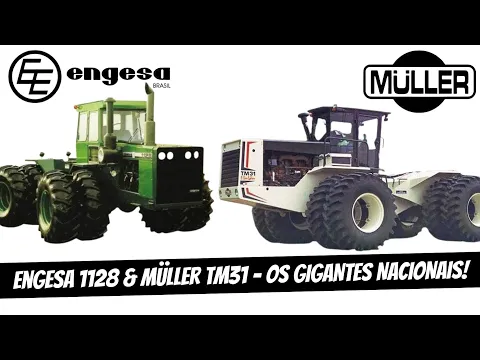

The ENGESA 1128 Tractor Is Still Remembered By Producers And Collectors
The presence of the ENGESA 1128 at agricultural fairs, vintage machinery exhibitions, and collector events reinforces its status as a national icon.
Agricultural mechanization specialists and enthusiasts of the sector’s history often point to the tractor as a technological milestone for the country, recalling its impact on rural productivity and the evolution of national machinery.
Currently, some producers still maintain units of the ENGESA 1128 in operation, whether for reasons of tradition or due to the tractor’s proven performance in certain tasks.
The legacy of the model, therefore, remains alive not only in the memory of farmers but also in the fields where, occasionally, it is possible to see this national giant in action.
What memories or curiosities do you have about the ENGESA 1128? Do you know someone who has operated or still uses this landmark of Brazilian engineering in agribusiness?





-

-

4 pessoas reagiram a isso.